

Looking back, I realize I had an interest in flying things from a very young age.
I lived in East Hartford, Connecticut, not far from the Pratt and Whitney factory that pumped out enough radial engines to power an Air Force just a couple decades earlier. In my youth P&W was pushing turbine engines out the door. Sonic booms were a common occurrence.
To this day that deep, thunderous clap of sonic disturbance brings me a bit of joy. Others may find rattling walls to be unnerving. Me? I like it. I always did.
Cessnas and Pipers and Beechcraft flew over my home on a regular basis, as did C-119s and C-124s from Westover Air Force Base. My eyes lifted skyward to see those airframes glide past. My young tender ears basked in the sound of round engines, flat engines, any kind of engine that caused sound to cascade down from the heavens.
I was hooked, but I was as ignorant as an ignoramus can be. Where those airplanes came from was a complete mystery to me. I had no idea that Brainard Airport sat just across the river in Hartford. My only exposure to an airport was P&W’s private strip. Rentschler field was the second largest airport in the state, just a short bike ride from my home. But it was fenced off to prevent intruders from entering the grounds. Much as so many general aviation airports are today.

I was stymied. Which means aviation remained nothing but a dream for me. Climbing into the pilot’s seat was beyond my capability because I didn’t know where to go, wasn’t sure how to get there, and didn’t have any guidance available from the adults I knew.
My personal mission is to correct for that deep-seated ignorance I suffered from as a boy. My goal is to help young people find the airport, get through the gate, find a legitimate means of getting hands-on with aircraft, and let nature take its course from there.
Of course, for all their zeal and energy, most kids don’t have enough disposable income or mad money saved up to buy an airplane. Yet many adults do, even if they don’t think they can.
There is a match to be made there. A good one.
At some point in the process of getting a kid involved in aviation in a meaningful way, a quantity of money is going to have to change hands. Whether their interest is in becoming a pilot, a mechanic, an engineer, or an administrator, a flying club is perhaps the most cost-effective, socially beneficial, long-lasting method for high school and college age students to find their way onto the airport and into a serious involvement with an aircraft or two. That’s just true. The economy of scale and non-profit nature of flying clubs makes any other method pale in comparison.
But, as my good friend and fellow Aircraft Owners and Pilots Association (AOPA) Ambassador Pat Brown points out so well, at some point somebody has to write a check. More often than not, that’s where the idea of a flying club stops. Parting with dollars is hard. For many of us the idea of handing over enough money to purchase an airplane is out of the question.
Or is it? Let’s take a short side trip to Benefactor U. The totally unregistered, University of Giving with a Purpose, that lives in my imagination.
There are real advantages to becoming a benefactor to a flying club that fills a role most of us couldn’t individually accomplish.
If you’re a bit selfish (and I might be) there’s the tax benefit to consider. Flying clubs formed to have an educational purpose often qualify as a 501(c)(3) tax exempt organization. That means you can get a receipt for any cash or equipment you donate and write that value off your income taxes.
Beyond that, and this is where we get into the warm cockles of the heart segment of giving, you have the power to put an aircraft within the reach of teens and young college students who couldn’t possibly afford such a thing.
If you don’t have the buying power to do it on your own, you might encourage a number of friends and business associates to join you in the effort. An inexpensive entry level airplane doesn’t cost much at all when the final ticket price is divided by 6, or 10, or more.

Incidentally, this isn’t random hyperbole. I know of what I speak.
Prior to this past weekend I had funded three airplanes that went to live with flying clubs that couldn’t afford to purchase one of their own. I leased them very affordably, but still made a small profit on each by the time the club finished with it and I sold it off.
As of Saturday, July 4, 2020, I did it again. I bought a Piper Cub specifically to put it to use in a flying club designed to serve high school and college students.
The Cub wasn’t purchased with pocket change, but it cost less than my motorcycle or any of our family’s cars. And no, I’m not wealthy. But a small sacrifice on my part can go a long way when applied to a group of kids who have dreams but no means to reach them.
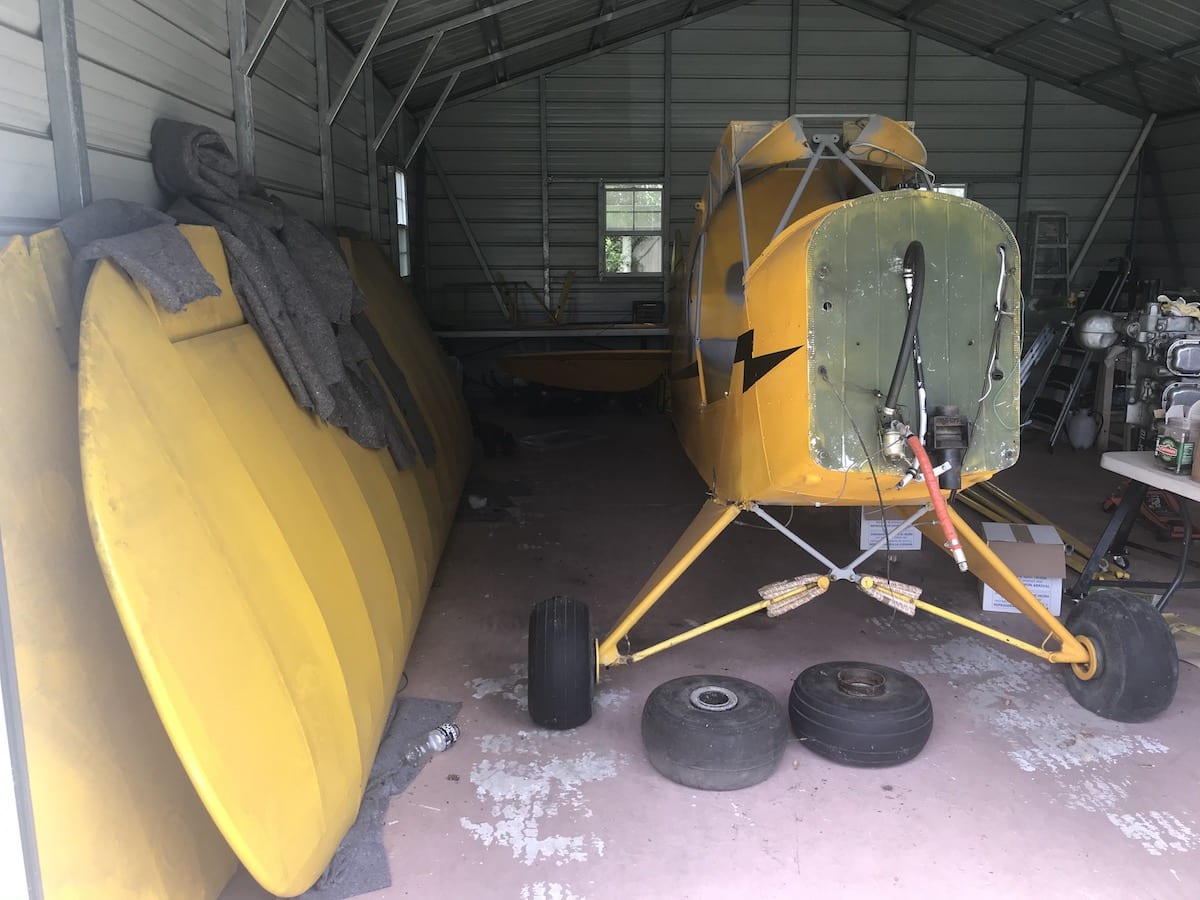
Truthfully, I expect to get a great deal of pleasure from seeing club members build their work benches, reassemble the aircraft, and fly it again.
Putting a 75-year old airplane back into the air with teenagers at the controls will do my heart good. I’ll fly with them, putting my CFI to good use. I know the experience will benefit their imaginations and motivate them to aim for higher goals.
And my life will have meant something more than just accumulating cash to lavish it on myself.
Maybe I’m crazy, but I don’t think so. While my ability to fund dreams doesn’t rival Bill Gates, or Paul Allen, Michael Bloomberg, or Sergey Brin, it does make a difference to those who want to fly in my neck of the woods. And that’s enough for me. I hope you will find a way to do something similar, on a smaller or larger scale — as you best see fit.
Onward!

Jamie ,I loved the article. In a small way I am also trying to advance aviation education . Despite the virus my grandson and I are flying a couple times a week. He now has 75hrs in a light sport aircraft and just finished his thirtieth glider flight. He is not quite old enough to solo but the education of aviation and many other factors in life have jumped tenfold.
That’s so great!
Where people spend their money (and/or time) is a true measure of what they value, and obviously you value the future generation of pilots. Thanks for that, and for inspiring many of us to be better human beings.