

In April 2021, Cole Harris celebrated his 24th birthday and his fifth month in business. He opened Central Florida Aircraft Services in December 2020 at Lakeland Linder International Airport (KLAL).
That same week he flew in Aviat Aircraft’s Central Florida Classic, a national STOL (short take-off and landing) competition, held during the Holiday Flying Festival and Car Show at KLAL.
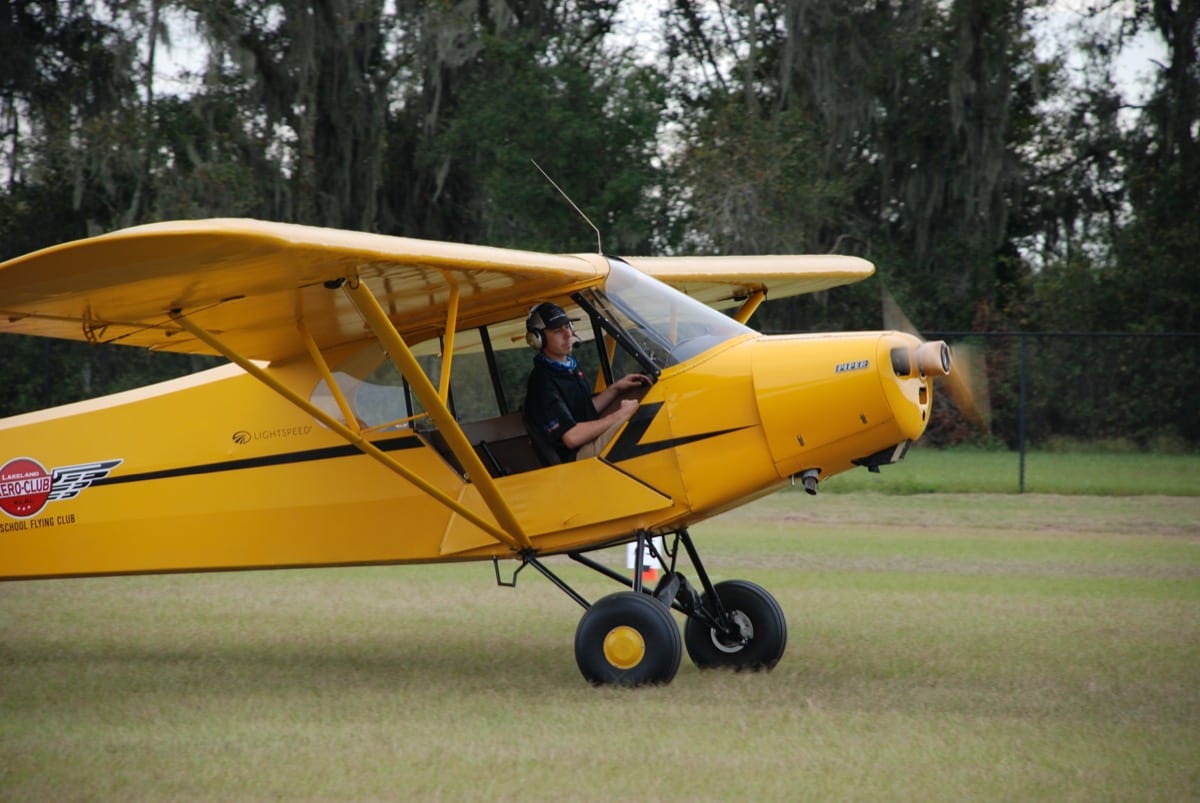
It makes sense that his milestones all happened at KLAL, as that’s where his aviation career began.
“The Central Florida Aerospace Academy was the core foundation to starting my career,” said Harris. “If I hadn’t gone there or become involved in the Lakeland Aero Club or any of SUN ‘n FUN’s programs, there’s no way that I would be even remotely close to the point I’m at in aviation now. They allowed me to get immersed in aviation.”
While known for its annual fly-in, SUN ‘n FUN has evolved in the last several years, transitioning from “Spring Break for Pilots” to the fundraising arm of the Aerospace Center for Excellence (ACE) at KLAL. The center includes the high school, the flying club, the Florida Air Museum, and much more – all with the mission to “engage, educate and accelerate the next generation of aerospace professionals.”
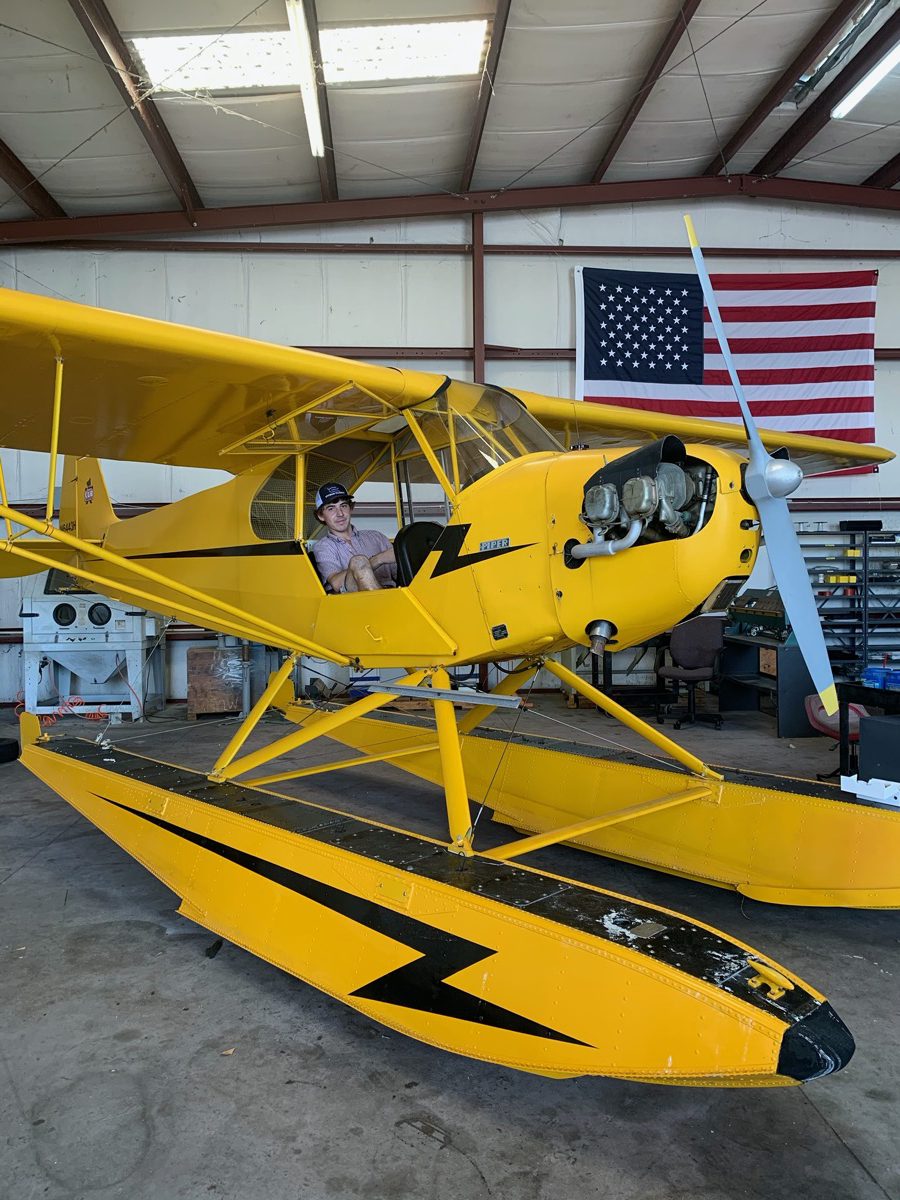
During high school, Harris joined the Lakeland Aero Club and “learned how to turn wrenches” by working on aircraft. He earned his private pilot certification as a junior in high school and worked part-time at Aircraft Engineering in Bartow, Florida. He graduated in 2015 from CFAA.
With jobs for pilots and mechanics in high demand, Harris weighed his options.
“One reason I moved into the maintenance side was because pursuing all your flight ratings can become very costly. I was very fortunate that I was on the James C. Ray Scholarship and got my private and didn’t have to spend any money. But, to go on and do your instrument, commercial, and multi-engine and then build all the hours, I mean, you’re talking like almost $100,000 to get to that point. So being a mechanic, you can be an apprentice and get paid to learn a skill and get your A&P license. Instead of paying $150 an hour for an airplane and instructor, you’re making $15 an hour and learning. So, I saw it as an easier way to support myself and still learn a skill in aviation. I still get to fly all the time, too.”
Harris continued to work for Bill Turley at Aircraft Engineering in Bartow and earned his airframe and powerplant certificate in 2018. In business for 40 years, Turley has a reputation as a tough, knowledgeable boss who has apprenticed many mechanics who later opened their own shops.
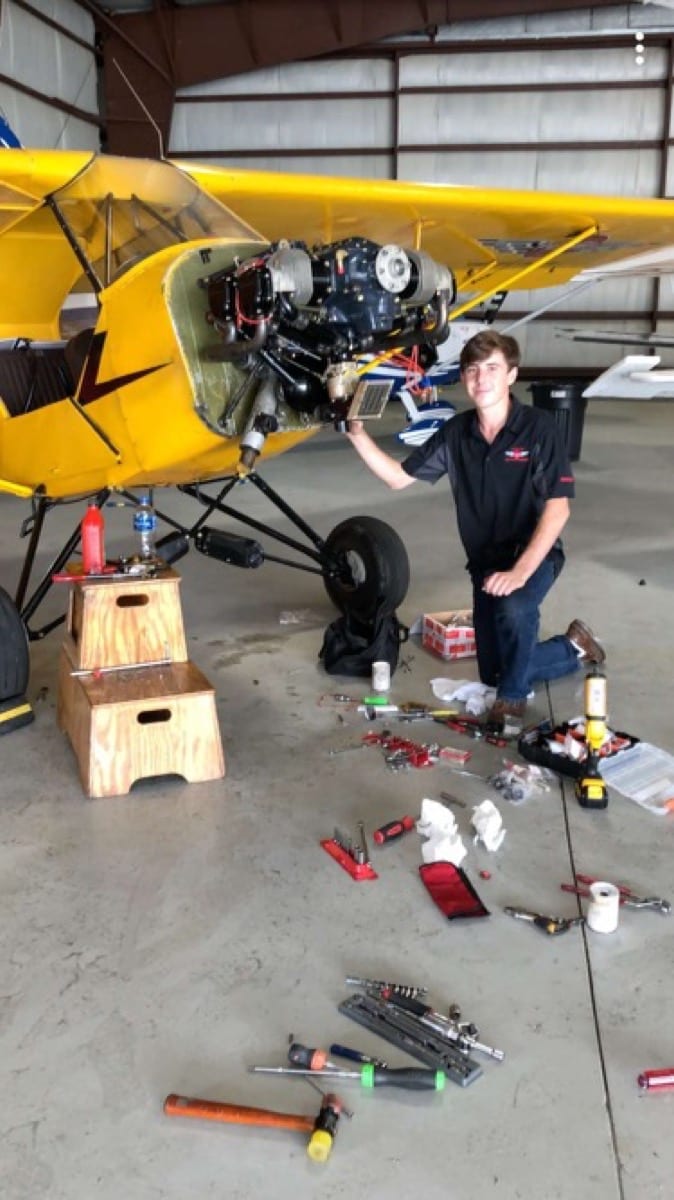
On working for Turley, Harris said, “I love him like a grandpa. If it wasn’t for him, I probably wouldn’t have matured as quickly, and I’d still be running around getting into a bunch of trouble. I mean, he’s very hard-core, obviously, but you know I’m used to that style of learning and working just from growing up in the agriculture industry. I’m used to having a bunch of old farmers yelling at me, so an old mechanic yelling at me wasn’t too much different. I wouldn’t have traded working for him for anything. I owe all my experience and knowledge to him, and I wouldn’t be an A&P without him. Yeah, Turley’s the man. Anytime I have a question about anything I haven’t seen yet or don’t know, I call him or go see him and ask him.”
After earning his A&P, Harris worked at a few other shops before deciding to open his own when a hangar became available in Lakeland.

“It was my opportunity to come back to my home airport and see what I can do in the industry,” Harris said.
For the business side of running a shop, Harris has two accountants — one a CPA — and Office Manager Emily Wenglarz, who graduated from St. Mary’s College with a business degree.
“Anyone can work on planes or fly and just talk to customers, but being able to run the books is a lot more challenging,” Harris explained.
Work Philosophy
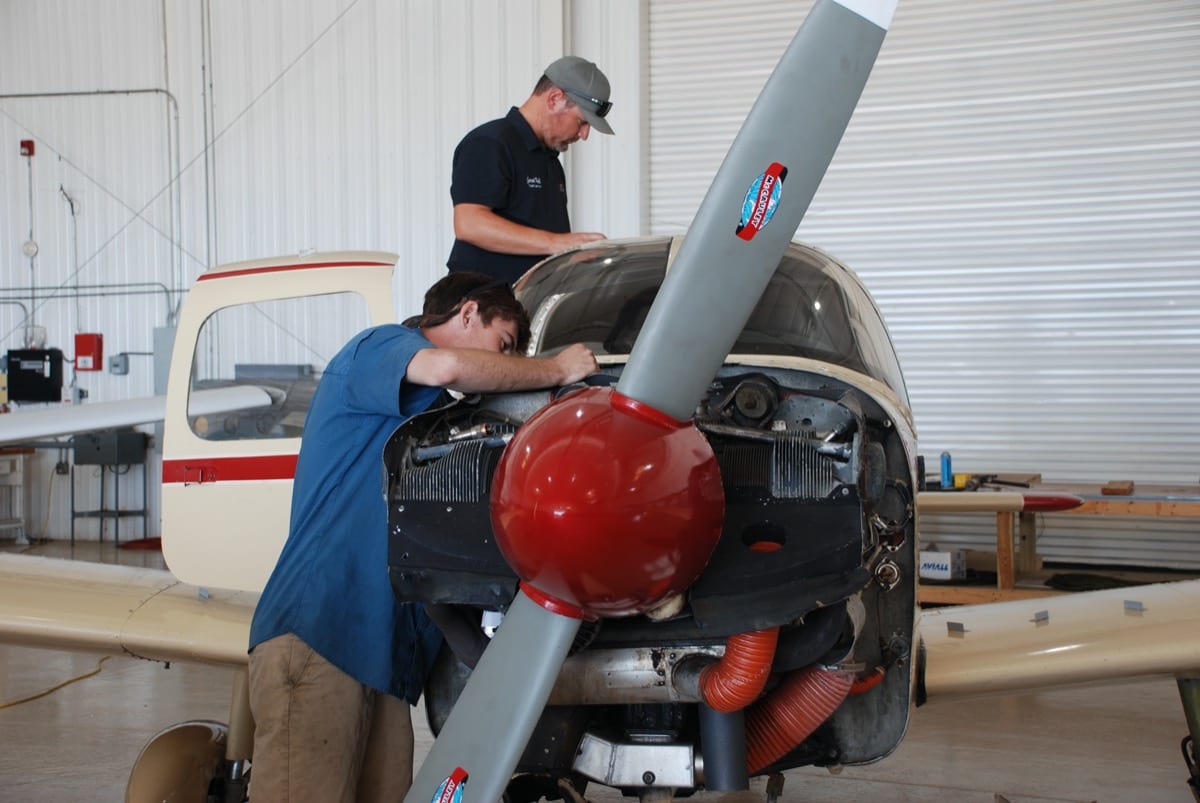
“A lot of people just walk up to a plane and drain the oil and go through and open everything up, and then they’re running back and forth from one wing to the other. You lose a lot of time going back and forth from one side of the plane than if you just sit there and attack one piece at a time, finish it, and go to the next problem,” Harris said, shaking his head.
“Like for an annual, you have to keep everything in systems and be organized,” he continued. “I’m all about being clean, sometimes spending hours and hours wiping down nasty oil underneath the floors and the belly. If you don’t go about attacking the airplane in a certain manner, then everything is going to be off, from ordering parts, and it will be disorganized, and you’ll have it opened up from one end to the other versus if you attack the engine, attack the wings, attack the landing gear, all in different systems. I think it makes it a lot easier to go through them when everything is all squared away.”
His favorite part of the job?
“I like to fly to random airports to do missions,” he said. “Like yesterday I had to fly to Cedar Key because someone tried to rip the nose gear off a 172 they were flying — I mean a really hard landing — so I get to jump in a plane, fly up to a really cool place, spend an hour or two troubleshooting and seeing what we can do to get the airplane back home. That’s what I enjoy doing. That and going to do pre-buys.”
Harris is partway through his instrument training and plans to get his commercial rating and his seaplane certification. His dream plane to own is a Pilatus Porter PC-6.
In the future, he said he would like to get involved in restoring warbirds and vintage aircraft and possibly open satellite mechanic shops.
You can find out more about Harris and his new shop on Facebook or by calling 863-640-3603.

An inspirational story. Very enlightening. Cole Harris’ story just goes to show how satisfying and accessible a career in aviation really is.