


In 1916, with manned powered flight just 13 years old, the rationale for aircraft design was still wide open.
The ultimate path was illuminated by the failures, as well as the successes. That’s the year a patent was filed for the Johns Multiplane, a seven-winged whopper ultimately powered by three Liberty engines.
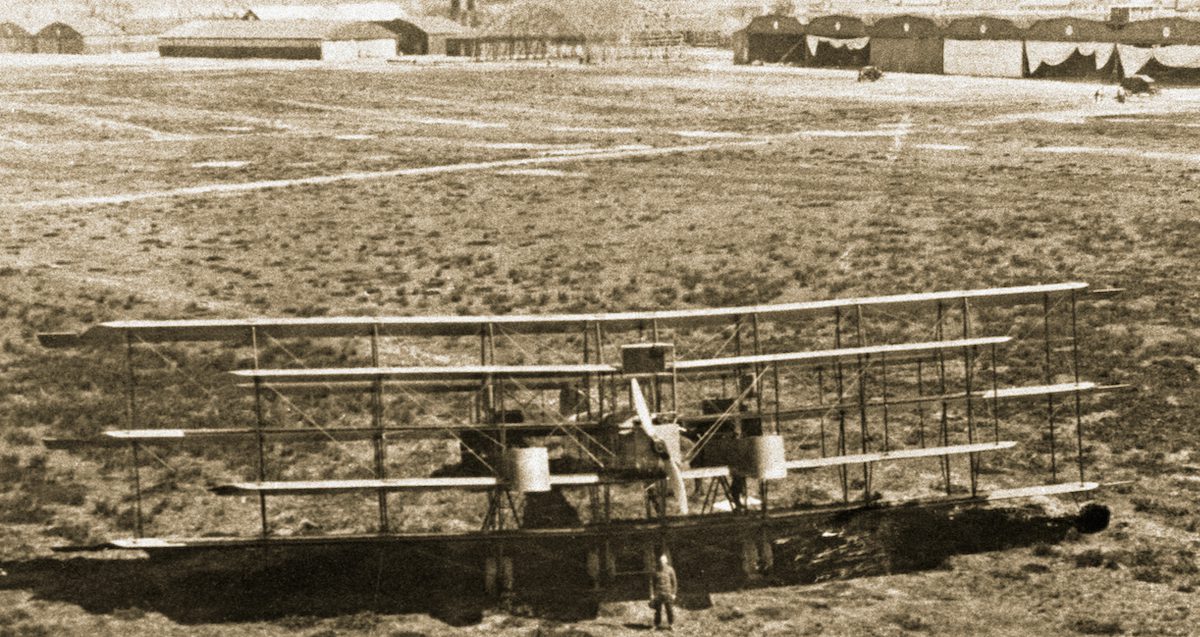
The desire for more lifting surfaces resulted in an airframe that looked like a huge triplane with a set of slightly smaller biplane wings ahead of, and another set behind, the main three wings.
Six ailerons were employed for roll control. Some stories say aileron forces were still heavy.
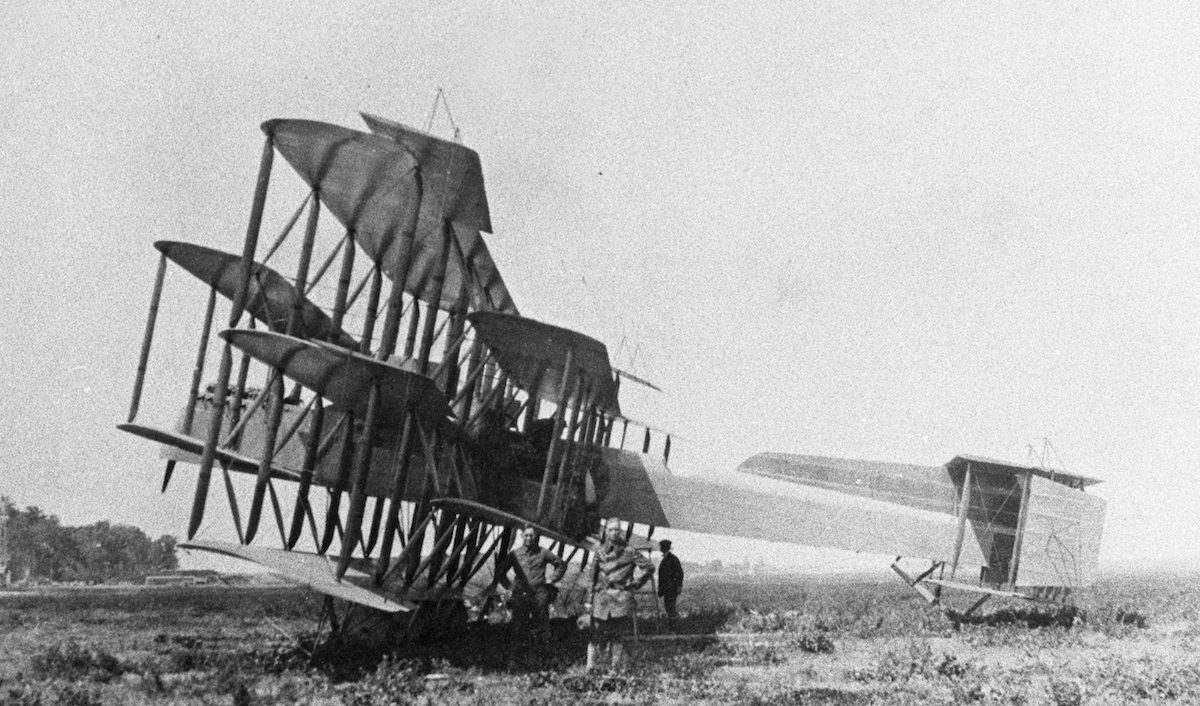
The American Multiplane Company of Bath, New York, had high hopes for the design. First flight of the Johns Multiplane, named after designer Herbert Johns, took place in 1919.
Some photos show the Multiplane in noseovers at Langley Field, Virginia, and after efforts failed to produce a well-controlled flying machine, the one-and-only Johns Multiplane was broken up for scrap in 1920.
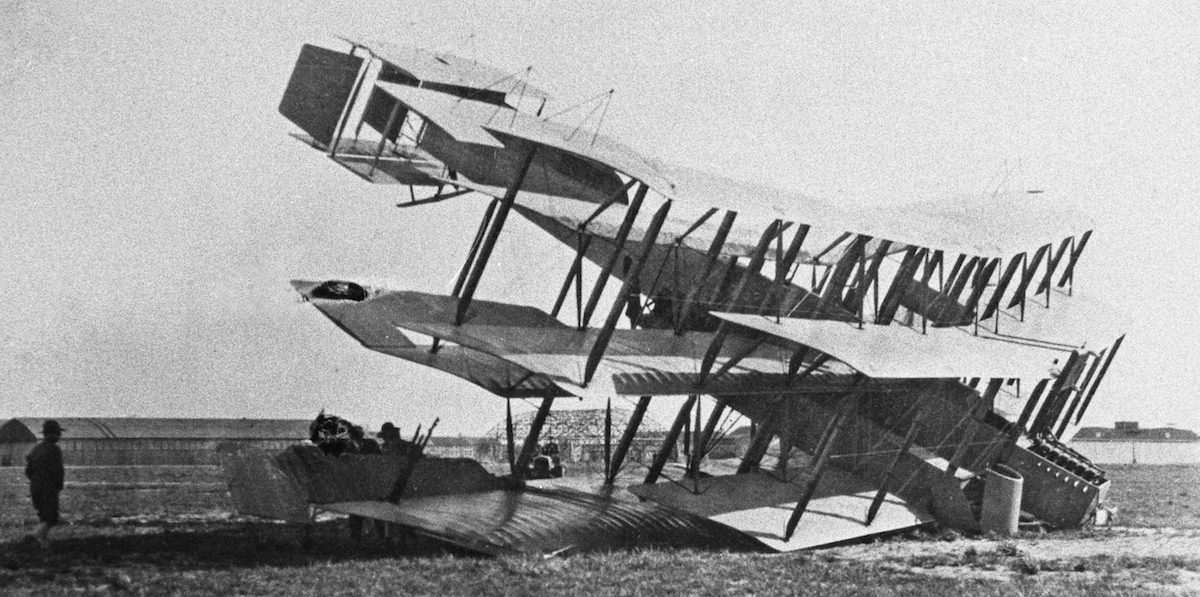
It’s been hard to find a photo of the Johns Multiplane that isn’t from the aftermath of a mishap. The seven-winged machine serves as a milepost in the development of aviation, which went in a different direction relying on fewer lifting surfaces. (Photo Courtesy First Fighter Wing History Office) 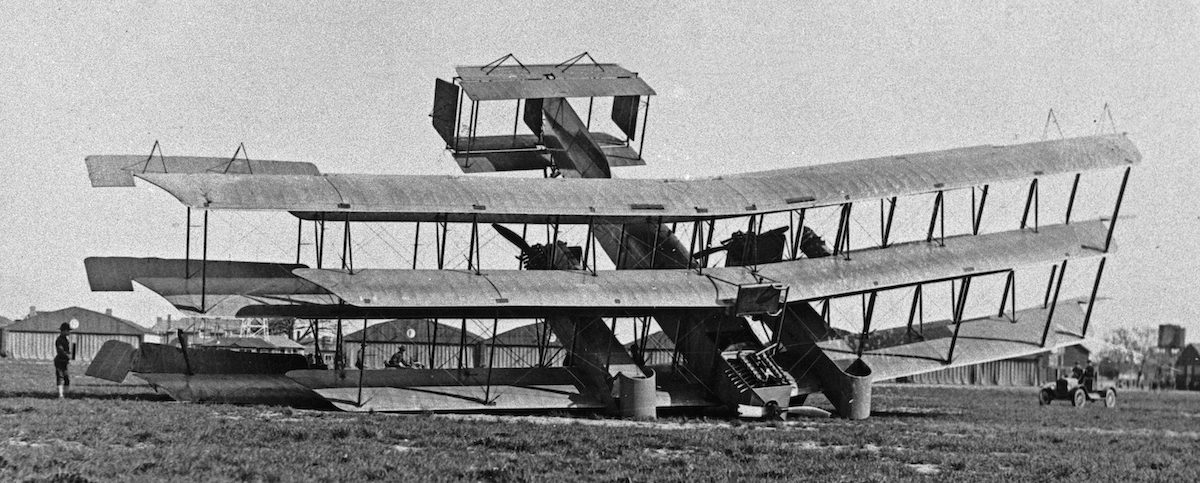
A splintered nose propeller resulted from this upending of the Johns Multiplane during its testing tenure at Langley, Virginia. (Photo Courtesy First Fighter Wing History Office) 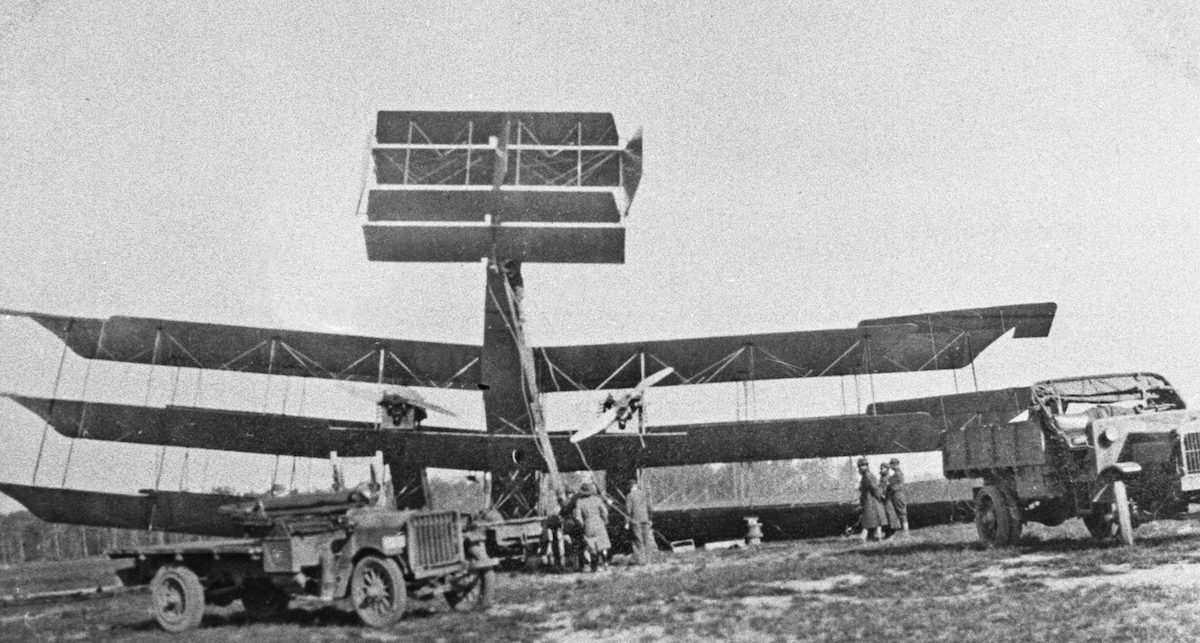
Massive boxkite tail surfaces of the Multiplane are emphasized in this tail-high post-mishap photo. (Photo Courtesy First Fighter Wing History Office collection) 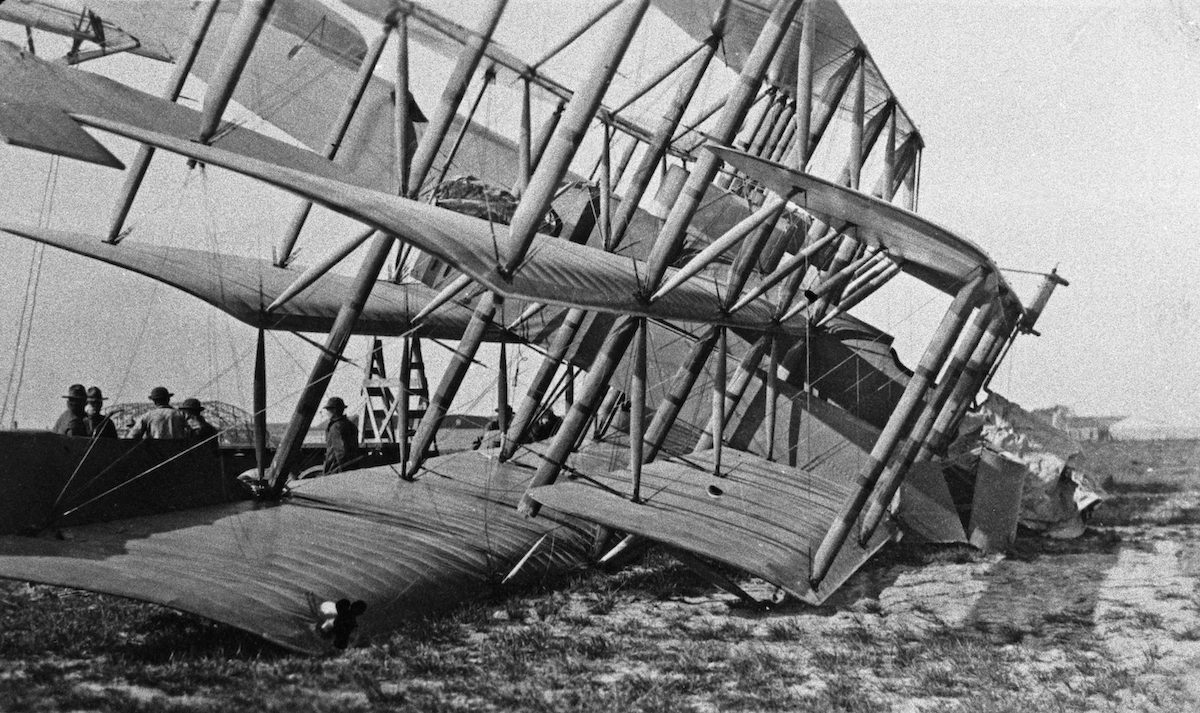
The Johns Multiplane used creative rigging and bracing to keep its seven wings aligned and intact after mishaps like this noseover. (Photo Courtesy First Fighter Wing History Office) 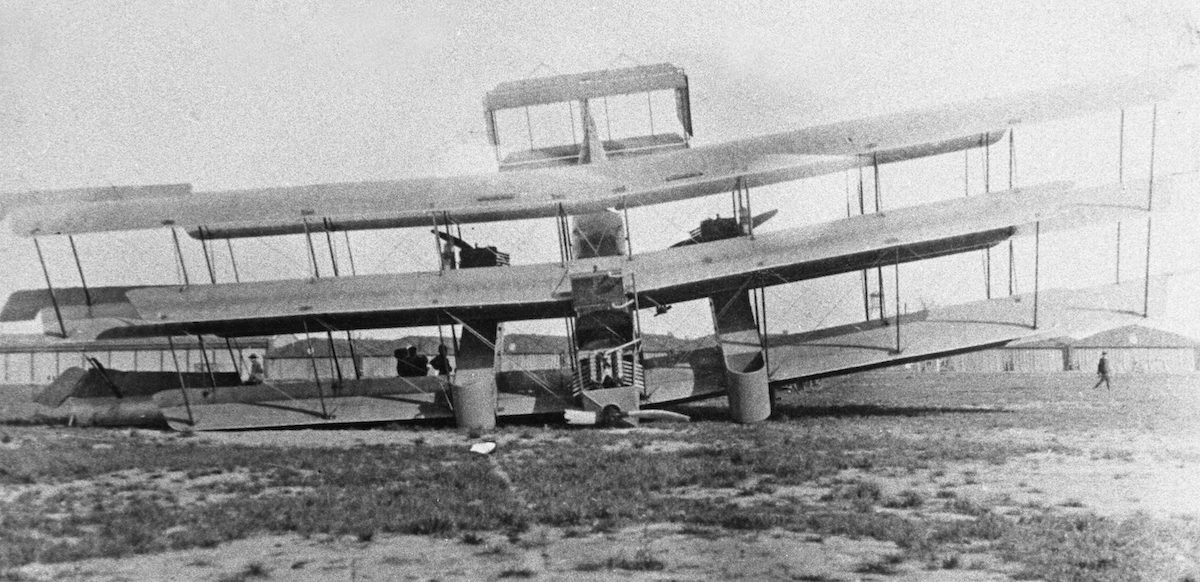
The Johns Multiplane never made it beyond a troubled test program in 1919 and into 1920, when the seven-winged aircraft was scrapped. (Photo Courtesy First Fighter Wing History Office collection)
Patent holder Charles A. Herrmann of the American Multiplane Company said the design was intended “to provide flying machine with a large supporting surface and at the same time occupying but a comparatively small area, thereby enabling the aviator to handle the machine with the same facility as a small structure…” Herrmann’s patent envisioned both military and commercial uses for the seven-winged aircraft.
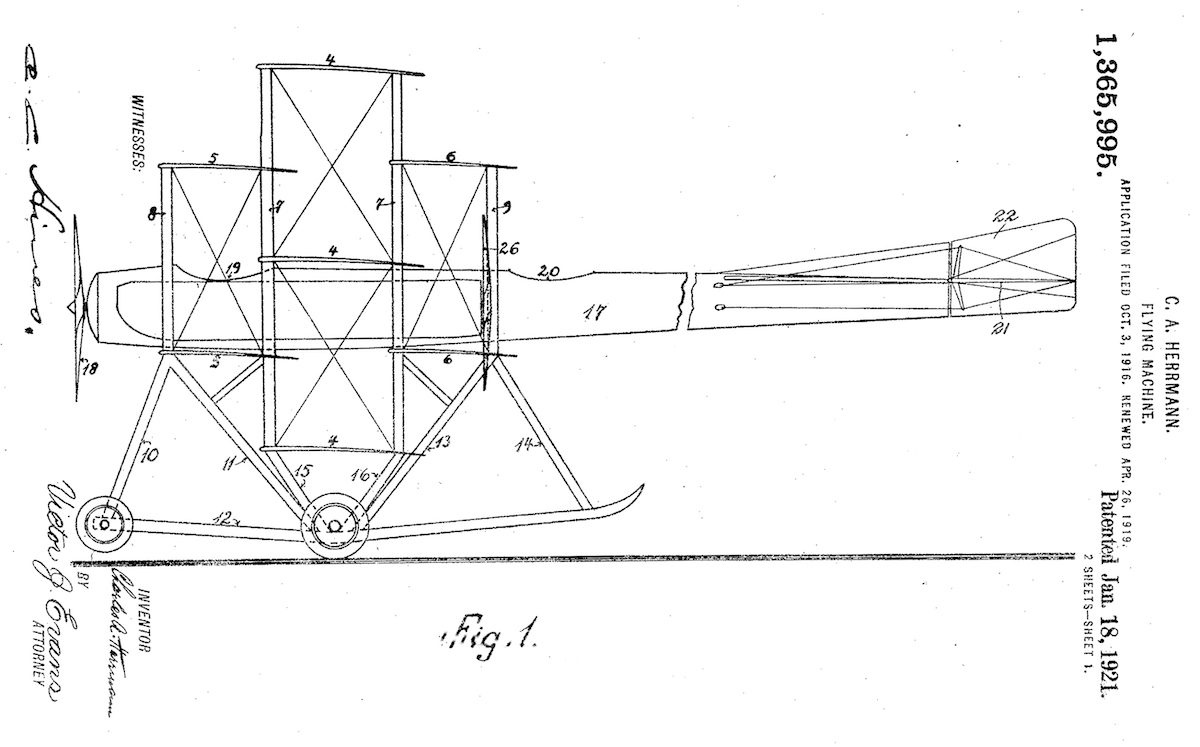
Aircraft nomenclature of the day embraced monoplane, biplane, triplane, and even quadruplane (having four wings) to quantify an aircraft’s lifting surfaces, but beyond that, anything with yet more wings was lumped into the multiplane category.
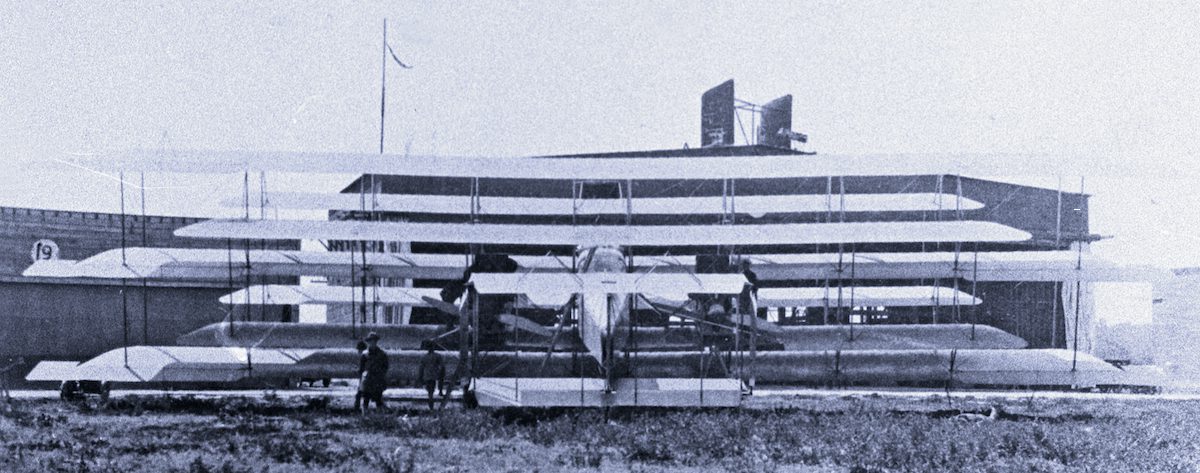
As aviation development sorted things out, multiplanes were not the answer. A few triplanes enjoyed limited success in World War I as fighters, but biplanes dominated until several things, ranging from engineering and construction technology to powerplant developments, made monoplanes the answer that thrives to this day.

One of the nose-over pictures has a different (four-plane) tail. Was that an (unsuccessful) effort to add stability?
Anyone building a replica of this thing would create a worldwide Dacron shortage all by themselves. Lets go fir it!