


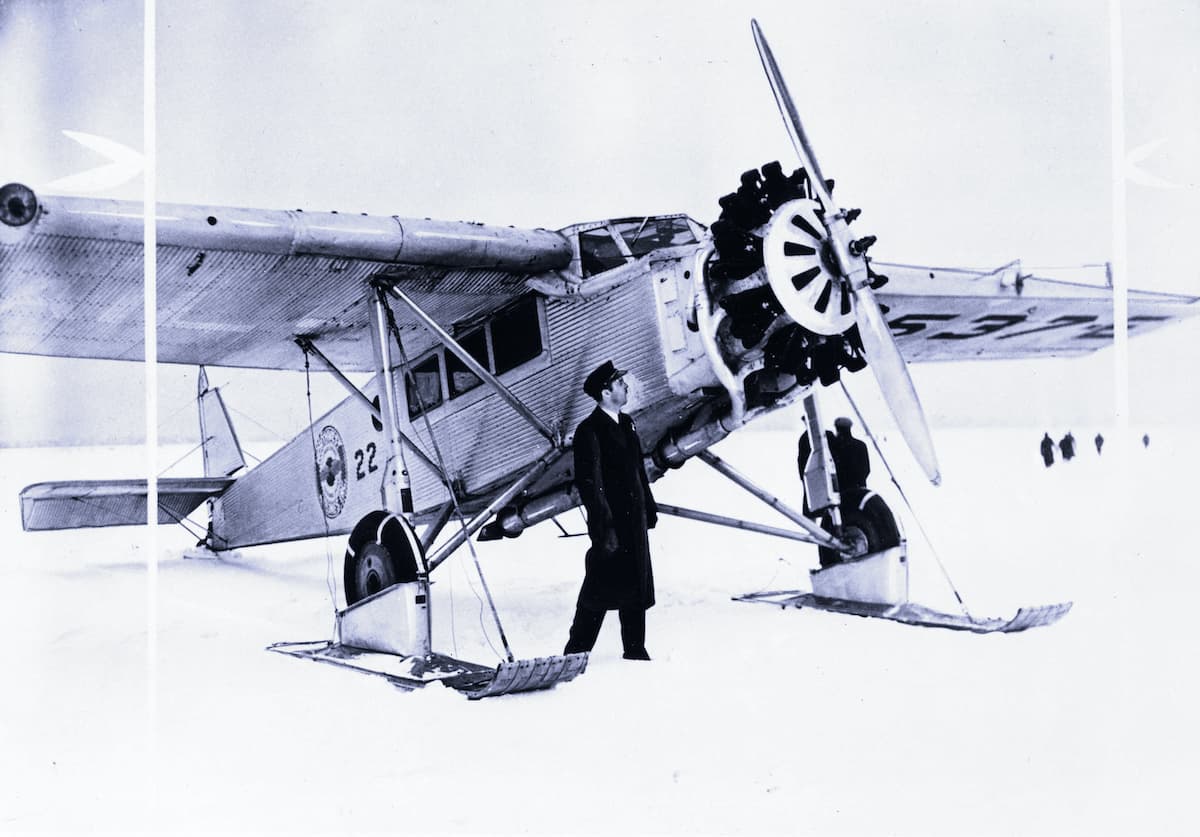
The Hamilton Metalplane models H-45 and H-47 were sturdy, straightforward single-engine metal monoplanes of the late 1920s. Observers often comment on their resemblance to scaled-down Ford Trimotors.
There’s a reason for that. The original Ford 3-AT Trimotor, as well as the Hamilton aircraft, were worked on by a young designer named James McDonnell — yes, that James McDonnell.
In the early decades of American aeronautical developments, it was not uncommon for a rising engineer with entrepreneurial aspirations to work for an established company before launching a new venture, often bearing the name of the entrepreneur.
The Hamilton Metalplane company of Milwaukee was named for Thomas F. Hamilton, who built several aircraft before concentrating his energies on propeller design. James McDonnell worked for Hamilton between 1926 to 1928 as chief engineer, about 10 years before he started the McDonnell Aircraft Corporation.
The McDonnell-influenced Hamilton H-43 was a corrugated-skinned, cantilever-wing, open cockpit single with a four-passenger cabin. It had a design that can only be called “swoopier” than the angular Models H-45 and H-47 that followed.
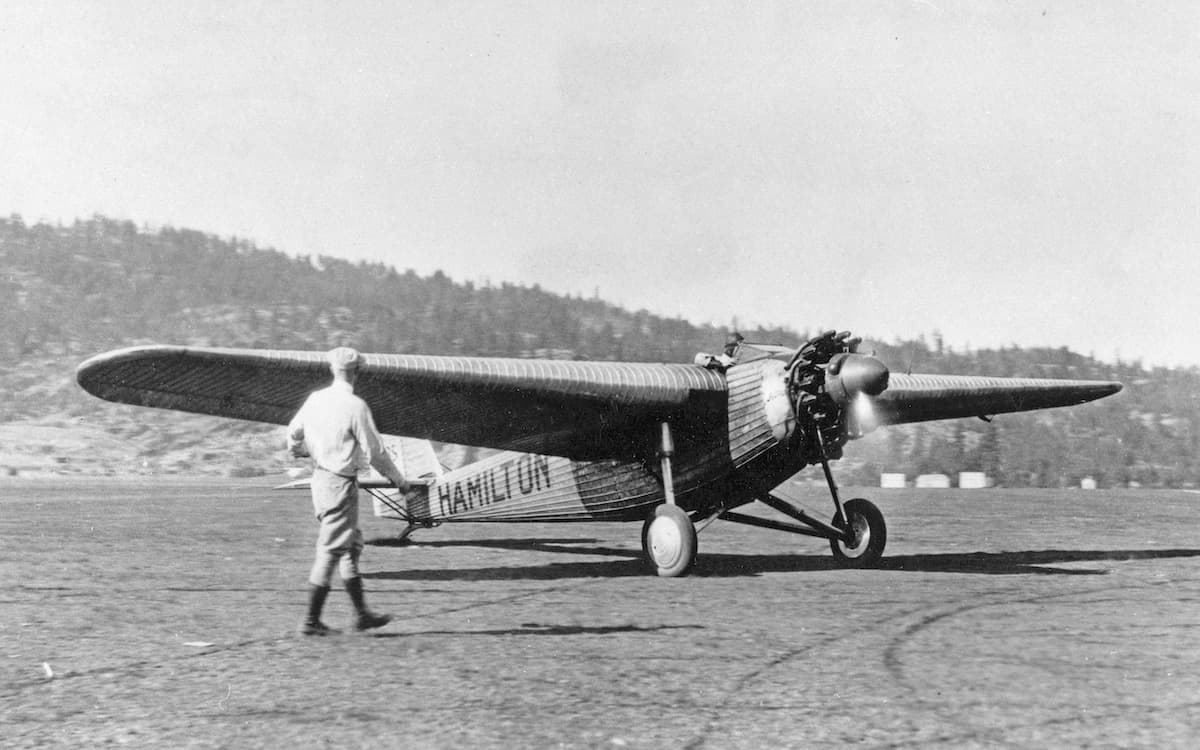
If the H-43 had issues, some of its features — wide-track landing gear, cantilever wing construction and, of course, corrugations in abundance — found a home in the more prosaic later Metalplanes.
The rounded H-43 Metalplane was characterized as sound and efficient, but somewhat complicated, according to civil aviation historian Joseph P. Juptner.
Juptner also credits John Ackerman with work on designing the angular, simpler H-45 and H-47, said to be the first all-metal aircraft certificated in the United States.
The H-45 and H-47 airframes used a fuselage framework of riveted Alclad (corrosion-resistant) aluminum covered with corrugated Alclad skin. The wing was made of riveted dural tube truss spars hosting stamped dural ribs. The wing structure was covered in corrugated dural skin, according to Juptner.
Dural, or duralumin, is an aluminum alloy dating to the early 20th Century that has traces of copper and other metals to create a material that age hardens after quenching.
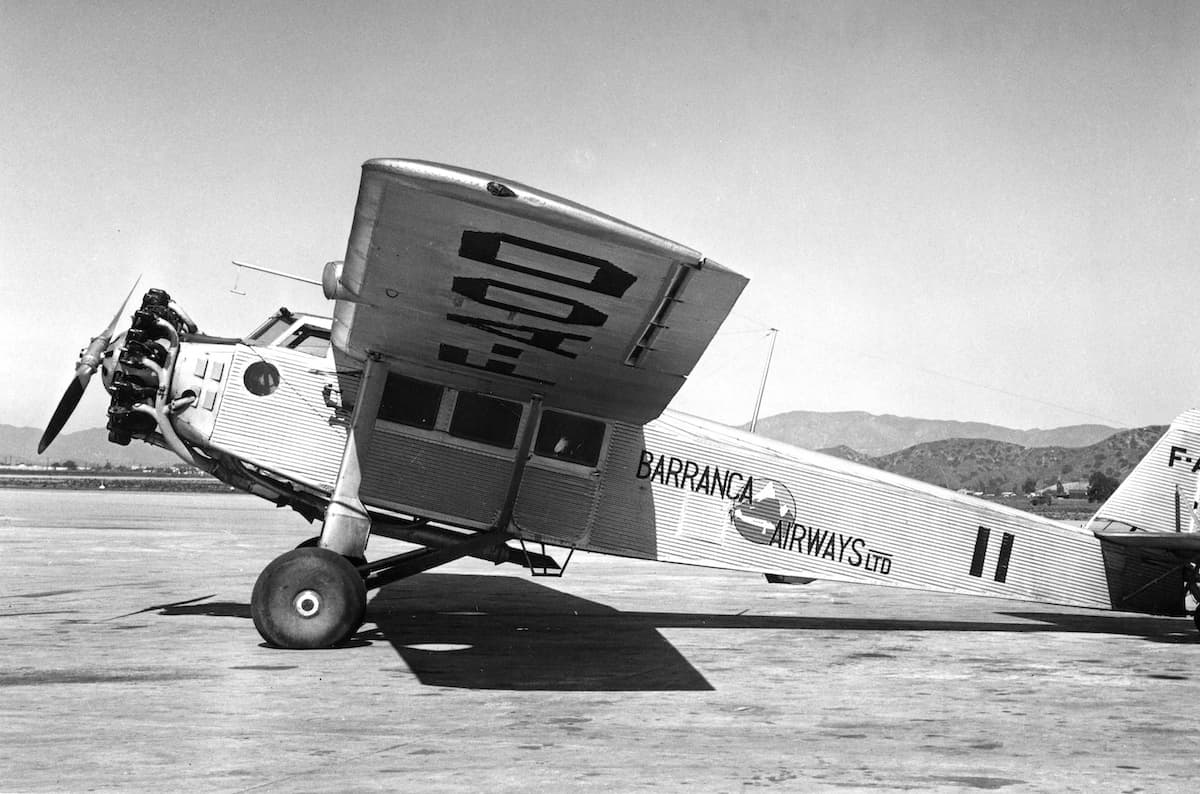
The main difference between the Hamilton H-45 and H-47 was the use of the Pratt and Whitney Wasp engine (450 horsepower) on the H-45 and the more powerful Hornet (525 horsepower) on the H-47.
In September 1928, Northwest Airlines added a pair of Hamilton H-45s to its roster, eventually tallying eight of the H-45 and H-47 Metalplanes.
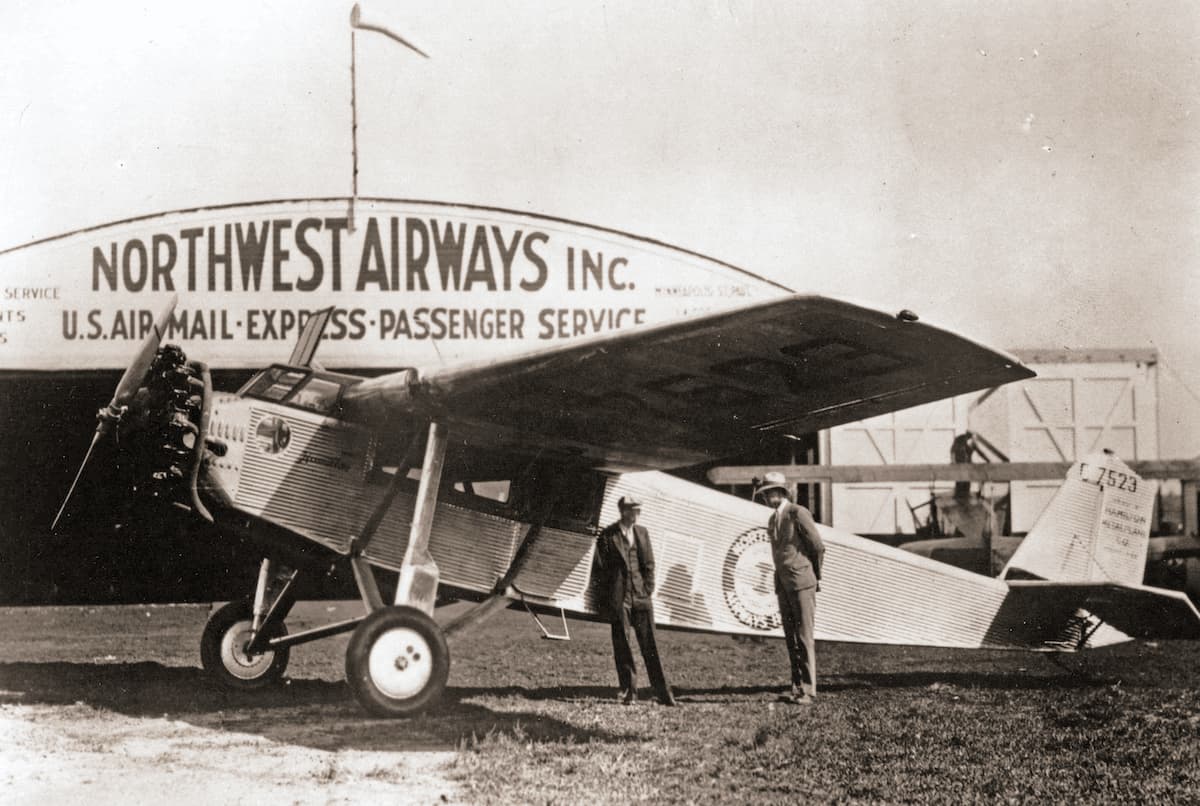
But the best use of promotion must go to Isthmian Airways, which used the H-45 to traverse the few miles from the Atlantic coast of the Isthmus of Panama to the Pacific side, for which the airline claimed the fastest transcontinental service in North America.
The Wasp-powered H-45’s wing originally spanned 51 feet, 1 inch. It was 34 feet, 10 inches long and stood 8 feet, 7 inches tall. Later production H-45s spanned 54 feet, 5 inches, were 34 feet, 8 inches long, and stood 9 feet, 3 inches tall. Payload was at least a half-ton, depending on the version of H-45, and cruise speed was said to be 115 miles an hour, although some accounts knock 10 miles off of that.
With the H-47 riding behind a Hornet engine and using the bigger 54-foot wing, a payload of 1,290 pounds was claimed, with a cruise speed of 121 mph. An inertia starter was provided for the H-47.
The H-47 spawned a rare variant using the 525 horsepower Wright Cyclone and wings spanning 60 feet, 5 inches.
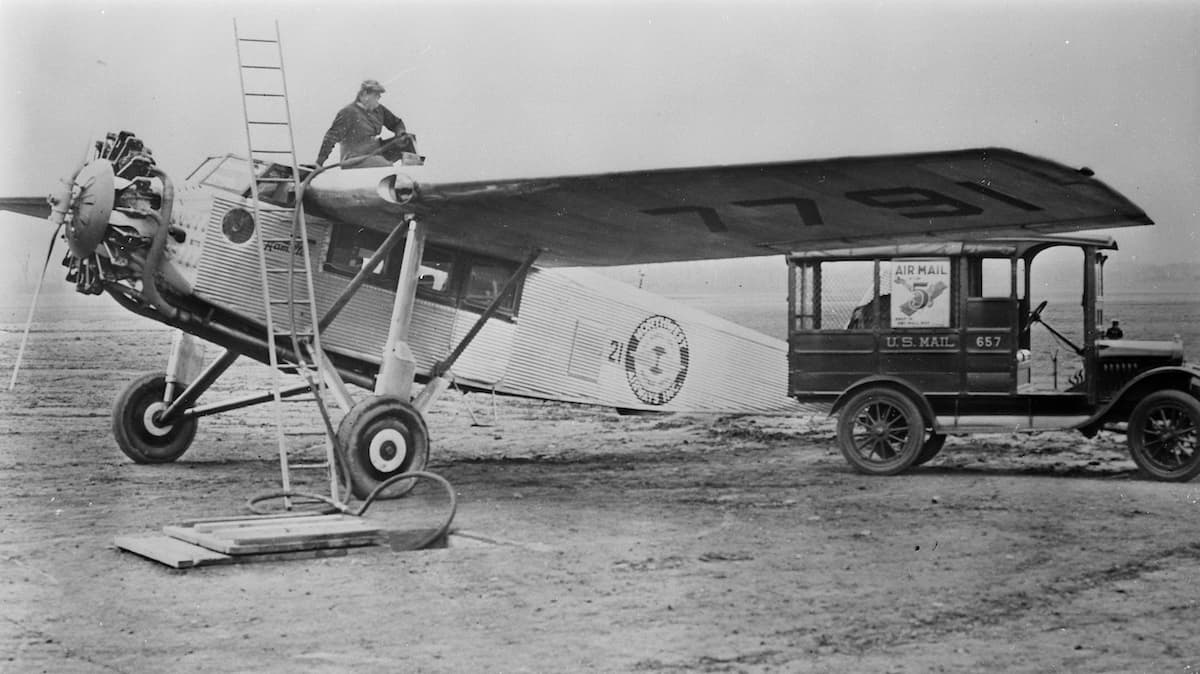
Prices for factory-new H-45s and H-47s were in the $23,000-$26,000 range. Production totaled about 25 H-45s and 21 H-47s, including the Cyclone example.
Various passenger counts, ranging from six to eight, are listed for the square-sided Metalplanes that were operated commercially.
Floats were an option. For awhile, Hamilton promoted a Wasp-powered Metalplane as the Silver Streak; on floats, it became the Silver Sea-Dan.
The durable simplicity of the Hamilton Metalplane H-45 and H-47 made these aircraft naturals for operations in remote Alaskan and Canadian regions, where several served their final days.
As of this writing, one complete Hamilton Metalplane, in splendid airworthy condition, can be seen at the Historic Flight Foundation Museum on Felts Field in Spokane, Washington. It is an H-47 that served out its first life in Alaska, where it was retrieved for restoration.

The 2nd photo from the Gerald Balzer collection is not the H-43 but rather the H-18 known as the “Maiden Milwaukee” and was indeed designed by McDonnell. That photo was I believe at Felts Field in Spokane where the Maiden won first place for efficiency at the Spokane Air Races in 1927. The pilot of the Hamilton was John Miller who was the pilot of the long-distance race. It was an aircraft ahead of its time and as this article points out, however, there were many difficulties including the wing spare through the fuselage, and was very cramped. A side note on this design is the windows, they were placed around the contour underneath the wing at the intersection with the fuselage. A major complaint was passengers could not see out while seated.
There was no H-43 model but the next aircraft produced was the H-21 with the Mfg. Serial #43 , and was given the name “Silver Streak.” The H-22 was the model after with Serial #44 assigned to it and given the name “Sea-Dan.” These models had the familiar square “boxy” shape and as the article points out this was due to Professor Akerman’s influence of the design when McDonnell was replaced. Both had metal pontoons produced by the Hamilton Aero Manufacturing Company in Milwaukee, which was also famous for its other products – propellers.
Have always admired the Hamilton with its one engine; thought of it as a 3-2 “trimotor.”
Loved the ski conversion with the wheels securely attached to the skis. That was an innovation long-needed.
Considering all the variants, this plane was usable by so many from airlines to a single operator, and performed well wearing all its aeronautical hats.
Long live the remaining example. Dust that plane carefully. It has a place in history and my heart.
Ann Holtgren Pellegreno
Reply
Have always admired the Hamilton with its one engine; thought of it as a 3-2 “trimotor.”
Loved the ski conversion with the wheels securely attached to the skis. That was an innovation long-needed.
Considering all the variants, this plane was usable by so many from airlines to a single operator, and performed well wearing all its aeronautical hats.
Long live the remaining example. Dust that plane carefully. It has a place in history and my heart.
Ann Holtgren Pellegreno