


I recently wrote a feature story about a 1936 Stinson Reliant that once belonged to the Pepsi Cola company. That classic made its post-restoration debut at EAA AirVenture Oshkosh 2024, resplendent in vintage Pepsi logos and lingo.
There’s another Pepsi dalliance in aviation that stands as a curiosity — the time six decades later in 1996 when the cola maker paid to have a Concorde supersonic transport painted in Pepsi colors for a European marketing push.

The company colors of red, white, and blue were to be prominent on the sleek SST. It was one more round in the vigorous competition between Pepsi and rival Coca Cola, a competition so intense it garnered the name “cola wars” as each company wooed customers.
While we are resisting some of the puns this scenario engenders, we can’t walk away from the observation that early supersonic jets relied on a slim-waisted fuselage area-rule design that looked like — and was called — a Coke bottle fuselage thanks to Coke’s classic bottle shape. When Pepsi wanted to use a Concorde SST for its promotion, supersonic area rule design tenets favored an aft location for the wing and an extended tail that mitigated Coke-bottling, so the Pepsi Concorde did not have the shape of its rival’s glass vessel to contend with.
Aerospatiale Concorde engineers weighed in on the Pepsi Cola color scheme to be applied to an operational SST. The supersonic airliners were predominantly white, to reflect heat from air friction at high speeds, especially in the Mach 2 range. If Coca Cola emphasized red in its colors, Pepsi Cola brought blue to the fore in the 1996 campaign. The engineers convinced Pepsi to leave the wings white to avoid overheating fuel contained therein. But Pepsi prevailed in getting a blue-painted fuselage.
The concession for introducing this dark color on a Concorde was the need to keep this SST’s time at Mach 2 or faster limited to not more than 20 minutes. Under Mach 1.7 speeds, flight time in the Pepsi passenger plane was unrestricted. These flight parameters were better suited to Concordes assigned to shorter routes in Europe and the Middle East as opposed to long transatlantic flights. This may have influenced the choice of the Air France Concorde bearing civil registration F-BTSD.

The color conversion of Concorde F-BTSD began in late March 1996 at Air France’s maintenance facility in Paris. The website ConcordeSST.com says 200 liters of paint — nearly 53 gallons — were used to give the Concorde Pepsi colors, with the job consuming about 2,000 work hours.
Wrapped in brown paper in an effort to keep the Pepsi plan a secret as long as possible, F-BTSD rolled from a hangar, sans paper, and flew to England the night of March 31, 1996, where it immediately entered a hangar at London Gatwick airport.
The Pepsi blue SST went public April 2, 1996, at an event that featured actors and models, including Cindy Crawford, star of a clever and much talked-about Diet Pepsi ad a few years before. The following day, the Pepsi plane flew to Dublin, beginning a promotional tour that took it to Stockholm, Paris, Beirut, Dubai, Jeddah, Cairo, Milan, Madrid, and back to Paris by April 9.
The blue SST, with huge white PEPSI lettering on each side of the forward fuselage, was part of a major Pepsi Cola rebranding effort said to cost a total of $500 million. It was a stunning and unique way to position the cola company. In recent years, Coca Cola has been the leader in soft drink sales over Pepsi, but the Pepsi company has bought other food lines that augment its bottom line as both companies grapple with a decline in carbonated drink popularity from previous generations.
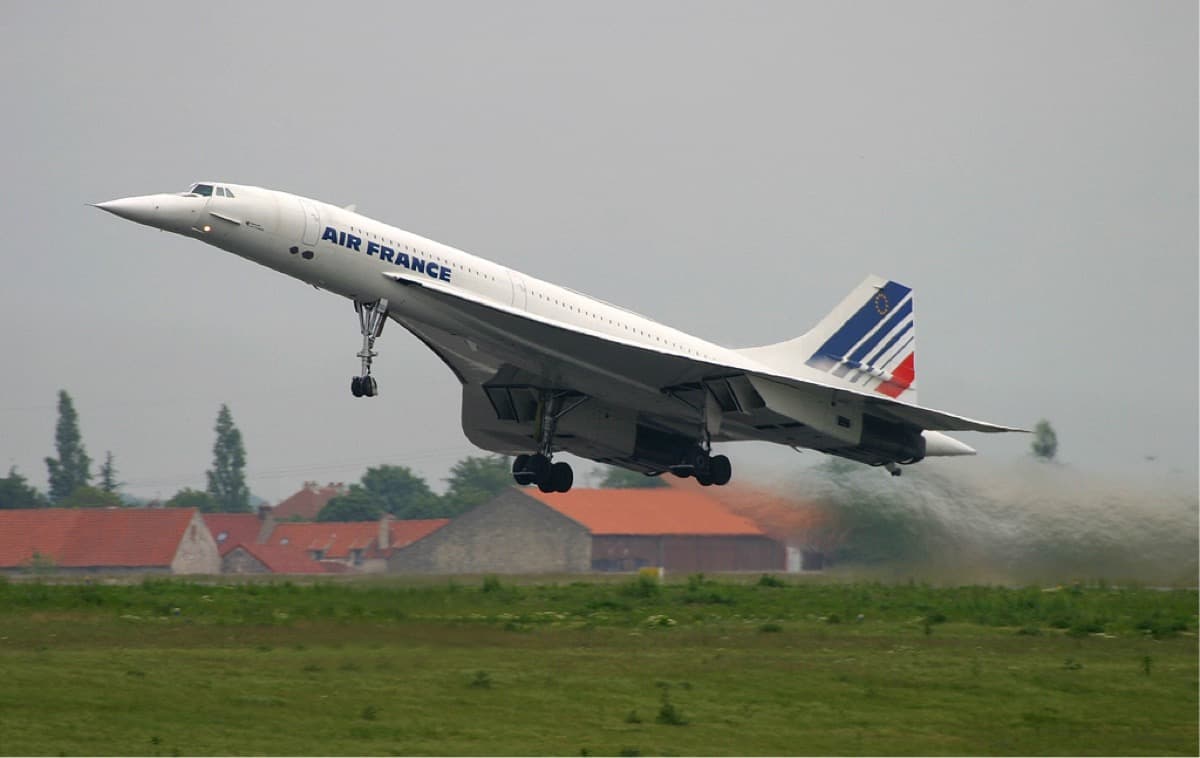
And that short-lived blue Pepsi Concorde, F-BTSD, returned to normal Air France colors and served until 2003. It holds speed records for round-the-world flights in both directions, at over 32 hours westbound and more than 31 hours eastbound.
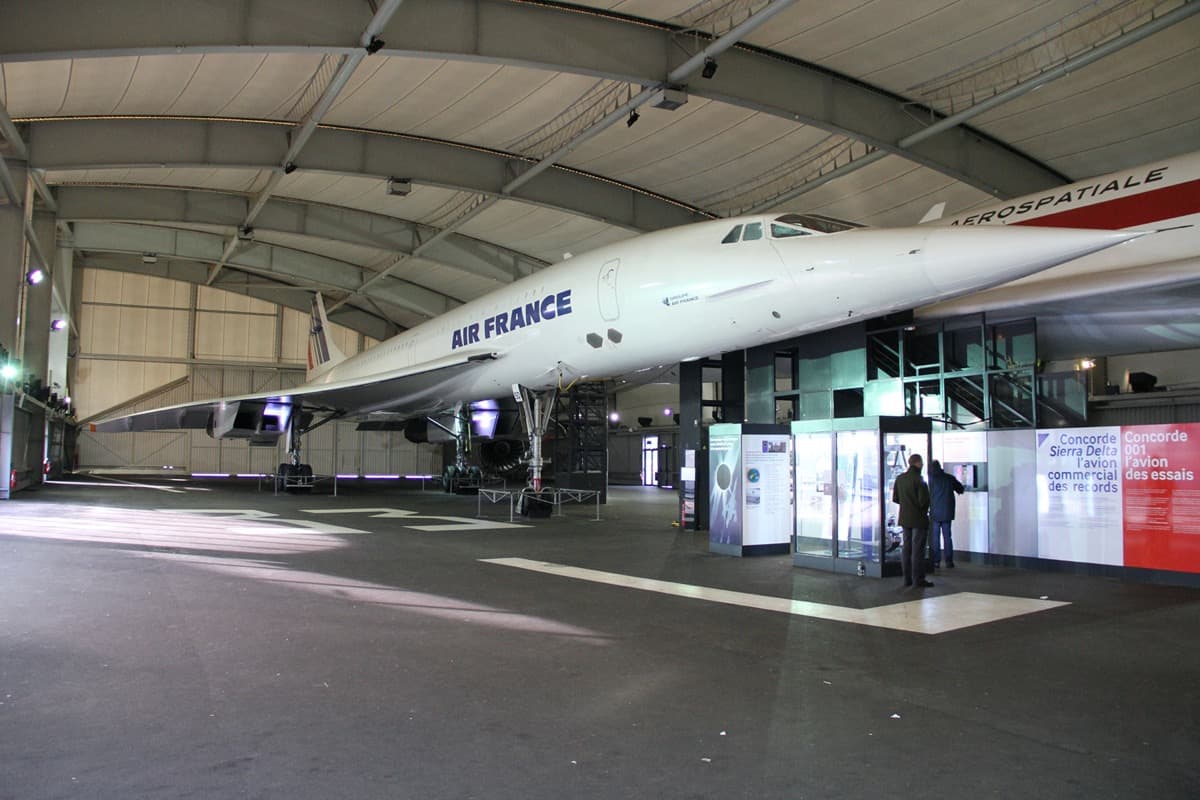
As of this writing it resides in the French Air and Space Museum at Le Bourget, France, where a crew keeps many of its systems in working order.

Just Concord. SST was never in its name
Indeed Concord as never, during her flight life, named SST, either in technical or even in common language.
Concorde, actually.