

The second wave of aeronautical entrepreneurs in the U.S. included engineers, designers, and dreamers who variously worked for each other, or bought and sold companies with each other, all while drinking from the firehose of aviation developments that shaped the 1920s and 1930s.
Smack in the middle of this growth spurt was John K. Northrop.
Jack Northrop established a reputation for envisioning smooth airframes that minimized drag, a concept he developed when working for Lockheed on the sleek all-wood Vega cantilever monoplane in concert with another pioneer, Gerald Vultee.
Northrop’s factory at El Segundo, California, was the scene of early successes and near successes, including the Northrop BT-1 dive bomber for the Navy.
The BT-1 was brought to life by designer Edward Heinemann, working for Jack Northrop.
That company was a partnership with Northrop’s friend Donald Douglas, who owned 51% of the Northrop company’s stock.
Labor issues proved problematical for Northrop government contracts for awhile in the late 1930s, and Douglas bought the remaining 49% of stock in April 1937. The upshot was the creation of Douglas Aircraft’s El Segundo Division.
John K. Northrop moved on to create his own company down the road at Hawthorne, California.
And in the middle of all of this was the Northrop BT-1 dive bomber, Ed Heinemann’s creation.
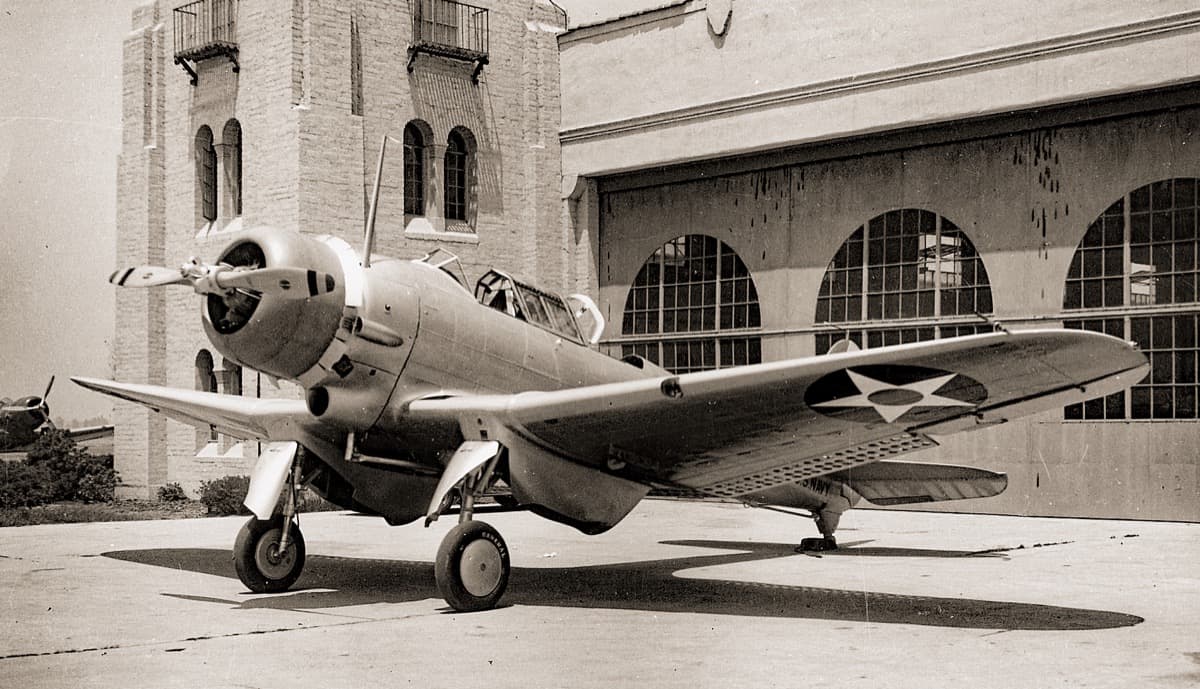
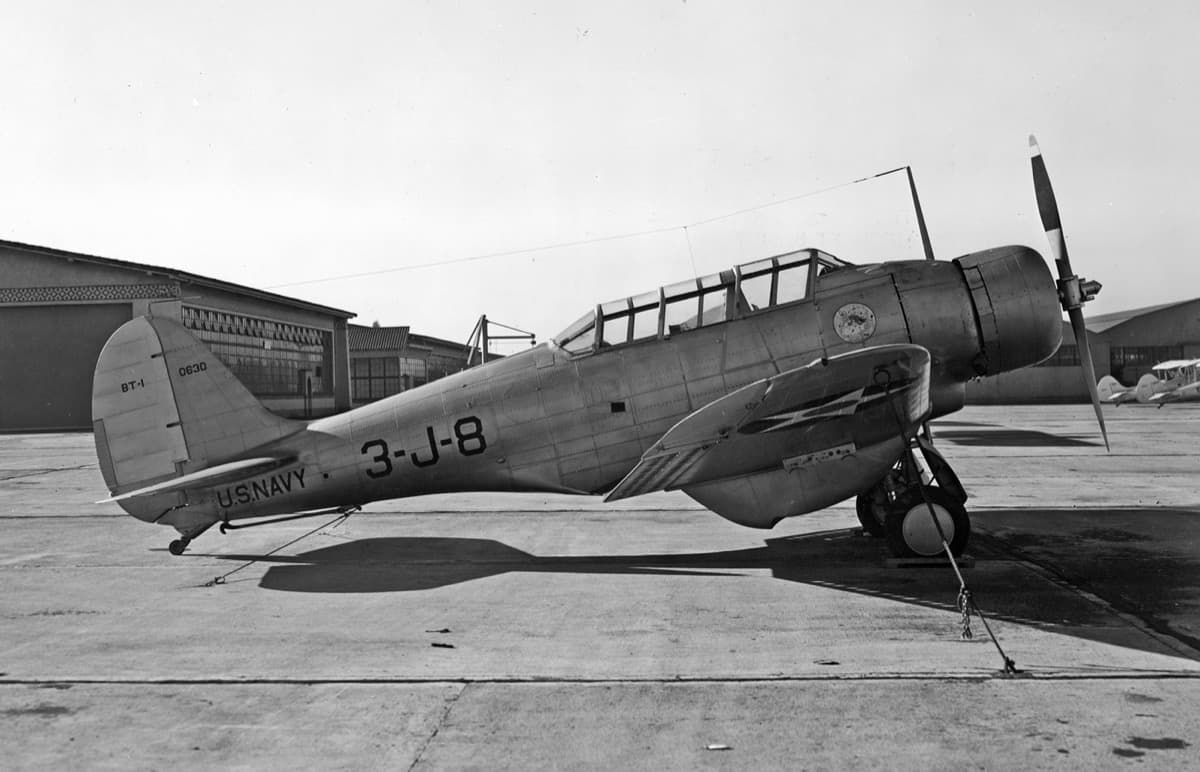
Only 55 BT-1s, including the prototype, were built. They entered service aboard the aircraft carriers USS Yorktown and USS Enterprise in 1938. They flew with an 825-horsepower R-1535 engine turning a two-blade propeller. Landing gear on the BT-1 retracted aft into bulky pods on the lower surface of the wing center section.
Several peculiar handling characteristics needed attention on the BT-1.
Heinemann tackled an early tail-buffeting problem that threatened to sideline the BT-1, and asked the National Advisory Committee for Aeronautics (NACA), for advice on taming the buffet when the BT-1’s trailing edge dive flaps were deployed into the slipstream above and below the wing, making dams for airflow.
The NACA’s suggested fix was to punch a series of circular holes in the dive flaps. By allowing some air to pass through the dive flaps, the large flow disruption was modified into smaller disturbances that did not threaten the security of the tail.
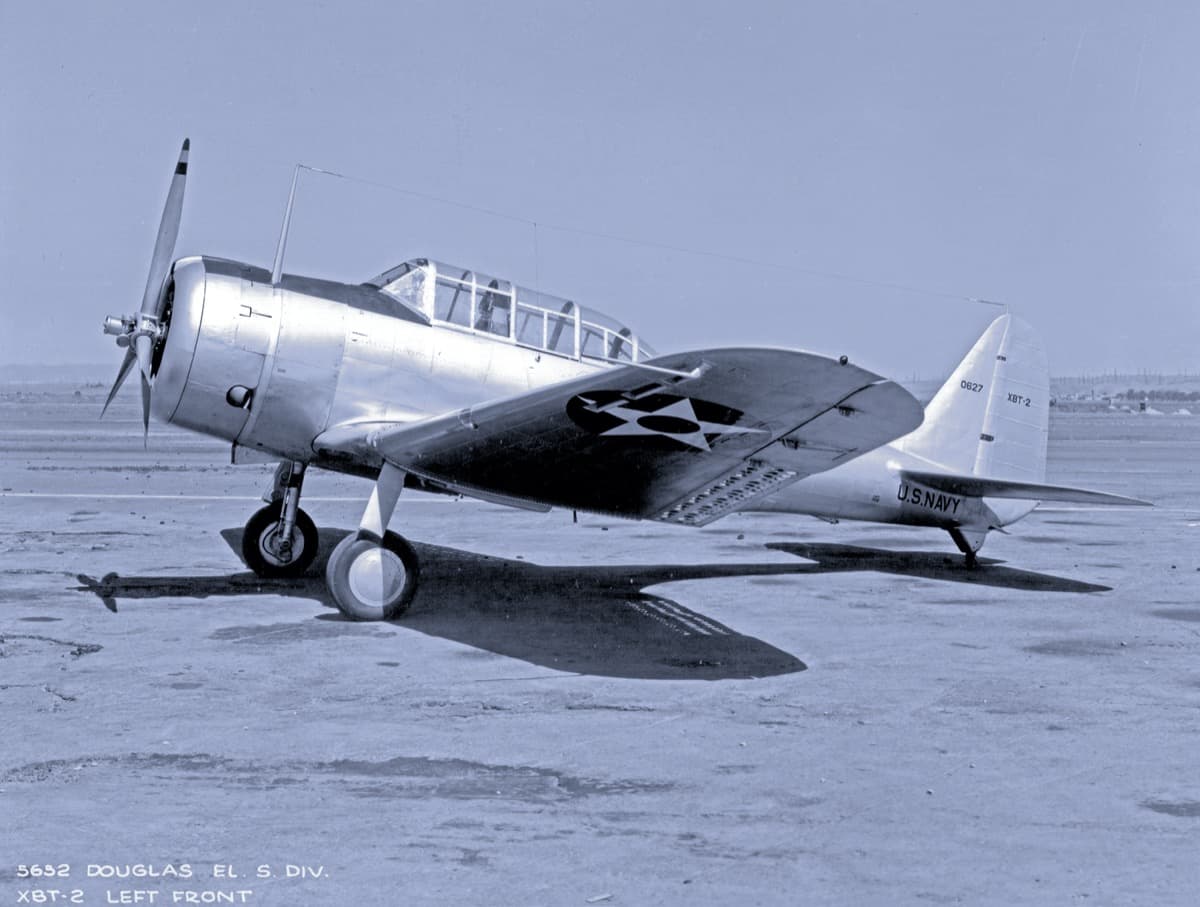
That was a step in the right direction, but the Navy also wanted to replace the BT-1’s partially-retracting main gear with drag-reducing fully retractable wheels. The airplane that resulted was designated XBT-2, still using the Navy Northrop letter identifier of the era, “T.”
More modifications ensued, including the mounting of a large Wright R-1820 Cyclone engine to the XBT-2, turning a three-blade propeller. The wing of the XBT-2 was given better pre-stall characteristics with the addition of letter-box slots in the leading edges ahead of the ailerons, to promote better airflow.
Other controllability issues were addressed with more assistance from the NACA, and the horizontal and vertical tail surfaces received changes that added a small but effective dorsal fin and redesigned horizontal stabilizers and elevators.
Ed Heinemann shepherded the changes to the old BT-1 design as applied to the XBT-2, and he stayed on when the Northrop operation at El Segundo became a part of Douglas Aircraft.
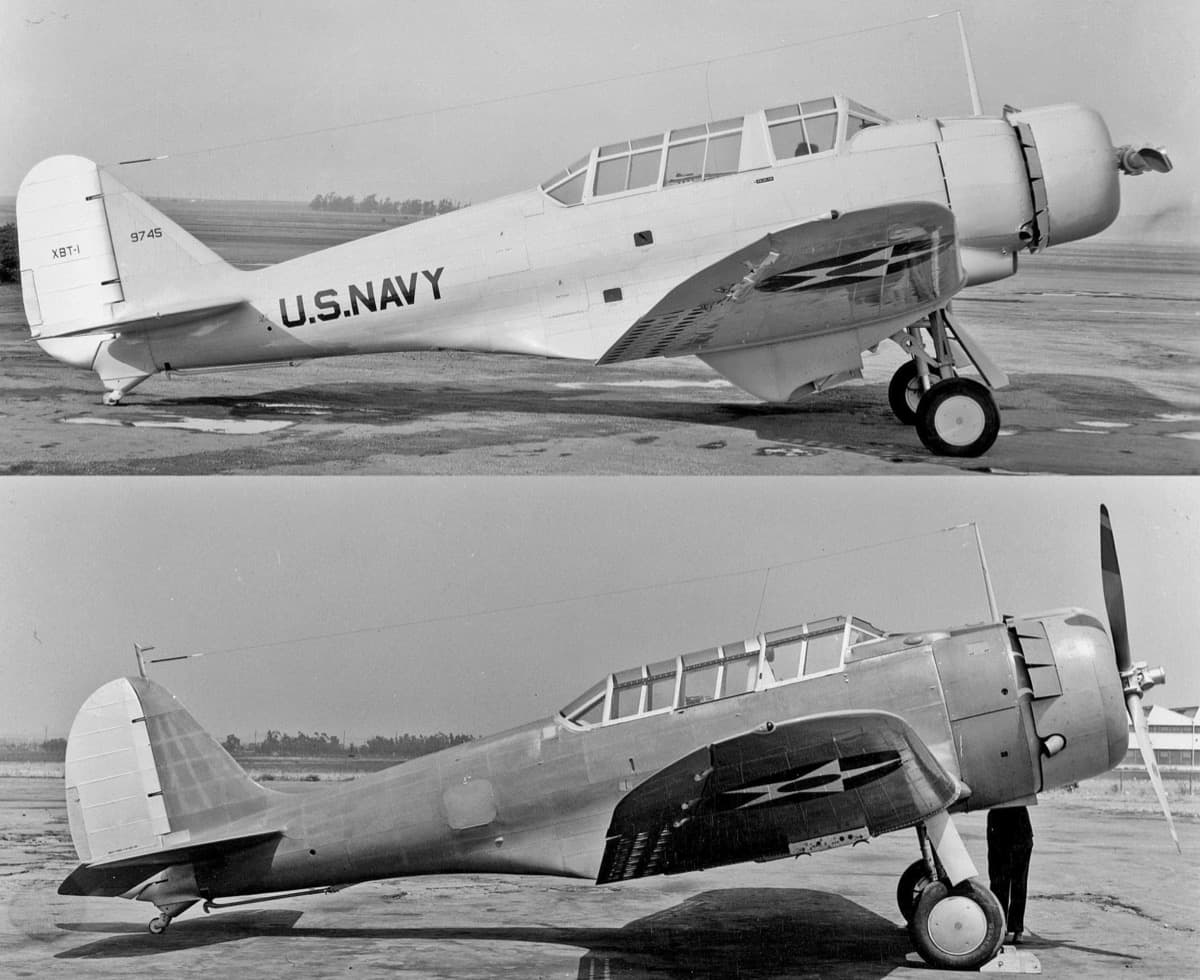
The BT-1 might have been an anecdotal footnote in aviation history, but the modified XBT-2 showed promise. Now part of the Douglas portfolio for the Navy, the XBT-2 was redesignated the Douglas SBD-1.
The SBD first flew in May 1940 to rave reviews from Navy pilots, and iterations were produced to the extent of more than 5,900 by 1944 when production ended to make way for newer designs.
Effective in the hands of plucky and determined fliers, Dauntlesses helped turn the tide of war in the Pacific in favor of the Allies, with events like the salient victory over four Japanese aircraft carriers at Midway in June 1942.
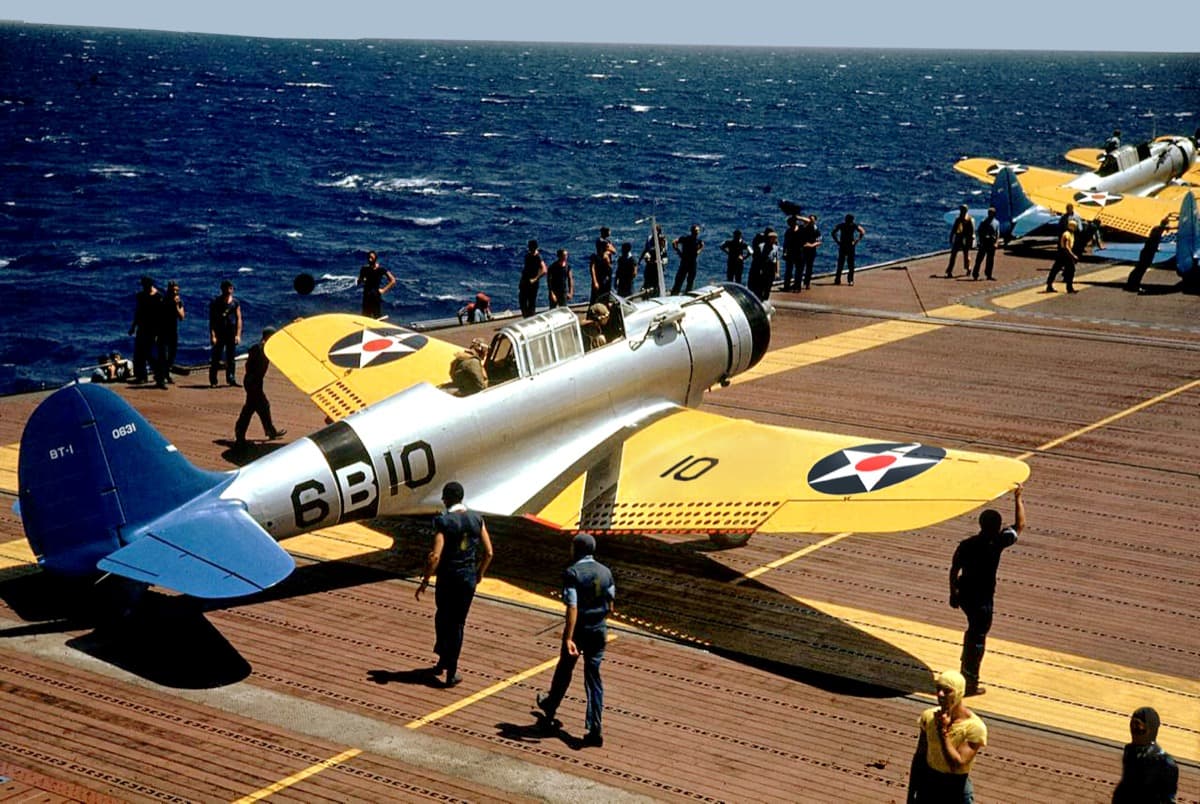
SBD Dauntlesses have been memorialized in a number of museums and flying collections, even as the pre-war Northrop BT-1 ancestors go unnoticed, presumably victims of scrap-metal drives before the SBD’s war was finished.
How closely related is the Northrop BT-1 dive bomber of 1935 to the combat-capable Douglas SBD Dauntless dive bomber of World War II?
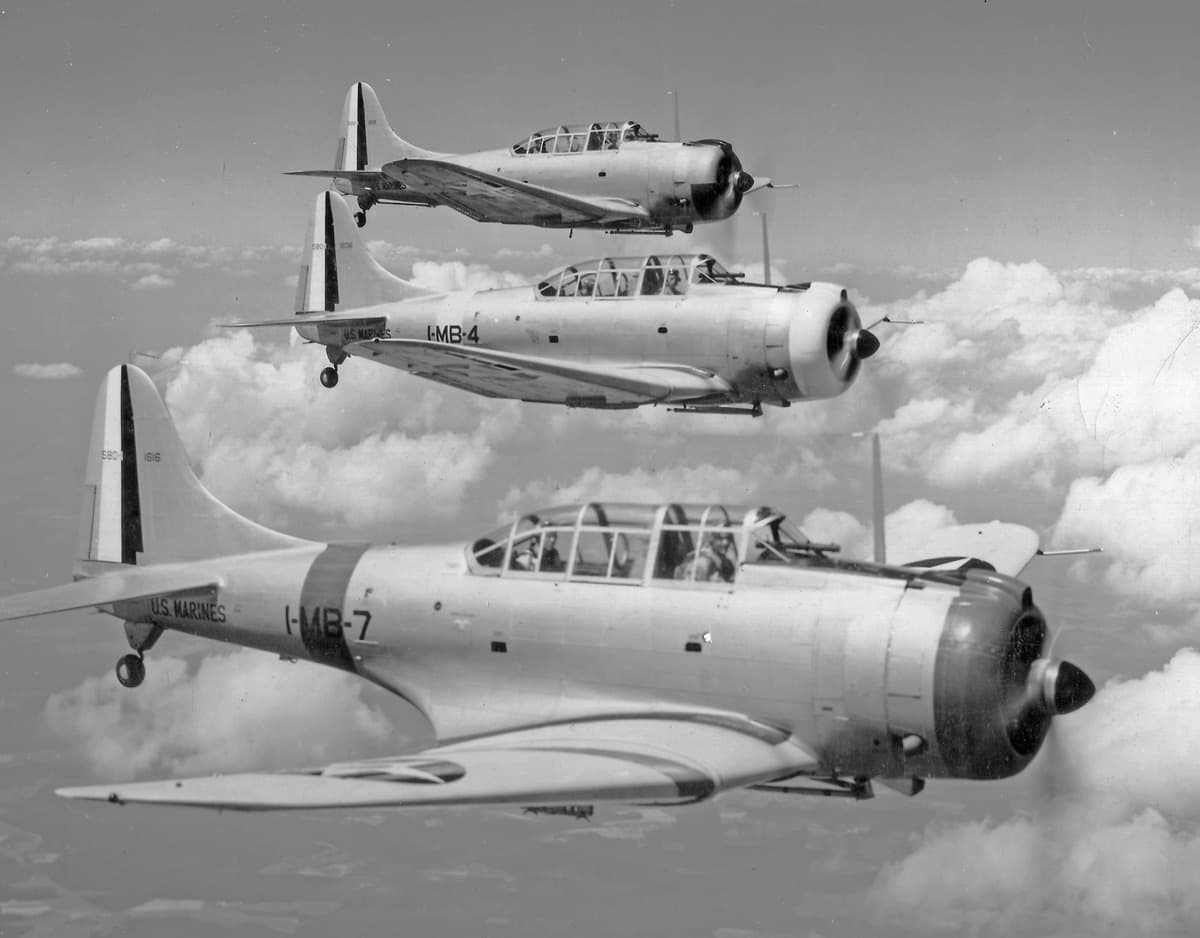
Major changes incorporated on the SBD Dauntless include bigger engines, a three-blade propeller, redesigned tail surfaces, redesigned canopy frames, and fully retractable main gear.
But, curiously, planform views of the wings of both bombers reveal the outer wing panels to be visually virtually identical, save for the letter-box slots in the SBD wings. And every aircraft from the BT-1 through the final Douglas SBD-6 Dauntless of 1944 posts a wingspan of 41 feet, six inches.
And that may be a clue to the stewardship of Ed Heinemann, who described his design philosophy as conservative by nature.

I believe the Douglas A-4 was Ed Heinemann’s creation, too.