

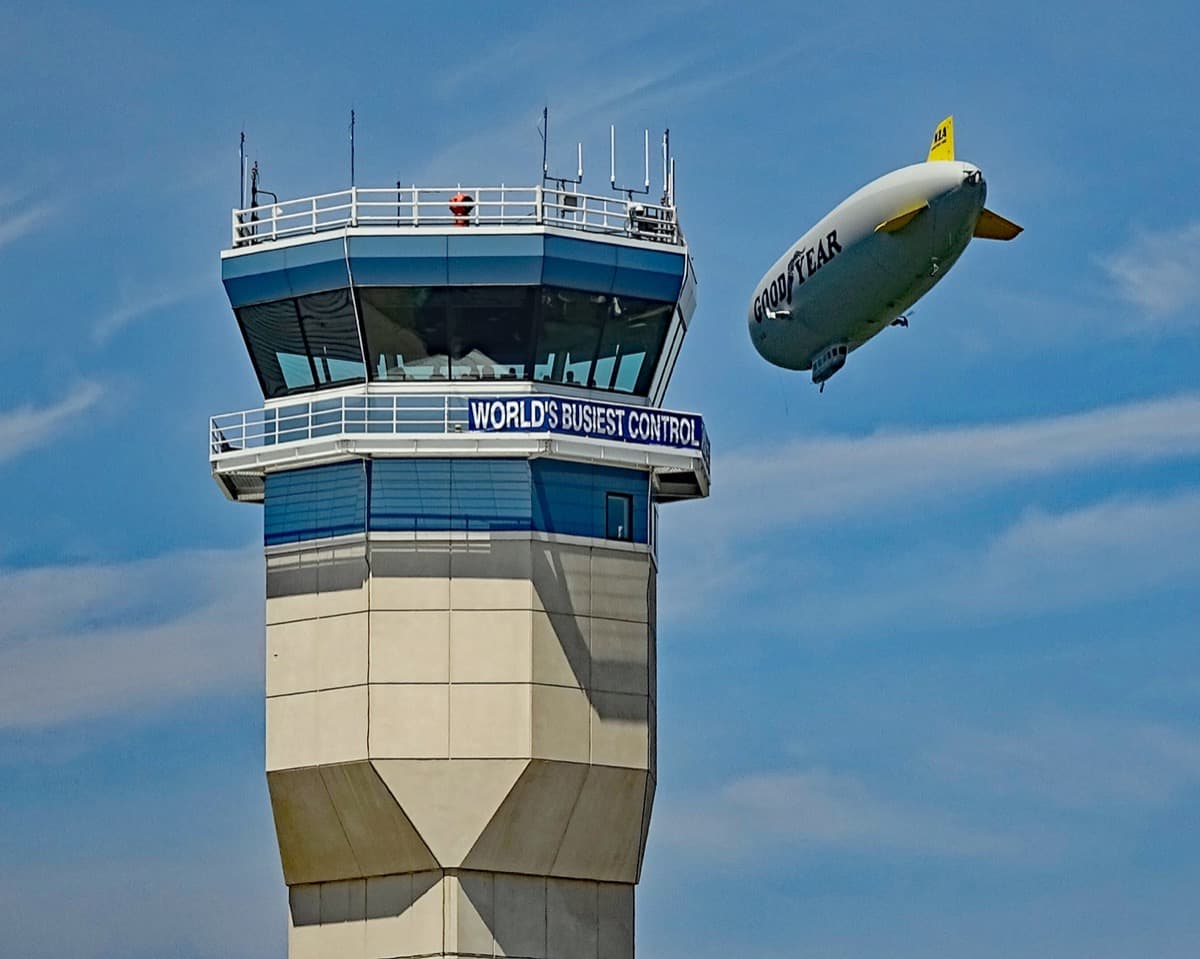
EAA AirVenture Oshkosh 2025 is a blur.
Bouncing from events, press conferences, meetings, forums, and more, I’m often asked what was the coolest thing I saw or experienced at the show. That’s when I have to refer to my notes. I jot them down quickly so I can reference them later and then I’m on to the next thing.
Here’s just a few of the things I did, saw, and experienced at OSH25.
Saturday, July 19 (Travel Day)
On my flight from Seattle (KSEA) to Milwaukee (KMKE) I saw a few familiar faces on the flight. That’s pretty common actually.
After dropping my bags at my Airbnb and eating dinner, I took a lap around the AirVenture grounds. A quick stop at the SOS Bros beer tent seemed the right thing to do. And sure enough, I ran in to a friend. Brian Greene and I both attended one of the first — if not the first — EAA Air Academy and have met up more than a few times at OSH since. He’s a pilot for FedEx and built his RV-7.
Walking around downtown Oshkosh, I bumped into Scott and Michael Severen. Scott owns US Sport Planes. He’s the U.S. importer for Jabiru aircraft and engines. He’s also the president of LAMA, the Light Aircraft Manufacturers Association. Son Michael is responsible for all things sales and marketing for US Sport Planes.
They showed me a photo of a new Jabiru project, but it is far too early to share the details.
Sunday, July 20
I gathered my media credentials about 10:30 a.m. and started exploring. And explore I did. Nearly 20,000 steps and 10 miles of walking. In flip-flops no less.
First stop was the press center. I ran into General Aviation News columnist Frederick A. Johnsen and photographer Gregory Melton. Both attended Oshkosh on our press credentials. I’m excited to see what they come up with.
Dick Knapinski is both a long-time friend and long-serving director of communications for the Experimental Aircraft Association (EAA). While walking into the press center to refill my water bottle we shared a flew words.
I introduced myself to AVweb’s Russ Niles and Aviation Consumer’s Larry Anglisano. I’d never met either face-to-face. It was nice to commiserate over the state of aviation media and the inexhaustible comment sections of our respective websites.
CubCrafters recently hired Jackie Burch to handle its advertising and marketing. Without a scheduled meeting, I walked into the company’s display as the crew was still setting up. It’s always nice to make a new friend.
The General Aviation Manufacturers Association recently appointed James Viola as its new president and CEO. We set up a 3 p.m. meetup. I was anxious to hear how the flight from Florida to Oshkosh went in his Robinson R-44. Sadly, the R-44 wasn’t able to make the trip, but James did fly his Grumman. While chatting with James, I finally got to meet Andre Castro, GAMA’s managing director of communications. If we need anything from GAMA, Andre is our guy.
When I met Ivy McIver, she was the Pacific Northwest sales rep for Cirrus Aircraft. We quickly bonded over the loss of our dads.
Today, she is executive director of the SR line. But she’s also a dear friend. We connect far too infrequently but it is joyful when we do.
While chatting it up, Ian Saeger from Flyer in the UK walked up to join the conversation. That’s what happens at OSH. While we knew of one another, I don’t believe we’ve ever met. He was surprised to see me NOT wearing a bright pink General Aviation News shirt.
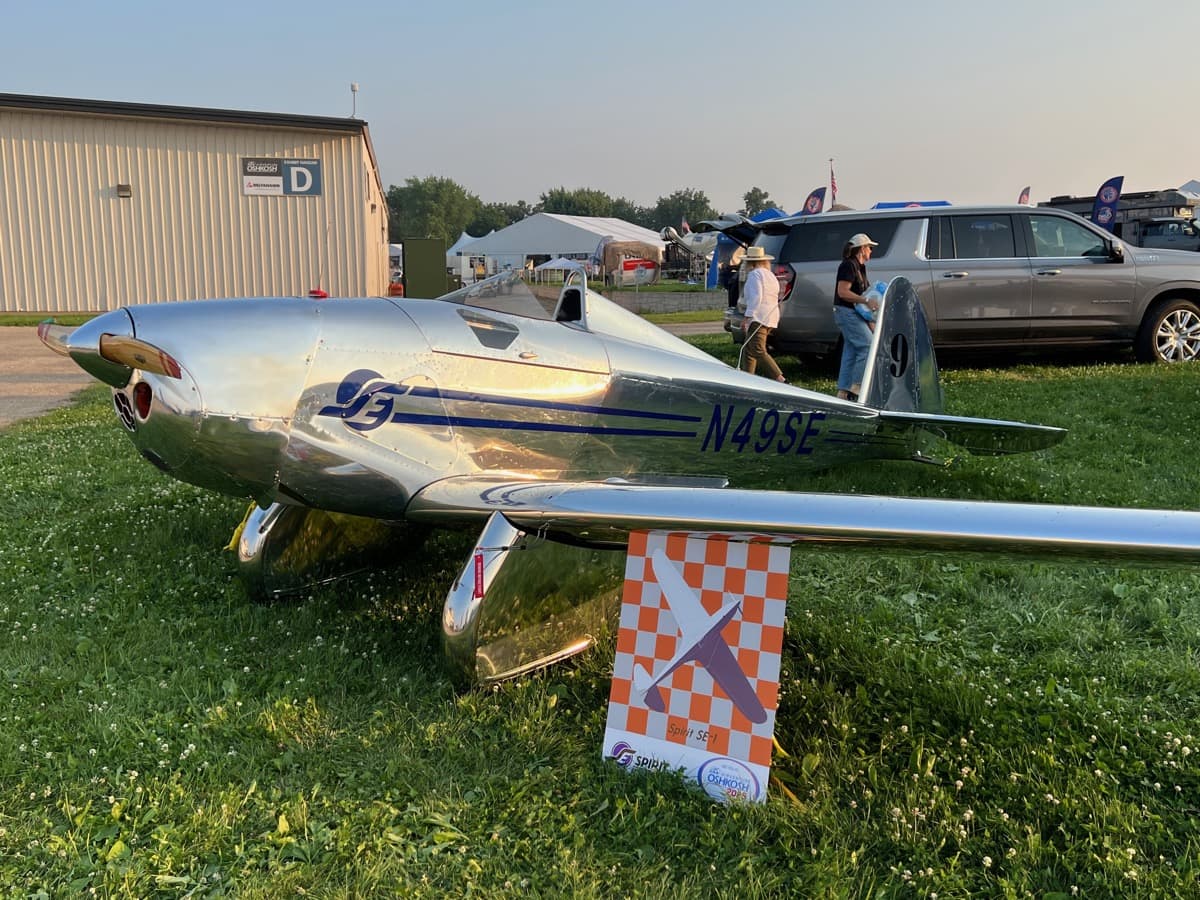
He mentioned that a fellow Flyer mate could not get enough of Spirit Engineering’s SE-1. It is a one-seat, ready-to-fly S-LSA with a starting price of just $69,500. I pointed Fred Johnsen toward the Spirit Engineering display. Expect to read a story on this marvelous aircraft in the near future.
Monday, July 21 (Opening Day)
The day started early with a press breakfast at the Cirrus Aircraft display. The company has 2,800 employees, has delivered 11,200 aircraft, and has amassed 18 million fleet flight hours. The Cirrus Aircraft Parachute System (CAPS) has been deployed 136 times, saving 274 people.
A week or so before OSH25, the 136th CAPS pull was made. The pilot, who was on a business trip, let Cirrus officials know that her seat was the only one occupied, but the CAPS pull saved two lives. She was 10 weeks pregnant at the time.
“That will likely be the youngest save we’ll ever have,” said Todd Simmons, president of customer experience.
Oh yeah, they also announced the Safe Return Emergency Autoland system is now available on the SR Series G7+.
Back in March 2022, Nighthawk Flight Systems acquired the assets of Sandel Avionics. Since then, they been working on a new concept flight display. Out of stealth mode, Guardian is a modular system with on device graphics for high definition synthetic vision.
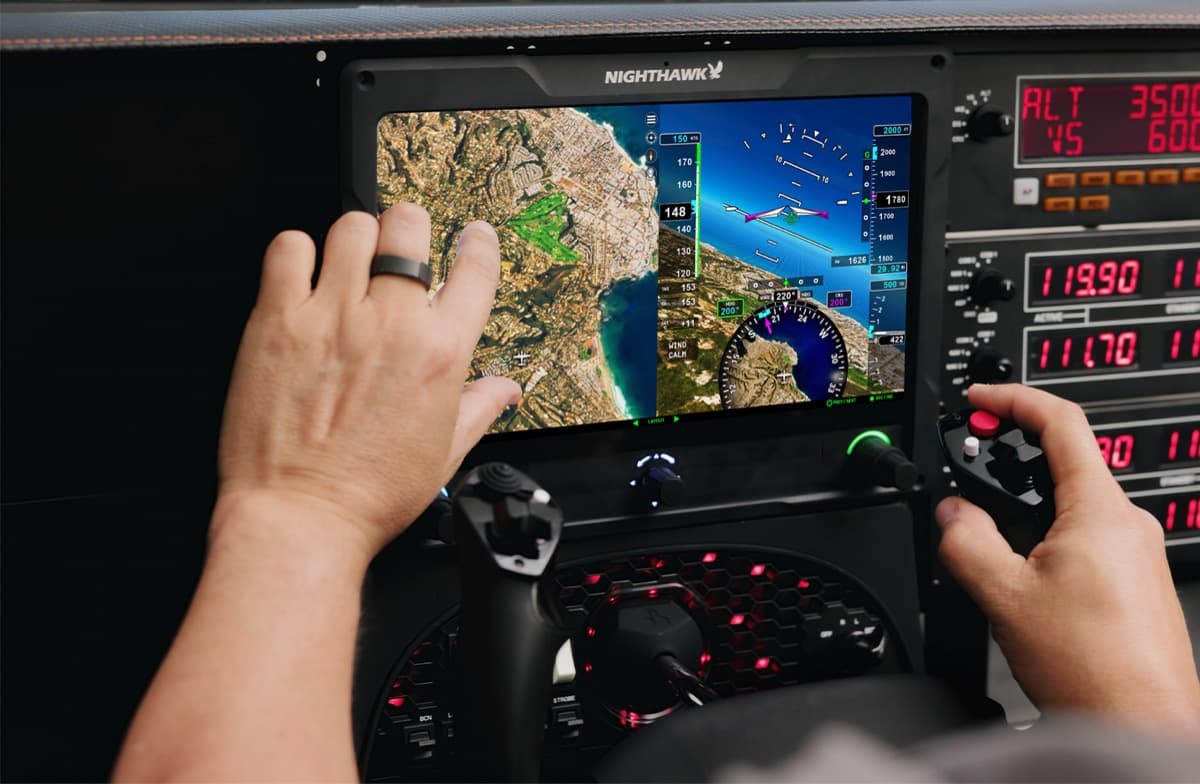
Powered by the NEST, which can be mounted anywhere on the aircraft, the system includes most of the expected features with more to come.
Interestingly, they encourage aircraft owners to not discard existing equipment. The Guardian will be able to add that information to the NEST and serve the data on the Guardian display. Nighthawk is shooting for Part 23 Class I/II certification in the fourth quarter of 2025.
Lightspeed Aviation introduced its Zulu 4 headset. It includes dual Bluetooth and FrameFit for greater comfort when wearing a hat and/or glasses. It also uses AI to reduce the cockpit background noise at the mic for clearer communication. Price: $1,099 and ready to ship.
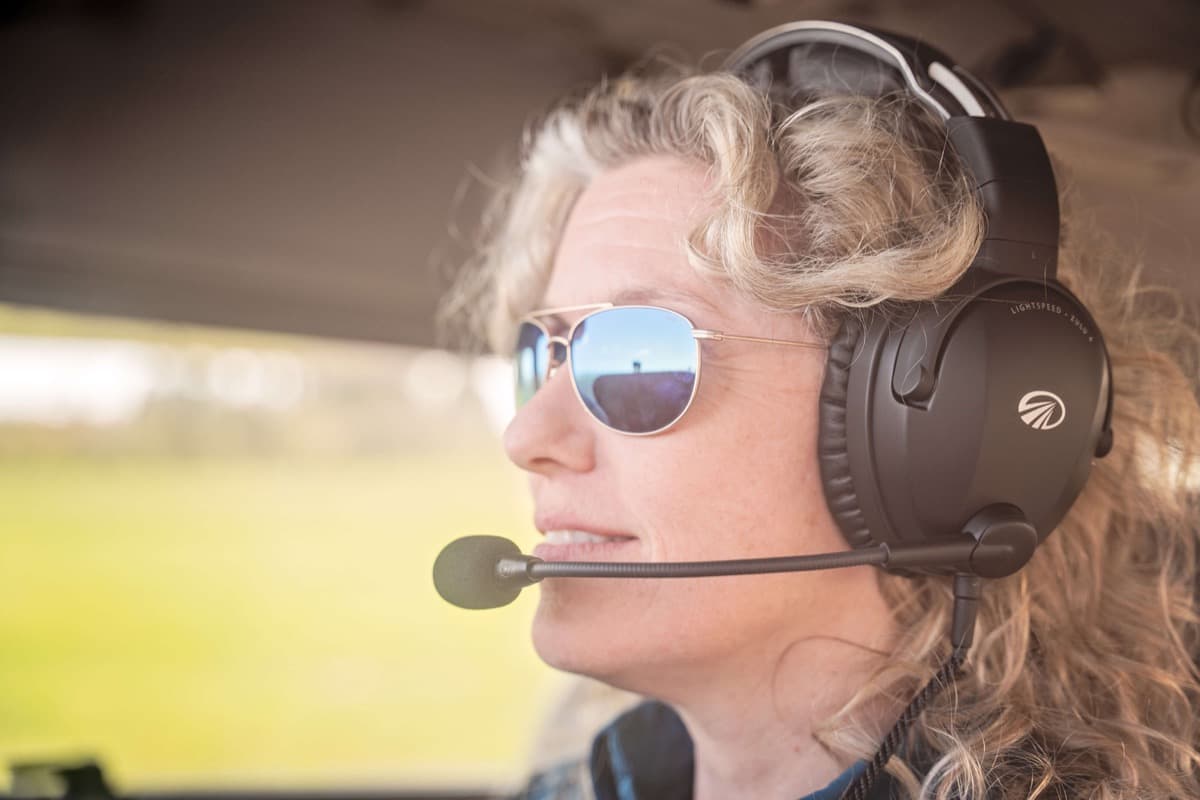
While passing by the company’s display I introduced myself to Lightspeed’s newly named CEO, Heider Lazzarini. Heider is fun to speak with. He comes from outside the industry, but has been at Lightspeed for two years.
He noted the Delta Zulu model added HearingEQity — basically a headset hearing aid — well before Apple added that feature to AirPods.
Founder Allan Schrader isn’t going too far. While shedding the CEO title, he’ll remain chairman of the board of directors. In fact, he was chatting it up with customers while Heider and I spoke.
TL Sport Aircraft introduced the Sirius BackCountry. It is a designed to be a “luxury STOL aircraft.”
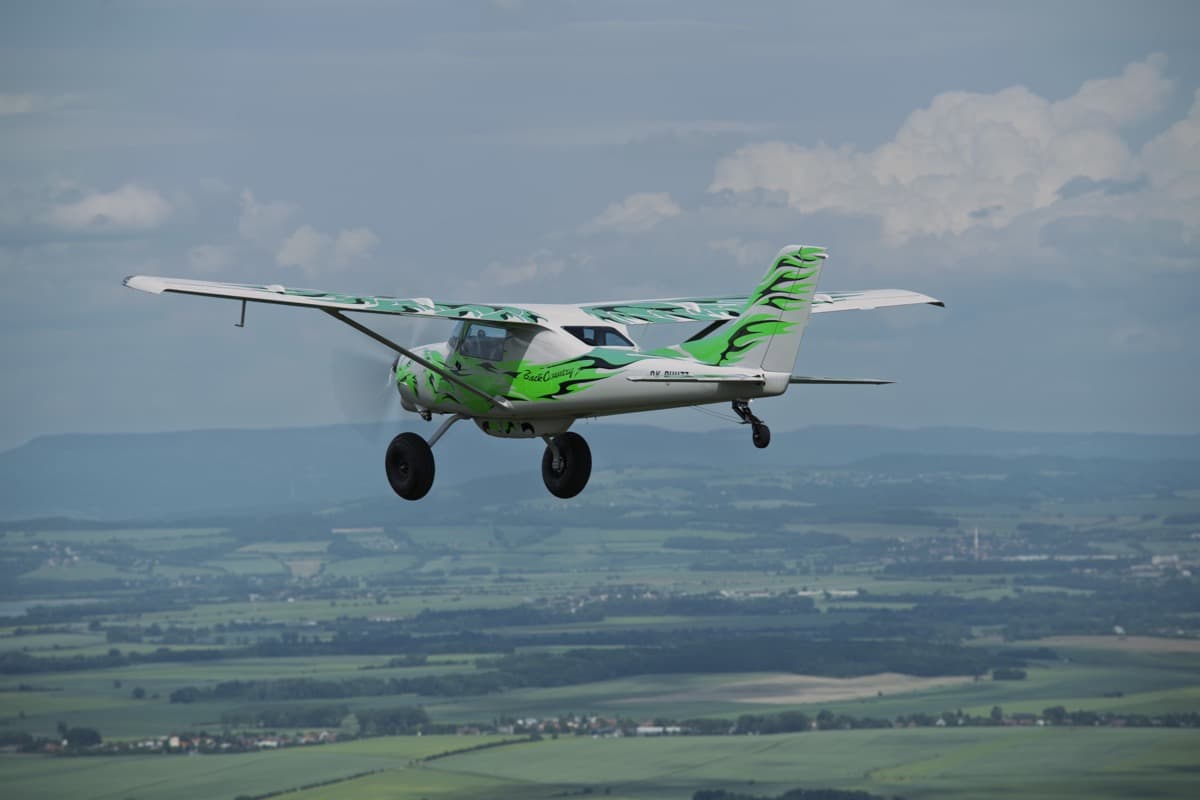
Based on the tricycle Sirius model, the BackCountry removes the nosewheel and adds a tailwheel. The idea is to fly fast to the backcountry and fly slow for landing. The model at AirVenture included a belly pod to haul one electric scooter or two one-wheelers.
I attended the Eliminate Aviation Gasoline Lead Emissions (EAGLE) update. As far as I could tell, no new information was shared about the transition to unleaded fuel. This is a long process. Of the questions asked, I was pleased that each questioner got right to the point without making a speech. Most of the questions were about specific cases. The panel simply replied as best they could given where we were at in the process.
I sat down chat with Cessna’s Jimmy Beason, VP of Product Development, and Keturah Austin, Manager Product Communications, about the company’s Customer Advisory Board. The idea is to get customers in the same room with designers and engineers. Conversation ensues.
One example Jimmy shared was that of an owner who wanted more cockpit room. The design team quickly built a plywood mockup with 4.5 inches of extra seat space. They invited the owner back. Suffice it to say, he’s happy. Don’t take my word for it, you can hear him yourself in a YouTube video.
Many companies say they listen to their customers and some actually do. But Cessna has systematized the process.
Tuesday, July 22
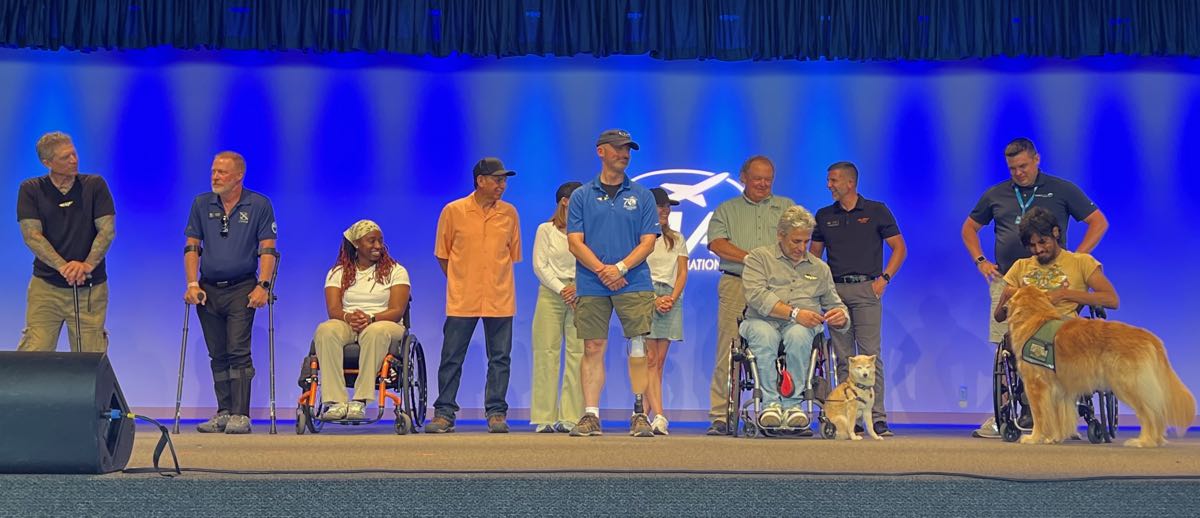
Able Flight hosted its annual wing-pinning ceremony at EAA’s Theater in the Woods. Founder Charles Stites played host. This year saw the 100th Able Flight pilot pinned. In all, five pilots were pinned this year. Their personal stories are inspiring, to say the least.
Able Flight operations will soon transition from Charles Stites as the man with the plan to Southern Illinois University (SIU). There’s a lot more to Able Flight than just the awardees.
During the annual Light Aircraft Manufacturers Association (LAMA) meet-up, LAMA President Scott Severen awarded Tom Peghiny, founder of Flight Design USA and longtime U.S. importer of the Flight Design line of aircraft, the Distinguished Service Award. I was standing next to Tom and can assure you he was surprised.
Tom retired in 2022 and since has been paragliding, a lot.
Following Tom’s award, there was a presentation that included nearly up-to-the-day certification numbers. While everyone was engaged, it was easy to see most minds were on the upcoming Department of Transportation and FAA announcement about MOSAIC.
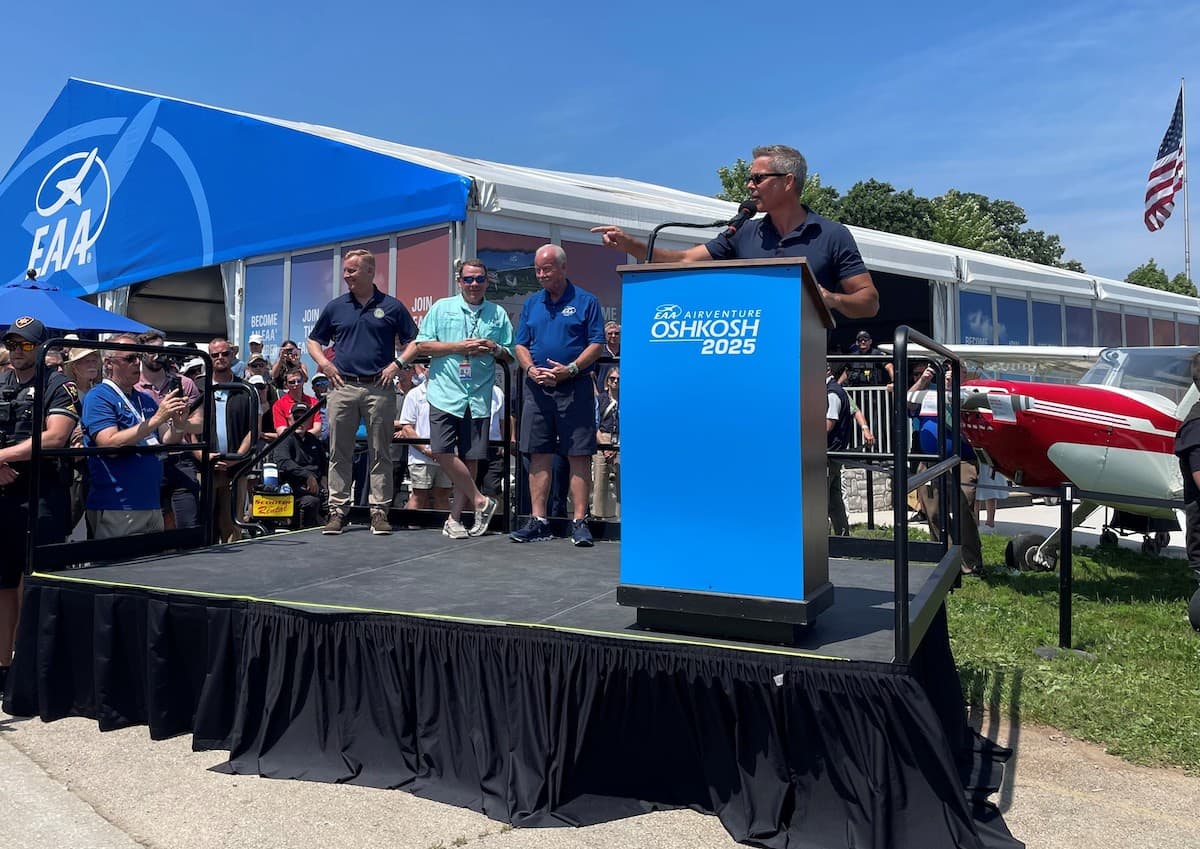
Speaking of MOSAIC, I joined a few hundred of my closest friends out in the Wisconsin sun, on blistering concrete no less, to hear Department of Transportation Secretary Sean P. Duffy make an announcement about MOSAIC. Best to read editor Janice Wood’s story.
My friend Kevin Laufer, founder of Taildraggers.com, texted me to see if I was interested in seeing the Messerschmitt Me 262 on the warbird ramp. Yes I was, and fortunately, had a few minutes.
Just wandering around with a friend and looking at all there is to OSH is one of my favorite things.
Oh yeah, the Me 262 was amazing as well.
Wednesday, July 23
John McBean, president of Kitfox Aircraft, was in a good mood. The show was off to a good start. Business operations are smooth. What more can a company leader ask for?
Like John, Sebastien Heintz at Zenith Aircraft, is a fun conversationalist. We had a wandering conversation about many topics. He’s encouraged about MOSAIC but hasn’t yet decided where he’ll go with it. Zenith is in a sweet groove and I get the feeling he doesn’t want to upset the apple cart getting into things that’ll make operations more complicated and expensive. As a fellow small operator myself, I can respect that.
Airtime Aviation took over the Flight Design U.S. import business from Flight Design USA when Tom Peghiny retired. Airtime Aviation’s Tom Gutmann Jr. talked to the gathered media about the recent purchase of Flight Design by the Shanggong Group (SG) in China — the same group that bought ICON Aircraft, if the name sounds familiar.
Long story short, Flight Design is still operating in the Czech Republic and Germany. SG was founded in 1965 and has already invested millions to upgrade manufacturing and expand parts inventory among other areas.
The Flight Design F2 is not an upgraded CT model, it is a clean sheet design built with MOSAIC in mind. In total, 2,000 Flight Design aircraft are operating around the globe, including about 400 in the U.S. Chatting with Tom after the press conference it was easy to see he was quite bullish on Flight Design’s future.

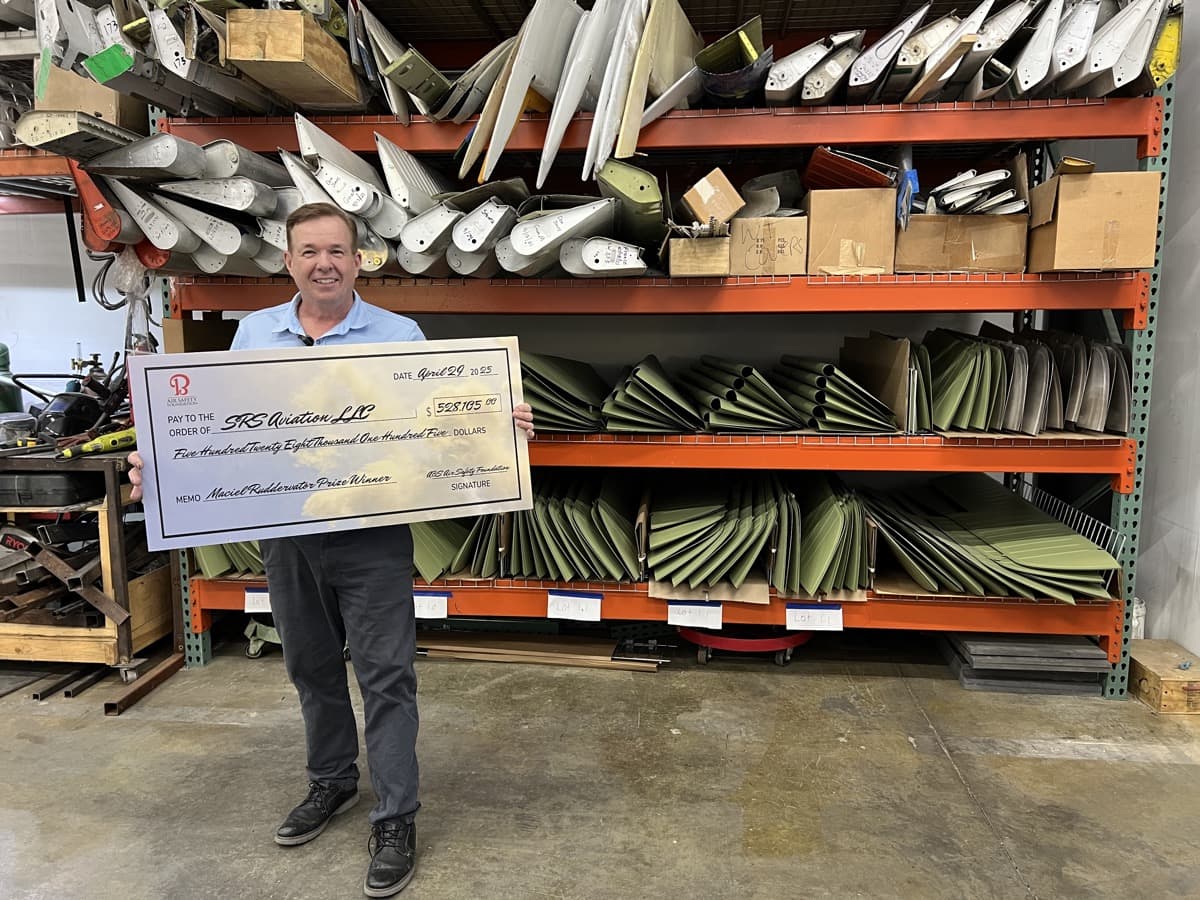
The American Bonanza Society (ABS) Air Safety Foundation awarded SRS Aviation the Manuel Maciel Reddervator Prize valued at $528,105. The prize was earned by successfully designing, earning approval, building, and selling V-tail Bonanza ruddervaters. Even better, the ruddervator kits are priced slightly lower than when Beechcraft stop selling them.
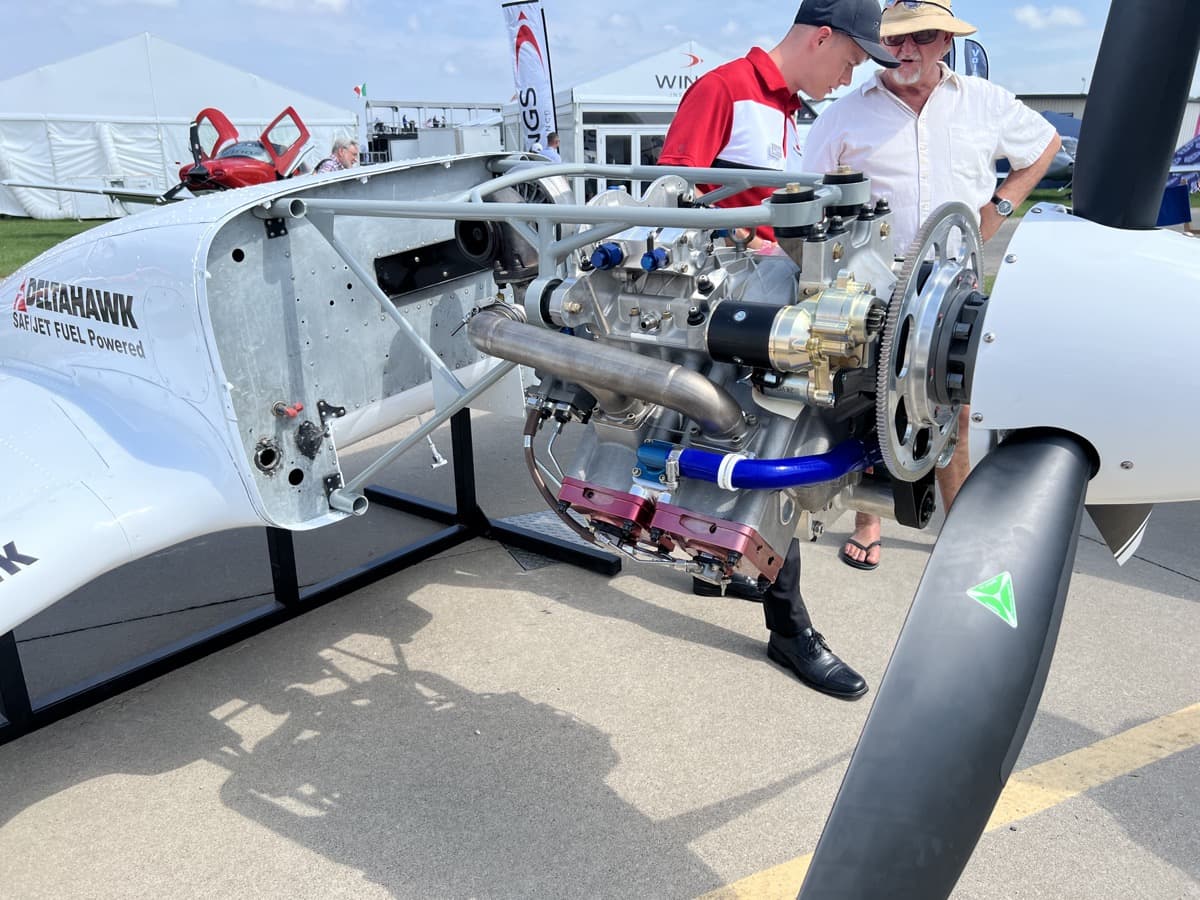
Piper will soon deliver the Seneca DX with Deltahawk’s DHK4A180, 180-hp, engines. Also, Deltahawk and Bushliner Aircraft are collaborating on a forthcoming six-cylinder, 350-hp engine.
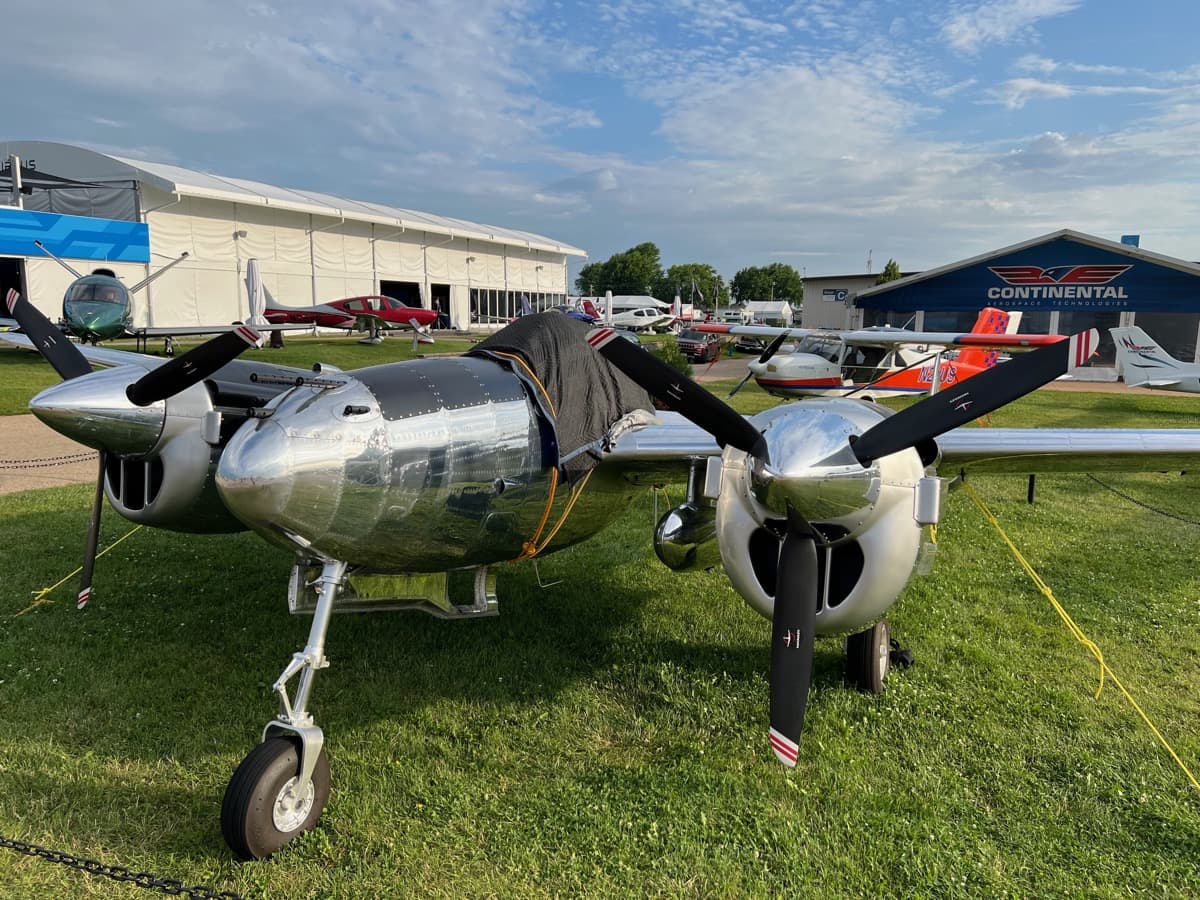
Fellow Pacific Nothwest company, Dynon, hosted an evening party. As I was walking out after chatting it up with a few fellow attendees, William Presler stopped me to ask if he thought General Aviation News readers would be interested in a story about his scale model P-38. It was hosted at the Continental Aerospace Technologies display all week. It is a head-turned for sure.
We set Fred Johnsen on the task. Expect a feature in the next few months.
Thursday, July 24
By Thursday I was feeling every bit of my 55 years. Nonetheless, I pressed on, but at a slight slower pace.
Justin Smith at Progressive Air Services reminded me, as we stood in the air- conditioned EAA Canada pavilion, that there are no tariffs between Canada and the U.S. with regards to aircraft and aircraft parts.
After enjoying a vanilla soft serve cone in the shade of a tree, I wandered toward the BETA display. As I approached I spotted founder Kyle Clark walking down the stairs from the rooftop patio. I introduced myself and was thrilled to hear Kyle tell me how much the BETA team loves reading General Aviation News. We shared quick stories about our pilot daughters.
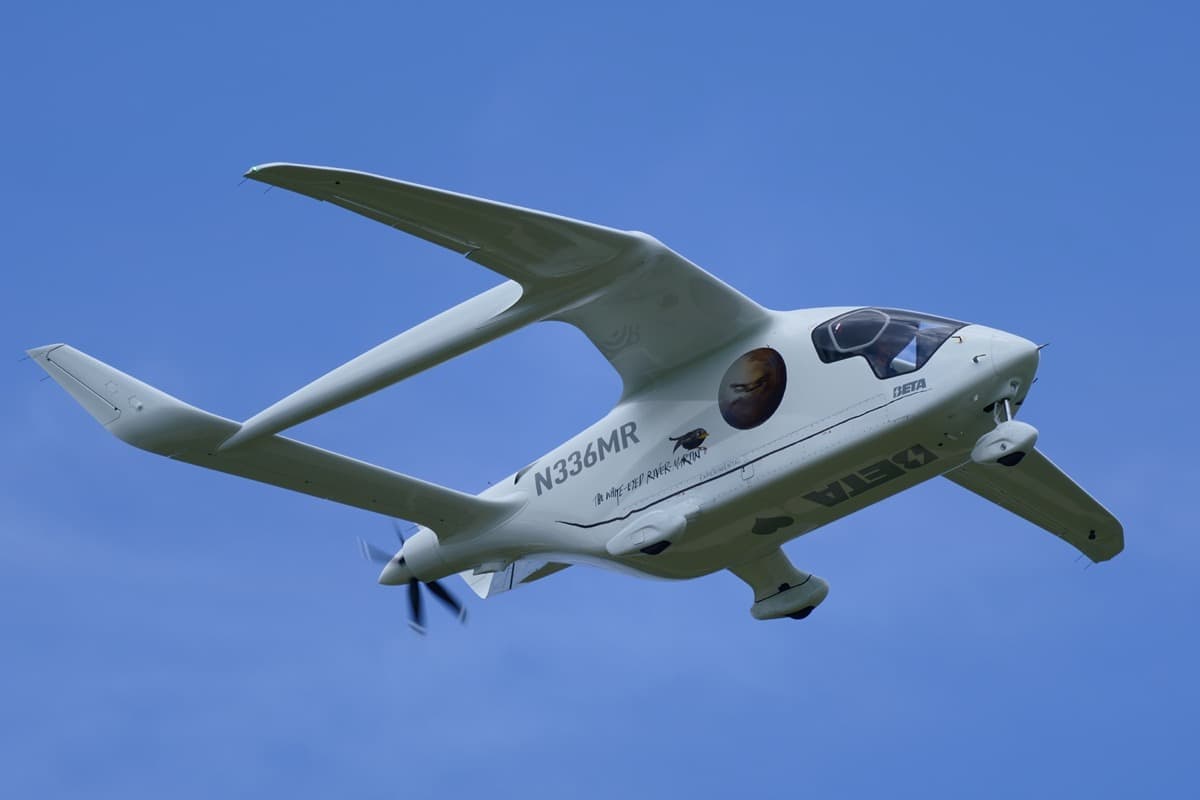
Just before we parted he said his team flew the ALIA from Vermont to Oshkosh using just $100 of electricity. Something to ponder if you or your business needs are short haul in nature.
To be sure, OSH is much more than press announcements, and I have many of those memories in my notebook. If you haven’t yet made it to OSH, I hope you’ll start planning now to go in 2026. And if you do, be sure to bring sunscreen and comfortable walking shoes.
I didn’t get a sunburn and I walked nearly 45 miles over five days.
See you in OSH.

Did you happen to notice the race planes from the AirVenture Cup Race? I would say a majority of them are kitplanes, and quite a few would be great stories!
Ben
I am printing your article. Loved sharing your connections with those who are designing,
manufacturing, sharing information about their products, and everything else in between and during Airventure 2025. You were a great tour guide. The article takes me to Oshkosh 2025.
I did not attend.
Thanks, Ann
Three days is about all I can take of AirVenture without having my head explode from overload, or my skin melt from the heat and humidity. This year I flew my Maule in on Thursday as the mass exodus after Wednesday’s night time airshow opened parking spots in the north 40. I came with my checkbook, intending to buy a Lightspeed Delta Zulu headset. I recently started wearing hearing aids because I have lost hearing acuity in the higher frequencies. The frequency response adjustments the Delta Zulu offers along with the added benefit of CO detection made purchase of this headset a no-brainer from the perspective of pure capability and features. The sales rep in the booth showed how easy it was to adjust the frequency response and the CO alarm levels using a smartphone app. SOLD! I bought a headset and went back to my tent to set it up before my flight home. When I opened the box, the to flyer mentioned downloading the app from the Apple store. No mention of an app for Android from Google Play. It turns out all of the cool features of this headset are only available to Apple customers. I took the headset back to the Lightspeed booth and asked if an Android app was in the works. I was willing to keep the headset if the company was working on a way for me to use the capabilities of this headset. I currently fly with a regular Lightspeed Zulu headset and I’ve been very happy with it’s performance. Sadly, Lightspeed has no plans to offer Android access to the software adjustments, so I returned the headset. BIG disappointment! I bought an $8.00 rootbeer float to console myself and thought about leaving the show early due to my disappointment. I decided to hang around until Sunday morning and see if there was someplace else to spend my money. I saw lots of cool things and talked to some really interesting people, but left the show with my checkbook intact. Flying back to the Seattle area I dodged a LOT of thunderstorms and had to divert to the Salt Lake City area to get across the Rockies because my planned route through Mullen Pass in the Northern Rockies was blocked by thunderstorms. That just reenforced the idea that travelling by small plane is great, but only if you have time to spare.
Ben:
I am sorry you did not visit the National Association of Flight Instructors at the Pilot Proficiency Center at the EAA Museum. We presented many educational forums, and CFIs taught in 12 Redbord LD simulators. NAFI is all about maintaining and improving pilot recency and proficiency. We are worth a look. Please don’t miss us next year. And please consider visiting us at our symposium in Akron, September 20-23. It will be an event not to be missed.
The museum didn’t make my list this year Victor. Sorry to miss seeing you.
Great recap and hints of future articles. Looking forward to it.
Did you wear flip-flops every day, or change to better shoes after day 1?
I wore my flip-flops Sunday-Wednesday. Switched to shoes the last day. Should’ve stay in my flips.
I walked 29 miles in 3.5 days….but came away looking, well, lobsteresque.
Can’t wait until ‘26!