

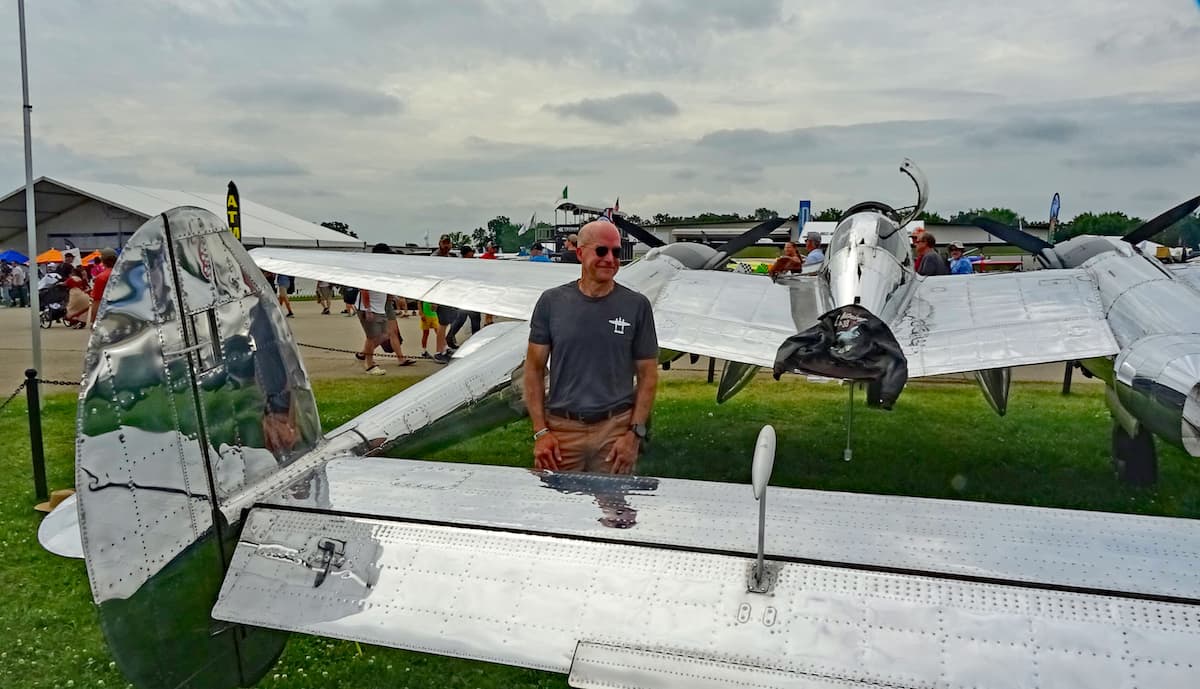
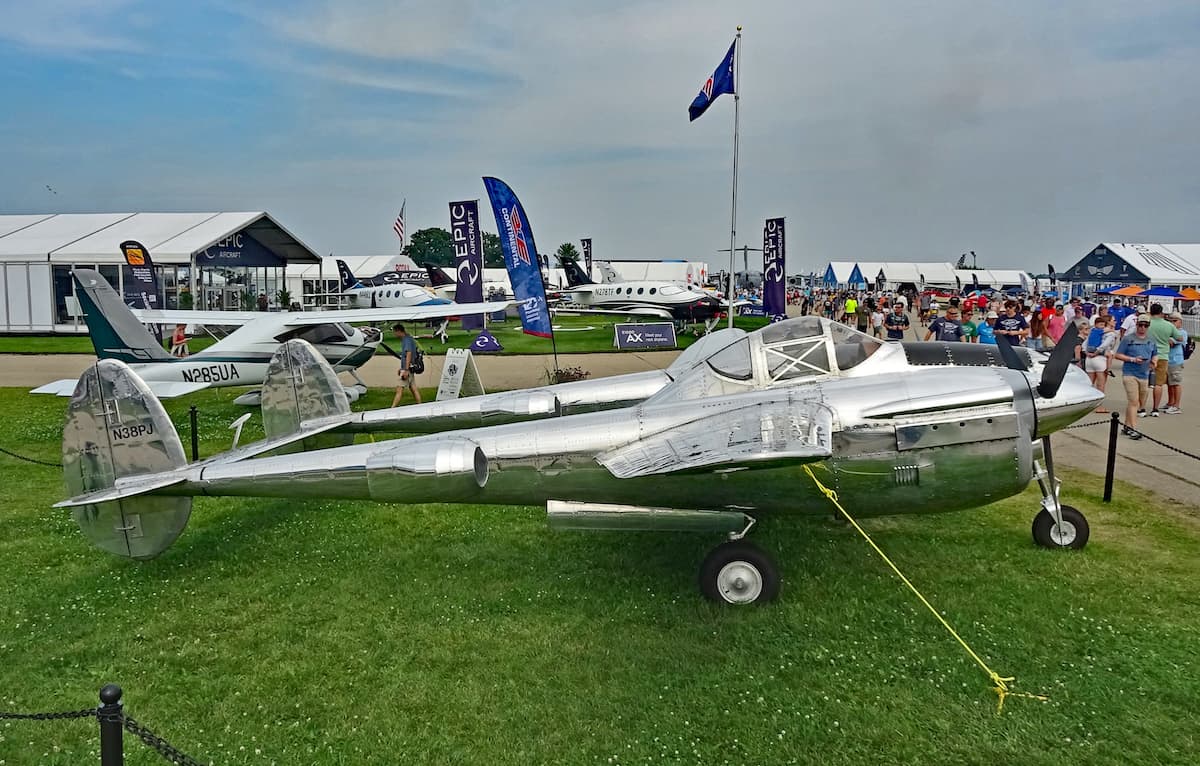
William Presler is mighty proud of the P-38 Lightning his uncle, Jim O’Hara, and his wife Mitzi built over the span of about a quarter century.
Though the airframe is smaller than the P-38s that rolled out of the factory in World War II, William likes to say his aircraft is a real P-38, just not original.
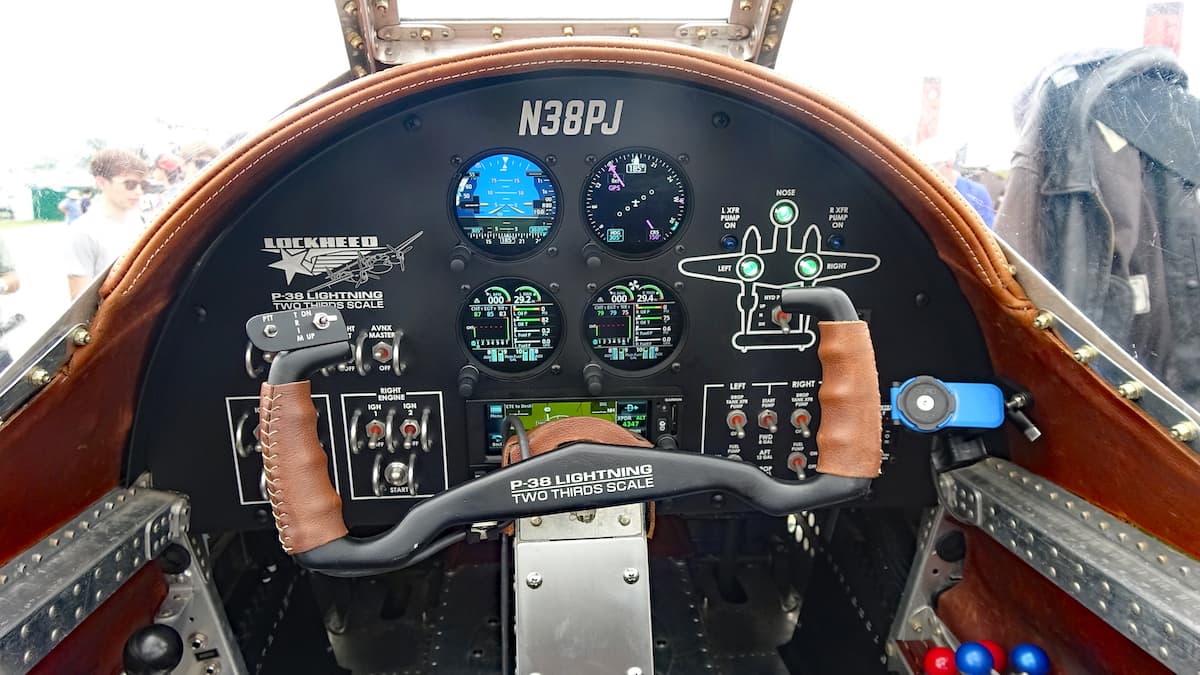
Sometimes called the TTP-38, for Two-Thirds size, William says it has the same airfoil, same mean aerodynamic cord, same dihedral, and many other attributes of the Lightning line.
One quickly feels the family pride William has for his bright and doughty uncle, an engineer of considerable talent. A professor of aeronautical engineering at Tulane University, Jim O’Hara also consulted for NASA.
“He was a rocket scientist. Literally a rocket scientist,” William says.
He explains that Lockheed told O’Hara the P-38 was too complex for him to build. That did not slow O’Hara, who relished challenges as he learned new skills to aid in the construction of his Lightning.
How many times at places like EAA AirVenture Oshkosh do we hear stories of lifelong commitments to aspects of aviation forged in childhood?
Jim O’Hara built a balsa wood model P-38 Lightning when he was a nine-year-old in Princeton, Kentucky, and saw P-38s fly overhead during the war.
“He was enamored with this plane,” William says.
O’Hara’s P-38 project began in his garage.
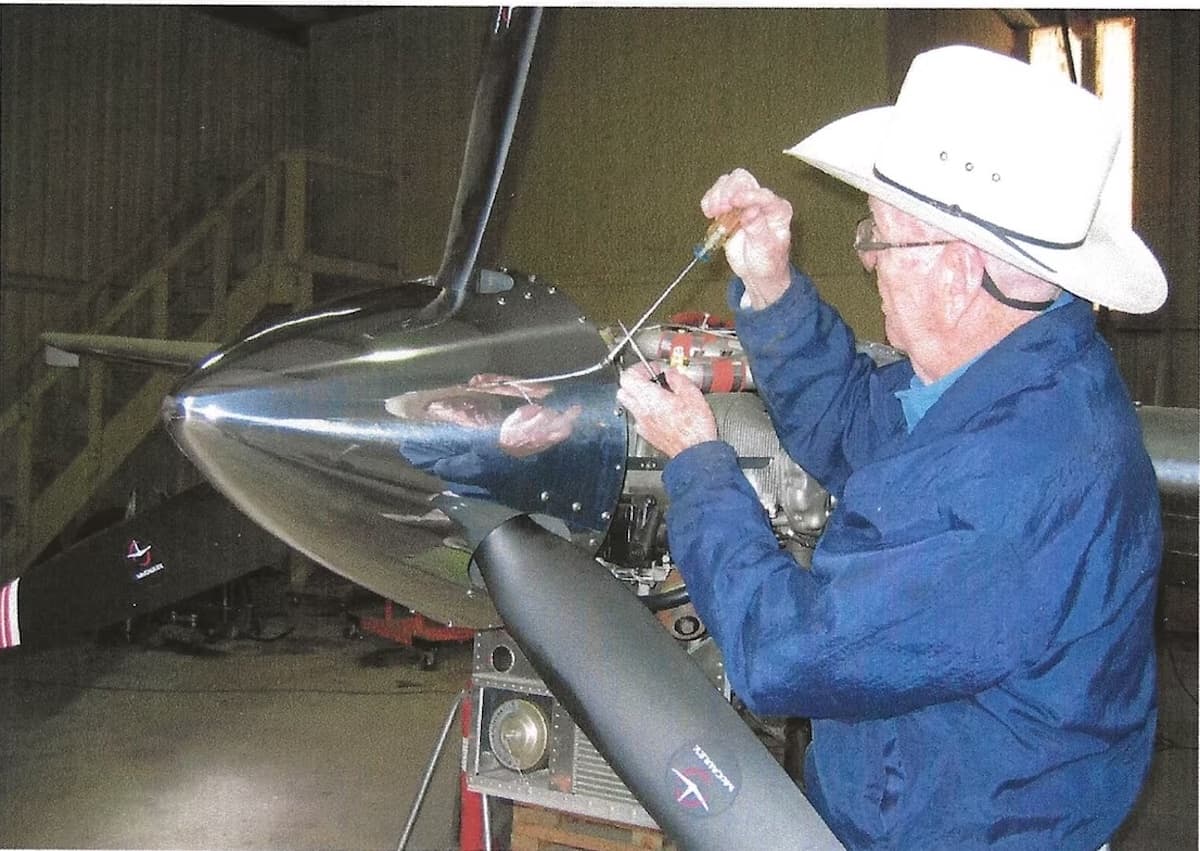
“He built it around him,” William says, noting he made a cockpit mockup to validate two-thirds scale as the right size.
And while William, at 5 foot, 10 inches, can fly the TTP-38, anyone over 6 foot maybe not so much.
Jim once estimated it would take him 25 years to create his dream Lightning, “and if I’m lucky, I’ll get to fly it,” William recalls his uncle saying.
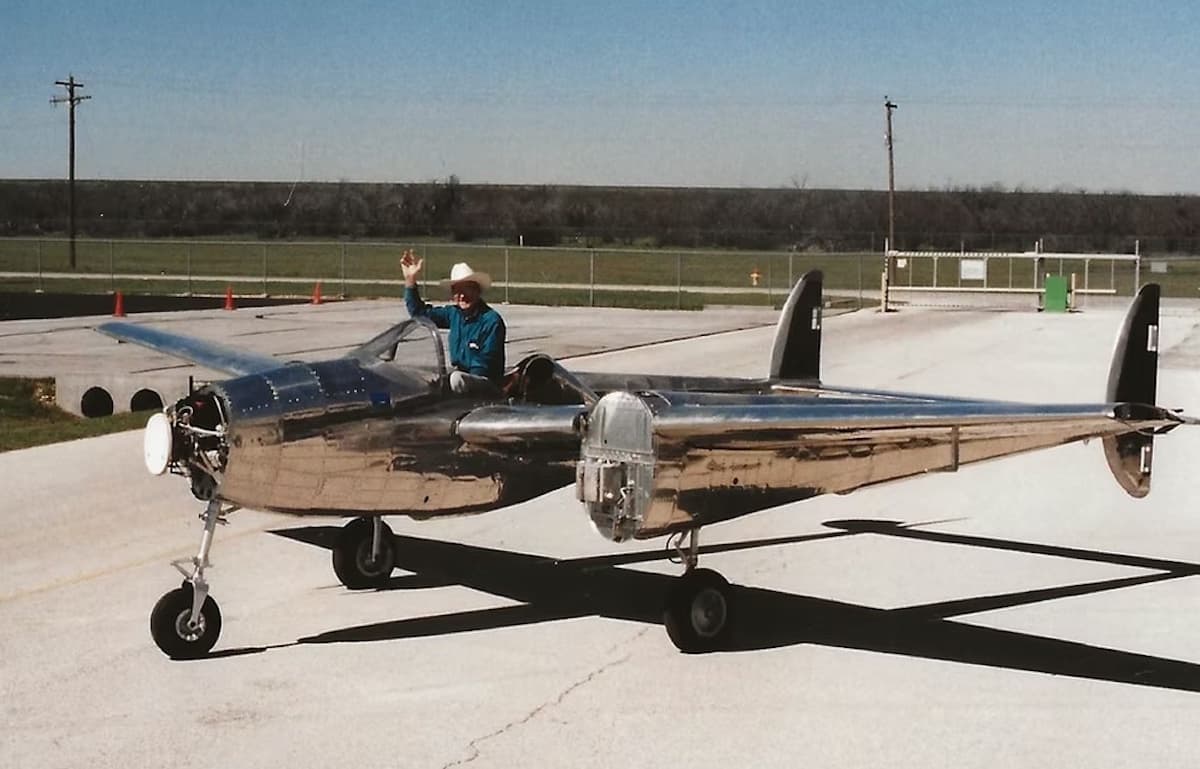
At his uncle’s passing, the silver TTP-38 had accumulated about 100 hours of flying time.
Meanwhile, William, who was impressed with the aeronautical acumen of Steve Michael, a Carbon Cub technician, had the opportunity to enlist Steve’s help to retrieve his uncle’s cherished Lightning from its slumbers in a hangar in San Angelo, Texas.

Years of accumulated Texas dust were scrubbed away like the detritus covering an ancient and prized artifact. What the two men found as they inspected Jim O’Hara’s Lightning was a machine made with deliberate decisions, forethought, and ingenuity.
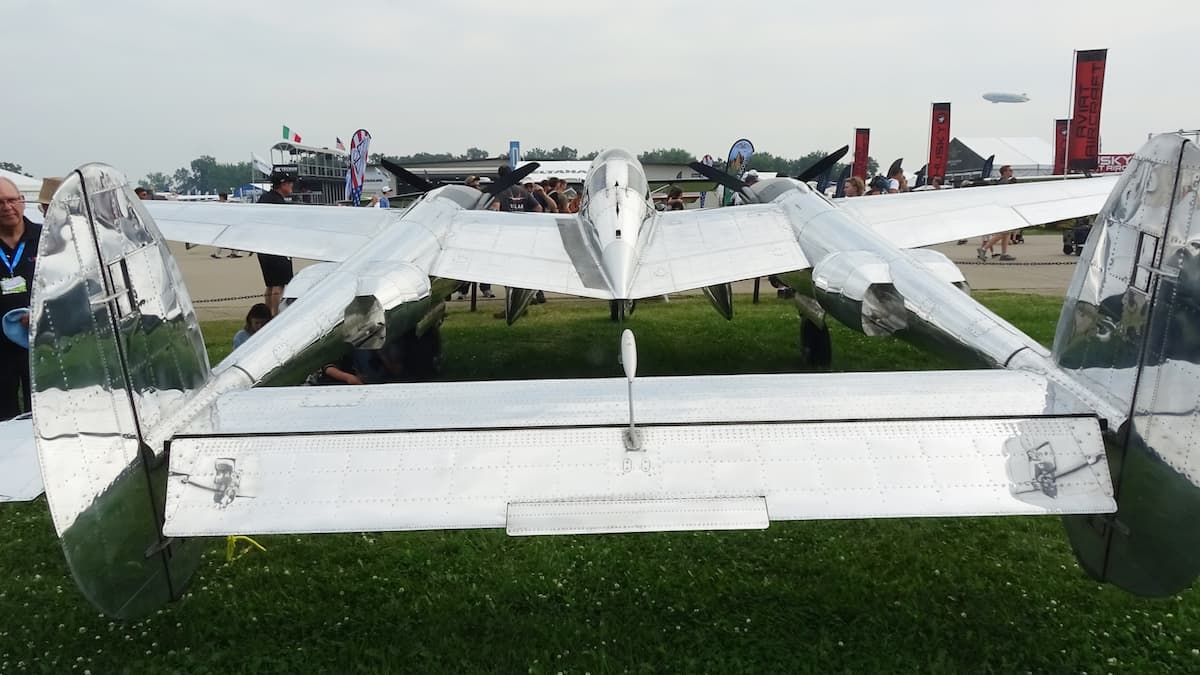
To boost range with more available gas tank space, Jim evoked the style of P-38 underwing drop tanks by putting Osborne aluminum tip tanks intended for a Beech Bonanza beneath the wings.
The TTP-38’s landing gear uses parts from a Cessna 310 as the basis, with changes in retraction necessitated by the P-38 design.
When the intended narrow frontal area four-cylinder engines for the TTP-38 did not pan out, Jim revamped the cowling design and installed Continental IO-360 engines from a Piper Seneca.
So at this year’s AirVenture, William showcased his Continental-powered Lightning at the front of Continental’s exhibit, a show-stopper that benefited Presler and his company, Volar, an avionics and restorations company at Lebanon Municipal Airport (M54) in Tennessee, as well as Continental.

What can the TTP-38 do in the air?
Taking off with rotation at 75 knots, the silver machine cruises at 160 knots TAS, William says. Stall comes at 58 knots.
William says the TTP-38 “flies like a 55 Baron.”
“It’s a very benign aircraft,” he adds.
Wingspan is 35 feet, and length is 27 feet, sitting nicely in a rectangle a bit smaller than the footprint of a Cessna 172.

William plans on legs of 1.5 to 2 hours, less than the fuel might dictate at 14 gallons per hour.
“I always land with an excess of fuel,” he explains, giving himself about a one-hour reserve in the air to handle any contingencies that might arise.
One wouldn’t want to belly-in the only TTP-38 if a bit more flying time would find a solution for such a problem, he adds.
So now Jim and Mitzi O’Hara’s pride and joy is nephew William Presler’s family heirloom.
The TTP-38 is emblematic of the huge AirVenture campus, a fusion of homebuilt aircraft, talented engineering, warbirds, and general aviation in less than one 35-foot box.
For more information: FlyVolar.com

I suspect the lads at the 475th Fighter Group in Chino would be thrilled with this.
That is a seriously impressive accomplishment!