

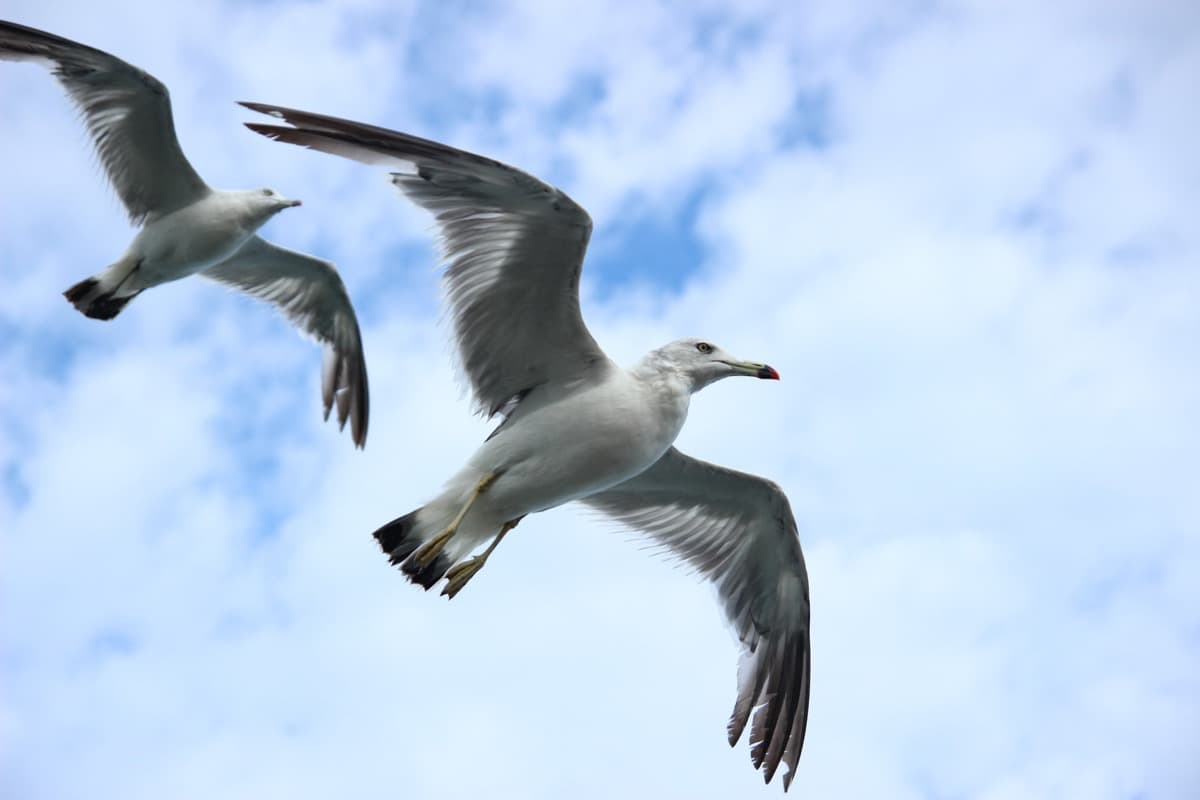
The sight of a seagull floating effortlessly on the breeze has always fascinated me.
Wings outstretched, head on a swivel, tail and wings twitching almost imperceptibly for control, the seagull searches relentlessly for an unattended morsel of food to abscond with.
They are majestic. Awe inspiring. But they are birds and birds are a problem for pilots and aircraft owners.
Admire them as we may, it’s in both our best interests to steer a wide berth from each other.
Specifically, our feathered friends present two serious threats to the human flying public. For one thing, they can be slow motion missiles that transition into a high-speed projectile at the exact wrong moment. Second, they can set up shop in our airframes and engine compartments without ever signing a lease or even leaving a note.
It’s a mutually assured destruction scenario. Or at least a traumatic experience that leaves both of us worse off.
Consider this real-life scenario.
A friend popped into the hangar of my local high school aero club one afternoon. His intent was to share some joy — to take one of the newly minted teenage pilots on a short jaunt in a stellar C-152 he had the use of for a time.
The teenager agreed enthusiastically. He was a hard charger. A real spark plug of a kid. He’d earned his private pilot certificate thanks to hard work, serious commitment, and a scholarship from the James C. Ray Foundation.
This kid was so motivated and sharp, he still had money left in his account on the day he passed his private pilot check ride. So, being the ambitious type, he took those remaining dollars and spent them obtaining a seaplane rating.
He really is an impressive kid.
After performing all the appropriate pre-flight activities, the two saddled up in the airplane, fired it up, and headed for the runway.
Everyone was happy, healthy, and looking forward to a rewarding experience. That is right up until the flight path of a foul fowl intersected with the climb-out position of the Cessna.
A loud bang followed by a distinct degradation of the airplane’s performance made it apparent something profound had occurred. A quick trip around the pattern for landing was initiated.
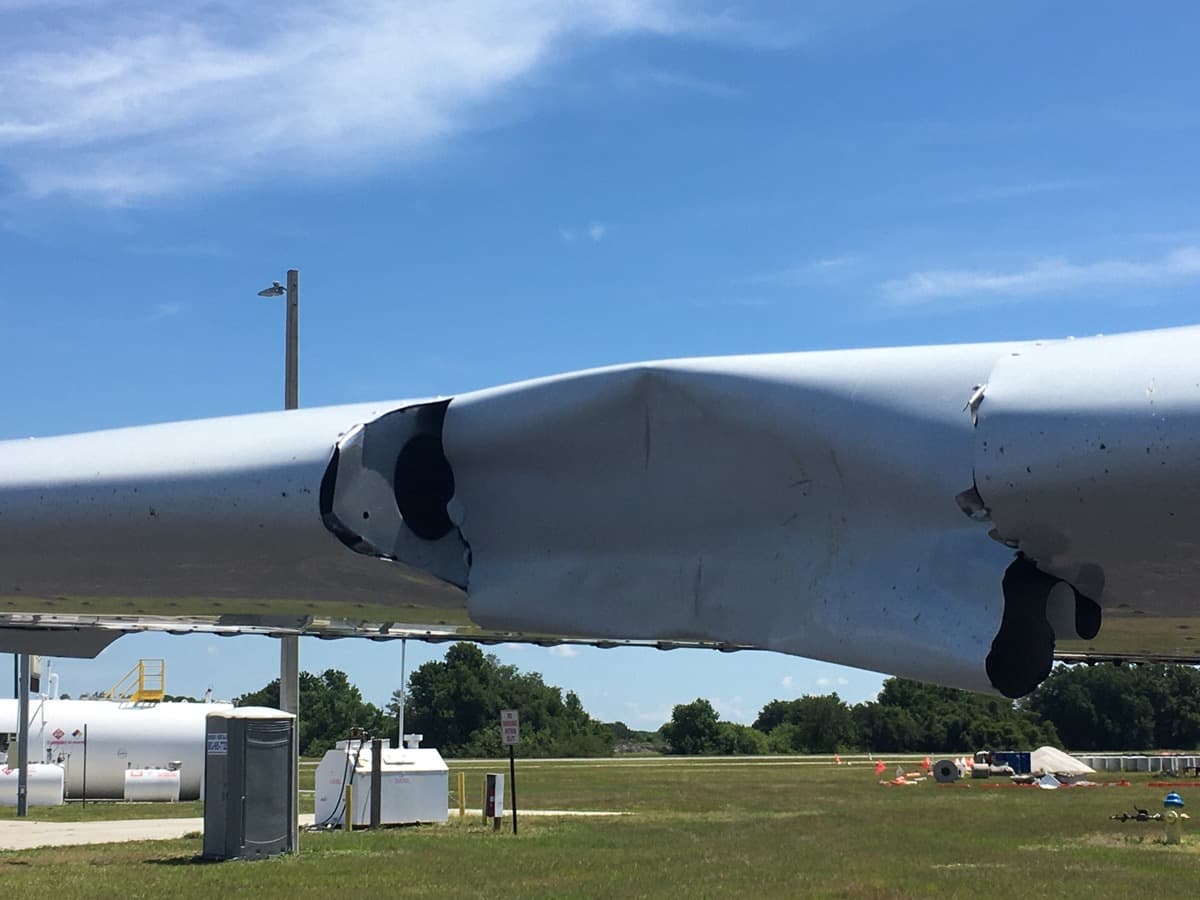
When the two departed the cockpit to inspect the wing where the impact was centered, they found the sheet metal between two ribs completely caved in. Rather than serving as a smooth productive airfoil, that small section of wing was now more of a speed-brake.
Unfortunately, the bird didn’t fare well at all in this situation, either.
Scenario two is hardly any better.
Some years ago, I had possession of a single engine Cessna that was making metal.
Generally, I’m fairly liberal on what sort of irregularities I’m willing to put up with in an airplane. Chipped paint? No worries. Torn seats? I can live with that. An inoperative Vertical Speed Indicator? Let’s go.
But when an oil change reveals a filter clogged with metal particles, I’m in favor of dealing with that right quick.
I relocated the airplane to the ramp outside the shop that would facilitate the engine rebuild. The plan was to remove the engine, ship it out, then re-install it when the engine came back.
Due to workflow schedules my airplane sat on the ramp for a few days. Less than a week. When it was rolled into the hangar the cowl was popped off and mechanics began to employ the tools of disassembly.
Before they could remove the first connection, loosen a fitting, or even think about hoisting that engine out of the compartment, the mechanics found they’d disturbed the construction of a bird’s nest.
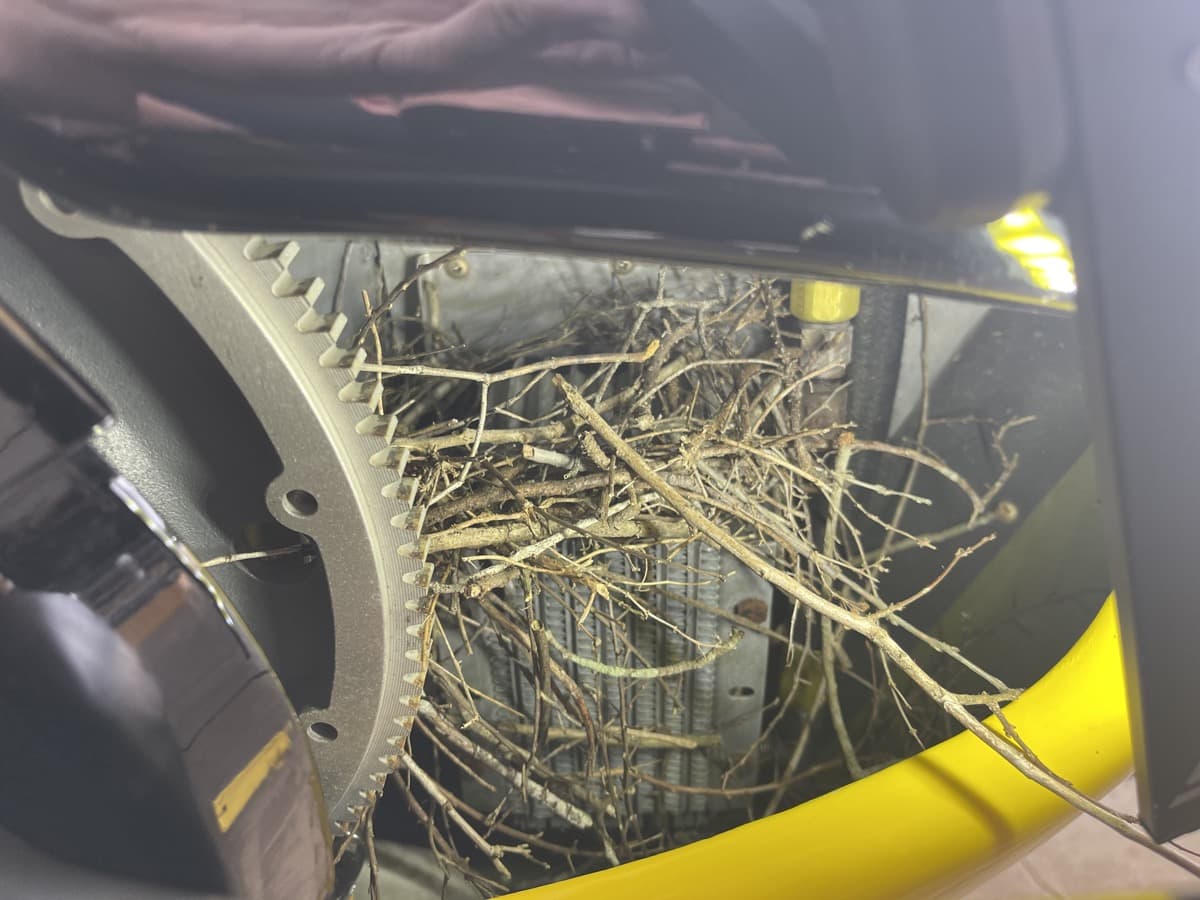
When it comes to real estate they say it’s all about location, location, location. I get that. The warmth and protection of a cowled engine might present a very attractive spot to a bird or two who want to start a family.
Unfortunately, birds are not known for their understanding of mechanical engineering. Placing a quantity of tinder between cylinders that are designed to dissipate heat is a wonderful way to start a fire.
This is not something we humans think of with fondness as we ply the skies in our manufactured flying machines.
It has been theorized in serious circles that birds are the descendants of dinosaurs. They are remarkable creatures, surely. And even with their potential, or even probable connection to ancestors that fascinate us enough to write books and make movies about them notwithstanding, birds in the wild are evil.
They have tiny little brains that have not yet adapted to recognize the inherent risk of charging headlong into an airplane at high speed. We are well-aware of the damage they can do to turbine engines, sheet metal, or the clear plastic windows we hide behind in flight. They are not. As a result, the assault of a feathered missile in cruise is a fearsome thing for us.
We can increase that concern exponentially when a flock is involved. One bird is a worrisome thing. A few dozen all at once is a horror movie we don’t need to experience in real life.
That being said, I have been known to keep chickens at the house during various phases of my life. Chickens are birds, too.
As much as I enjoy flying, I’m also a big fan of breakfast. Having a nearly limitless supply of farm fresh eggs just steps away from my kitchen is a real plus as I see it.
But my chickens, like most chickens, can barely fly high enough to clear the four-foot fence that hems them in. They’re not going to set any distance records for feathered creatures, either. And I’ve provided all the nesting materials and space they’ll ever need.
So, should you ever have an unpleasant encounter between a bird and your airplane, I’d like to make it clear that bird is not from my domestic flock.
However, their wild and unfettered cousins are a whole different story.
Keep an eye peeled. See and avoid is no joke.

DSM Tower personnel ask for our “DUCK STAMP” after our successful IFR arrival!
I had 2 Blue Ducks fly through the windshield of my B-33 Debinaire while IFR.
Jamie,
Try quail eggs – you’ll never bother with chickens again.