

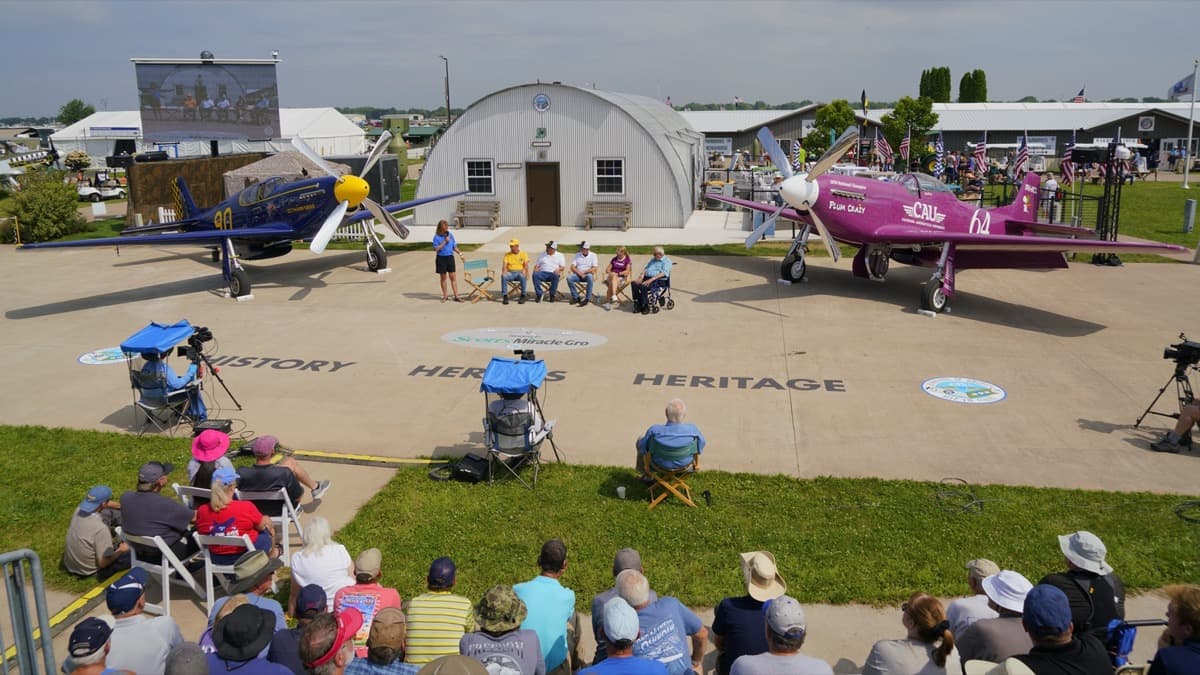
P-51 Mustang unlimited air racers and their pilots enjoyed a round of appreciation at EAA AirVenture Oshkosh 2025.
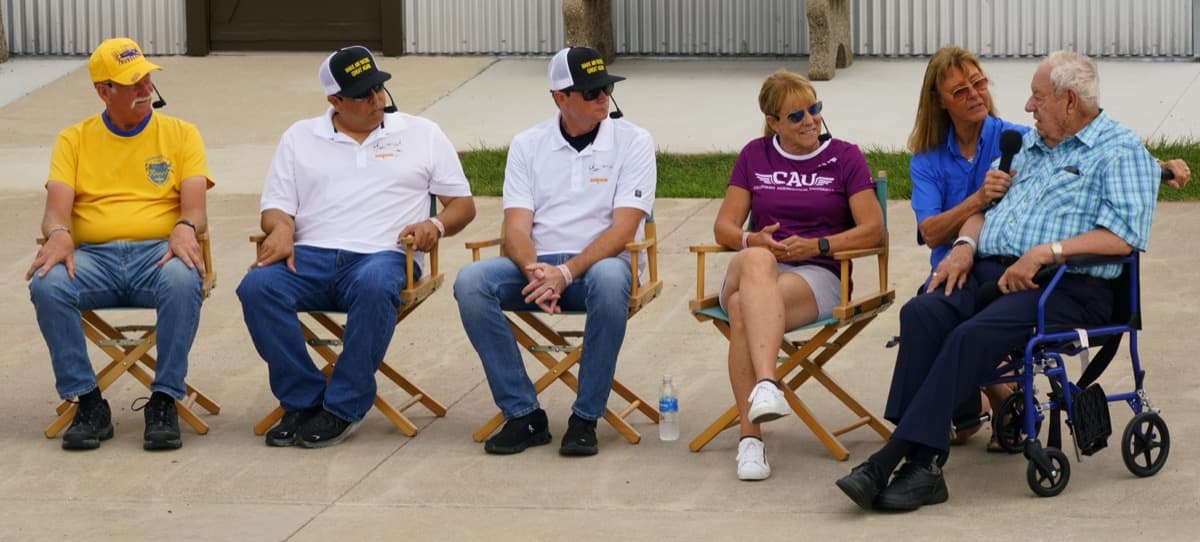
The Warbirds in Review session held July 22 included Vicky Benzing and Clay Lacy, both of whom have owned and raced the purple Mustang Number 64 in different decades.
Multiple Unlimited Gold winner Steven Hinton, Jr., joined Justin Zabel, owner of the white P-51 Bardahl Special, a comeback competitor from the 1960s that makes waves today with state-of-the-art modifications.
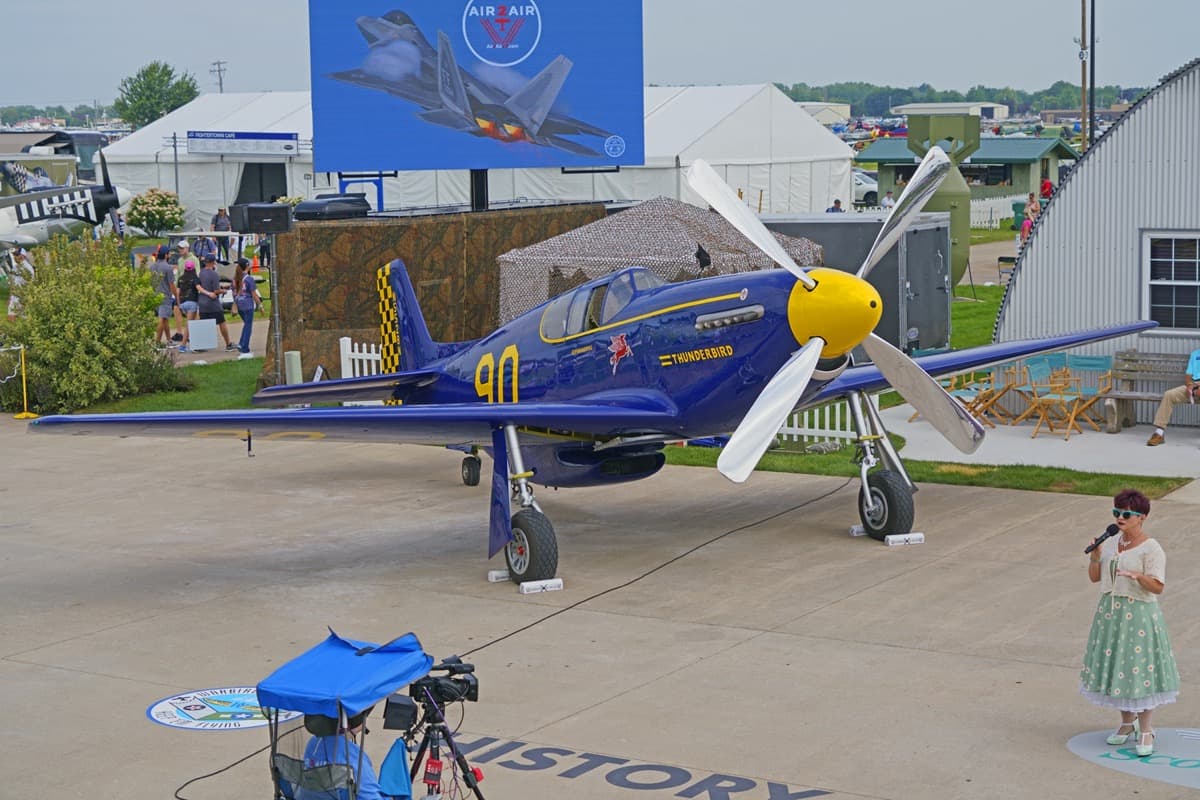
And Warren Pietsch filled in details about the classic 1940s Mustang called Thunderbird, once owned by actor Jimmy Stewart, that Pietsch flies after its restoration that started with a pile of charred debris.
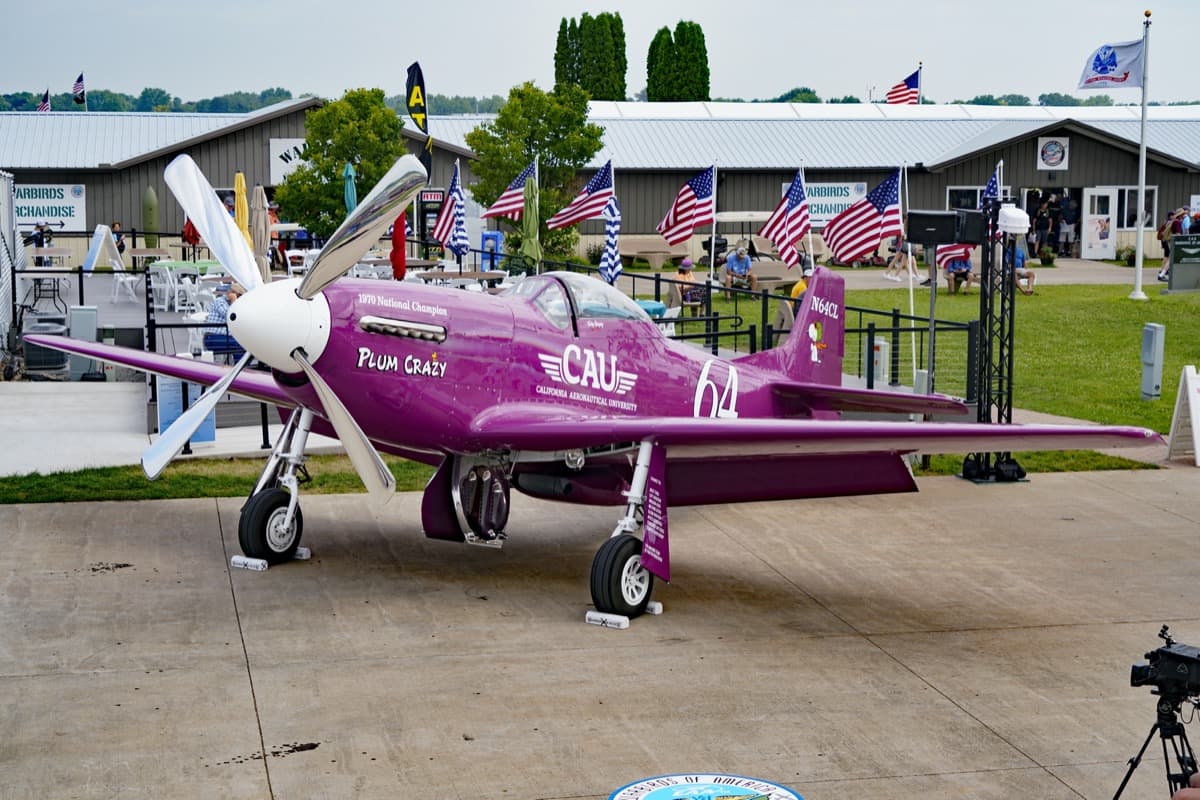
Gracing the Warbirds in Review ramp for this event were Benzing’s purple Mustang No. 64, and Pietsch’s deep blue Thunderbird racer No. 90.
The much-anticipated arrival of the white P-51 racer Bardahl Special was a last-minute cancelation due to a mechanical issue with the highly modified Mustang.
During the session, Clay Lacy reminisced about his start in unlimited air racing in 1964. As a United Airlines pilot, he was in layover status in Reno in January 1964 when he heard about a plan to renew classic air racing in the Reno area beginning that year. He joined in from the start.
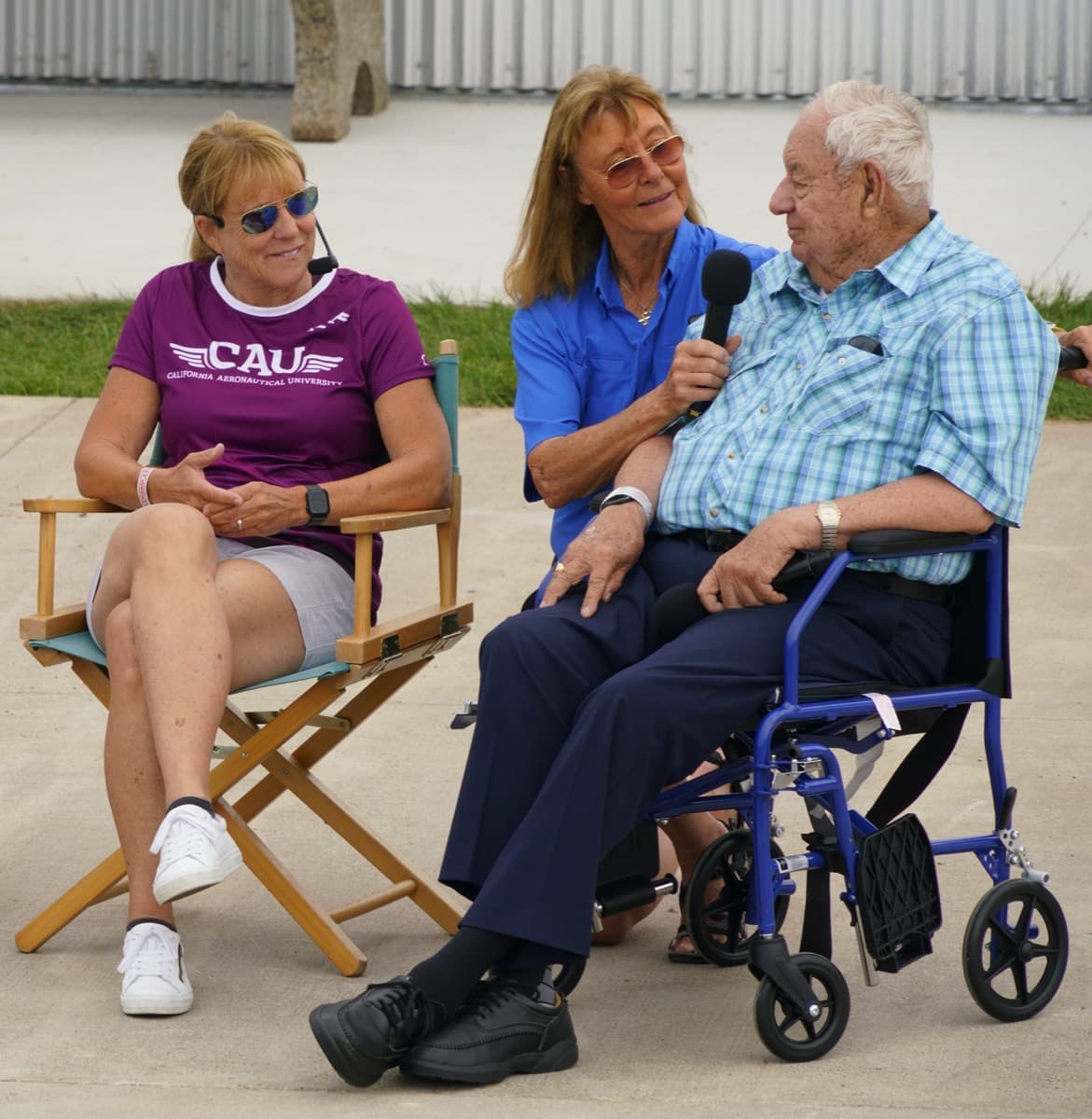
Initially flying a stock ex-RCAF P-51D owned by his friend Allen Paulson, Clay bought the Mustang not long after.
Benzing, the Mustang’s current owner, told the AirVenture crowd that Paulson’s company received, in error, 1,500 gallons of orchid/purple paint intended as trim for other airplanes instead of the expected 50 gallons. At that point, ground support equipment, tool boxes, ladders, and the Mustang all received a thorough coating of purple.
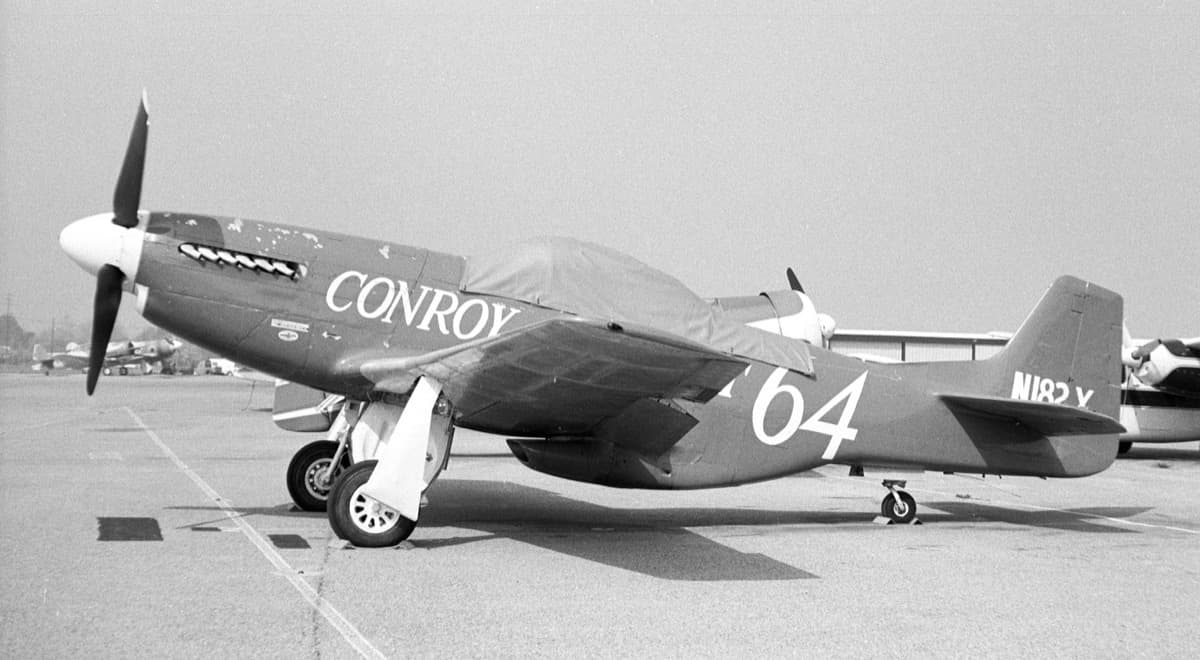
That hue has been recognizable as Clay Lacy’s racing Mustang for decades. Repainted as part of a rebuilding of Race Number 64 for Benzing, the plum-colored Mustang took her to a fourth place finish in the final air races at Reno in 2023.

Hinton then discussed what it takes to create a top-performing Mustang racer today.
He says the competitive champion Mustangs like the Bardahl Special are 120 miles an hour faster today than the Mustang racers in the 1960s.

One key to this incredible performance boost is the assembly of a special racing-modified engine using parts called transport Merlin components originally intended for specialized post-war airliners. Those parts are built stronger and can sustain more manifold pressure than traditional P-51 Merlin engines, he explained.
Hinton described efforts to reduce the size of competitive P-51 radiator scoops by 50%.
And he noted the clipping of Mustang wings by three feet on a side is not irreversible. These Mustangs can be returned to stock wing configuration, he explained.
The racing Merlins employ ADI — anti-detonation injection fluid sprayed into the fuel/air mixture to cool it.
He went on to say a competitive racing Mustang can consume four gallons of fuel a minute.
Adding up all the fluids used for things like cooling a hot-running Merlin, as much as 13 gallons of liquids per minute can pass through a P-51 during the vigor, and rigor, of a race. A spray bar puts cooling moisture in front of the radiator.
Moderator Connie Bowlin noted this voracious consumption of fluids limits the endurance of Mustangs set up as competitive air racers.
All the efforts expended on creating a racing Merlin can result in an engine producing 3,400 horsepower instead of the stock 1,500 hp.
Hinton added the inflight preparation for such a racing engine demands the pilot’s adjustment of valves for the various fluids as he sets up for entering the race course with the other competitors in an airborne start.
And then it’s over the race course at about 80 feet, watching for pylons and other aircraft as his racer clips along just above the desert floor, moving at speeds between 400 and 500 miles per hour.
For comparison, when Hinton set a new speed record in a Mustang in 2018 he handily bested 500 miles per hour, at times flying faster than the velocity of some .38 Special bullets!
“Initially the first time I raced everything happened real fast,” he recalled. “Of course, now by the end of it, doing it for so many years, everything slows down and you can really notice all the details.”
“We’re pulling up to six Gs going around the race course at those speeds,” he continued. “The biggest pull is at the start of the race when you have a lot of energy and trying to make the first turn and get ahead of the rest of the pack. But ultimately the goal is to fly at the least amount of G because the more G you put onto an aircraft, the slower it gets. So at times it’s six, but then generally three to four Gs for the remainder of the race.”

Pietsch’s stunning glossy blue Mustang racer Number 90 was a contender in several Bendix cross-country races, winning in 1949. The markings include a painted anvil with the numbers 1853. Some have said that this is Jimmy Stewart’s homage to his family’s hardware store, opened in Pennsylvania in 1853.
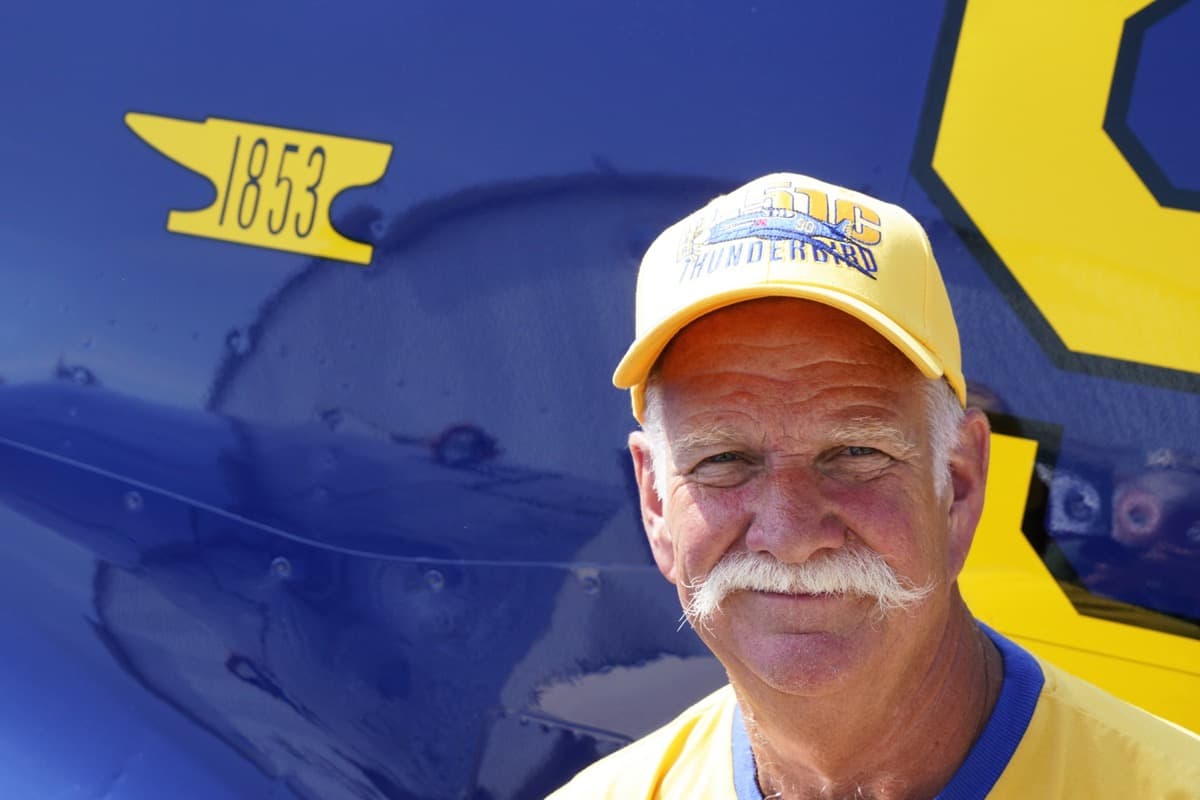
Pietsch teased the crowd with another possible interpretation.
Could this be a reference to the celebratory and upbeat Anvil Chorus in Verdi’s opera Il Trovatore, which debuted in 1853, perhaps as a celebration of this warplane’s post-war civilian use in something other than fighting?
