

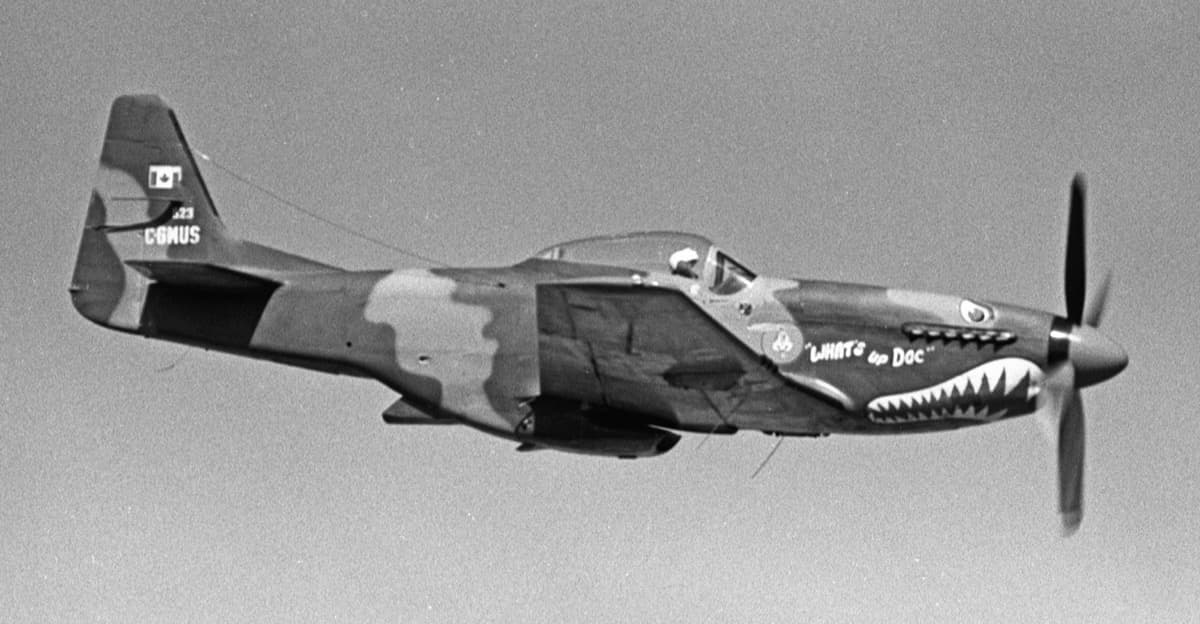
Designers created classic landplanes to take off and return to earth on airstrips meant to support wheels or skids. It was lather, rinse, and repeat for the many cycles envisioned for machines like the B-17, P-51, B-24, and the rest.
The global nature of World War II frequently placed fliers overwater in deadly commutes to and from targets. Running out of airspeed and altitude far from shore was exacerbated by battle damage and, sometimes, simply fuel exhaustion.
The military and the National Advisory Committee for Aeronautics (NACA) studied ditching and made recommendations to fliers on how to go about it.
“Never attempt to ditch the P-51 except as a last resort.” That’s what the U.S. Army Air Forces’ P-51 Mustang pilot’s 1945 manual bluntly advised.
We can’t say whether that advice is still followed for Mustangs flying today, but World War II pilots were told the P-51’s aerodynamically clever belly radiator scoop made the Mustang an inadvertent tuck-under diver when ditching at sea.
The British studied the problem in 1943 as overwater losses of Royal Air Force Mustangs proved vexing. According to the Royal Aircraft Establishment in a December 1943 report, “the ditching performance of the Mustang is so bad that pilots should bale (sic) out on every occasion if sufficient height exists to do this.”
That underslung radiator scoop contributed to Mustangs experiencing 8Gs when decelerating in the water, according to the British.
The Army Air Forces warned Mustang pilots: “It will go down in 1-1/2 to 2 seconds,” counseling P-51 pilots to bail out if they could not reach land since it was impossible to save the airplane under those conditions, and no useful equipment could be retrieved even if the ditching was successful.
Even at 50 feet above water while cruising, P-51 pilots had enough energy in their fighters to climb to 500 feet, considered minimally safe for bailing out.
The U.S. Navy’s carrier-based aircraft faced a situation where the aircraft were over water immediately after leaving the deck of the ship. The flight manual for the Grumman F6F-5 Hellcat fighter matter of factly describes water landings with no caveats about any adverse conditions.
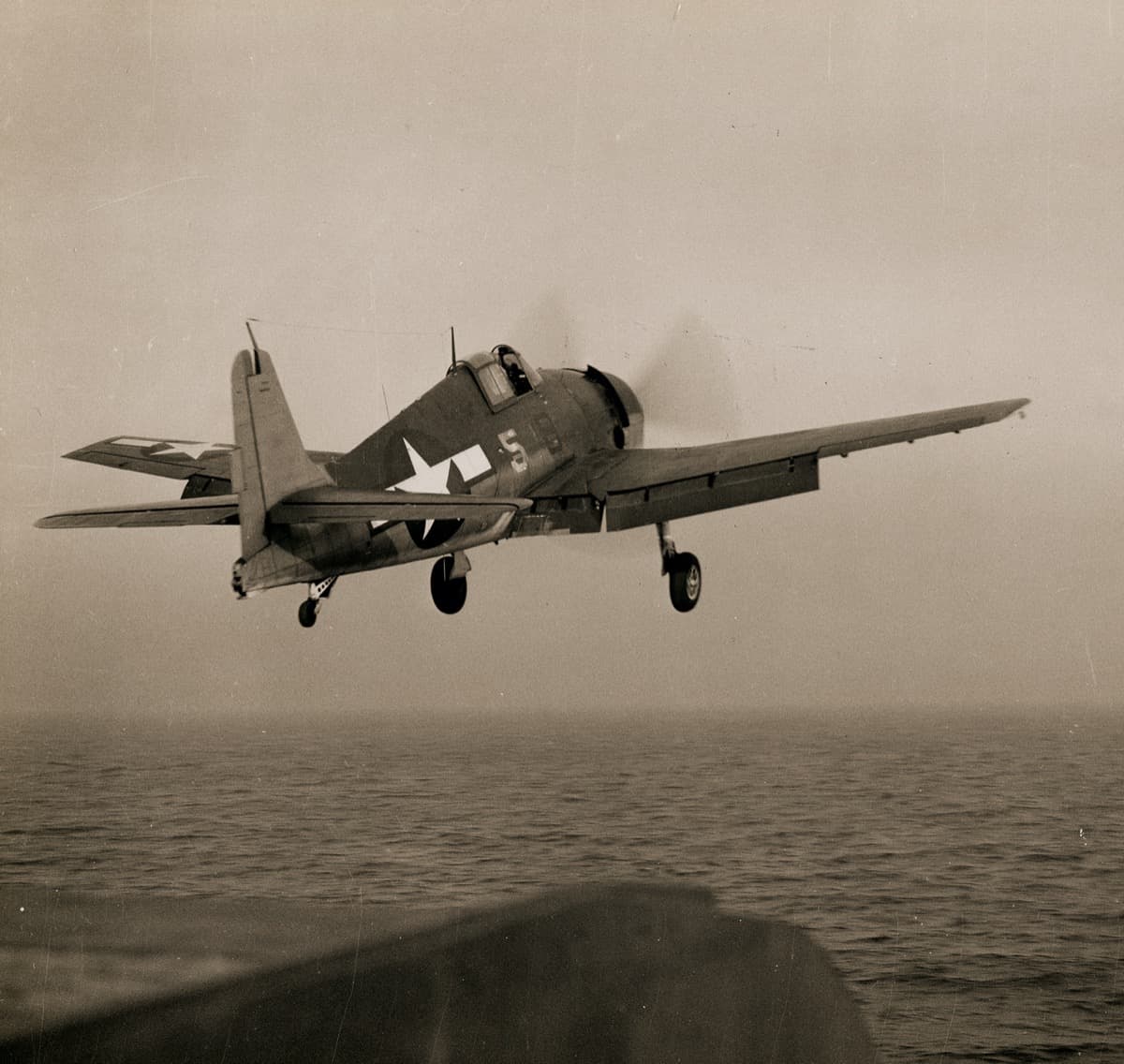
Photos of World War II warplanes launching from an aircraft carrier frequently show the cockpit canopy open, making emergency egress that much quicker in the event of a ditching.
A wartime Curtiss-Wright brochure for pilots of the SB2C Helldiver advised keeping the bomb bay doors closed for ditching, although if a bomb load was on board at the time of ditching, “it is advisable to dispose of it before ditching the airplane or it may dispose of you upon ditching.”
The brochure added: “For the actual flight approach in ditching, remember to keep your tail low. Let it drag first and pull you in. In short, try to make a normal carrier approach.”
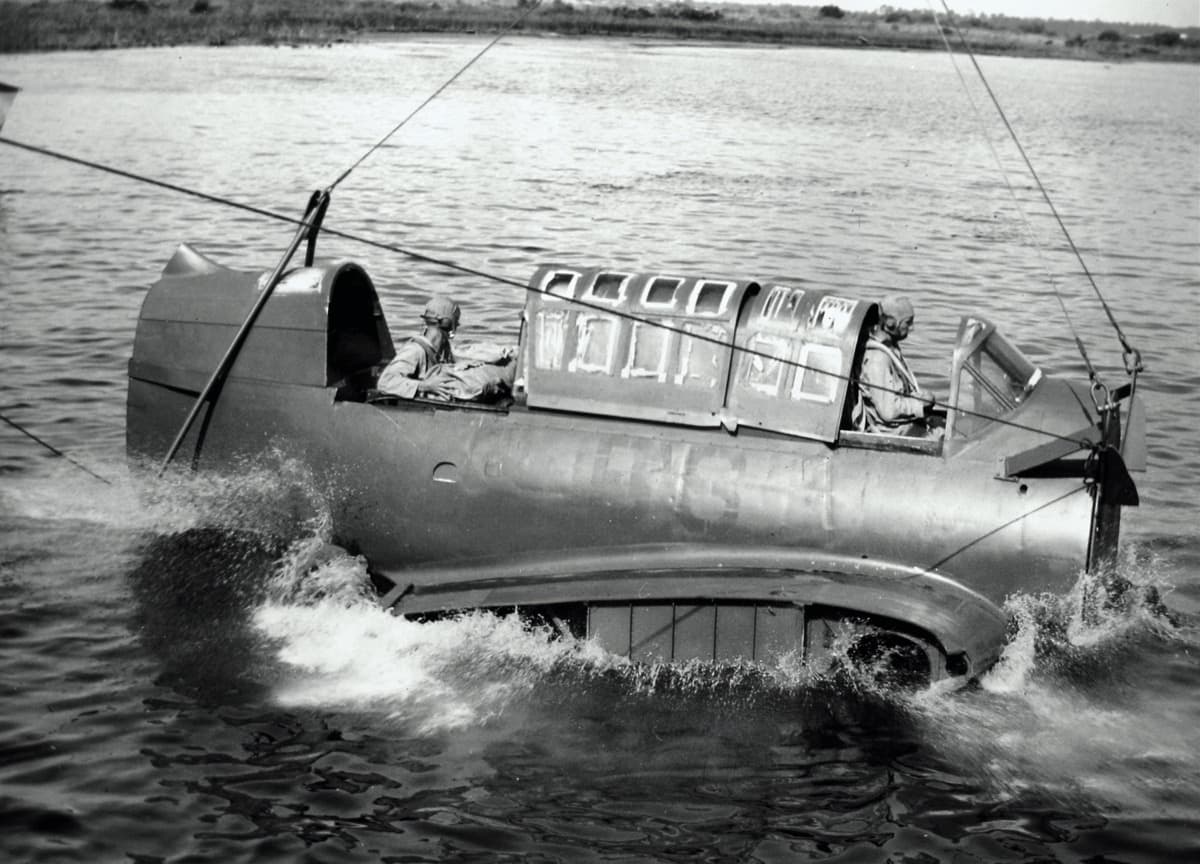
Devotees of the Army Air Force’s two most prominent World War II heavy bombers, the B-17 Flying Fortress and B-24 Liberator, will defend their chosen favorite to the bitter end from the comfort of their armchairs. With a shocking lack of good judgment, I will enter that discussion when it comes to ditching.
Even as a lifelong supporter of B-24 Liberators and their stalwart aircrews, I have to acknowledge the B-17’s advantages in a ditching, resulting from the Fortress’ low-mounted sturdy wing versus the Liberator’s high-mounted wing and flimsy bomb bay doors.
One Army Air Forces report studied B-17 and B-24 ditchings in the six months following D-Day in 1944. While acknowledging its sample of 71 B-17 ditchings and 50 B-24 water landings was anecdotal, the report said 62% of the studied B-24s broke into two or more sections, while only 22% of the B-17s came apart in the water. But for the B-24 fans, the report said a larger percentage of B-24s stayed afloat longer than B-17s.
Interestingly, the report even analyzed the training of the aircrews involved in these post-D-Day ditchings, and found a higher percentage of the B-17 crews had received better ditching training.
According to the report: “Overall averages were 24% of crew members drowning in B-24 ditchings as against only 6% for B-17s.”
The Army Air Forces worked with the NACA in 1944, with Col. Carl Greene and Maj. Julian Harvey flying a B-24D into the broad James River in Virginia to quantify the effects of ditching a B-24. Water impact around the nosewheel compartment contributed to a bend nearly breaking the cockpit and nose free from the Liberator.
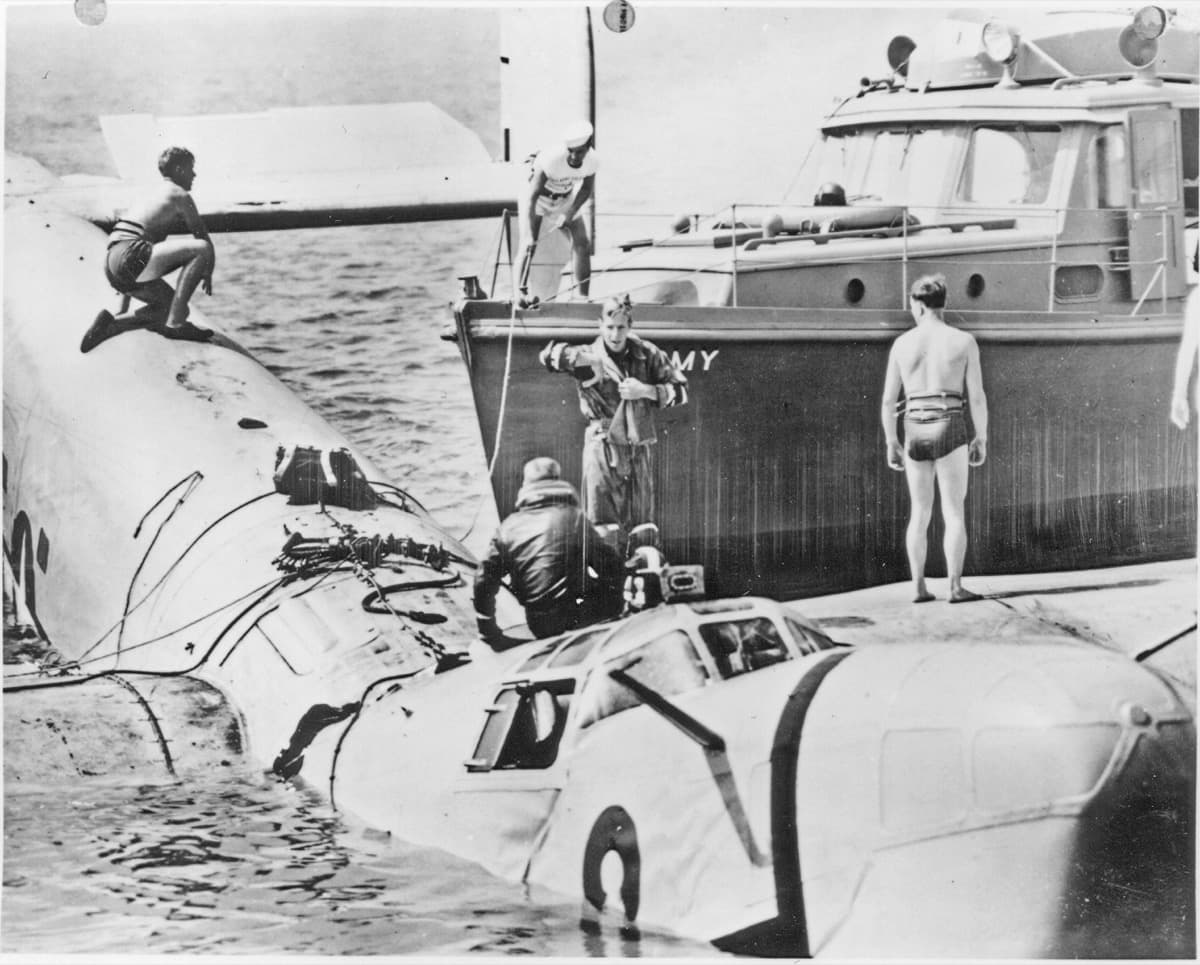
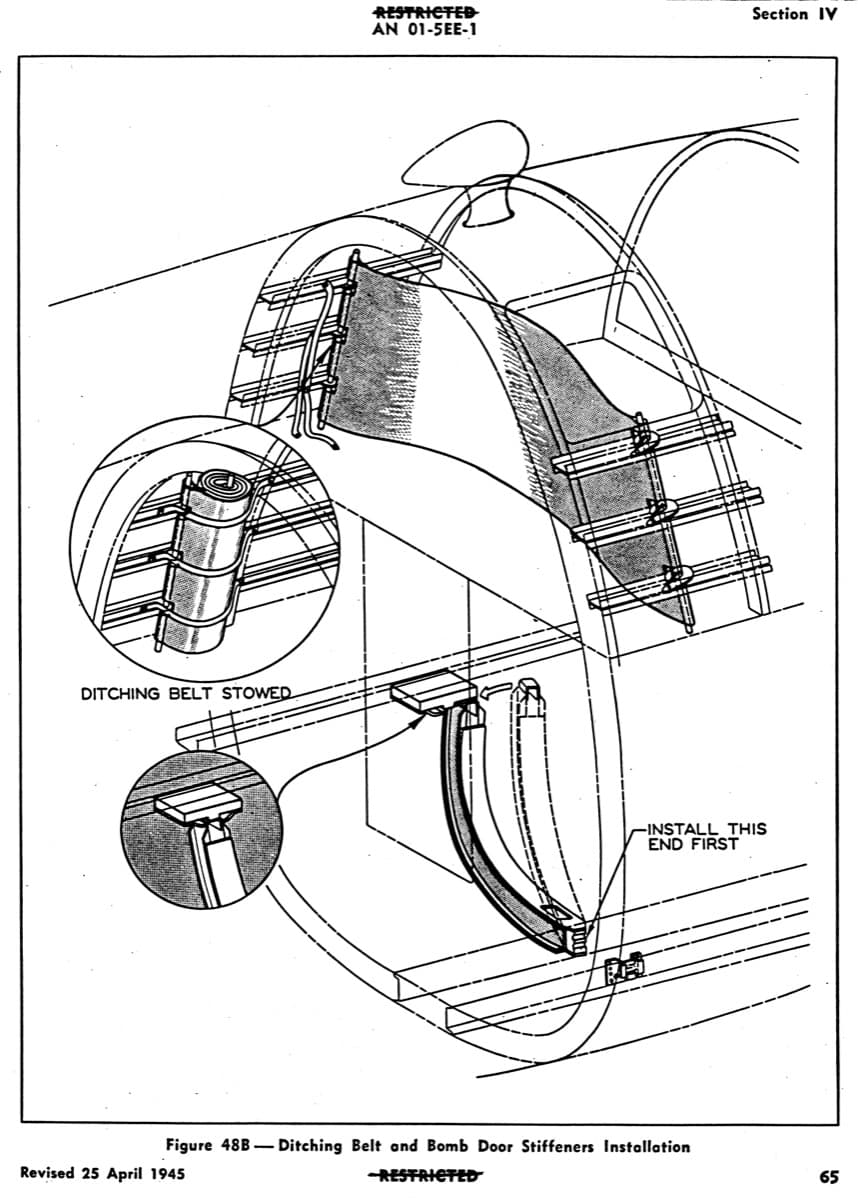
Late-war B-24s were sometimes sent out on missions with ditching ribs — stiffeners that could be wedged in the bomb bay before ditching to increase the structural integrity of the Liberator. An additional dorsal hatch was added on some B-24s to facilitate crew escape in the water.
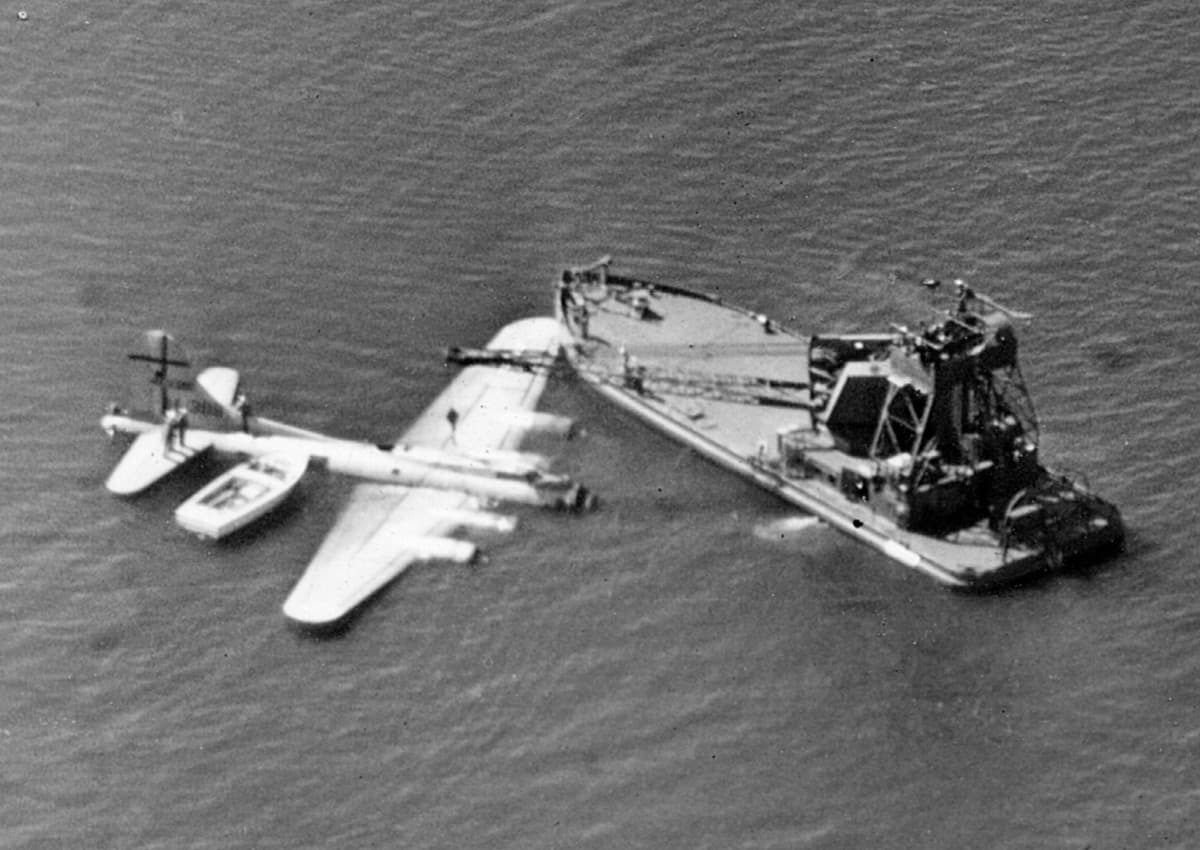
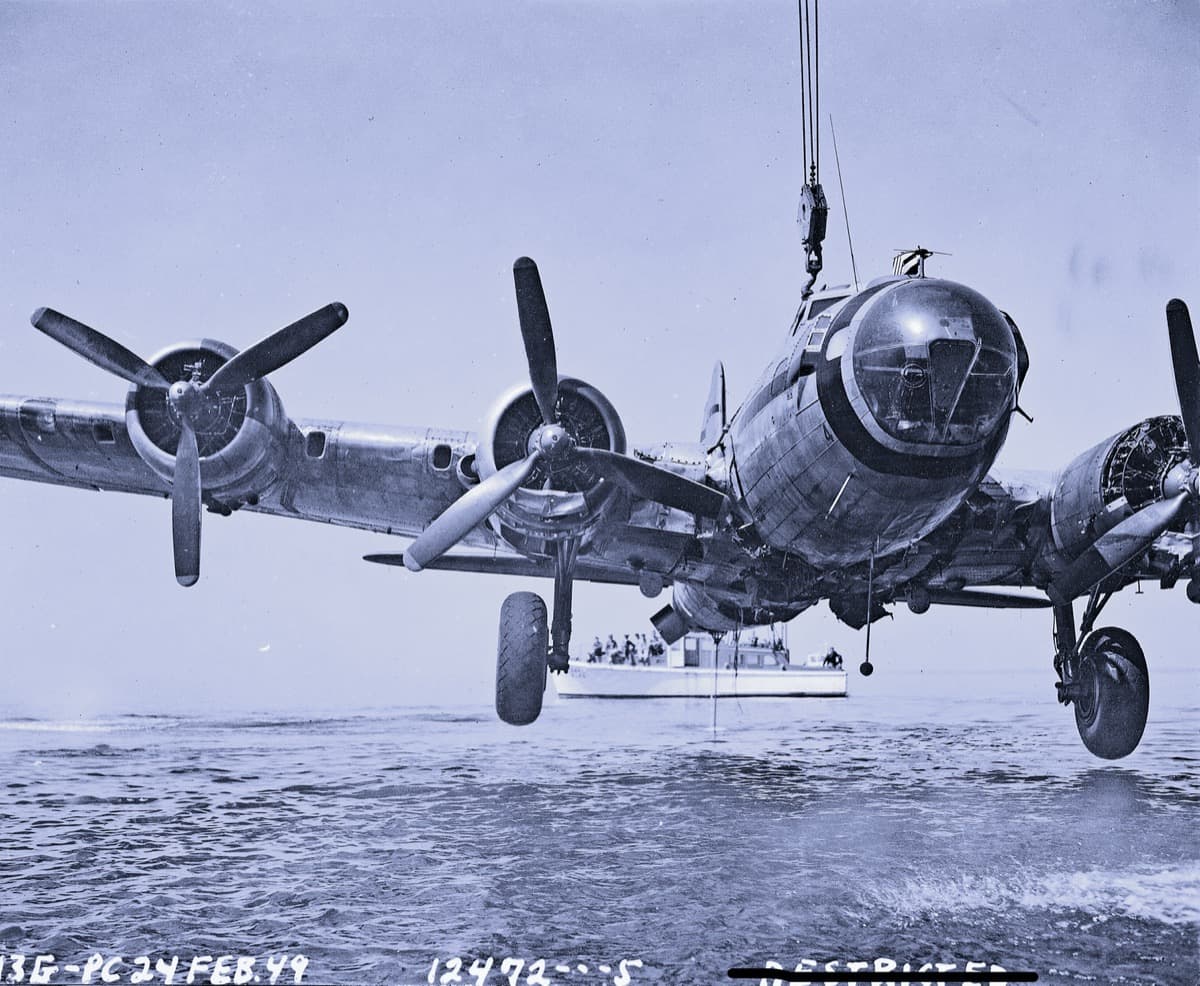
After the war, with an abundance of obsolete B-17 bombers available for drone conversion, the Air Force deliberately ditched several in the waters near Eglin Air Force Base in Florida to quantify the effects of water ramming into an airframe. Instrumentation recorded decelerations. The tests weren’t to learn anything specifically about the aged Flying Fortress, but rather to add to the general body of knowledge about the dynamics of ditching large aircraft.
The NACA tested a series of hydroflaps and hydrofoils on aircraft models, and found it possible to divert water flow from vulnerable structure by use of planing surfaces intended for that.
One design used a stoutly reinforced crew door on the ventral portion of the Martin XP4M Mercator patrol bomber of 1946 that could be extended 30° as a hydroflap in anticipation of ditching, planing on the water as the aircraft slowed. The Mercator was relegated to a short run of 19 aircraft, and we have not found any reports of the use of this hydroflap.
In the best of circumstances, ditching was a last resort if bringing a wheeled aircraft back to terra firma was not in the cards.
(Details of the postwar Eglin B-17 drone ditching operation can be found in “Q-Birds: American Manned Aircraft as Drones” by Frederick A. Johnsen, published by Crecy/Hikoki)

Good article!
Note that ditching of modern foam/composite aircraft such as the Rutan designs is typically survived without significant injuries and sometimes without significant damage. At least one EZ was able to fly again within a few weeks after ditching: the waterline remained below the instrument panel!
Some experienced canard pilots would prefer a water landing over a landing on rough terrain.
Thanks for an interesting report on a forgotten subject. One comment. While they were obviously built strong the designers didn’t expect them to be around long. Between training and actual missions most had a pretty short useful life.
Fred, incredibly interesting facts of the ditchings, etc. of the B-24 and B-17, and the Mustang. And various solutions tried.
In the latest string of F-18 incidents, all pilots survived. Planes equipped with. ejection seats offer a great chance of survival and being rescued.
Yes, the cost of an F-18 is high, but compared to the life of a pilot(s)!!!!!!!
Ann Holtgren Pellegreno