

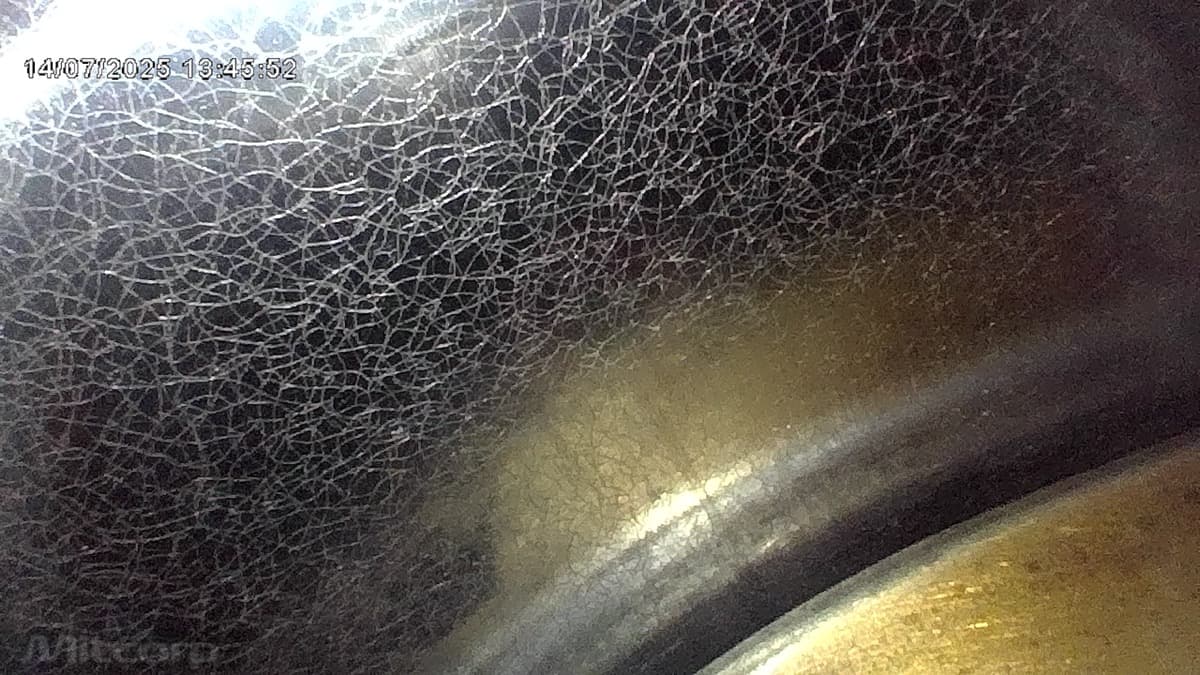
Question for Paul McBride, the General Aviation News engines expert: Is this crazing like cracks normal on barrel cylinders?
I borescoped a Lycoming IO-320 engine, and the appearance of this crazing alerted me. I’ve never inspected something similar like this.
Do you have information about this?
Ricardo Coyure Tito, via email
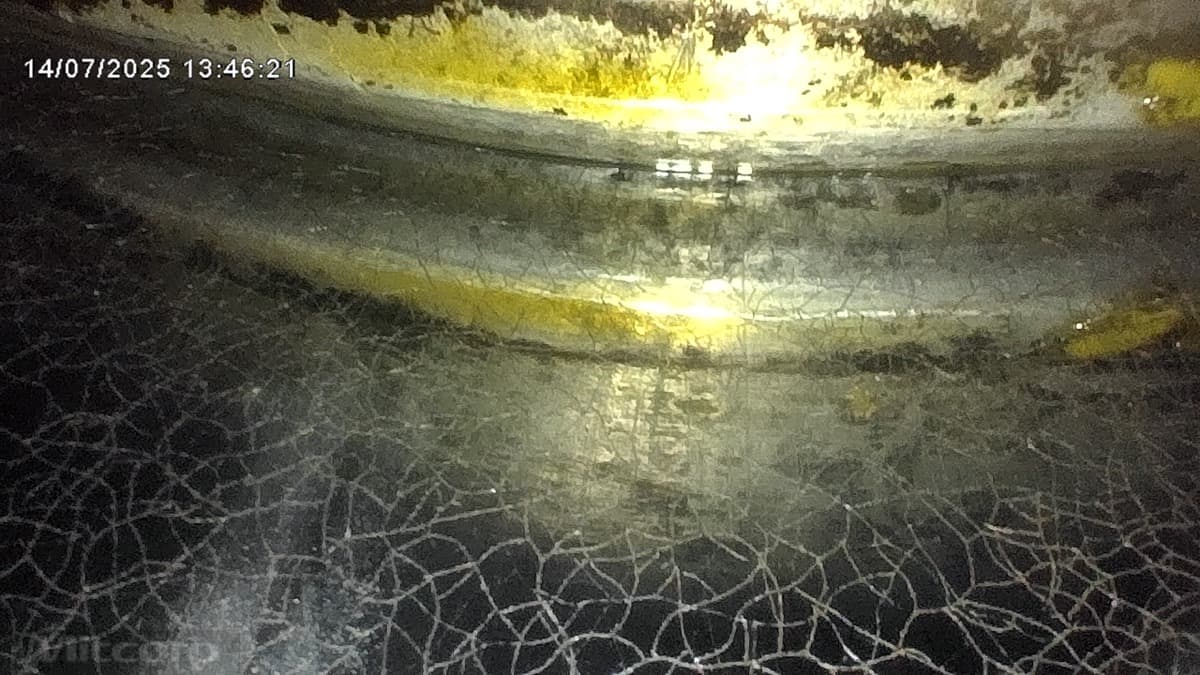
Paul’s Answer: Hi Ricardo, and so nice to receive a question from you. Also, thank you for submitting the photos, which made it easier for me to know exactly what you were referring to.
The photos of your engine are a perfect example of a chrome cylinder barrel.
Those little “cracks” are actually channels for the oil to travel through as it lubricates the cylinder walls. I’m certain this where the term “channel chrome” originated.
As you may know, chrome cylinders were used for many years as an alternate to plain steel cylinders and typically provided a longer service life. They are also still used as a reconditioning method during cylinder overhaul.
One of the advantages to using chrome cylinders is the fact that rust and corrosion are of no concern versus the “nitride” cylinder barrels that are commonplace today.
The big advantage to using the nitride cylinder barrels is the fact that they provide excellent long service life because of the hardness as a result of the nitride process. Nitriding is a heat-treating process that hardens the surface of a metal by diffusing nitrogen into it.
The only disadvantage that comes to mind is that they are known to rust or corrode if allowed to sit idle for long periods of time on inactive aircraft.
Aircraft that are operated in a high ambient and humid temperature areas, and possibly in a salt air environment, are more likely to experience corrosion issues. Adding infrequent operation only increases the possibility for the chance of corrosion.
The other point I would like to make is the fact that you always use plain steel piston rings in a chrome cylinder and always use chrome-plated rings in a nitride barrel. Should one fail to remember this, all I can say is be prepared to spend a lot of money to correct the situation!
I hope this little history regarding cylinder barrels was of some benefit to you.
Again, thanks for the great photos and your cylinders look fine.

We had a C310L with T. W. Smith chrome overhauled I0-470 engines, used in our air taxi fleet. We always carried 8 quarts of oil in one wing locker as we couldn’t keep oil in them!
Later, we replaced the original TSIO-520 engines in our C402B with chrome overhaul units directly from Continental. At an annual inspection, with 350 hours TMOH, I noticed that the cylinder head fins didn’t line up with those on adjacent cylinders. I set each cylinder’s piston as far down the bore as possible with the valves still closed and pumped 80 PSI into each cylinder while pouring Windex over the head-to-barrel area. The affected cylinders blew bubbles at that juncture. In the end, I found 6 of the total 12 cylinders cracked!
No chromed cylinders for me, thanks!
Right you are paul….I recall a top overhaul with chrome cylinders…..and the oil consumption was terrible. Eventually the school redid the top and found chrome rings….A NO NO….
Just as bad as changing a cylinder and forgetting to the cylinder gasket!….
Thanks great reply
Question: I’ve always wondered, “Why Nitride rings on a Chrome cylinder and Steel rings on rings on a Nitride cylinder?” Galling?
Chrome on chrome, the rings will never break-in, high oil consumption until corrected.