

Anyone who has ever delved into the labyrinth of rules outlined in the Federal Aviation Regulations (FAR) is familiar with the sense of confusion that can result. It’s ironic that the regulations we are required to comply with are often somewhat less than crystal clear.
There is no doubt the FARs, more accurately known as Title 14 of the Code of Federal Regulations, aren’t as easily understandable as they might be. This is a problem that doesn’t just vex the average A&P or pilot. There are instances that arise from time to time where the feds themselves find the rules to be unclear or inaccurate.
Stick with me on this. These things can get a little messy now and then.
The process of interpretation may seem simple. Yet, it is not. Lawyers get involved. Teams of federal employees are brought to bear. Every word in the regulation is evaluated and reevaluated to be sure their meanings are accurate and appropriate to the specific issue at hand. When deemed necessary, a rule can be modified during the interpretation process.
This is a topic worth understanding for at least two very important reasons.
The FAA doesn’t just recommend we follow the rules. It requires it.
Many, if not most, pilots, CFIs, and A&Ps are unaware of the interpretation process. In short, you can’t amend your behavior if you’re not aware the rules have changed.
And since we’re all mandated to follow the rules and their FAA interpretation or reinterpretation, life can get a little weird for that large swath of the general aviation community who are unaware they’re doing it wrong. That’s especially true when they can whip out their tattered copy of the FARs, turn to the appropriate part, and read the regulation that may or may not be accurate anymore.
Gulp.
Let’s consider a few relatively recent examples that have had a profound impact on how we are expected to conduct ourselves.
The Moss Interpretation
14 CFR 43.3 (d) reads as follows: “A person working under the supervision of a holder of a mechanic or repairman certificate may perform the maintenance, preventive maintenance, and alterations that his supervisor is authorized to perform, if the supervisor personally observes the work being done to the extent necessary to ensure that it is being done properly and if the supervisor is readily available, in person, for consultation.”
The crux of the matter in this case is the term “in person.”
On Sept. 3, 2024, in the FAA’s response to a request for clarification on the rule, the FAA specified the individual training the non-certificated mechanic must be available throughout the entire operation. The response indicated the physical presence of the supervising mechanic was required at all times.
This presented a problem — a big problem.
A&Ps and IAs have traditionally provided direction and were available for questions when training mechanics. In a busy shop, or an active training program, it is common for one A&P or IA to be supervising multiple trainees simultaneously. Each performing a separate function under the watchful, but not always physically present, supervisor.
As one might imagine, there was significant pushback on this interpretation from many in the industry. Certainly, no malice was intended on the part of the FAA. But, this change would effectively make it impractical — if not impossible — to train mechanics at scale.
Fortunately, on Oct. 15, 2024, just weeks after the Moss Interpretation made waves throughout the industry, the FAA issued a stay. Essentially saying “hold on. We’re not going to stand behind that opinion. Let’s go back to how we were working before all this hubbub started.”
Sometimes, we win one.
The Coleal Interpretation
On the topic of preventive maintenance the owner or operator of an aircraft can perform legally, 14 CFR 43, Appendix A, Paragraph (c) lists 31 specific tasks that are permitted. This regulation is backed up by AC 43-12A which states explicitly that any task not specifically included in that listing is not considered preventive maintenance.
In February 2009 the FAA issued a letter that took an entirely different approach to the topic.
The salient passage in that letter reads, “As with the other paragraphs of Appendix A (i.e., on major repairs and major alterations), the lists are better viewed as examples of the tasks in each category — they cannot be considered all inclusive. There are, no doubt, many ‘simple or minor preservation operations [tasks]’ and many ‘replacements of small standard parts not involving complex assembly operations’ performed daily, especially on small general aviation aircraft, that the agency would consider to be preventive maintenance, though they are not included in the 32 listed items.”
Another big win. Yay! If you own or operate an aircraft under Part 91, you can change your own oil, replace a landing light, or change a tire. So says the FAA in the Coleal Interpretation.
The Hartzell Interpretation
Earning an instrument rating is a proud thing. Earning a commercial certificate is an equally impressive feat.
It may come as a surprise to many, certainly enough applicants that the Hartzell Interpretation came to be, that the requirements for earning your instrument rating and the requirements to qualify for your commercial pilot practical test are not the same.
Uh oh. You might want to get with your CFI to be sure you’re on solid ground with this one.
The sticking point can be found in 14 CFR 61.129 (a)(4) which specifies the applicant for a commercial pilot certificate in a single engine airplane must have logged “10 hours of solo flight time in a single engine airplane or 10 hours of flight time performing the duties of pilot in command in a single engine airplane with an authorized instructor on board.”
Pay special attention to the word “or.” The applicant must complete the first task or the second. This is not a mix and match situation.
If your logbook doesn’t reflect the hours required by this regulation, you may find your practical test ends before it begins, although you will more than likely be expected to pay for the time you’ve booked with the designated pilot examiner.
The devil is in the details, they say. That’s certainly true of anything that falls under the watchful eye of the FAA and the many regulations, interpretations, and reinterpretations they publish.
I am not the devil by any means, but I have made the point many times that everything we’re expected to comply with is written down. The question is do you know where to find it?
Word of mouth is great for marketing. However, it’s severely lacking when it comes to compliance with the FARs. Find a reference, read it, know it, love it. Right up until it changes, as it most surely will.

Loved this article, thanks Jamie. I’ll be sure to read up on the interpretations section as they’re always being talked about.
Good article, Jamie. I’m a little surprised you didn’t mention where to find the interpretations mentioned in your article.
Those and more can be found on the FAA website under Office of General Counsel (you’ll have to do a search to find the web page on the FAA website).
Once you are on the webpage look on the left menu bar for operations. Click on it and you will find on the left menu bar “Regulations”. Click on it and you should find a search tool for finding interpretations. Use key words relative to the topic you want to know about.
This is what happens when lawyers write laws/ rules on subjects they know nothing about. FAA bureaucrats attempt to go through an entire career without making any decision they can be held responsible for.
The old saying “The FAA isn’t happy until you’re not happy “ still holds true.
I can vouch for the existence of Jamie Beckett and yep, this is the way he talks. Glad to count him as a friend.
Thanks for backing me up, John. I’m feeling well validated by you and Mike.
It has always been difficult to interpret a Regulation. Even FAA inspectors have problems and are actually are not authorized to interpret a Regulation …..
If there is a violation of the regulations , the inspector involved gathers evidence he believes is in violations and presents it to an FAA attorney to interpret weather there has been a violation and then and only then is a Letter of Investigation LOI sent to the airmen involved…..A long tedious process.
I’ve met Jamie – he’s a real, live person, not an AI. I’m not an AI either . . . either . . . either . . .
AI wrote this article. 👎
I don’t feel like AI. Do you know something about me that I should know too, Craig? Now you’ve got me nervous. If I’m really just a brain in a jar hooked up to a computer somebody is going to have to do some serious explaining.
It’s because you used the word “delve.” There’s been a spate of “How do you know it’s AI” articles lately, and all of them say AI loves the word “delve” and the use of the em dash.
I’ve copyrighted the word “delve”, also the em dash, also “egregious” and a bunch of other infrequently used words out of my Roget’s and I’m going to sue ALL the AIs for IP infringement. I’m going to make my fortune the American way – through litigation!
Old, Sebastien? I think I prefer the term, classic.
Thanks for another good article, Jamie. Informative as usual.
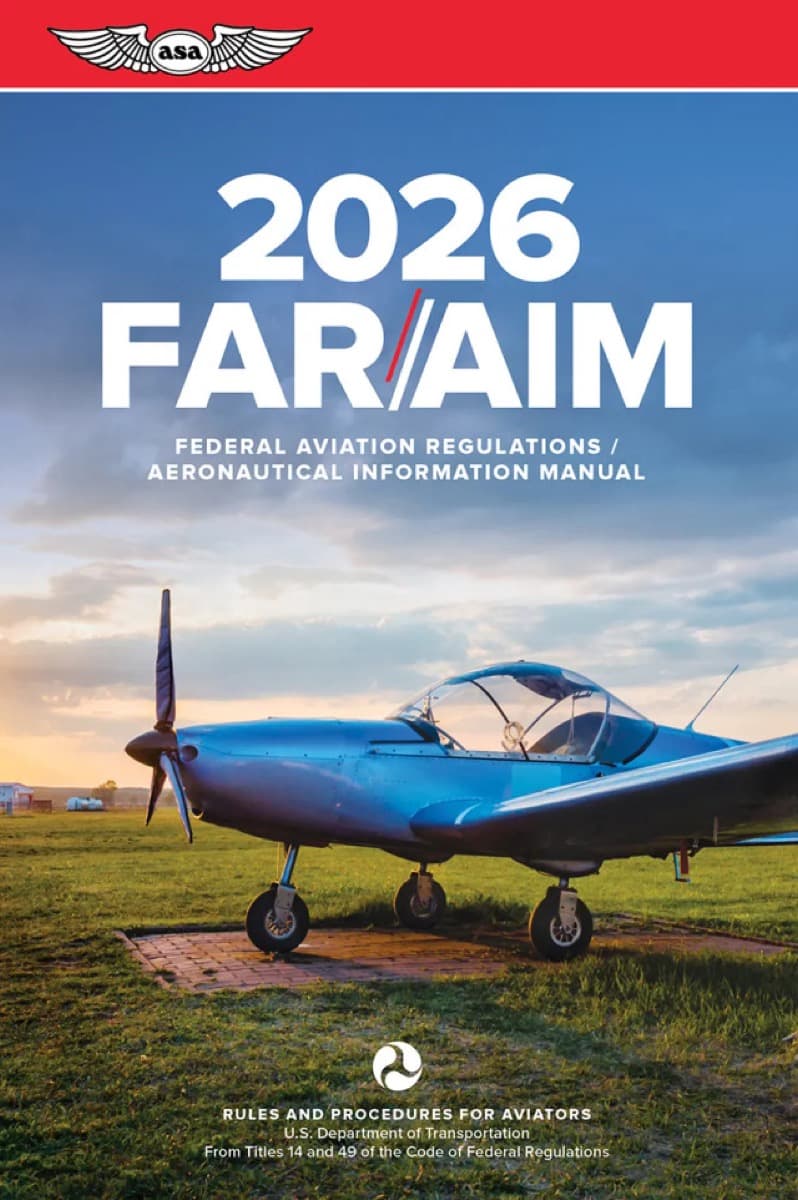
Nice to see a Zenith on the cover of the 2026 edition. It’s a older Zenith CH 601 model.