

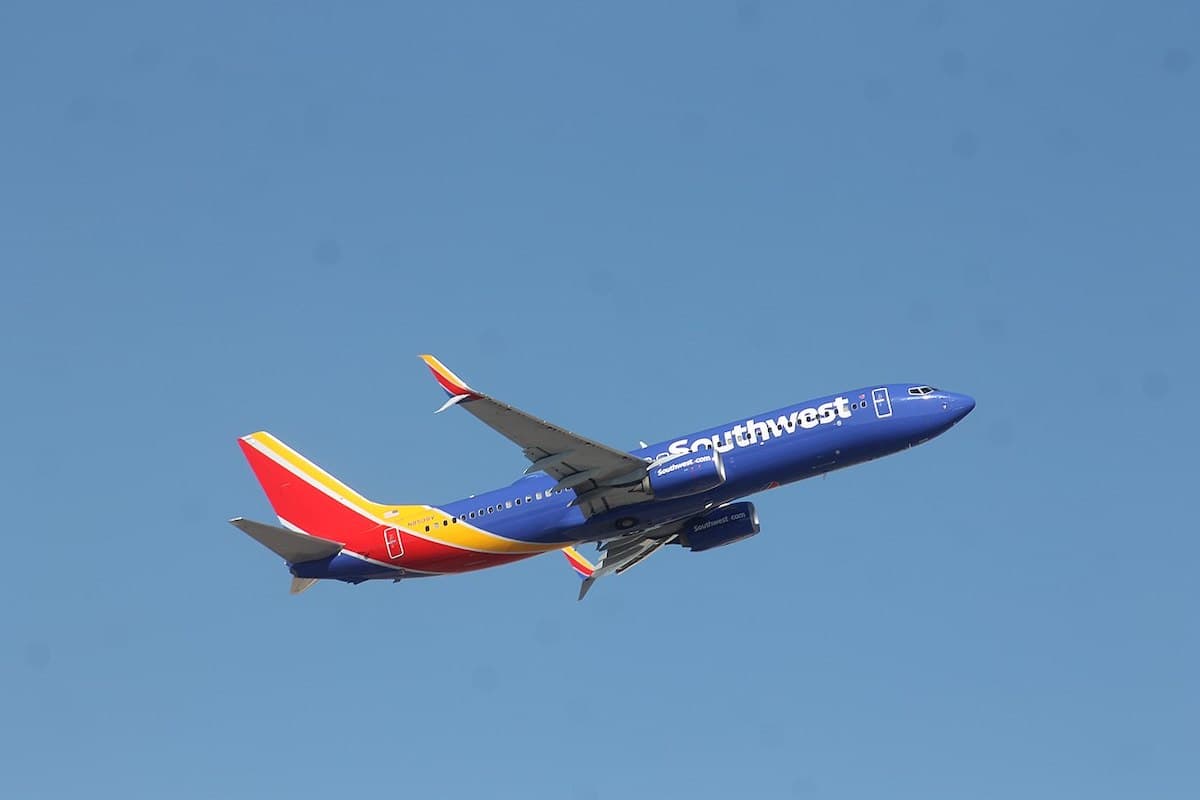
When I arrived in Sanford, Florida, to attend Comair Aviation Academy in October 1991, I had a clear vision of why I was learning to fly. I intended to become an airline pilot.
Big iron called out to me. The job, the lifestyle, the pay scale, and the opportunity to travel extensively sounded practical and plausible to me.
That’s not what happened. Not for me anyway.
As dead set on my career path as I was, that determination was grounded in a somewhat myopic view of what aviation had to offer. The industry is far more diverse, and the opportunities are more varied than I knew at the time.
It may give comfort to some who have been working toward a pilot certificate for an extended period of time without much success to know, I was in the same boat when I made the decision to attend Comair. I’d been taking lessons since 1987. Four years in and nearly 100 hours later, I still hadn’t earned my ticket.
The academy-style training environment changed all that — largely because I was fortunate enough to be assigned to a flight instructor who was dedicated to helping me achieve my goals. I earned my private pilot certificate within weeks of arriving.
It wasn’t easy. It wasn’t inexpensive. But it worked. That’s exactly what I was after.
Todd was an exceptional flight instructor. We had a deal. I’d buy dinner (usually pizza or some other inexpensive takeout food) and Todd would come to my apartment to review ground school topics with me. One on one works.
As I entered the instrument training phase, I was lucky enough to remain assigned to Todd. As was my friend and neighbor Baird. Both were stellar pilots. My network of serious aviation-minded folks was growing. That was a major factor in my success, I have no doubt. They fired up my competitive juices.
Guys are naturally competitive. If he can do it, I can do it, we tell ourselves. That attitude helped immensely when the going got tough. And yes, the going did indeed get tough from time to time.
It’s also tremendously satisfying to learn new concepts, gain skills, and hone them to a level of precision I’d previously thought to be nearly impossible.
Scott lived next door. Bryan was housed in another part of the same apartment complex. Rob, the self-described, apple pickin’ Ohioan, was my roommate. Matti, a Finnish student, filled the other bedroom in our home away from home.
We studied together, sometimes flew together, and spent many hours in the evening at the pool discussing what we’d learned that day and what troubled us about what was to come.
We even formed a study group that met regularly to gain a deeper understanding of airspace, meteorology, aircraft performance, systems, procedures, and the like. Each of us picked a topic to focus on. That individual would become the local expert on that issue.
We essentially became our own support group. And it worked.
Most of my classmates went on to the airlines. They started as CFIs, then built time with charter operators. We relocated more than once in search of more desirable flying jobs. We grew as people, as pilots, and as mentors to those who were coming up behind us.
To this day I’m proud to have known every one of my peers at school. Thankfully, I’m still in touch with several of them, including Matti who went back to Finland after graduation. And Scott, who flew off to Bali where he lives an idyllic life in his off time and occupies the left seat of an airliner professionally.
Other than a couple right seat flights in King Airs, and a handful of simulator flights at airline training facilities, the biggest airplane I’ve ever flown on a semi-regular basis was a Piper Seneca. I never went to the airlines. To be honest, I never even applied. General aviation became my happy place.
To my great surprise, I found being at the controls of a small propeller-driven airplane to be far more satisfying than my younger self could have imagined. It’s been my good fortune to fly taildraggers and tricycle gear equipment. I’ve piloted seaplanes, biplanes, singles, and twins. Early on in my career I was even lucky enough to pick up some helicopter time in an Enstrom and a Jet Ranger.
It’s been quite a journey, thoroughly satisfying and eminently worth the effort.
My peers from flight school fly big iron, as I dreamed I would one day. But to my great surprise, I found the hierarchy of pilot pride I’d assumed was inherent in the business doesn’t exist.
My friends fly 747s, MD11s, Airbus 350s, and the like. I flew Cubs, Cessna 152s, Cherokees, and light twins. As a new entry to the industry, I assumed the former was the goal and the latter was somewhat shameful — as if anyone who settled for piston engines and a single propeller had missed the boat somehow.
Nothing could be further from the truth. My big iron buds have all expressed a desire to fly seaplanes or to slip into a gentle touchdown on grass at the controls of a Cub. They hold multiple throttles and engage the autopilot in the flight levels while I spent untold hours tooling around at 500 feet AGL smelling the orange blossoms and counting the cows, sheep, and elephants below (yes, there are elephants in my neighborhood).
Aviation is so much bigger, and more diverse, and more rewarding than I ever could have imagined when I rolled into the parking lot at Comair Aviation Academy all those years ago. It wasn’t just the aircraft that made my life’s work worthwhile. My happiness wasn’t limited to the friendships I made, the destinations I discovered, or the challenges I faced and overcame. It was all of it. Every day was different. Every flight an experience I cherished.
With so many options, so many choices, our personalities and ambitions took us all in different directions. Yet we all ended up exactly where we were ultimately supposed to be. In the U.S., northern Europe, or Asia. Happy with what we chose to do and proud our old friends for finding their niche as well.

Great article. From my experience flying Cubs, Helicopters, King Airs, to Boeings, and C-5s the true lifetime professional CFI is Top Dog. Nothing demands more personal understanding, communication skills, dedication, and knowledge, in the most demanding of work environments. And Rolf, a Firm Landing is a Safe Landing. Cheers
“And Rolf, a Firm Landing is a Safe Landing. Cheers”.
Yeah!
If you don’t feel it, at least a little bit…(i.e., it’s not a “greaser”…), you’re going too fast!
I grew up exposed to several airline pilots who also had small aircraft at the local airport. They all conveyed an aura of professionalism and gratitude along with a camaraderie that I wanted a part of. Although I never achieved that airline pilot’s job, I still hang out at my local airport and just recently realized that I have more friends and acquaintances at the airport than in any other of my hobbies and endeavors.
My one comment to your big iron friends is to please learn how to land those airliners smoothly!
I’m so disappointed in most every airline flight that we take that the pilots just slam the jet down on the runway! How unprofessional! We’re not landing on an aircraft carrier!