

Question for Paul McBride, the General Aviation News engines expert: I thoroughly enjoyed your article, “Is this engine a ticking time bomb?”
Here are some facts regarding my aircraft:
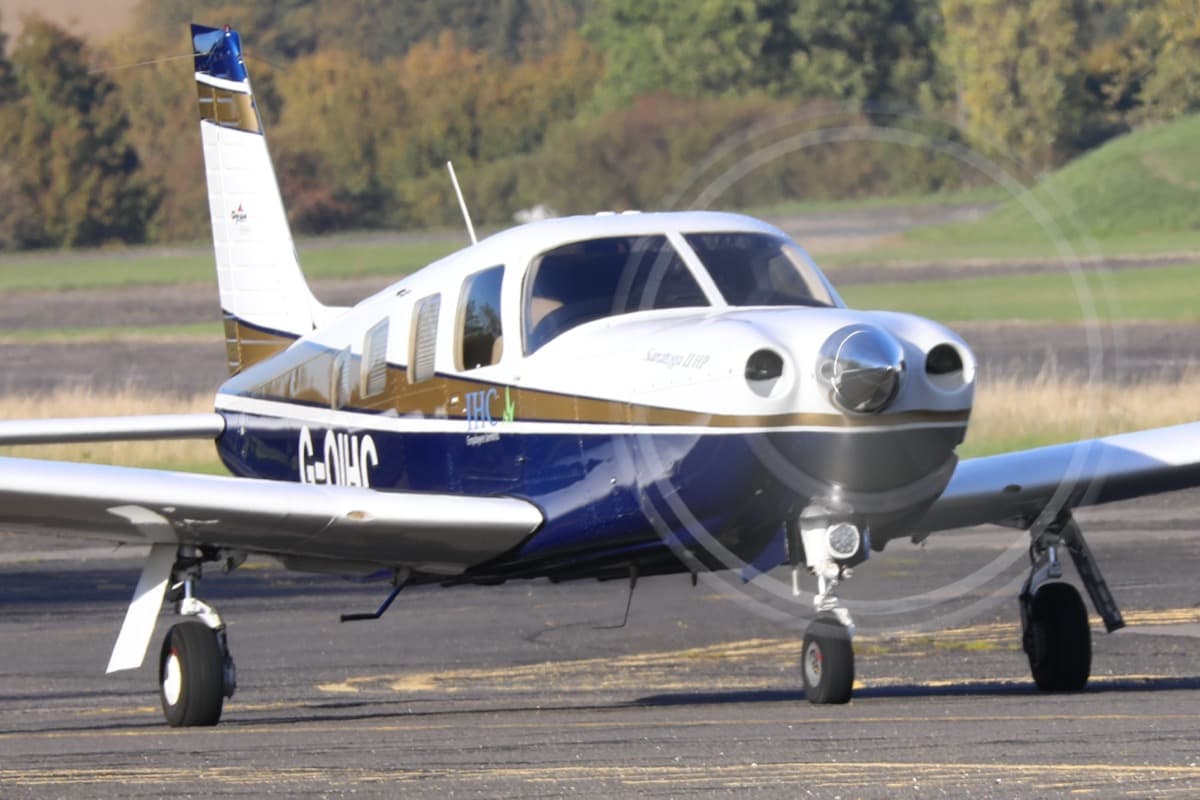
- 2004 Piper PA32R-301, S/N 3246204
- Total time: 2,370 hours
- Engine: Lycoming IO-540-K1G5, S/N L-28209-48A
- Time since new: 2,370 hours
Regarding cylinder maintenance:
- Number six cylinder was removed and replaced with an overhauled cylinder at 687 hours
- Number two cylinder was removed and overhauled at 2,307 hours
- All cylinder compressions are 64 or better
- Engine oil analysis results from Aviation Oil are within normal limits
- I burn one quart of oil every 2.2 hours
I ordered a factory-rebuilt engine from Air Power on July 20, 2023, with an expected delivery by March 2024. However, the arrival date has now been delayed to late October 2025.
I fly about 30 hours a month, mostly to the Bahamas — yes, lots of open water.
My question is: Is my engine a ticking time bomb? Should I consider overhauling the remaining five cylinders?
I look forward to your suggestions and advice. Your expertise and 40-year experience with Lycoming are truly impressive.
Robert, via email
Paul’s Answer:
Robert, from the information you’ve provided, I’d say you have done an excellent job of keeping on top of maintenance issues, such as the two cylinders you replaced. That would indicate to me that you are doing routine maintenance and investigating any potential issues.
I honestly do not think your engine is a “ticking time bomb,” but due to its age and the flight envelope it’s used for, I’d be keeping a closer eye for anything that appears different from what you usually see on the instrument panel, as well as any changes in sound during operation.
I highly recommend that you continue to do your frequent oil and filter changes, including the oil analysis, hot differential compression checks, etc.
Your oil consumption is probably better than average with the number of hours you have on your engine.
My gut feeling is that unless you see something change, you’re good to go, but just stay on top of things.
I feel pretty confident that because you fly about 30 hours a month, you would be very much aware if there were any small changes in the engine’s performance that would alert you that something has changed and you’d better look into it immediately.
I hope my response will serve as a guideline for continuing your engine in service until the replacement engine arrives. Hopefully, that will be soon, and you can continue to fly for many more hours.

Querry why no discussion on using a borescope for periodic inspection of valves, cylinders etc
I did mention using a borescope to evaluate the valves, the crosshatch and piston crown.
But the crank, rods and bearings can’t be looked at. Oil pressure and temperature as well as the engine making the book power can give an indication that the engine is good to go.
Every engine is a ticking time bomb. It’s just where you are on the timer you are. What matters are the fundamentals. Power, performance, temps, fuel flow, oil consumption, leaks, borescope, compression, metal in the filter. If your engine has ten hours or two thousand thesebtell a story. Had a customer who’s engine met all the above criteria but at 2600 SMOH it went bang. Threw a rod through the case. They landed safely on a field but the core was ruined and cost him an extra 15k.
Buy a twin.
Accident rate for twins is at least 4x higher than single engine.
Simple………Do not fly the aircraft….especially over water out of gliding distance of land…
StOP!!!!!!
If rings were broken or the cylinder wall was scored, it’s doubtful that a differential compression test would be as high as 64 over 80!
I would recommend that he borescope the cylinders to see the condition of the valves and look at the cylinder walls, for glazing or scoring from possible broken rings. Or, the rings are just very worn with that many hours on them.!
Using oil at 2.2 hrs per qt is quite high and If it was a TCM engine, they state that it is not airworthy if oil use is 2 hrs per qt., or lower.
Oil pressure or static power were not mentioned…other airworthy items.