

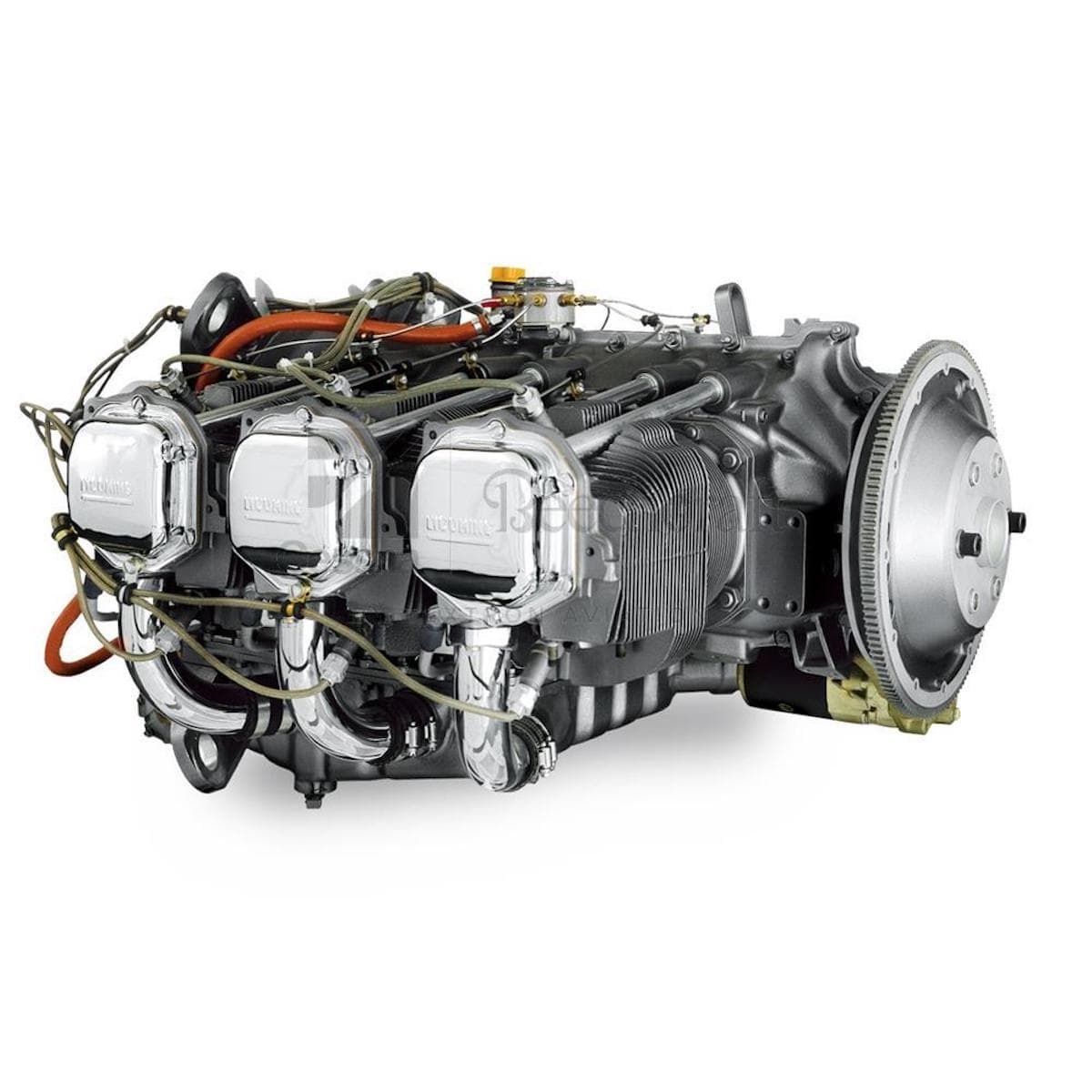
Question for Paul McBride, the General Aviation News engines expert: Hi Paul, I came across your name in an AI search. Looks like you are well informed on Lycoming. My question is wide deck vs. narrow on a Lycoming O-540 engine.
I purchased a 1971 PA-32 Cherokee 260 about 18 months ago. I did not do my due diligence in a pre-buy and even being in the marine business on Cape Cod for over 45 years did not consider the effects on an airplane engine with only 300 hours since rebuilt in 2012 that spent a lot of time in a hangar in New Jersey.
Now at the annual with the 120 additional hours we put on the engine, the #1 and #2 cylinders have 10/80 due to exhaust valve issues, along with oil analysis showing higher than normal nickel. Borescope through the fill shows excessive wear on the cam, as well as surface rust on viewable parts, such as rod bolts and crank counter weights.
It’s being decided whether to reman or replace. Lycoming is out one to two years, which is too long to wait for a new engine.
I’m trying to weigh out the extra expense and benefits, if any, going forward with another narrow deck engine or putting more into a wide deck.
My inclination is to spend the extra $6,000 to $10,000 and go with a wide deck as the narrow has not been produced for a long time and is basically obsolete or is rebuilding a narrow deck still a viable option?
That being said, are there any questions that should be asked of the history or anything I would want to know about the wide deck being used for the replacement or is that a moot point as it will be completely overhauled and warrantied?
I own this airplane, but two of my four sons fly it. There was a lot of pain telling my two boys about the down time, one of who flys CRJs for a living but loves to fly the airplane on his off days and my other son who just earned his IFR rating.
Our use in just pleasure flying, hopefully a minimum of 100 hours a year. We plan to keep it for a few years anyway.
What are your thoughts considering our use and do you think it would lessen the value if we stuck with the narrow deck?
Thanks much for your time and I look forward to any insight you have.
Marty Taubert, via email
Paul’s Answer
Marty, I could begin by saying shame on you for not doing your due diligence in a pre-buy inspection. However, I’m sure that would be just adding insult to injury, and you’ve probably already beat yourself up over that decision enough and don’t need your nose rubbed in it one more time. It may not make you feel better, but you are not the first person — nor will you be the last — to find themselves in this situation. So, let’s see what we can do about helping you out with your dilemma.
From the ugly information you provided, I’d say you’re in bad shape and I might think twice about continuing the aircraft in service. True, the two low cylinders are bad enough, but the results of the oil analysis are what I don’t like at all.
When you looked inside the engine and noted excessive wear on the camshaft in addition to surface corrosion on other internal components, that sounds like the death knell to me. It at least would limit any further operation because any further operation would cause even more damage internally.
So now we come to the big question as what the next step would be. I can’t even begin to explain why factory engines have such a long lead-time but, as they say, it is what it is.
My suggestion for you would be to look around at the various “reputable” field overhaul facilities and see what they may be able to do for you by either exchanging your engine for one that they may have in stock (I have serious doubts about this) or possibly overhauling your engine.
Marty, my thought is that having your engine overhauled would be the easiest way to go.
However, there are certain risks, one of which is the true condition of the crankcase.
If it is found to be serviceable, then that’s the good news. If it’s found not serviceable, the only hope is that it can be salvaged by weld repair and whatever else is required to bring it back to a yellow-tagged serviceable part.
I don’t think Lycoming still offers narrow deck crankcases for your model of engine, which means the only available sources are to be found in the field.
Lycoming does continue to produce complete cylinder, piston, and ring assembly kits for narrow deck engines. I will caution you that these kits may also be suffering from a huge backlog and not be readily available. Hopefully, all of your cylinders would be able to make it through the overhaul process, saving you from having to purchase costly replacements.
My final thoughts would be do whatever you need to do to keep either your engine and have it overhauled or find another engine and have that overhauled. I’d guess the cost to overhaul your present engine will be rather expensive due to the high replacement cost for the internal components.
One last comment Marty, and that is the overall history of your aircraft. There is no doubt in my mind that the extended time in the hangar in New Jersey, which is not a friendly environment for very limited flight time on an engine, had a detrimental effect on the overall condition of the engine.
Marty, I completely understand how difficult it must have been to break the news to your boys, but I think they will both agree that this challenge is in the interest of safety. I understand that the CRJ pilot can exist without the Piper, but the recently new IFR pilot may want to consider renting an aircraft to stay in practice while waiting to get your airplane back in the air.
Marty, I apologize for probably ruining your day, but I prefer to tell it like it is, rather than sugarcoat a situation.

1600 hours, 26 plus years. Oil analysts saids all very normal. Compression all mid 70 plus.
Many A&P IA said keep flying. Oil consumption 1 Qt every 12 hours. Runs great.
Sitting for any period of time damages cam and lifters. They need to be flown every week . If they sit for 3 mo it’s almost guaranteed cam and lifter damage will start. You may not know it for some time if a cylinder is not removed. On the 0-235 it’s easy to tell by how far the valve opens while doing valve adjustment. Some say you can’t tell by valve lift, but I can 100% of the time. Remember unless your going to fly once a week it’s cheaper to rent. Narrow deck vs wide deck talk to O/H shop , at least two of them. I never use used cylinders. It’s almost a sure thing used ones will crack. Always check for cracked cylinders on pre buy and inspection if they were not new at last O/H. Put vacuum on blow attach to exhaust using an old inner tube and turn on with plugs installed. Soap water spray next to lower plug between fins on exhaust port or any place else. Bubbles will indicate a crack. Running an engine lean on ground before takeoff helps reduce lead deposit on exhaust valve stem. Running engine around 1500 a few seconds then shut down at 1200 helps to get the lead out. Good luck.
Marty’s question was about whether to spring for the wide deck upgrade versus just overhauling the narrow deck O-540. And we would all like to know information on the value effect of the upgrade versus simply overhauling the narrow deck.
He never asked about whether he should down his aircraft, he has already done that. And why is half the response still about the lack of pre-buy inspection, Marty already owned that. We all buy used planes taking a chance, sometimes we get lucky.
It’s pretty clear that Paul McBride didn’t really answer any of Marty’s questions. Not only that, the lack of tracking with Marty’s real issue and the state of the industry really suggests that the response was written by AI.
Disgusting
I know owners want to ignore it, but there is a reason. The TBO is both hours of use OR calendar time. Which ever comes first! Clearly neither require an overhaul at the time but can we guess why there are both criteria? Something to do with parts that don’t age well, things that will corrode beyond usable specs. Not to say there probably many still within spec, but a risk as the manufacturer has already specified with the TBO timeframes.
Airplane seller: For Sale 19xx XYZ airplane with engine 500 SMOH.
Airplane buyer: Sounds great! Wait, when was that Overhaul done?
Airplane seller: Oh about 21 years ago, but it only has 300 hours SMOH!
Buyer beware!
Call central cylinder – those guys are the best with engine overhauls / advice here