

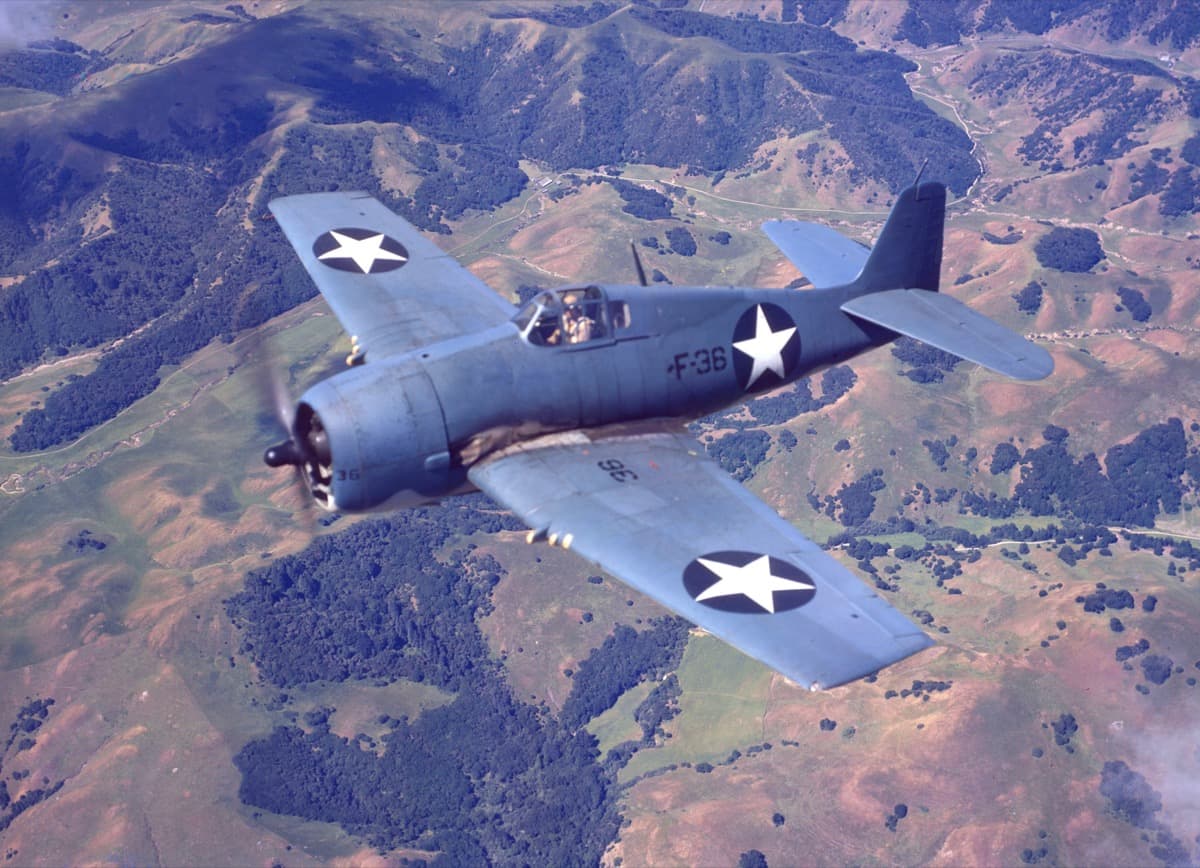
The Grumman F6F Hellcat stands out as the U.S. fighter that downed more Japanese warplanes than any other Allied naval aircraft in World War II. Yet the Hellcat’s capabilities, as measured in speed, were always in the shadow of the racy Vought F4U Corsair.
Aviation historian Rene Francillon described the Hellcat as having “adequate performance,” but that was not meant as faint praise. Naval aviation history expert Barrett Tillman opined that the F6F was “the most important Allied aircraft in the Pacific during 1943-44.”
The Hellcat’s efficacy did not develop in a vacuum. The discipline needed to grow a modern wartime fleet of aircraft carriers required attention to many moving parts, including the development and production of aircraft to give those carriers teeth in combat.
In 1941, design discussions for a modernized follow-up to the Grumman F4F Wildcat led to the creation of the F6F, a new airframe wrapped around a more powerful engine. In that same time, the Navy created the stellar Essex class aircraft carriers, envisioning a need for a fighter like the yet-unbuilt F6F aboard each of the new carriers. The Navy hedged its bets, nurturing both the F6F and Vought’s F4U Corsair fighters in their infancy.
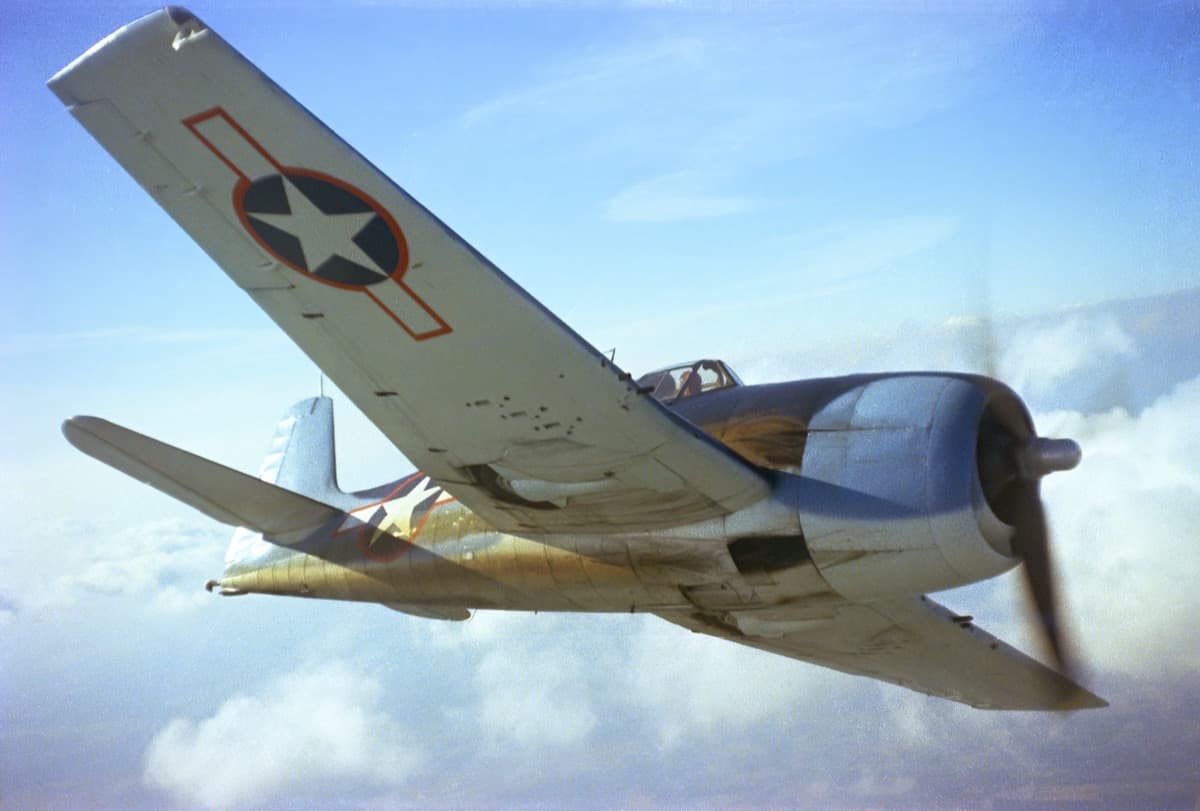
When brainstorming the Wildcat’s successor, Grumman designers studied combat reports from other nations at war. After America’s entry into World War II, U.S. Wildcat pilots had tips to share. What evolved was a fighter with the pilot seated high enough to promote visibility over a deliberately downsloping nose. Grumman’s legendary tough structural design for the F6F included its patented Sto-Wing method for folding the wing panels back along the fuselage for compact parking aboard ship and below deck.
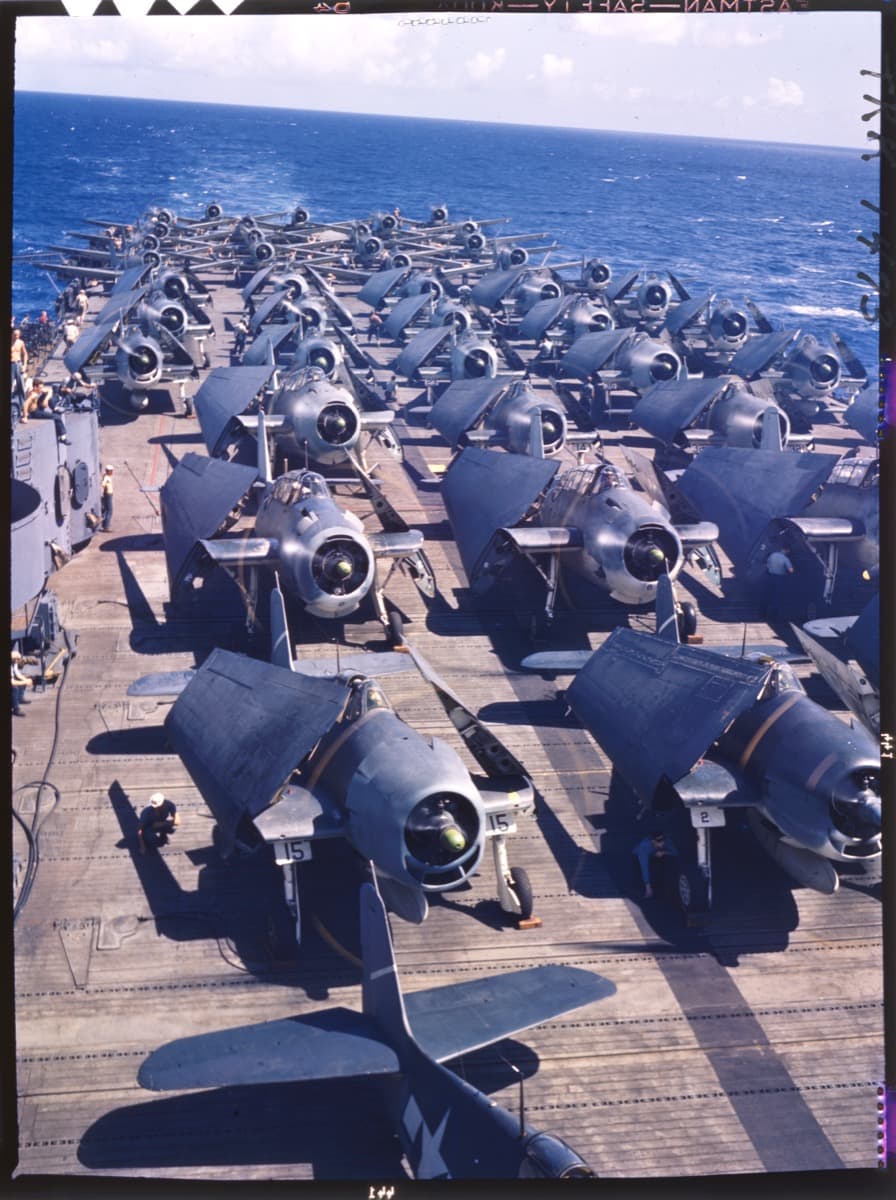
The powerplant ultimately selected for production F6Fs was the reliable Pratt and Whitney R-2800, also powering the F4U Corsair and P-47 Thunderbolt. Grumman engineers placed the broad F6F wing lower on the fuselage than had been the wing of the Wildcat. The F6F’s wing had more area than any other single-engine U.S. fighter, and this kept wing loading low, a useful trait in combat maneuvering.
Prototype XF6F-1, XF6F-2, and XF6F-3 configurations dabbled in engine variations, including a Wright R-2600 engine in the initial Hellcat.
The first XF6F flight came on June 26, 1942. But by then the Navy had already requested production F6Fs to fly behind the more powerful Pratt and Whitney R-2800, exemplified in the XF6F-3 that first flew on July 30, 1942. The Dash-3 Hellcat featured a few tweaks to the airframe, like horizontal tail surfaces of slightly larger span and narrower chord.
The first production F6F-3 flew in October 1942, setting the stage for rapid construction of thousands of F6F-3 and then F6F-5 models of the Hellcat.
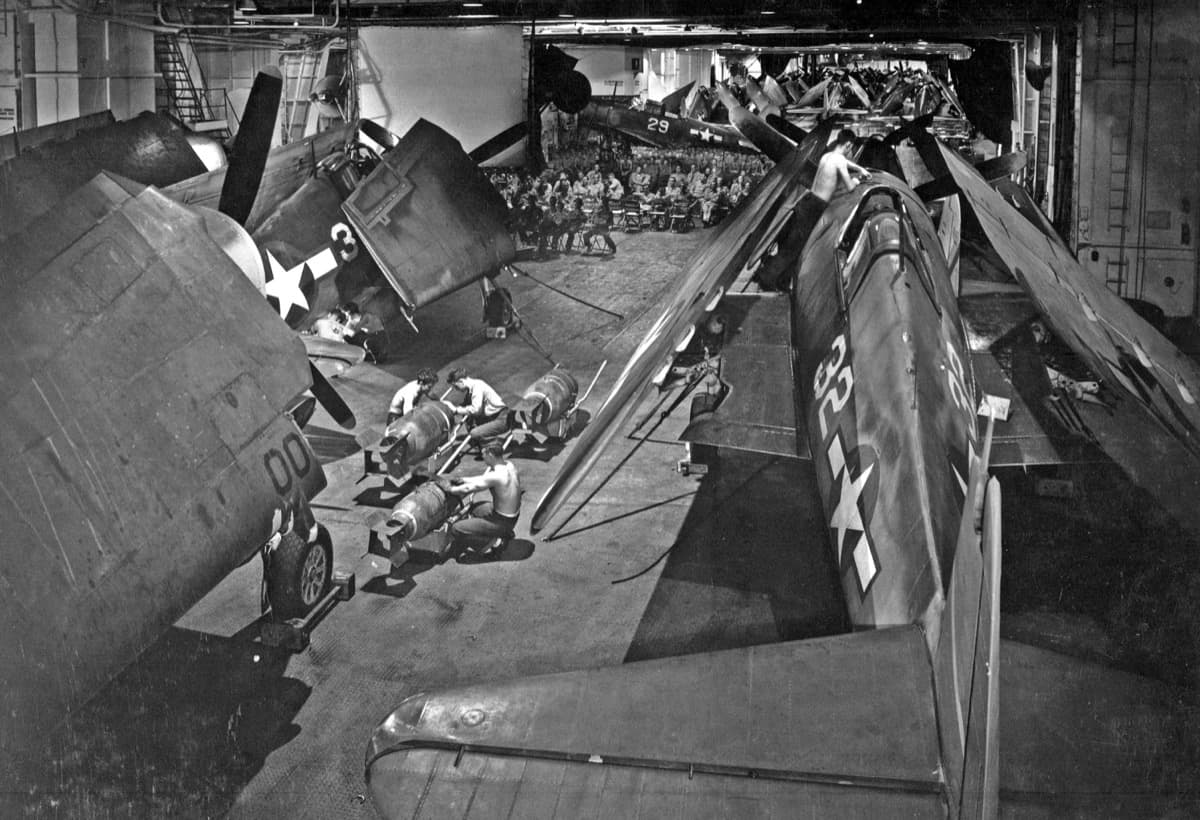
A key to the Hellcat’s success and rapid production was the forethought that went into the design. The F6F airframe remained essentially the same through production of more than 12,000 between 1942 and November 1945 when the last F6F-5 was wheeled out of the Grumman production doors. A few small changes to things like cockpit glazing, nightfighter radar installation, and wing guns were visible during the construction run. Ramping up production, the wartime team at Grumman attained astounding rates of 500 F6Fs a month after January 1944.
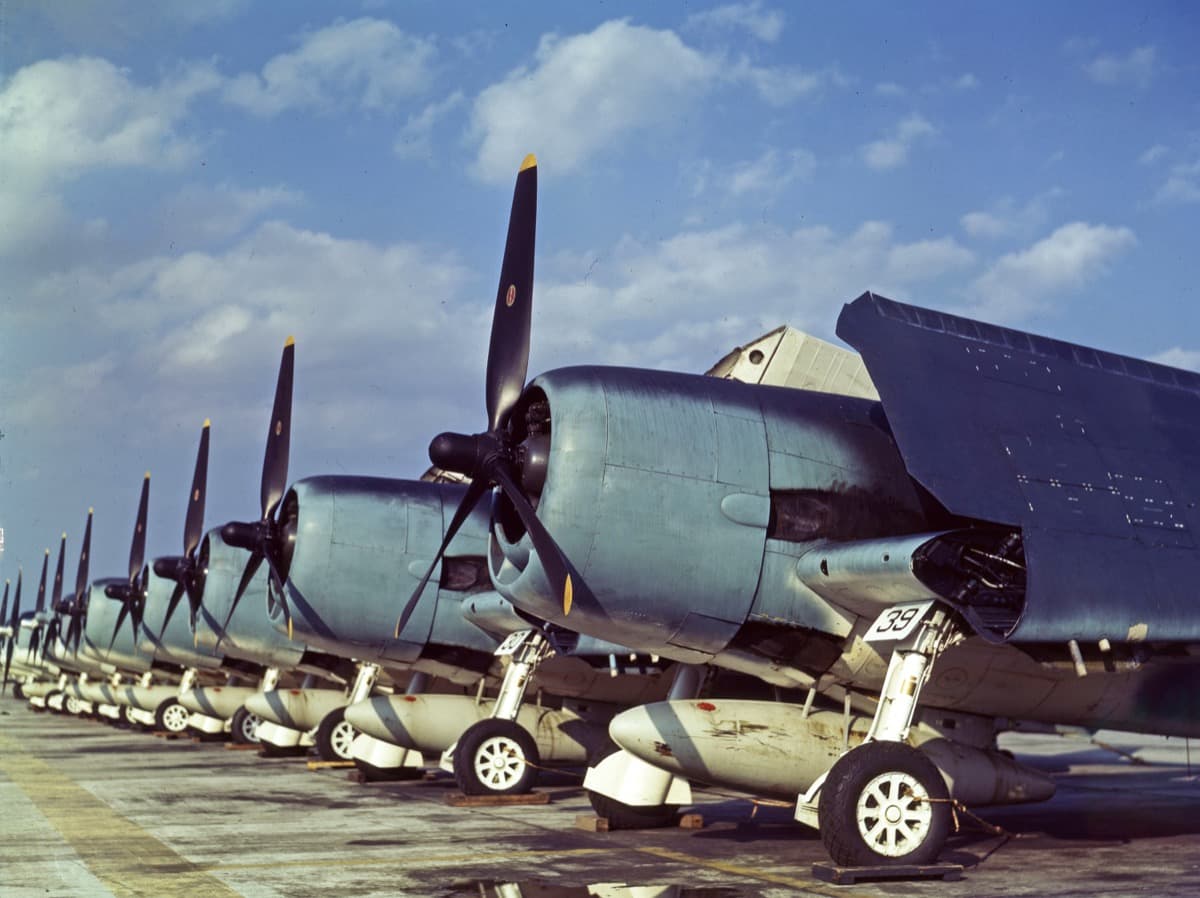
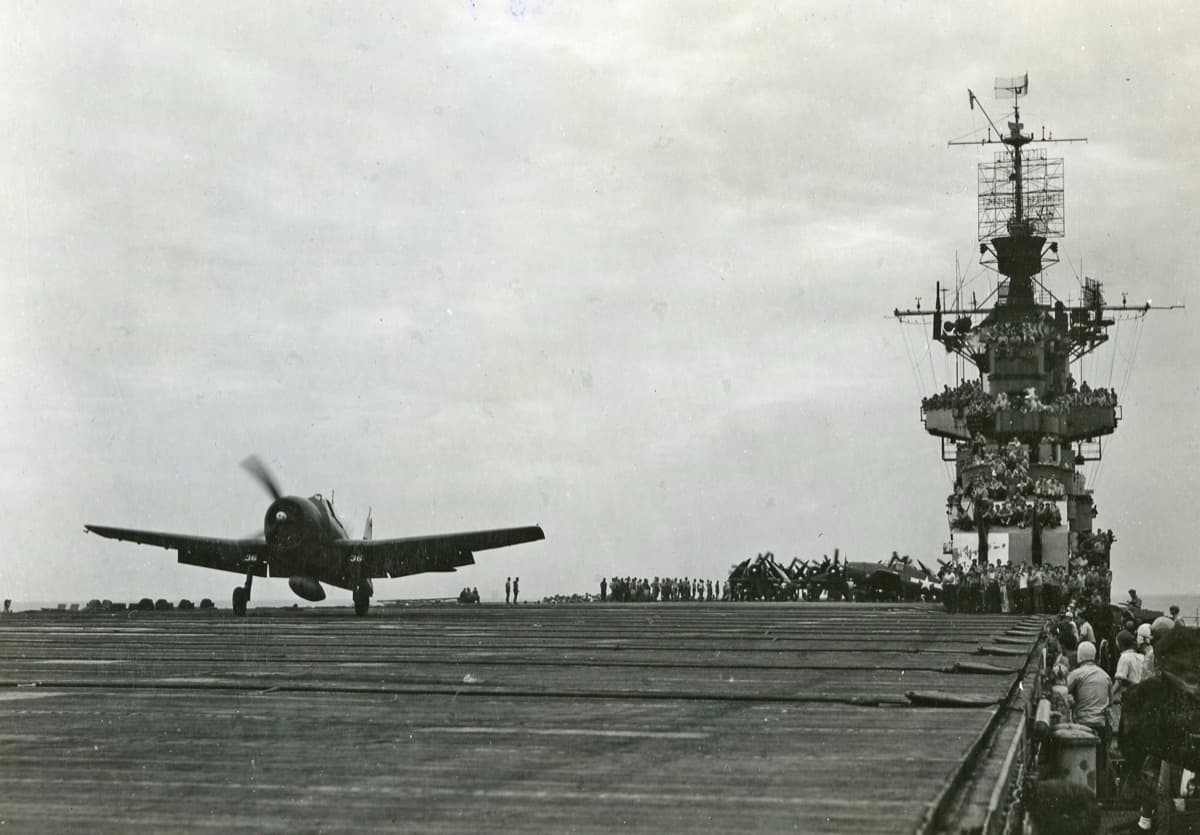
As the big Essex class aircraft carriers entered production and service, the Navy was clear on what it wanted in fighters. The carriers were larger and more numerous, and that added up to a need for many fighters. The F6F Hellcat became the standard, reinforced when early F4U Corsairs exhibited carrier landing issues that took time to resolve.
The wheels of industry and bureaucracy turned in unison, and Grumman off-loaded production of the F4F Wildcat and TBF Avenger to a new division of General Motors, while sending plans and parts for the utility J2F biplane amphibian to Columbia Aircraft for continued production. This freed up the Grumman assembly facility at Bethpage on Long Island for the F6F Hellcat, which benefited from additional shop space erected in the war years.
Naval historian Norman Polmar, calling the F6F Hellcat the principal fighter aboard U.S. aircraft carriers from 1943 to 1945, said the U.S. Navy operated more shipboard Hellcats than any other type of carrier-based aircraft during the war.
The evolving needs of combat in the Pacific war saw the Navy emphasize Hellcat fighters aboard carriers at the expense of bombers. Targets suitable for U.S. Navy torpedo bomber attacks were diminishing and the threat from Japanese aircraft, including kamikazes, was on the rise. This made Hellcat fighters more valuable to place aboard ships, especially since the F6F could perform some of the functions of a bomber by carrying ordnance on the centerline shackle, Polmar wrote. And F6F-5s had two additional bomb shackles, one on each wing center section stub. Hellcat pilots could also perform scouting missions.
Toward the end of the war, fighter strength authorizations for the big carriers reached 73 aircraft. That many Hellcats took up a lot of deck and hangar bay space, so the complements of dive bombers and torpedo bombers were reduced to only 15 aircraft of each. At one point, the USS Wasp had 90 Hellcats assigned in its aircraft complement.
The F6F Hellcat topped out below 400 miles per hour at about 380, but this still bested the 331 mph fastest speed of the Hellcat’s common adversary, the Mitsubishi A6M Zero, and some of its contemporaries.
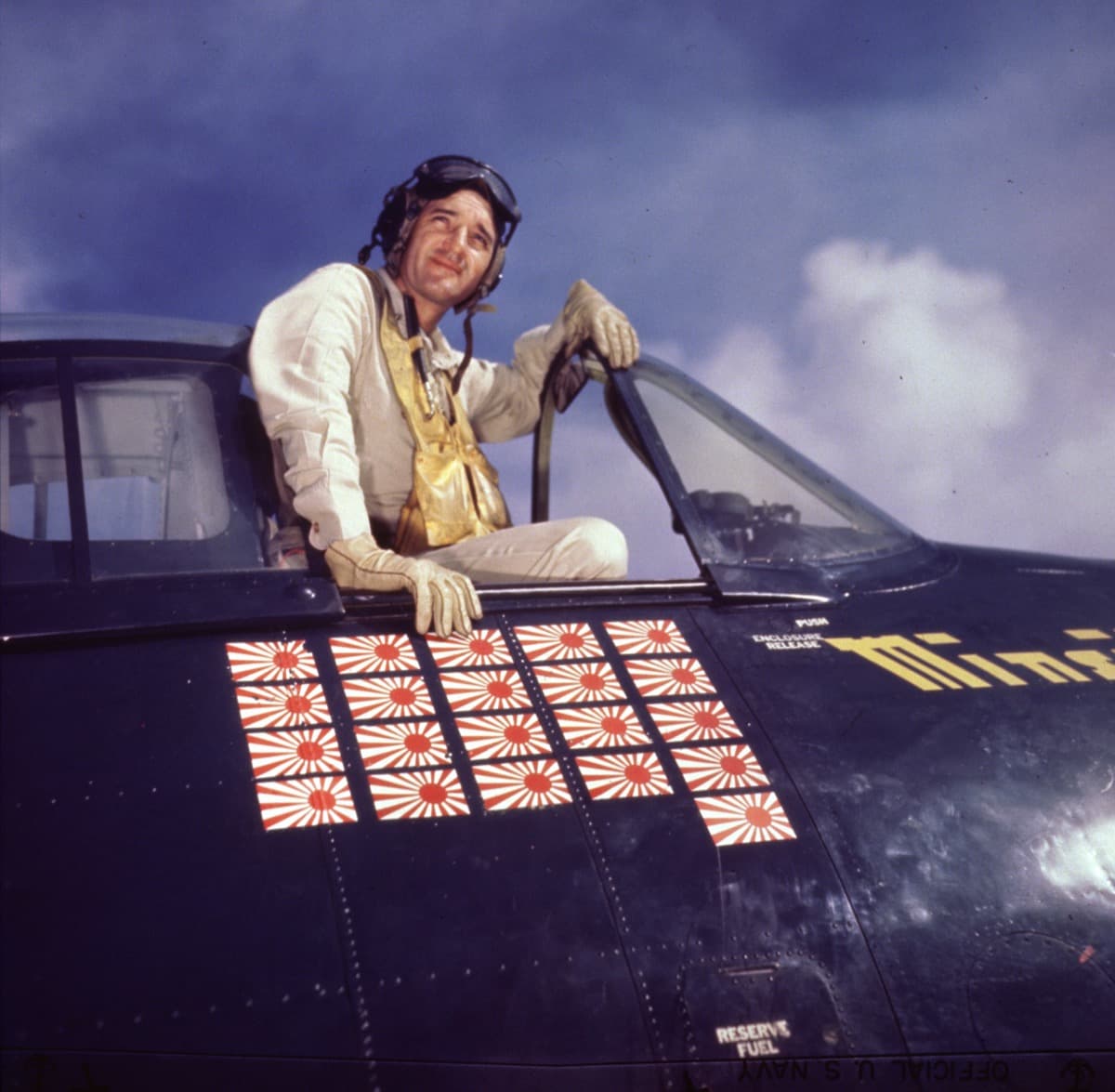
Take a rugged, competitive Hellcat, flown by a well-trained aviator, and make this the most numerous U.S. Navy fighter in the Pacific, and it is clear how the F6F created 305 aces, each scoring at least five victories over enemy aircraft.
With peace in the late summer of 1945, the same U.S. Navy that banked on the availability of thousands of F6F Hellcats pivoted quickly to faster prop-driven fighters like the F4U Corsair and F8F Bearcat, pending the perfection of shipboard jet fighters. But the sterling qualities of the F6F Hellcat — good flying traits, low wing-loading, rugged construction, and copious availability — made the Hellcat a natural for droning from the last half of the 1940s through the 1950s.
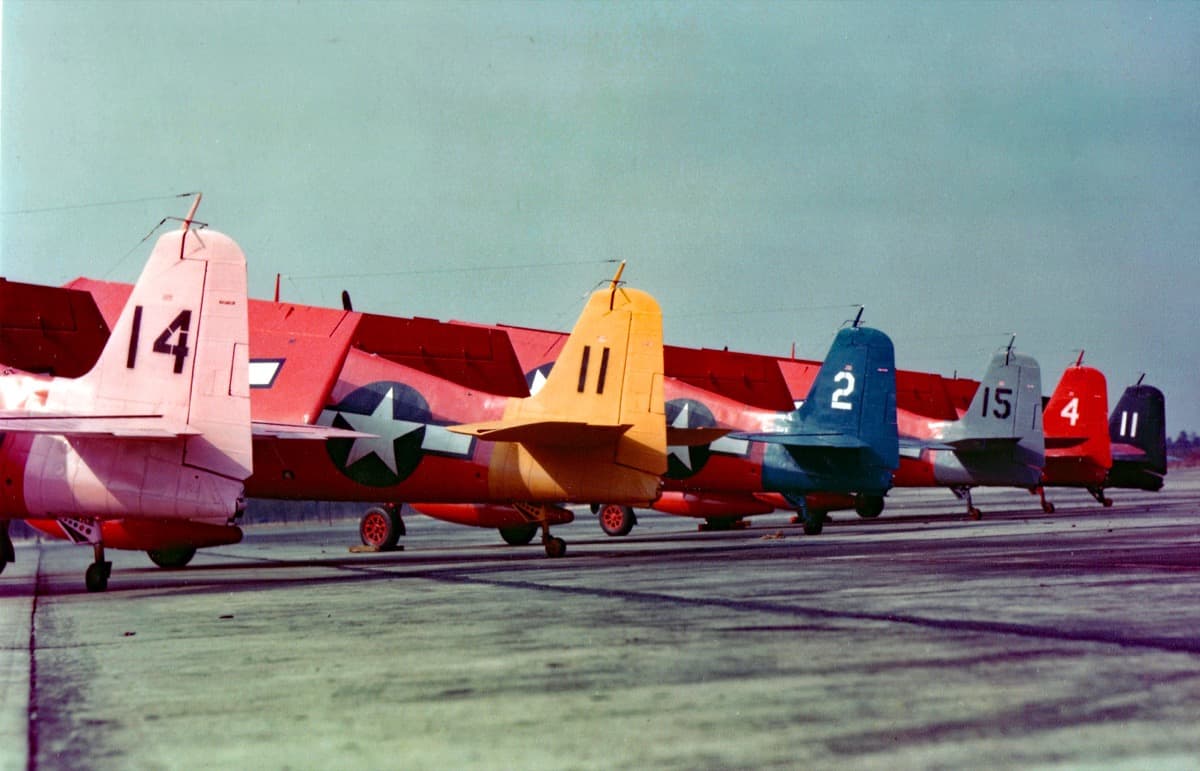
The U.S. Navy flew Hellcats as scientific probes in Operation Crossroads, penetrating radioactive skies after atom bomb tests. Numerous Hellcat drones helped prove the usefulness of air-to-air and surface-to-air missiles over western desert ranges, where F6F-5K unmanned Hellcats sometimes rained down in flaming pieces following a hit.
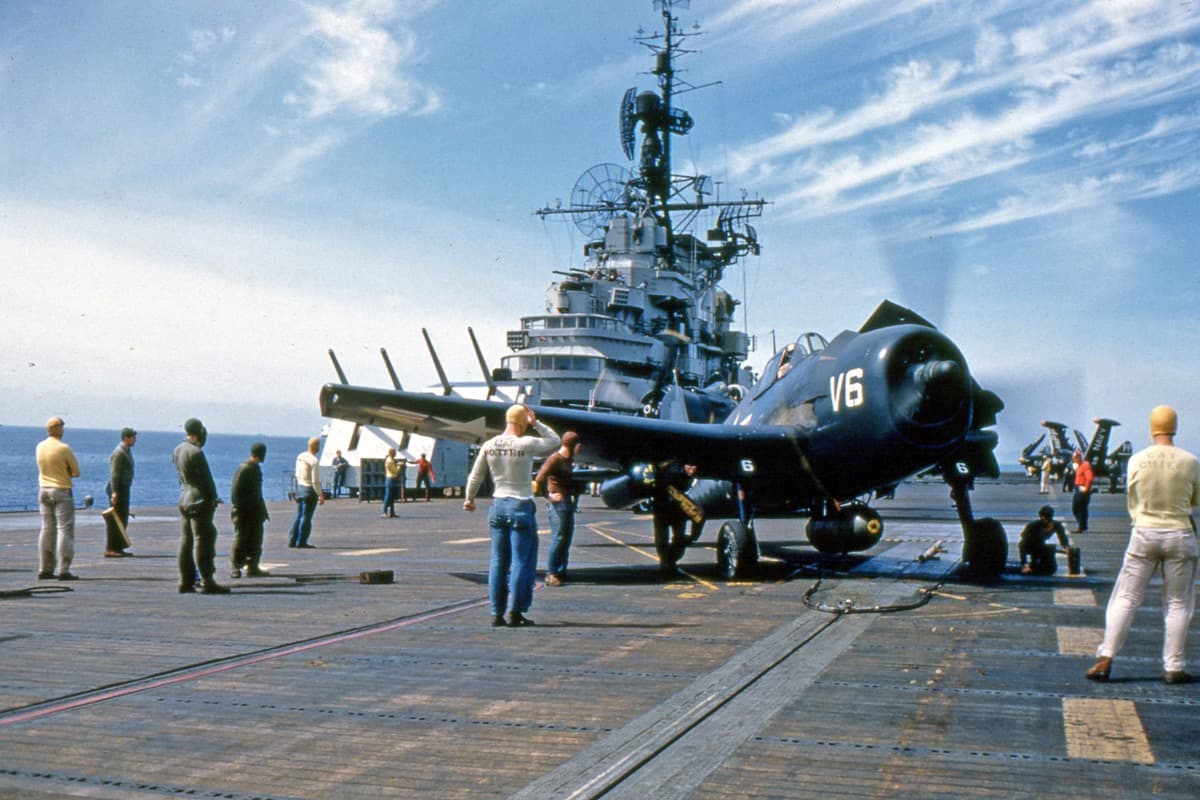
Two quirky uses of Hellcat drones were the F6F that mounted a machine gun aimed at its own test gas tank, in an exploration of flame caused by gunfire and the operational one-way sorties of F6F-5Ks carrying bombs against North Korean targets briefly in 1952.

Interesting. Wonder if any of those sailors felt as sad to launch those droned Hellcats as we do today watching the orange tailed droned F-16s blast off from Tyndall on their one-way missions as target drones over the gulf?
I believe one of the F6F “drones” lost radio signal and flew away over the Los Angeles area in the 1950’s and despite many efforts to shoot it down, it eventually crashed outside the greater metropolitan aera in the Antelope Desert (ref; “Battle of Palmdale”).
I just googled the battle of Palmdale. What a great
I would love to tool around in one of those!!