

Jimmy, a student pilot in Florida, writes: I’m confused about what seem to be overlapping definitions of cross-country flight, especially when it comes to what can or should be logged. I’ve talked to a couple of different CFIs at my school and I’m getting different answers. Can you help me sort this out?
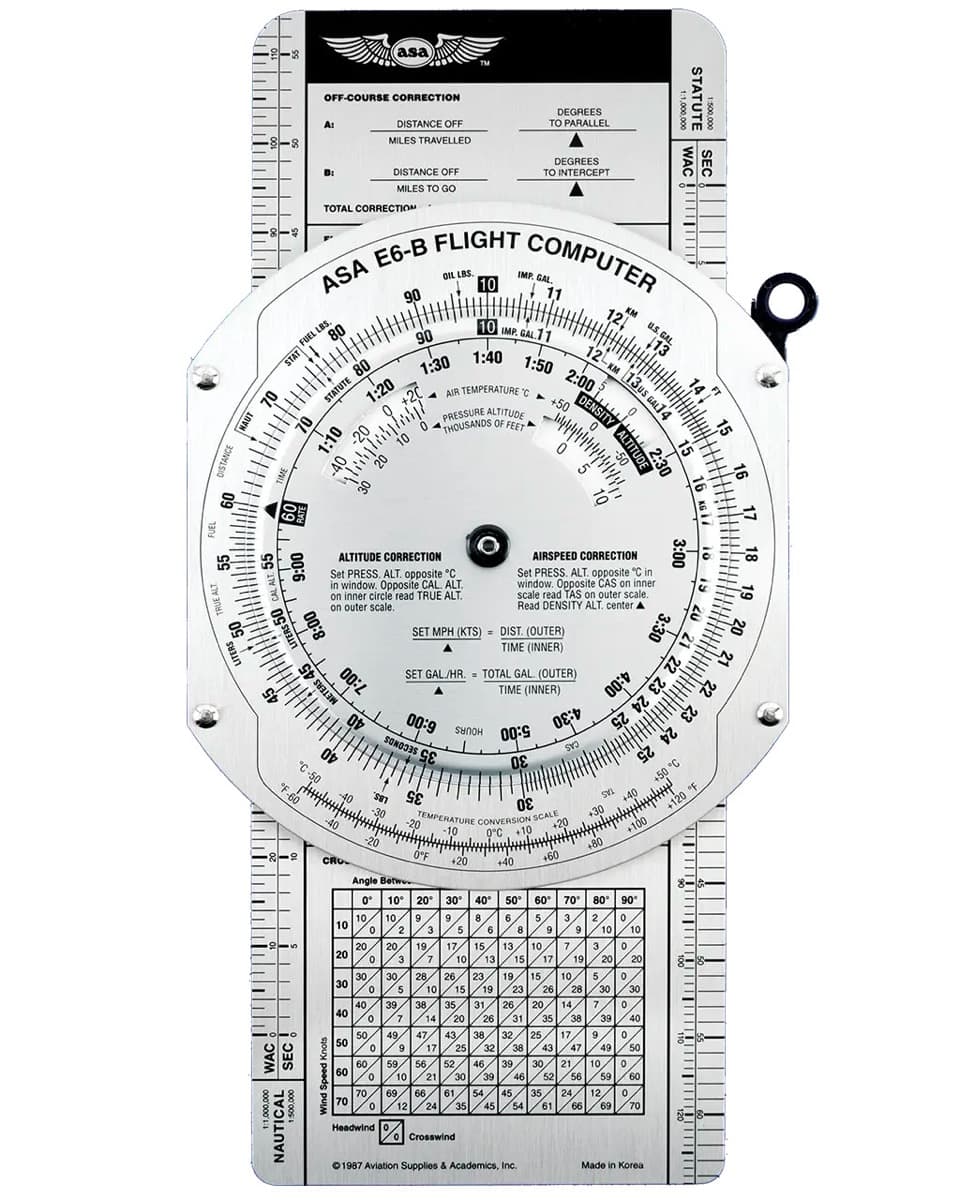
You bet, Jimmy. And don’t feel bad about being confused. There are so many definitions of cross-country flight that no one knows if they are coming or going. By my count, there are fully 15 different flavors of cross-county. Grab your E6B and buckle in, here we go.
The best place to start is at the very beginning. The beginning of the pilot certification regulations, that is.
Take a look at 14 CFR §6.1’s “applicability and definitions” section, the part of the pilot certification regs that define terms when it comes to pilot certificates. Here, under the Cs — dictionary-style — we find a rather intimidatingly long definition of cross-country time that spans three columns, spread over two pages of the paper FAR/AIM. It starts at paragraph (i) and goes all the way to paragraph (vii). So that’s actually seven of the 15 broad types of cross-country right there. (Interestingly, 14 CFR §1.1’s “general definitions” does not include a definition of cross-country.)
So maybe this won’t be such a long flight after all.
Anyway, the first — or foundational — paragraph is the simplest. It says, basically, if you takeoff at one point and land at another point, it’s a cross-country flight. I said “basically” because there are a few stipulations. You have to hold a pilot certificate. You have to be in an aircraft (no cross-countries in wing-suits, I guess). And you have to navigate, which can be pilotage, dead reckoning, radio, electronic, or “other navigational systems,” to find your way from Point A to Point B.
Still, that means, reflecting back on a couple of airports we talked about recently in the Human Factors column, “A case of mistaken identity,” if you took off from Georgia’s Cedar Ridge Airport and flew over to Brook Bridge Aerodrome, a total flight distance of around 9,000 feet, it would be a legitimate cross-country flight.
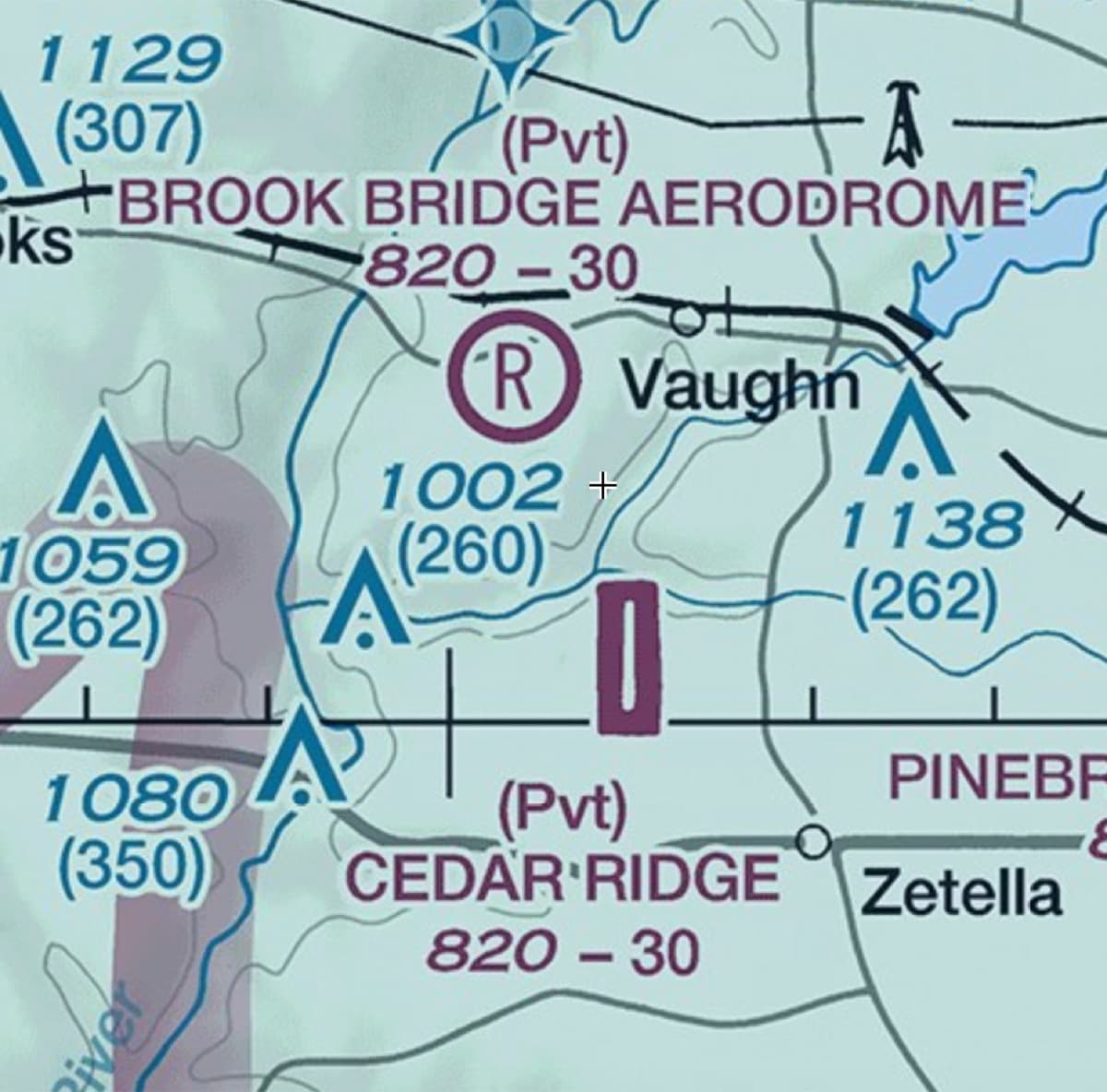
What about the required navigational element? Taking off from one, spying the other, and flying to it is classic pilotage. You’re covered. Log that 1/60th of an hour with pride.
Maybe.
I say “maybe” because, while I would totally log that time as cross-country, whether or not you should is a little more complicated, because after laying down the simple “if you land somewhere else after takeoff, you traveled, therefore it’s a cross-country,” the regulation now goes on with the classic “except as provided in paragraphs…” Yes, children, the regulation now lays out five primary exceptions to this basic principle of what a cross-country flight is.
The first, which is the second section (ii), says, oh… wait… that won’t do if you are seeking a private pilot certificate, an instrument rating, or a commercial ticket. Instead, “for the purpose of meeting the aeronautical experiences requirements” laid forth later in the regs for those two pilot certificates and the instrument rating, a cross-country now must include at least one leg that has a straight-line distance of 50 nautical miles.
Aggravatingly, and adding to everyone’s confusion, this exception to the original rule has, in itself, three sub-exceptions (which I — justifiably, I think — counted toward my total of 15 definitions). These exceptions deal with rotorcraft and powered parachutes, so I’m not going to dig into those precise details today.
But it’s worth pointing out that this exception does not overturn the original definition. It just says that you can’t count shorter cross-countries toward the required cross-country time built into the requirements for those three tickets. Jot that fact down on your navlog. We’ll talk more about it in a bit.
The second exception is the cross-country experience requirement for the sport pilot certificate. Now a 25 nautical mile leg is required for a flight to count toward that certificate. This exception also has a sub-exception, again dealing with powered parachutes.
The third primary exception outlines what a cross-country is for both private and sport powered parachute pilots, which sensibly lowers that straight-line distance down to 15 nautical miles.
The fourth exception is for any rotor certificate and the helicopter instrument rating, which is back up to 25 nautical miles.
The fifth exception is really interesting. It says, “Ya know what? For the ATP crowd — except rotorcraft pilots — you don’t even need to land somewhere else. So long as you go out at least 50 miles, and do some of that navigation stuff, we’ll call it cross-country time.”
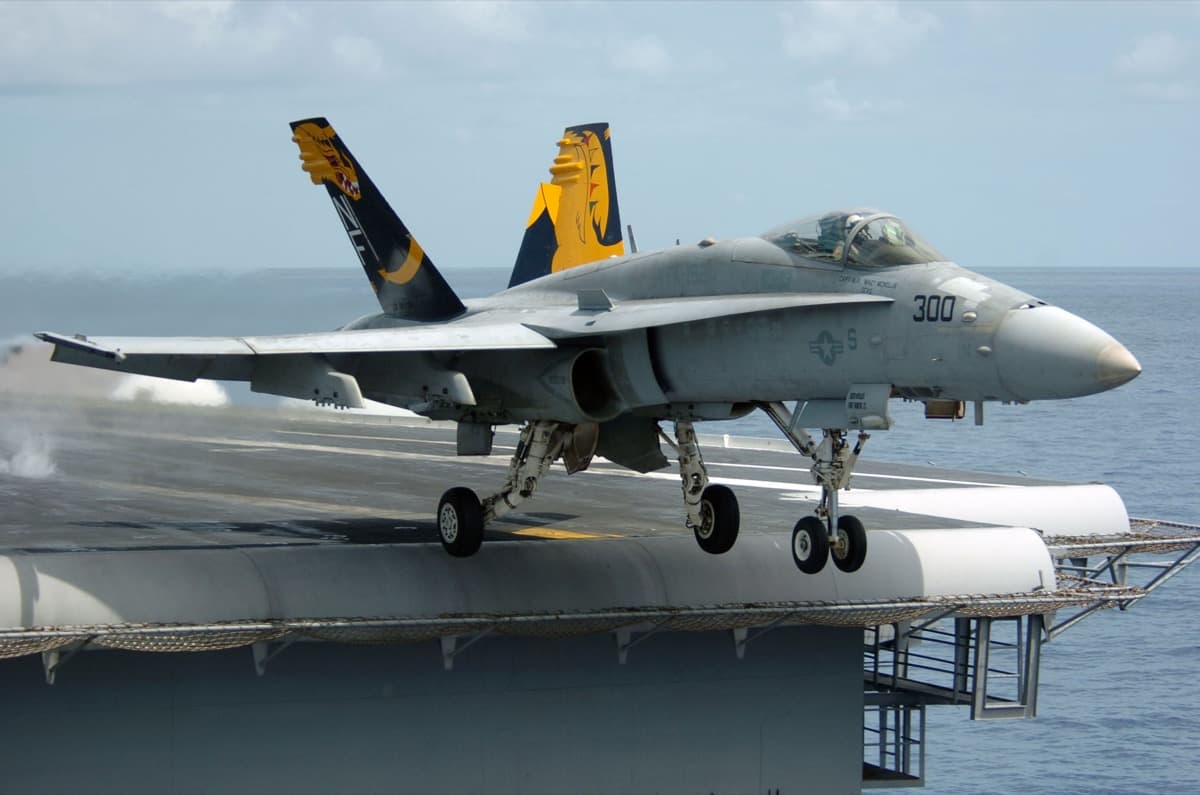
And finally, the sixth exception to the base definition of cross-country deals with military pilots picking up a civilian certificate based on their military flight time. This mimics the ATP regs, which makes perfect sense to me. Someone who takes off from an aircraft carrier in the middle of the ocean somewhere, flies hundreds of miles on a long patrol, then returns to the ship, surely deserves cross-country time in my mind!
Now, truth be told, it isn’t the sheer number of definitions, many with “except fors” embedded in them that’s causing so much confusion among instructors. It’s the fact that most people are looking in the wrong spot for the answers.
For some reason that I don’t quite understand, folks tend to forget to check both the overall definitions sections (§1.1) and the Part definitions, when present. If you only look at, say §61.109 where the logged time requirements for private pilots are laid out, and you only read (5) (ii), you could mistake its requirement for a solo cross-country of 150 nautical miles, with one leg being greater than 50, as being the definition of a cross-country flight. But it’s not. That’s unique to the private certificate and, even then, only for some categories of flying machines.
It’s important to note the experience requirements of various certificates and ratings may also include a minimum total length requirement, in addition to the minimum leg requirements set out in the definitions. Also, 141 schools have different requirements from the 61 regs. I suppose I should have included those as separate flavors of cross-country, but I don’t think I have enough space in my column, so we’ll keep it “simple” for today.
Anyway, so in §61.1 we then have seven basic definitions with six exceptions for a subtotal of 13. So there are two more yet to talk about.
The first of those is buried in the “how to build a private pilot” regs, at §61.111, and is a loophole for pilot trainees on small islands, giving them a pass on the standard cross-county requirements, if flying those lengths would require the pilot to fly more than 10 nautical miles over water. This loophole isn’t great, as it gives the pilot a certificate with a passenger-carrying limitation that later needs to be removed.
And lastly, the “charter” regs at §135.243 — which deal with Pilot in Command qualifications — return us to the original, basic “if you landed somewhere else” definition when tallying up hours required.
So just what the @$%#&! should one do about all these overlapping definitions? To be honest, most people only log cross-countries that meet the experience requirements of the certificate they are currently working on. But that, for some people, dramatically under-reports their real cross-country time in ways that can matter later on.
My preference is for pilots to log any §61.1 cross-country (i) time. That’s our foundational definition where if the point of landing is “other than the point of departure,” it’s a cross-country. Then, in a separate column, record certificate-specific cross-country time. In the details block you can state what reg you are satisfying with it, such as “§61.109 (a)(5)(ii) cross-country experience, or “§61.129 (a)(4)(i) cross-country experience. This makes it easy for an examiner to ensure you have met the requirements of the certificate, while also keeping a more accurate tally on your cross-country time.
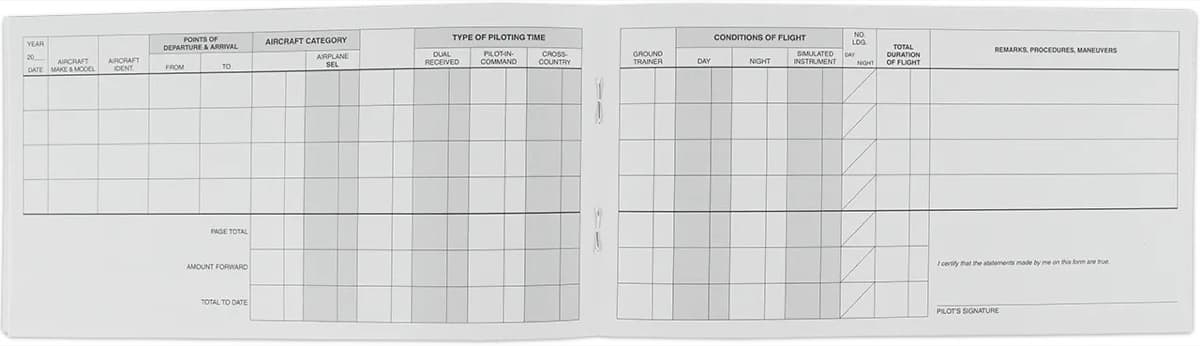
Why would that matter? Just imagine how frustrated you’d be in the future if you found yourself at a Part 135 shop, now able to use all those short cross-countries — the ones you didn’t log.
That would be a tragic waste of a lot of short trips — a waste that will slow down your career like a headwind.

BTW, when seeking a new (certificate, rating, endorsement, etc.); be assured that, whether you provide a separate column for qualification XCTY or not), the DPE will closely examine your log for whether any/all logged time qualifies for whatever licensing the candidate is seeking and eliminate all disqualifying entries.
When I went for my SEL ticket we set the minimums as 100 mi. straight, talk to radio control, crossing military aerial controlled airspace, landing and refuel at a new tower controlled airport. This was southern California and necessary for any traveling.