


I have a pet peeve. That’s probably true of most people. We can all identify something we don’t like. Some people don’t like broccoli. Others aren’t big fans of the fashionably pierced septum. And there is a sizable contingent who have profoundly powerful feelings one way or the other about the Dallas Cowboys, the WNBA, and golf.
This isn’t about that. My annoyance is directed squarely at rumors that persist in a community, even though there is absolutely no evidence to support the hearsay.
Worse, I’m as guilty as anyone of having fallen prey to spreading invalid information.
You are too. I’m sure of it.
When I was younger, I was remarkably stupid. Really, impressively unaware of my own fallibility. I was convinced of far too many things being true when I was relatively new to the world. Seeking out evidence that might support or refute my beliefs was unimportant to me. I knew what I knew and what I knew was true. So there. Case closed.
Well, not really. As it turns out, knowledge and insight have less to do with memorization of a slogan and more to do with research that leads to a better understanding of the topic.
Consider the canals on Mars, first spotted by Giovanni Schiaparelli in 1877. His discovery was astounding. The existence of an entire network of artificially designed and built canals on the red planet strongly suggested the fourth planet from the sun either was currently or had once been inhabited by sentient beings.
It turns out the canals fell somewhere between an optical illusion and a fantasy that fed a belief that wasn’t accurate.
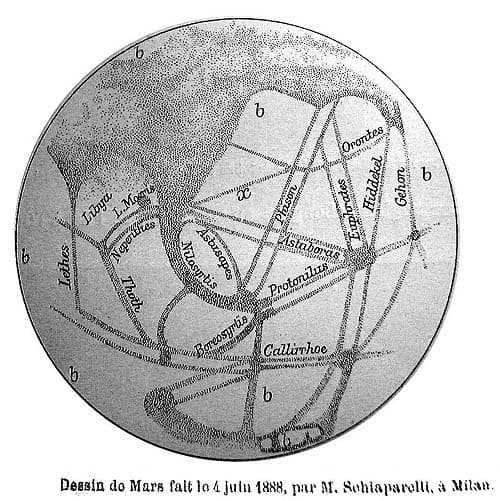
“I’m not saying it was aliens, but it was aliens,” makes good TV, but it’s bad science. It’s also a pretty thin concept to base a belief system on.
Years ago, I overheard a flight instructor explaining ground effect to a student by saying, “It’s like a cushion of air.” A statement that is common, widely believed, and totally inaccurate.
Ground effect isn’t a cushion of air at all. That’s no more true than the belief that air pockets exist in the atmosphere. Yet many people believe air pockets cause airplanes to suddenly drop while in flight. Just as far too many pilots believe an invisible pillow lies just above the runway that will ensure a greaser of a landing, if they hit it just right.
Ground effect is more accurately described as a reduction of induced drag when the airplane is close to the ground. Less drag allows the airplane to produce sufficient lift to maintain an altitude at a lower angle of attack and airspeed. And this is where the confusion comes into play. Because the airplane floats as if riding on a cushion of air, even though it isn’t.
This kind of untested, poorly researched observational belief system is what leads far too many of us to believe something as idiotic as the earth is flat — all photographic evidence from space-based cameras to the contrary.
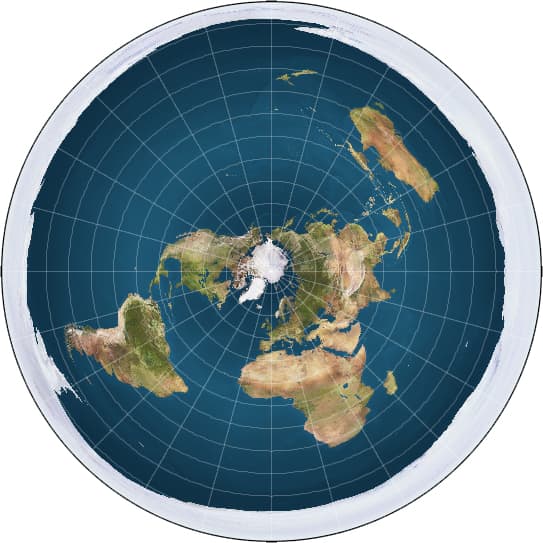
Belief is a powerful thing. Too few of us let new information in when it contradicts firmly held beliefs. Witnessing this in politics can be entertaining, or maddening, or motivational for good or ill. In aviation it can be far riskier to life and limb should we choose to embrace beliefs we cannot support with anything beyond our own opinion.
A pilot recently confided in me his concern about safety when flying in close proximity to larger, jet-powered aircraft. He’s noticed that turbine-powered airplanes sometimes make short hops of less than 100 miles. Sometimes those airplanes fly at altitudes very near the lower elevations VFR piston-powered aircraft are occupying.
“I know the slower aircraft has the right-of-way,” he told me. “I know the rules.”
To myself I could only marvel at his ignorance, bolstered mightily by his own belief that he was correct. Saying “I know the rules,” while displaying a complete misunderstanding of the rules, suggests a real problem.
Being wrong is normal. It’s part of the learning process. Being confident we’re right when we’re demonstrably wrong is a problem.
As diplomatically and politely as possible, I explained why those jet-powered beasts are making such short hops. I related that I have been aboard a turbine-powered airplane for flights as short as 15 miles. Jet pilots have to be instrument current, too. Shooting approaches is as valid a reason for a flight as it is to move the airplane two counties over to pick up the next passenger or get maintenance done at an approved shop.
While telling my story, I included some relevant information about the actual right-of-way rules. And at the risk of sounding like an egg-headed encyclopedia nerd, I included the suggestion that it might be worth taking an occasional peek at 14 CFR 91.113, which stipulates the right-of-way regulations.
It’s a quick read. The whole thing is fewer than 400 words. It’s less than half the length of this column. Barely long enough to be considered serious bathroom reading. And nowhere in that rule is there anything that suggests the speed of your aircraft has anything to do with having the right of way.
We could all benefit from a review of this sort of thing now and then. Hence, the flight review requirement — a task that is sketched out in great detail in another regulation, 14 CFR Part 61.56.
All of which brings us to the unavoidable conclusion that each of us may still harbor beliefs that are incomplete, incorrect, or downright wrong. A problem that can be fixed simply enough by just asking ourselves, “is that really true?” If it is, there’s a reference somewhere. If you can’t find a reputable source to support your belief…perhaps it’s time to reconsider.
It’s the responsible thing to do.

I have read of this reduction in induced drag when close to the ground, but have never heard a convincing explanation for this. I will stick with the ground is pushing back against a pressure wave created by the aircraft, much like the bow wave of a boat.
Yeah, it is kind of…disconcerting…what impressions, opinions, etc., that folks hold when it comes to certain flying-related topics.
I was presenting an AOPA Air Safety Institute seminar at a Virginia venue. The subject was non-towered airport operations…always a crowd favorite and one that’s guaranteed to generate controversy.
I introduced the “next” topic, radio communications, by asking the crowd “How many radio calls does the FAA recommend when operating at a non-towered airport?” (NOT on a practice instrument approach…)
The few anonymous answers shouted back at me ranged from “none” to “who cares, they’re just recommendations!”. The latter may be true, however:
I then brought up my slide which showed the actual answer from the AIM: Chapter 4, Air Traffic Control; Section 1, Services Available to Pilots; TBL 4-1-1 “Summary of Recommended Communication Procedures”…
Five inbound: “10 miles out. Entering downwind, base, and final. Leaving the runway.”
Two outbound: “Before taxiing and before taxiing on the runway for departure.”
Seven total; that’s all.
A gentleman in the front row literally jumped out of his seat and yelled at me… “If you only make those radio calls, you are not welcome to fly at my airport!!!”
Got it, no problem.
Could ground effect be due to the reduction of the wing downwash angle, epsilon, or the compression of air between the wing and ground.
Or could ground effect be the result of the decrease in the wing downwash angle, epsilon, a result of the compression of the air between the wing and ground.
Jamie said: ” If you can’t find a reputable source to support your belief…perhaps it’s time to reconsider.” Sometimes you’re the only one in the room who is right. History is rife with examples of this. For example, Copernicus theorized the Earth revolved around the Sun. He was publicly ridiculed and ex-communicated from his church. But, he was right. Moral of the story: stick to your guns until you can prove you are right, or discard your idea if you can discover it is flawed.
Regards/J
Calm down Jamie. As you know, metaphors are figures of speech used to create a vivid image or deeper understanding. PHAK – ground effect is “due to the air that is trapped between the wing and the landing surface, as if there were an air cushion”.
I guess you could have just cut and pasted:
§ 91.113 Right-of-way rules: Except water operations.
(a) Inapplicability. This section does not apply to the operation of an aircraft on water.
(b) General. When weather conditions permit, regardless of whether an operation is conducted under instrument flight rules or visual flight rules, vigilance shall be maintained by each person operating an aircraft so as to see and avoid other aircraft. When a rule of this section gives another aircraft the right-of-way, the pilot shall give way to that aircraft and may not pass over, under, or ahead of it unless well clear.
(c) In distress. An aircraft in distress has the right-of-way over all other air traffic.
(d) Converging. When aircraft of the same category are converging at approximately the same altitude (except head-on, or nearly so), the aircraft to the other’s right has the right-of-way. If the aircraft are of different categories—
(1) A balloon has the right-of-way over any other category of aircraft;
(2) A glider has the right-of-way over powered aircraft.
(3) An airship has the right-of-way over all other powered aircraft, except for an aircraft towing or refueling other aircraft.
(4) An aircraft towing or refueling other aircraft has the right-of-way over all other powered aircraft.
(e) Approaching head-on. When aircraft are approaching each other head-on, or nearly so, each pilot of each aircraft shall alter course to the right.
(f) Overtaking. Each aircraft that is being overtaken has the right-of-way and each pilot of an overtaking aircraft shall alter course to the right to pass well clear.
(g) Landing. Aircraft, while on final approach to land or while landing, have the right-of-way over other aircraft in flight or operating on the surface, except that they shall not take advantage of this rule to force an aircraft off the runway surface which has already landed and is attempting to make way for an aircraft on final approach. When two or more aircraft are approaching an airport for the purpose of landing, the aircraft at the lower altitude has the right-of-way, but it shall not take advantage of this rule to cut in front of another which is on final approach to land or to overtake that aircraft.