

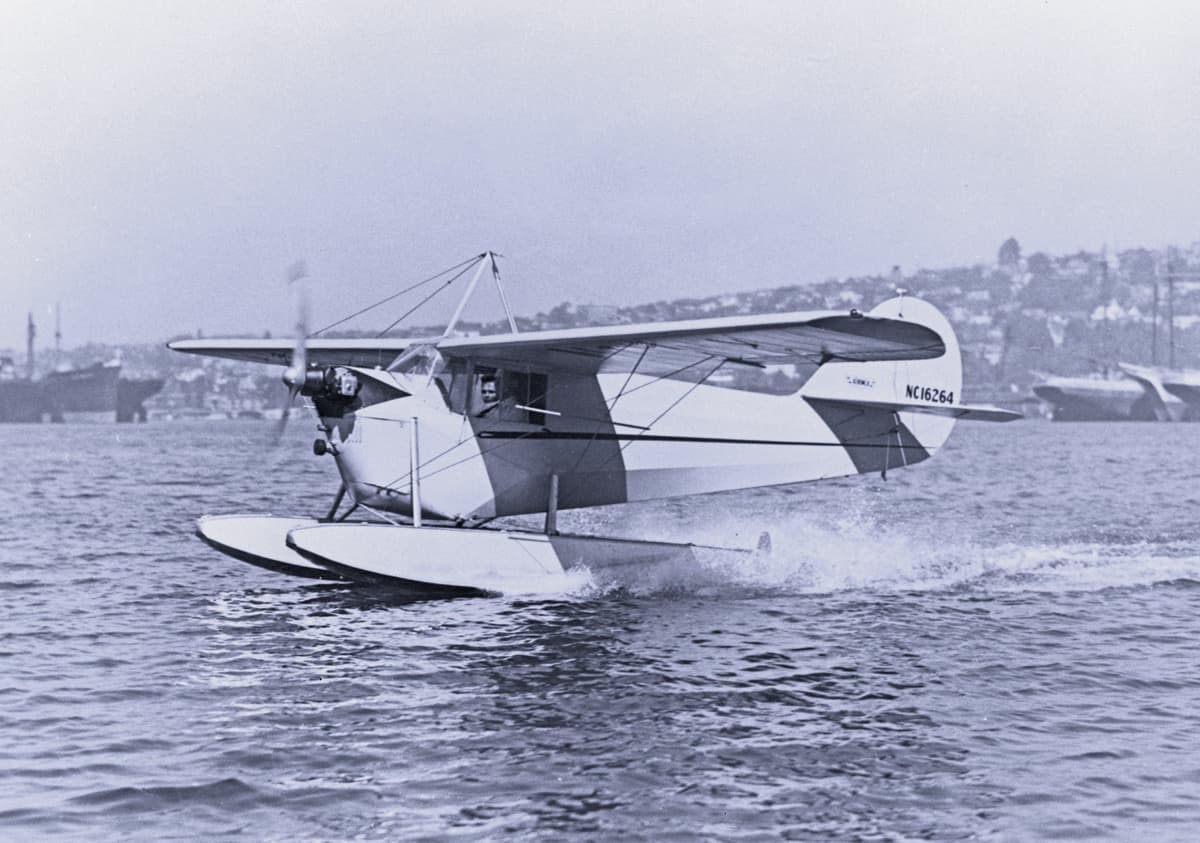
What’s in a name? Many things, if you’re Aeronca. The U.S. airplane manufacturer that fashioned its name from Aeronautical Corporation of America sometimes gets pronounced like it rhymes with Veronica, while other versions elocute it in line with Tonka or Wonka.
And then there’s the popular Aeronca Champ, said to be the cause of the nickname Airknocker, playing on the portmanteau Aeronca company name, turned into a nickname for the engine sound the Champ supposedly makes.
Many years ago I heard about folks who had a cat who tended to droop her tail instead of holding it proud like some felines do, and it was suggested that kitty acquire the name Aeronca because she was a taildragger.
Some say nicknames are a sure sign of acceptance into a group, and Aeronca earned its place in aviation with the manufacture of more than 17,000 aircraft.
After initially investigating a proposed three-place biplane in 1928, Aeronca settled on a quirky open cockpit monoplane with a triangular fuselage cross section. It was built in quantity as the single-seat C-2, with a small number of C-1s. The follow-on C-3 enclosed the cockpit for two occupants. Deliveries of these iterations numbered in the hundreds into the 1930s.
Financially well-backed at the start, Aeronca weathered the hard times of the Depression. But epic flooding of the Ohio River in 1937 inundated the company’s home on Cincinnati’s Lunken Field, and the Aeronca factory, including aircraft and tooling, was destroyed, as were some blueprints for designs. Aeronca survived, and moved out of the flood zone to Middletown, Ohio.
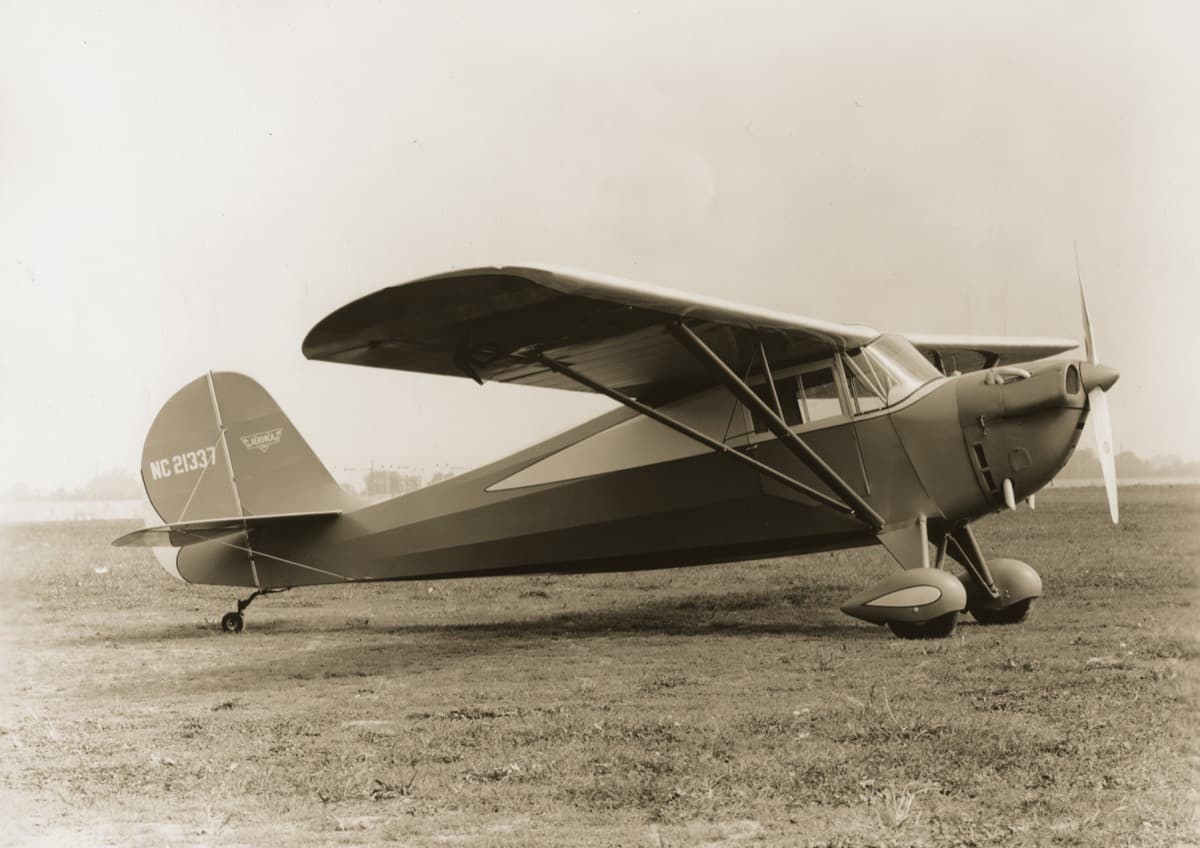
Following the little Aeronca C-3 into the 1930s, Aeronca adopted standard traits of fabric-covered tailwheeled aircraft of the era, and built general aviation models. Most were produced in the hundreds; the popular Aeronca 65 Super Chief totaled 2,059 aircraft.
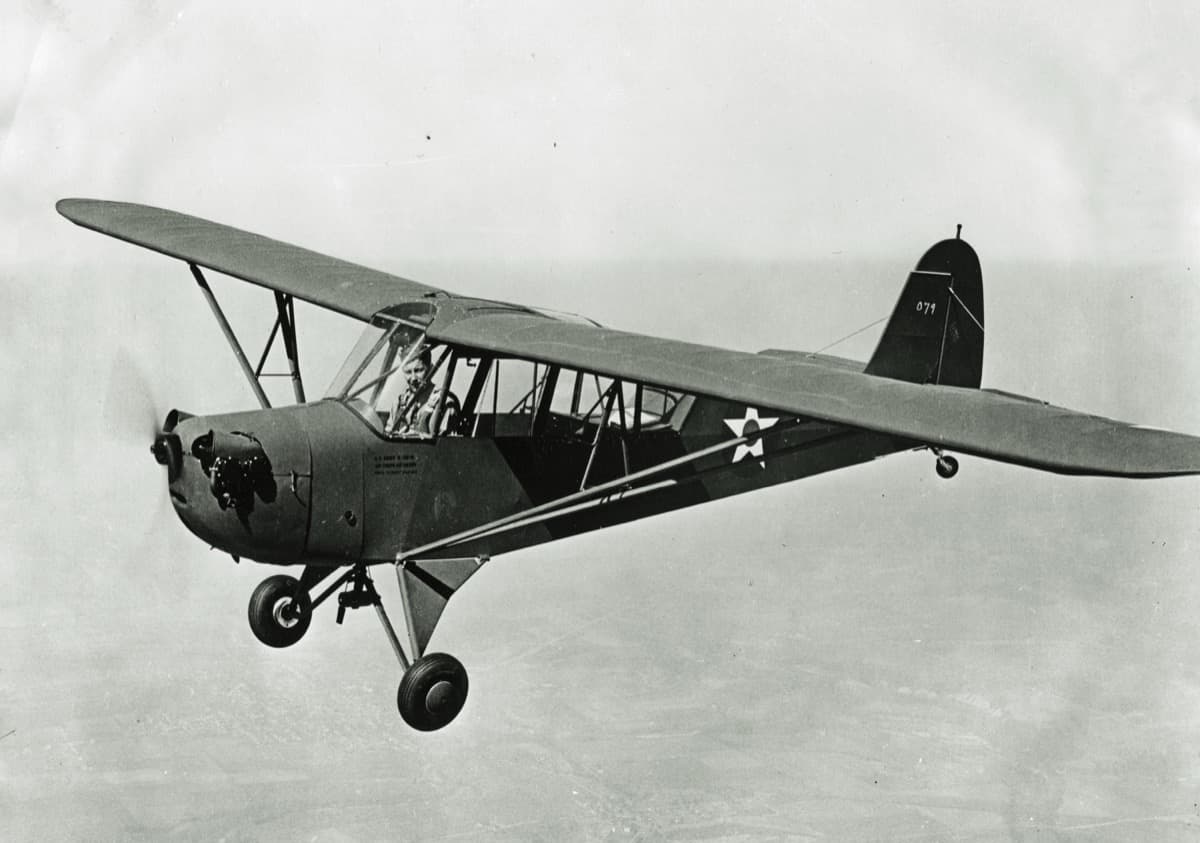
Build-ups of aircraft for the Army began before the United States entered World War II, and Aeronca delivered the L-3 liaison/observation aircraft, a traditional-looking high-wing cabin plane, in quantities nearing 1,500 airplanes. The L-3 was Aeronca’s contribution to aircraft design of the World War II era, based on the successful civilian Model 65. It mounted a 65-horsepower Continental motor and featured extensive glazing for military observation duties.
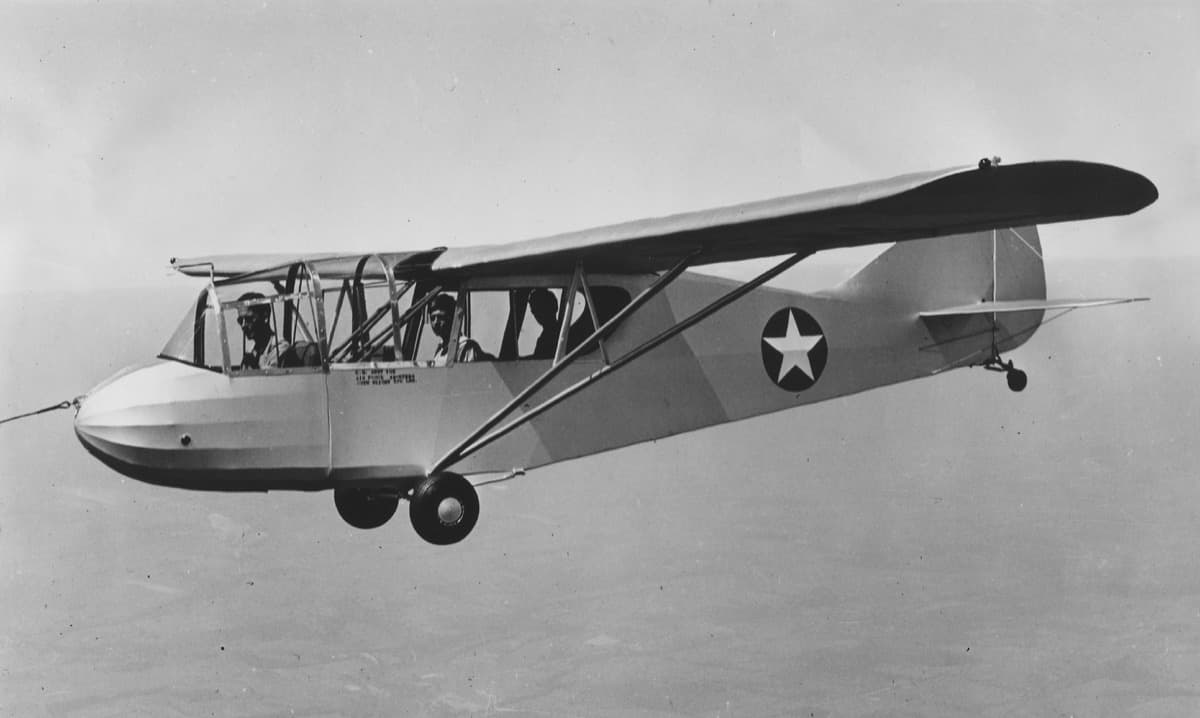
The Army asked Aeronca, Taylorcraft, and Piper to create three-seat tandem gliders from their basic liaison powered designs, and Aeronca’s modified L-3, called the TG-5 (Training Glider nomenclature), helped train pilots in glider operations. The instructor sat in front, and two students had full sets of controls behind. Aeronca and the other manufacturers each delivered about 250 of their glider versions.
We’ve heard the heroic stories of engineers at North American Aviation who, when asked to build Curtiss P-40s under license, quickly designed the world-beating P-51 Mustang instead. Similarly, at Consolidated Aircraft, an Air Corps proposal to build Boeing B-17s under license was met with 1939’s equivalent of “hold my beer,” while Consolidated designers showed they could invent a more modern bomber, the B-24 Liberator, rapidly.
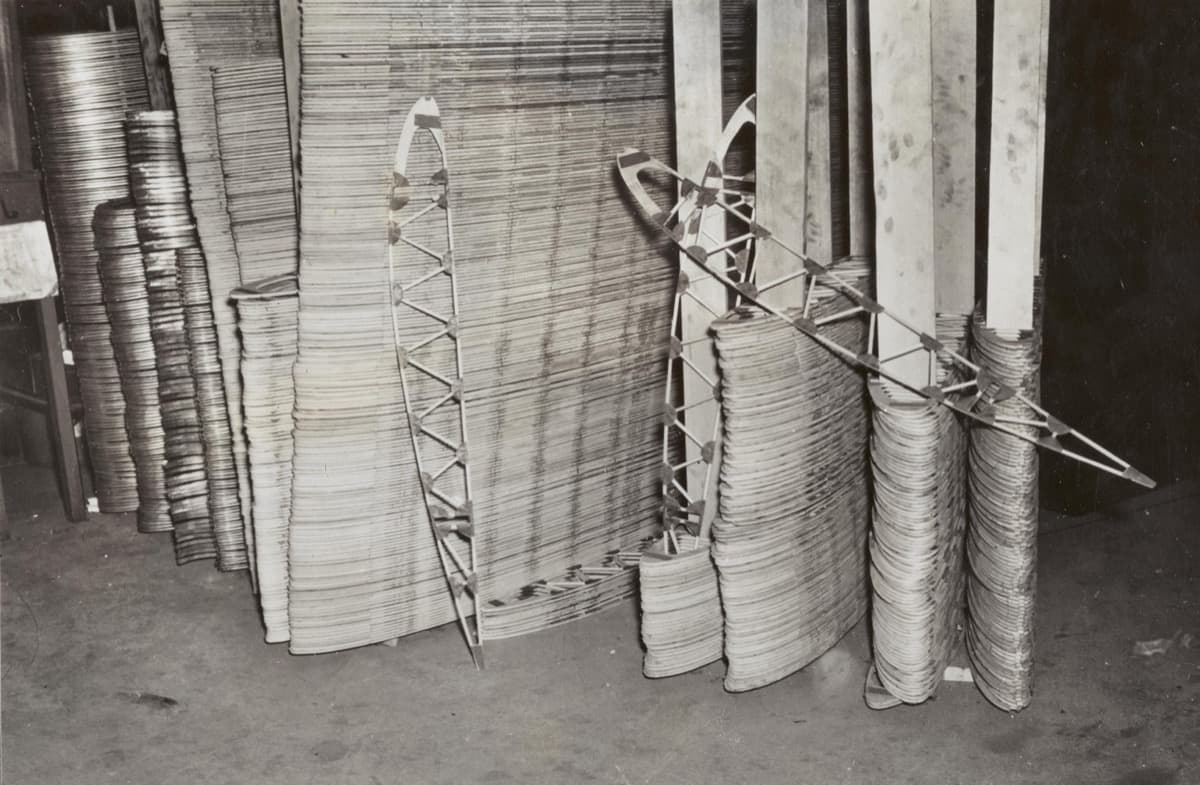
But some companies adapted to building the proven airframes of others. If the team at Aeronca didn’t pounce on designing their own primary trainer, they did competently sign on to build Fairchild PT-19s and PT-23s to meet America’s expanding need for trainers as war demanded pilots. Aeronca delivered more than 800 PT-19s and PT-23s.
Perhaps Aeronca’s established expertise with aircraft of wood, steel tube, and fabric made it a natural for augmenting Fairchild’s production of these trainers. The license-built trainers carried Army Air Forces nomenclature like PT-19A-AE, with the last two letters denoting their Aeronca lineage.
Residing somewhere between the Aeronca 65 Super Chief and the L-3, more than 150 Aeronca 65TAC Defender tandem-seat airplanes served as trainers during the war.
Even while building full aircraft of its own or Fairchild’s design during World War II, Aeronca contracted to make elevators for the Boeing B-17 Flying Fortress.
The L-3 spawned Aeronca’s postwar L-16, the company’s final military aircraft. With peace in late 1945, Aeronca embraced the anticipated boom in postwar general aviation as thousands of military-trained fliers were expected to purchase personal aircraft.
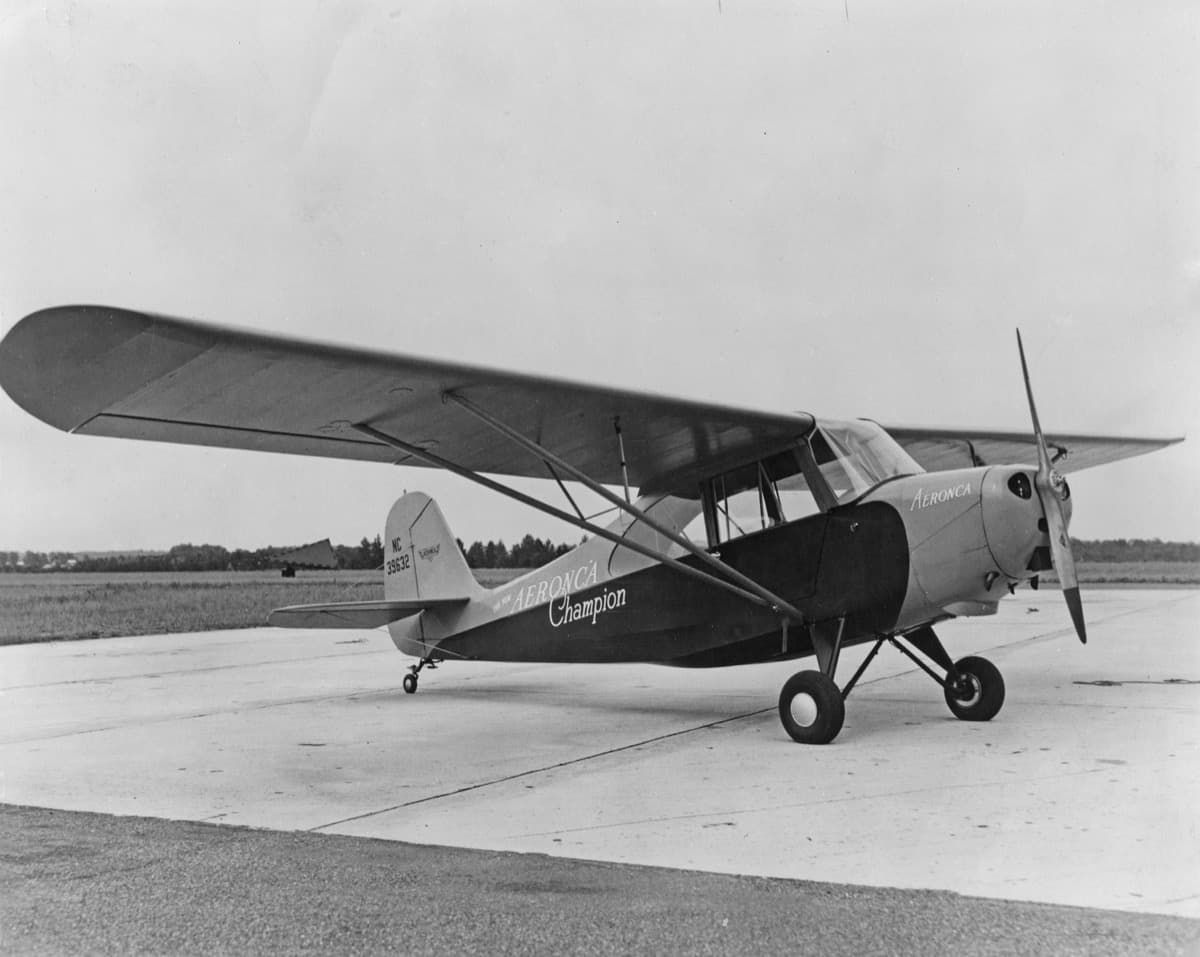
A new design, the Aeronca Champ, carried classic two-seat tandem ragwing ideology into the postwar market, selling almost 8,000 copies between 1945-1951. Thousands of postwar GA pilots remember their hours in the Aeronca Champ.
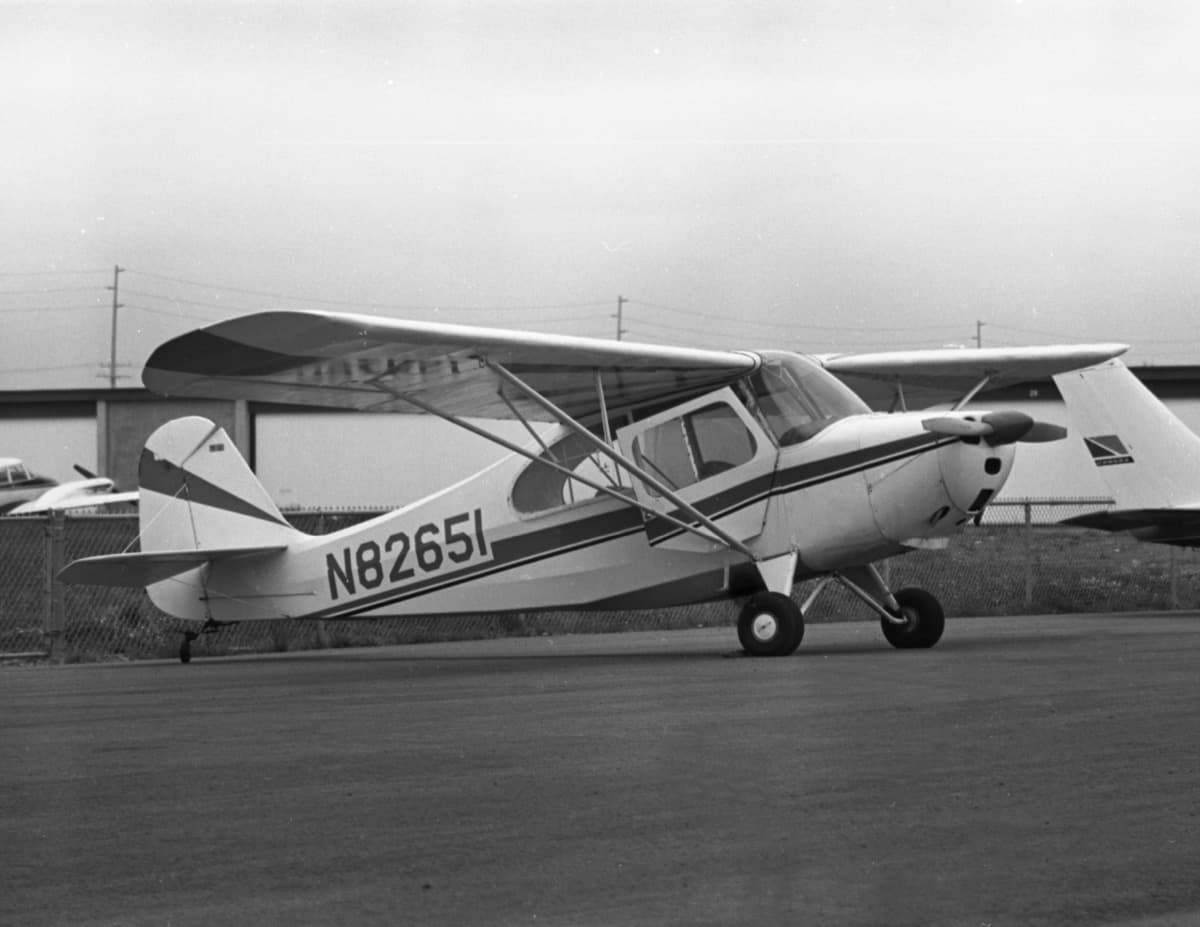
Perhaps the advent of aluminum Cessna 120, 140, and 170 aircraft stole the postwar march. At any rate, the boom in aircraft sales was not as steady or as large as anticipated. Aeronca ceased building airplanes in 1951. The Champ design was sold, leading to derivatives like the Citabria.
The Aeronca plant in Ohio was acquired by Magellan Aerospace, a supplier of precision components and assemblies to prime aircraft contractors. And the Aeronca spirit lives on every time you hear an Airknocker in the pattern at Oshkosh or your local field.

My first airplane was an1946 11AC Chief N9682E. Learned a lot from that airplane. In fact, built enough time to get my single engine Commercial license. Many fond memories!
Ground looped her, repaired her and sold to two guys in southern Indiana.
As a new student of aviation, I was introduced to the one and only desire of flying. My instructor was a SB2 pilot in the war. The machine of my dream was a ’46 7AC Champ.
I know now that you’ll never find a better tool then that little “Air knocker” to learn the lessons of Stick and Rudder. Sure, there are many other light 2 seaters but with a front seat, and minimal power and instruments, no radios, and that tail dragging rear wheel you’ll be proved to be able to own that title of “Pilot”. I, personally, believe that before you get overwhelmed by all of the bells and shiny whistles of a “nose dragger”, you know of the use of all of the controls that you will need when “necessary to save the plane”.
Chuck Driskell and Bob Parks, now that brings back a lot of good memories!
Yes! Every once in awhile I feel the urge to dust off some of the older air show negatives and bring performers like Chuck and Bob to light again.
The first pilots in my family were Uncles George and Lawrence, called Red (for obvious reasons, flame red hair}. They both learned to fly in “airknockers” as Uncle red called them all his life. Which was interesting because he owned a Taylorcraft instead of an Aeronca. He took me and my dad for my very first flight in it. I was 5 years old. I still remember sitting on Dad’s lap watching the wheels spin and the grass dropping away as we got airborne. Don’t recall much after that as Dad said I fell asleep shortly after takeoff. LOL. When I was 17 I inherited the airframe but it was too badly damaged from a windstorm and was unrepairable according the local A&P. Oh well. Later on after I got my PPL I flew my Dad in a Cessna 150.
To sharpen the article: The wartime production was 995 of the PT trainers. The L3 tandem was not an outgrowth of the side by side 65C. It was from the Trainer series, 65T. The L16 was from the post war 7 series, a clean sheet design from the prewar production.
The prewar Chief was not produced in that quantity. An easy confusion is to mix the prewar Chief with the post war Chief. The number given in the article is for the postwar 11 series. The prewar was only 934 planes produced.
I ran out of fingers and toes trying to count up all the varieties and eras of Aeronca Chiefs and derivatives. I appreciate your observation. I think some tallies of prewar Chiefs are higher, but this sounds like a good discussion to have at Oshkosh under a shady tree. I’ll learn something! Thanks for commenting.
It’s from the Aeronca production records for the 65s. They used the same number for the Tandem series, which isn’t side by side in the Chief.
The C series numbers had nothing to do with seating. They were model numbers. The C-2 and C-3 were the only ones sold to the public.
Great afford able fun aircraft ……..So which is more popular the Cub or the Aeronca…..!?
The most popular, the Cub.
The better airplane, The Champ!
I’ve owned two Champs over the years. They really are the ideal tailwheel trainer. The rugged oleo gear usually survives the inept student groundloops without damage, and they will teach you solid tailwheel skills to fly almost anything.
Even with my modest number of flying hours, I’m pleased to say I learned how to loop a Champ on my 30th birthday. Sure felt good to come back through our own wake turbulence at the bottom of the loops. Thanks for commenting!