

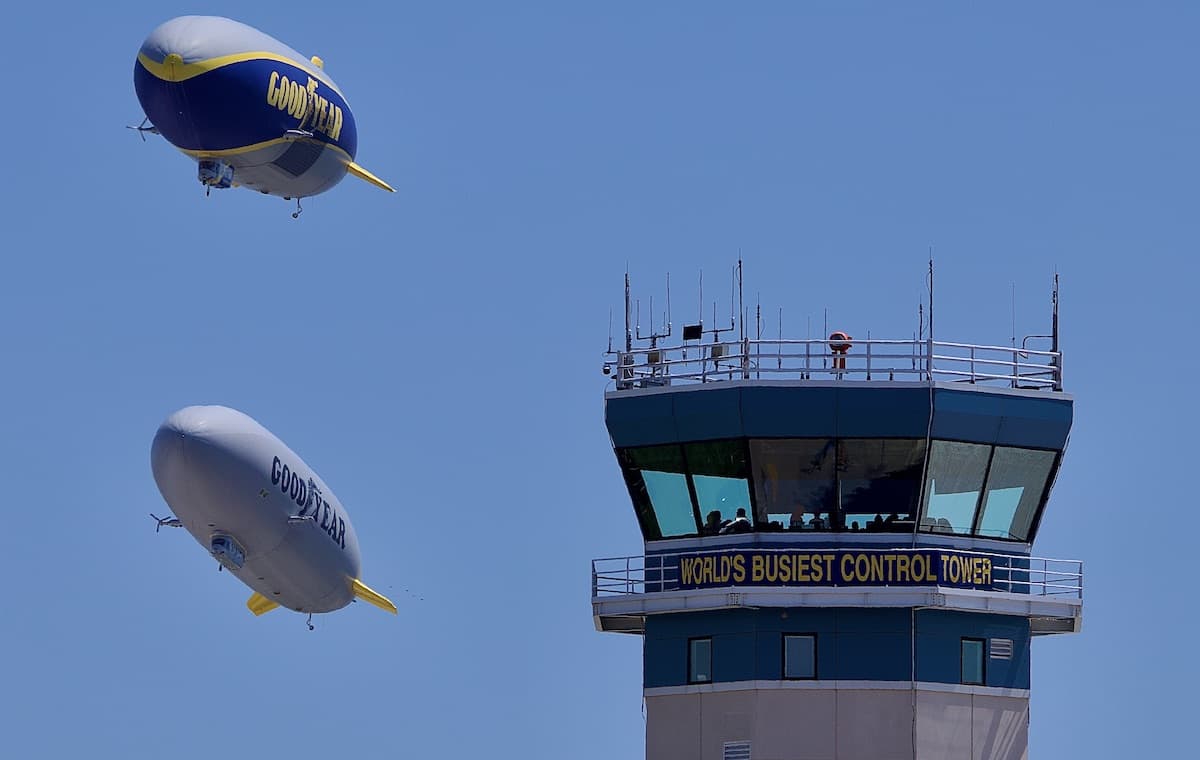
With the country emerging from a brutal winter, I thought this might be a good time to share a piece of aviation history that bridges the gap between the “Golden Age” of flight and the modern era: How the iconic Goodyear Airship came to be powered by a trio of Lycoming IO-360 series engines.
Most of us are familiar with the Goodyear blimp from overhead shots at sporting events, or perhaps from a close-up encounter at EAA AirVenture Oshkosh or SUN ‘n FUN. For those of us in Williamsport, Pennsylvania, it’s a local celebrity. The blimp usually visits each year for the Little League Baseball World Series, circling the very home of Lycoming Engines.
But the story of how that airship moved from the old “GZ-20” design to the high-tech Zeppelin NT (New Technology) began with a chance encounter in 1993.
The Meeting at the Skunk Works
In the spring of 1993, I attended AERO Friedrichshafen, the premier European general aviation show held on the shores of Lake Constance in Germany. At the time, I had heard rumors that the Zeppelin Company was looking to get back into the game with a revolutionary “semi-rigid” airship.
Back then, Lycoming maintained a technical and sales office in Munich, staffed by my colleague Pierre Cornaz. When we met at the show, we decided to track down the new airship project. We eventually located the Zeppelin Company’s engineering staff in a small villa known as the “Skunk Works.” They were deep in the design phase, and when we asked if they had selected a powerplant, the answer was a surprising “no.”
They needed an engine that fit a very specific flight envelope. Unlike the older blimps that used two Continental IO-360s, this new Zeppelin required three engines to support its unique thrust-vectoring system. This system allows the propellers to swivel 90°, giving the pilot the ability to take off vertically or hover with the precision of a helicopter—even in a crosswind.
After several hours of technical back-and-forth, the 200-hp Lycoming IO-360 emerged as the winning solution. It offered the ideal power-to-weight ratio and the fuel-injected reliability needed for long-duration loitering. Today, those three engines define the ship: Two on the forward pylons and one mounted transversely at the tail to act as a “tail rotor” for yaw control.
A Small World
During a follow-up visit to the company’s flight test facility, I had one of those “small world” moments that only happens in aviation. I was meeting with the chief powerplant engineer when he introduced me to the program’s chief test pilot, Scott Danneker.
I immediately said that there were still several Dannekers living in Williamsport. When Scott heard I was from the Williamsport factory, he smiled. He told me his grandmother lived on Demorest Street, right at the rear of the Lycoming plant, and he recalled visiting her there. This really surprised me because I immediately knew where her house was located.
An interesting point about this is the fact that the Lycoming factory has been at the same location since 1889. The company was founded in 1845 by Mademoiselle Ellen Demorest as the Demorest Manufacturing Company. At that time, the company was manufacturing sewing machines and had offices in New York City and Paris, France.
Following the sewing machine days, the company began making bicycles which, at the turn of the century, sold for as much as $125.
However, it wasn’t until 1907 that the name we all know — Lycoming — was born. Facing a restructuring, the company was renamed the Lycoming Foundry and Machine Company, named after the local Lycoming County. That 1907 pivot was the moment the company shifted away from sewing machines and into the high-precision world of internal combustion engines.
The Legacy of Power
For the “gearheads” among us, Lycoming’s automotive history is legendary. In the era before “vertical integration,” car manufacturers bought their engines from specialists, much like airframe manufacturers do today. Under the leadership of E.L. Cord, Lycoming built the hearts of the Auburn, Cord, and Duesenberg.
We officially pivoted to the skies in 1929 with our first aircraft engine, followed by the 1938 certification of the R-680 radial — an engine that powered thousands of trainers during World War II. That transition from luxury cars to radials laid the groundwork for the engines that most of us fly with today.
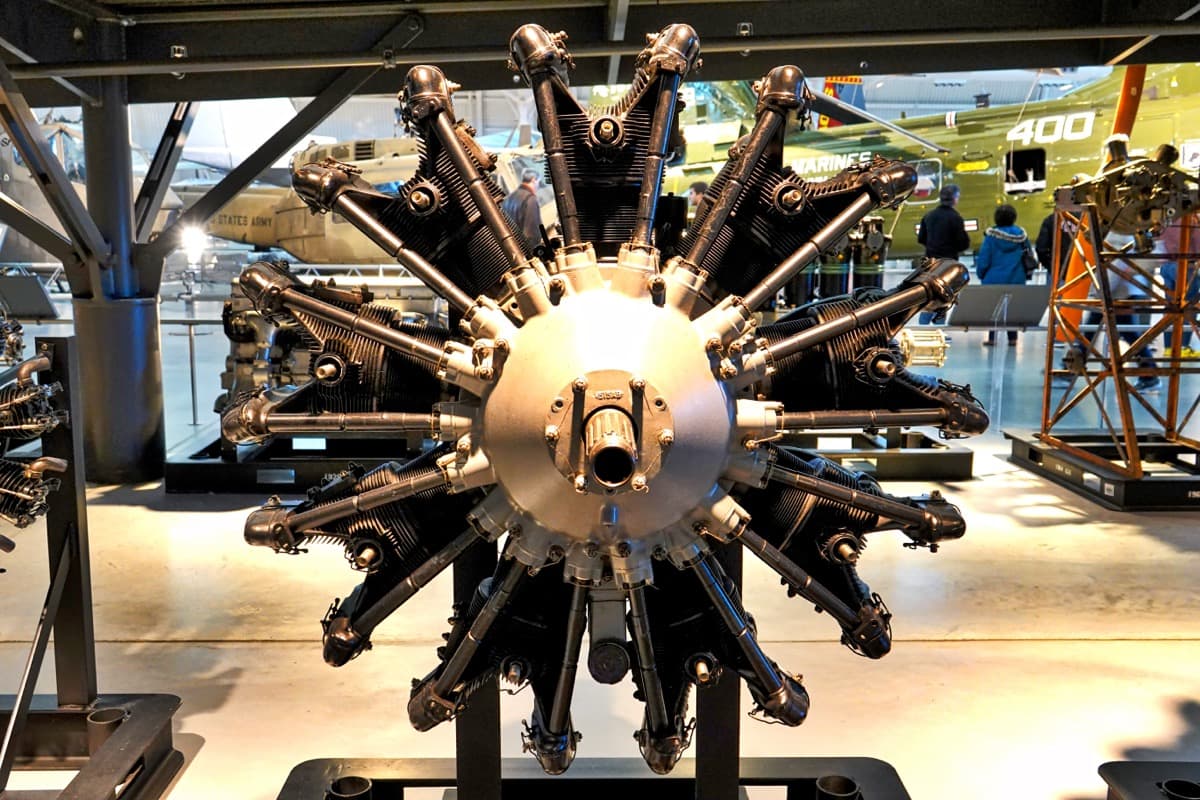
The next time you see the Goodyear Airship (now technically a Zeppelin NT) humming overhead, listen for that familiar Lycoming growl. It’s the sound of a century of Williamsport engineering, a German Skunk Works vision, and a reminder that in aviation, all roads — and even some backyards on Demorest Street —eventually lead home.

A brilliant article. One of the best. Should have known coming from you Paul.
I too had a ride in the Goodyear Airship. I concluded it was the absolute best way to fly if your objective was to watch the scenery below float by. My employer was the FBO at the Williamsport/Lycoming County airport, near where they moored the Airship when it was in town for the Little League World Series. One hot August afternoon when I was in the parking lot getting ready to go home, I noticed a large dust devil in the farm field just West of the airport fence. It was headed due east, toward the Airship. I thought this might get interesting and I was not disappointed. The twirling air currents grabbed the ship by the tail, stood it vertically, rotated it 270 degrees, then dropped it like a rock. Lighter than air? Not so much. It hit the ground so hard the landing gear went fully collapsed then the force was enough to break several windows out of the gondola. None of the crew was present and I guess they wondered what happened. It was repaired quickly and was making flights the next afternoon. See you soon, Paul.
Amazing article my good friend. Thank you.
Be well.
Wow!! Paul I’ve read your excellent and helpful advice for many years (AskPaul) and you’ve also advised me personally regarding AC engines – thank you ! I had no idea about the Lycoming history with the Goodyear Blimp even though I’ve had a ride in it and was invited to sit in the seat with that big “trim wheel” in my hands. You have an amazing history with Lycoming and next time I’m at Sentimental Journey I hope to tour the factory again. Keep up the great work and advice – Thank YOU !!!!!!
I just want to see it do a barrel roll
Great! I’ll watch from the ground at a safe distance . . .