


I like seaplanes. Seaplanes are honest. They aren’t pretentious. They are what they are. No apologies. No excuses.
For one thing, seaplanes haven’t got a suspension system and they don’t pretend otherwise. The floats are attached directly to the airframe. Any energy imparted by a wave or a hard landing will transfer directly to the pilot’s butt. And spine. And maybe even bounce their noggin off the overhead.
Even classic flying boats with all their majesty and elegance make no attempt to hide the truth. On landing we’re dropping a big ol’ boat hull onto the choppy surface of the water with nothing to dissipate the impact.
Flying boats have integrity. Literally and figuratively. Unless the pilot pounds it down too aggressively or hits a hidden stump on landing — then the literal integrity disintegrates with the hull. The figurative version stands, however.
Land planes are sneakier than seaplanes. For a century or more the engineers who design them have been seeking ways to turn a ground pounder into a squeaker. Landing is hard.
Trailing link landing gear is a dream come true. The main wheel sits behind the landing strut, attached by a lever. In between the two components is a shock absorber. The full assembly can make a ham-fisted pilot’s landings feel more like a mere kiss on the face of the earth.
Trailing links are heavy, though. Lots of parts equals lots of weight. And weight is bad.
For decades now, Cessna has done beautifully with its spring steel gear legs. Simple, elegant, this entirely functional design allows the company’s aircraft to dissipate the impact of bumpy taxiways and hard landings by flexing. There are no moving parts in the traditional sense.
In a way they’re brilliant in their simplicity. But building bouncy into our landing gear from the start isn’t everyone’s idea of a foolproof system.
Perhaps one of the best suspension systems ever designed for aircraft came early on. Very early on.
I’m talking about bungee cords. Rubber bands bundled together. Simple, inexpensive, weird, and perfectly functional.
Louis Blériot made use of bungees on his Blériot XI way back in 1909. His was the first airplane to cross the English Channel. Since airports hadn’t been invented yet pilots flew out of unimproved fields. Literal fields. Just shoo the cows out of the way and go. Suspension systems mattered.

This early system was so reliable, so effective, and so well accepted by Blériot’s fellow designers and pilots, bungee cords became an accepted standard in the field of light aircraft design. They still are.
I’m currently working with a group of teenagers, high school students, who are restoring a 1946 Piper J-3 Cub. This particular airplane rolled off the Lock Haven, Pennsylvania, factory floor in the spring of 1946. We know that because of the serial number, which starts with a “1.” If the first digit was a “2” we’d know it came to life in Ponca City, Oklahoma.
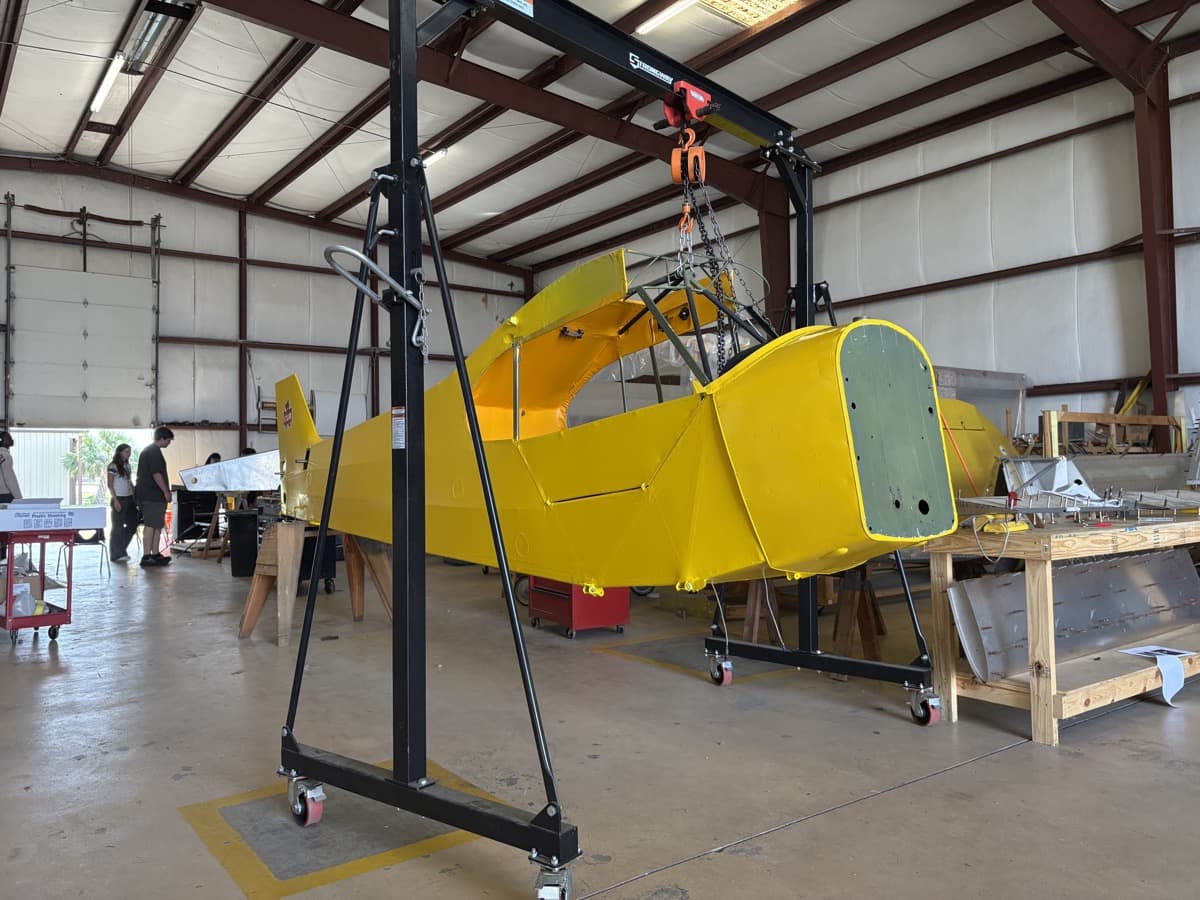
But the origin story is a tale for another day. Let’s stick with landing gear.
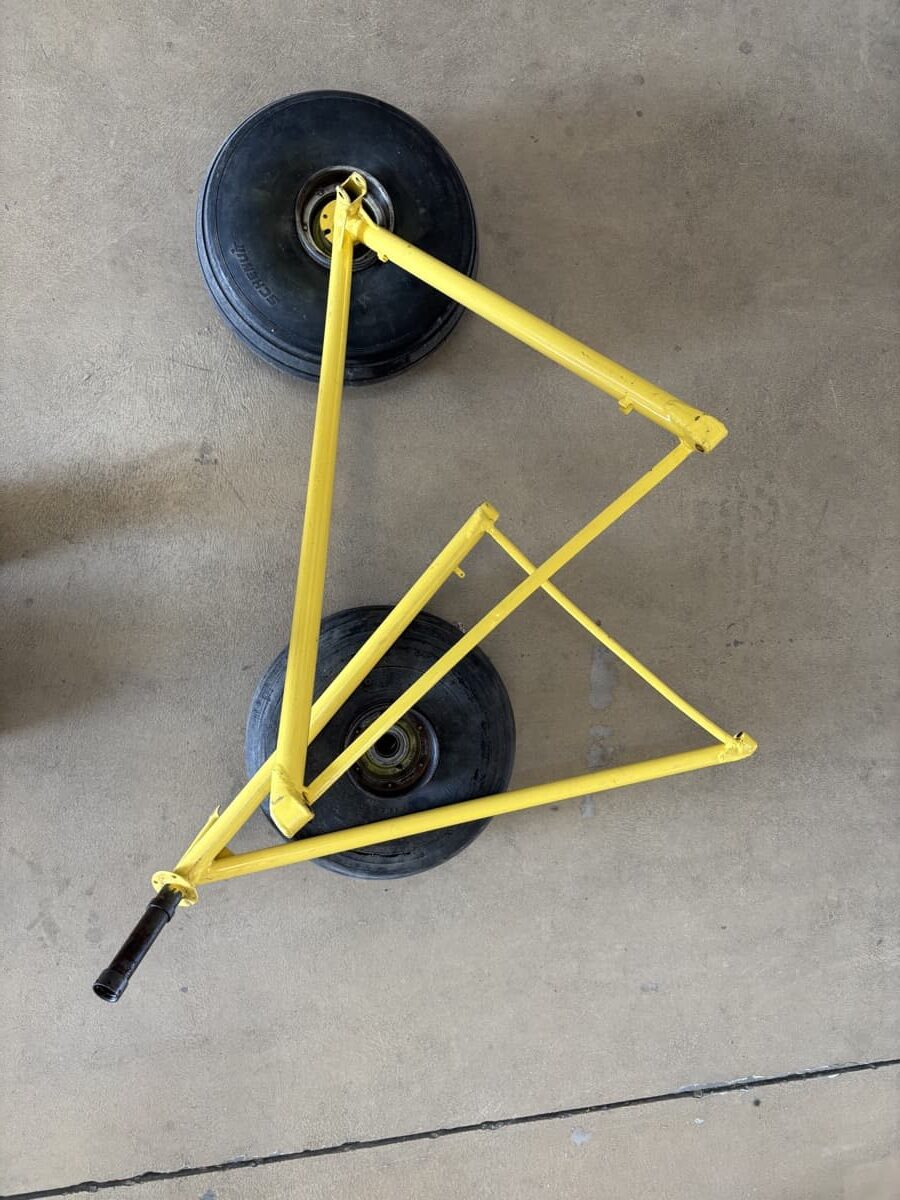
The problem in putting landing gear back on the airplane — especially when working with teenagers whose parents expect them to return home each night in their original condition — is the bungee cords.
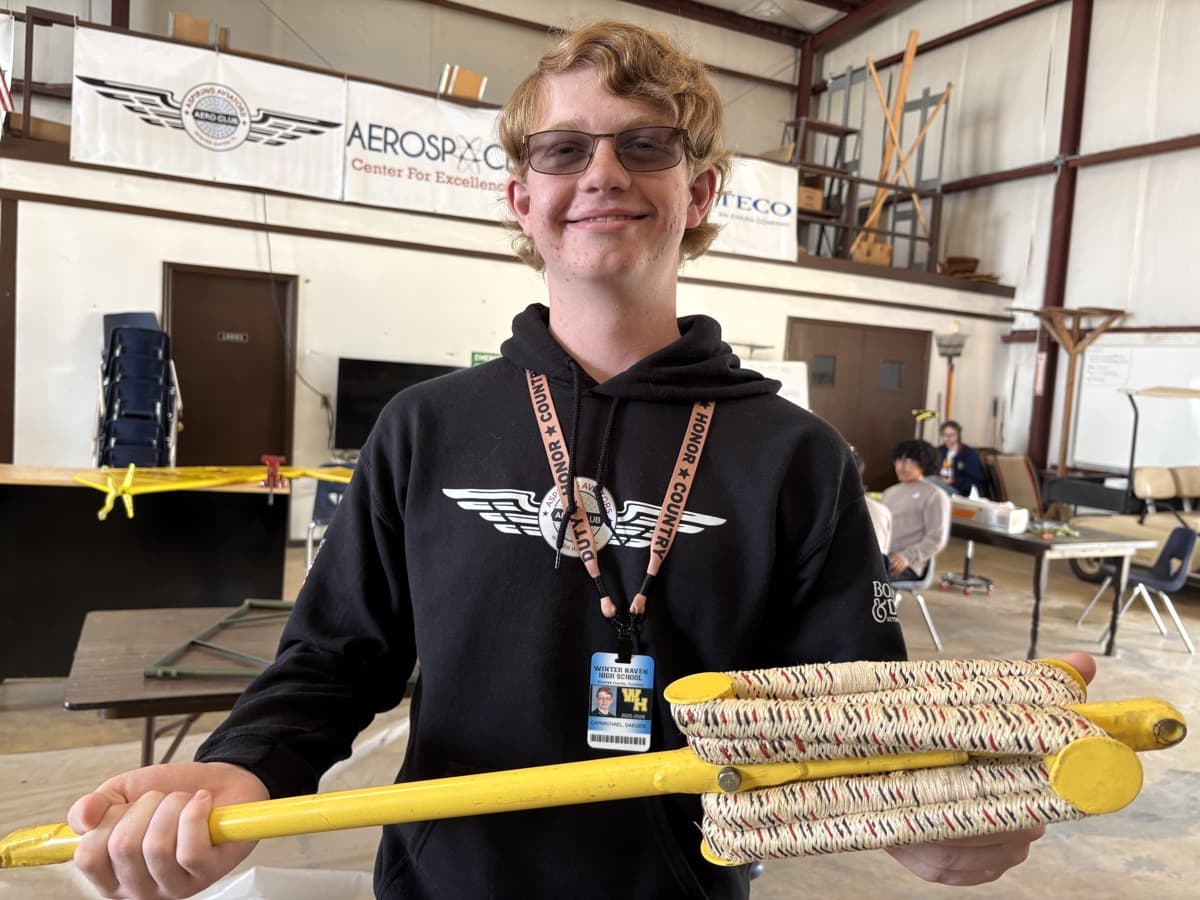
The suspension system works because the bungees absorb the load of any bumps a pilot might encounter along the ground-bound way. To do that the bungees have to be stressed. Really stressed. Two bungee cords per gear leg, four in total. They’re wrapped around steel tube fittings — a simple design involving a tube sliding inside another tube allows the bungees to soak up the bumps as the tubes slide back and forth.
This is where the problem comes into play. Those bungee cords have to be stretched over the steel tube fittings. And being a collection of hundreds of rubber threads lashed together inside a fabric covering, they really don’t want to be stretched out. They want to stay as they are. This is why they’re such effective shock absorbers.
Fortunately, there is a tool to accomplish this work. Several tools, actually.
Back in Lock Haven the tool was nothing more than a lever in the hands of a burly young guy. He was practiced at the art of smoothly and efficiently drawing those cords tight and locking them in place. He didn’t need a gym membership. That dude was pumping iron or, in his case, rubber bands, all day long.
Today we try to be a bit craftier. Safer, too. Nobody needs a bungee cord designed to carry hundreds of pounds snapping back on them unexpectedly. And the idea of a 100-pound kid wrestling those bands into place by hand is a bit more anxiety inducing than I’m comfortable with.
Fortunately, the Lakeland Aero Club on the SUN ‘n FUN campus at Lakeland Linder International Airport (KLAL) sits just on the other side of the county from the group I’m working with. It has a specialized tool which the members graciously offered to loan out in the interest of safety and fraternity. Bless them.
Even the simple things aren’t so simple when you get right down to it. There’s not a more basic component of aircraft construction than the rubber band. But to install it correctly and without injury takes a bit of doing. Thankfully, our community is smallish, dedicated to helping others, and just a phone call or a text message away.
The bungees are on. The gear is going back on the Cub.
Attaching the wings isn’t so far off. Not long after, the engine will be back on its mount and an 80-year-old piece of aviation history will be back in the air. Now, with teenagers at the controls.
No matter how technologically advanced the world around us might become, the basics still have their place. And like the seaplanes I love so dearly, the Piper J-3 Cub is a simple, honest, straightforward flying machine. It is timeless.
May you get the opportunity to fly one, or own one, or restore one at least once in your life.

My 1946 J-3 sn 20409 was built in Lock Haven.
Let’s give credit where due. That “Cessna spring gear”, the flat one, was a weight saving invention of Steve Whitman on his early racers. The tubular version was, I believe, just an evolution based on the evolution of metal alloys.
See ya’ at S&F. Be set up Thurs nt.
Wittman is the correct spelling of his name.
Good article Jamie. You forgot the a major picture, the “magic tool” from Lakeland Aero Club.
I did leave that out, John. My apologies. However, there will be a video showing up on the Mad Props Aero channel on YouTube next week that includes a clip of that exact tool in use. Sorry for the inconvenience.
Soloed a Cub in 1969…..never forgot the moment……..!