

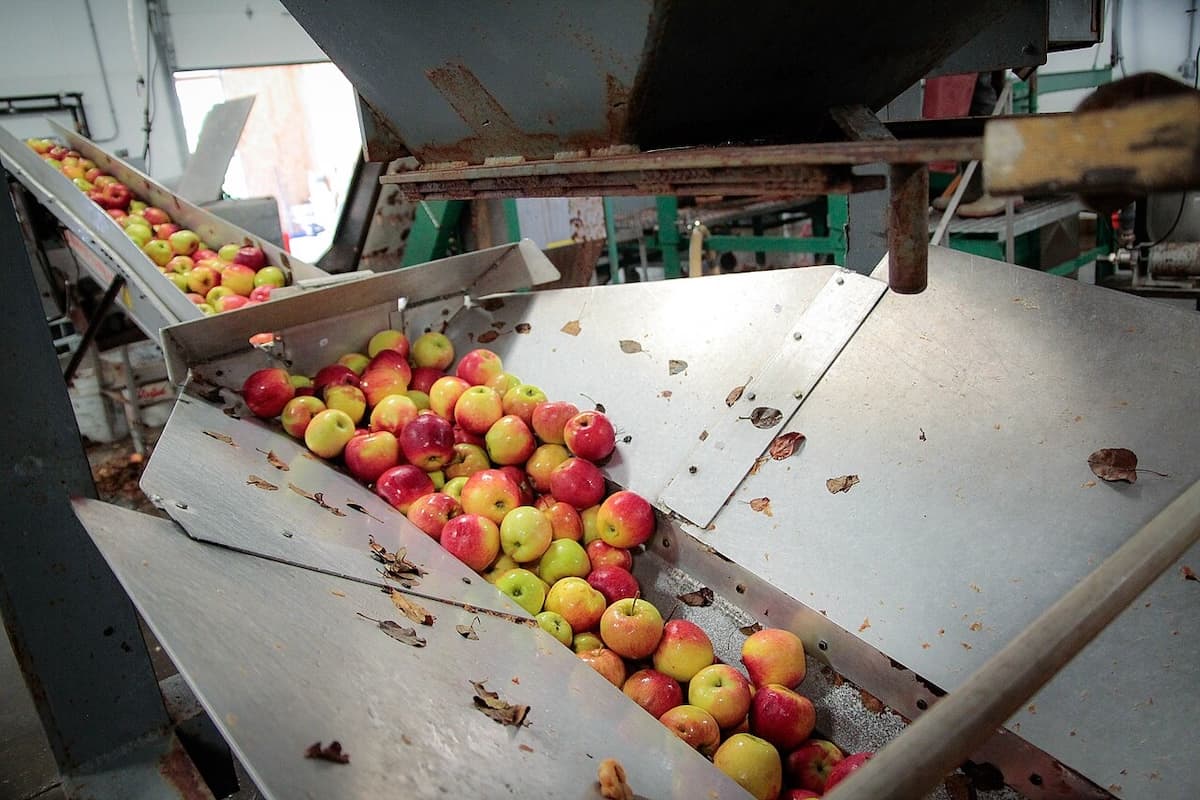
My family owned a farm when I was growing up. Tomatoes, squash, asparagus, and corn all grew in the dirt out back, the standard fare for a New England farm that had been in operation for nearly 200 years.
In a rough, unpainted barn near the main road through town sat our cider mill. It was at the time the oldest continuously operated cider mill in the United States. In the fall we could sell as much as 1,000 gallons of squished apples in a single day.
The setup was fairly simple. The apples go into a large wooden hopper behind the barn. A conveyor belt moves a steady stream of the fruit into a grinder, which deposits applesauce onto a press below. A skilled craftsman folds the slurry within heavy blankets, stacking them high between wooden slats for support. By building a small tower of fruity goodness, the press can squeeze out the juice, leaving a tasty treat for both humans and livestock.
The humans prefer cider, sweet and cold. The livestock munch on the dried apple pulp with great enthusiasm.
For 15 years I was that skilled craftsman. I learned and honed the talent of making that tower stand straight as tremendous pressure was applied to it. So did Leny Longo, a good friend who went on to become a chef of some renown. Scott Cully had the gift, too. He went on to make an appearance on the Tonight Show for growing the largest pumpkin in the nation that season. This was during the Johnny Carson years.
I’ll be honest with you. I’m fairly proud to have learned a skill and plied a trade that has historical significance. There is a legacy to the work that extends way back into American history. That’s true, at least in part, because people who learn to make apple cider tend to learn through experimentation or accident that hard cider is just a hop, skip, and a jump from the sweeter, fresher version. History bears that out, too.
Out of sight, out of mind. The craftsmanship involved in making apple cider has largely been replaced by mechanized processes conducted by relatively unskilled people pushing the right buttons in the right order. They call it modernization.
I mention this as I spend a couple days a week watching a highly skilled old dude named Wiley share his knowledge and artistry with a small collection of high school students. Wiley is a master of his craft, one that is generally considered to be dying away, but one that is well worth learning and putting into practice.
Like squishing apples, covering an airplane in fabric has become something that’s well off the beaten path. But like good food of high quality, a well-covered airplane is essential to survival.
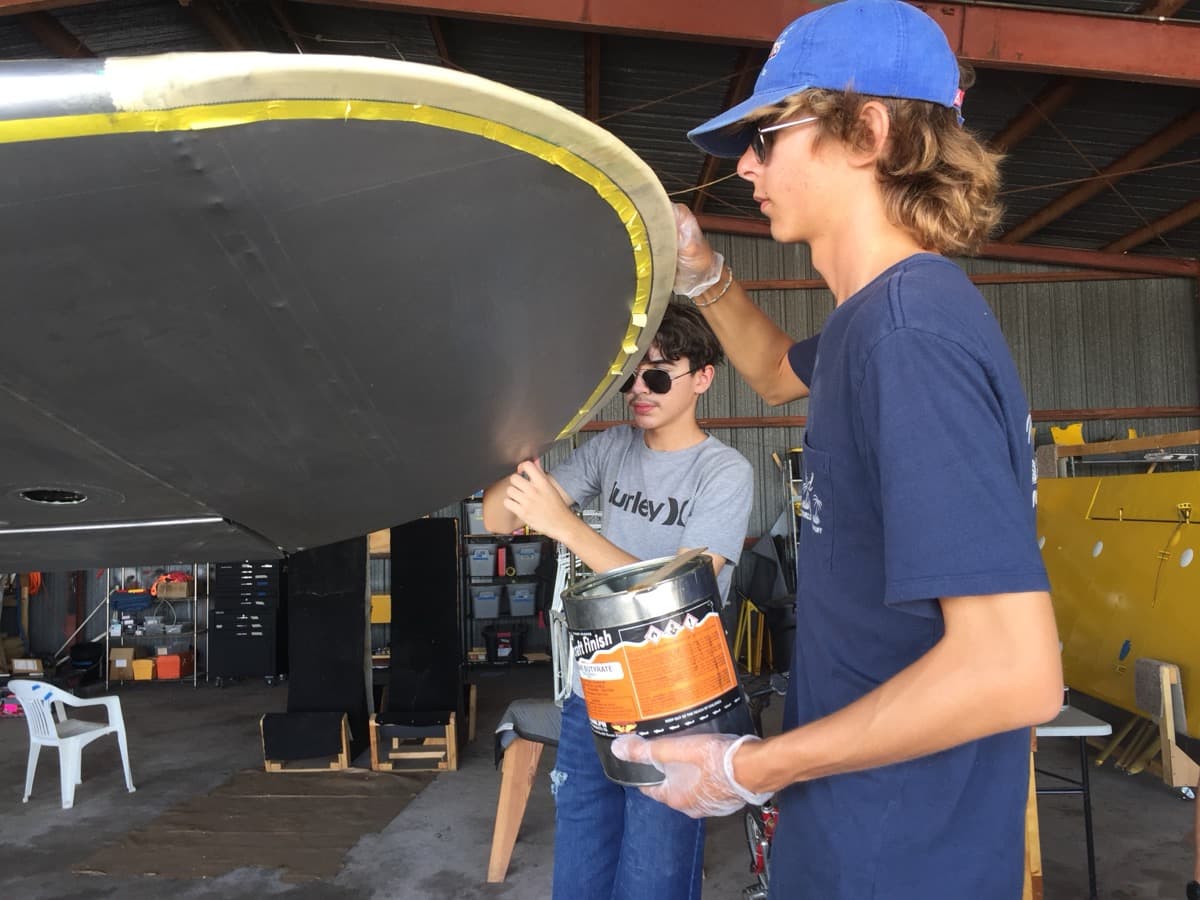
Right now, at this moment, there are approximately 34,000 fabric-covered airplanes listed on the FAA registry. In the old days they were covered with Grade A cotton or Irish linen. Nitrate and butyrate dope was applied with brushes to shrink the fabric tight around the fuselage, wings, and tail feathers. Those dopes did their job beautifully.
The one downside: Both slather the airframe with what could realistically be called a liquid firestarter. Not exactly a comforting thought in a world where sparks and cigarettes were routinely close at hand.
The fabrics themselves were no treat, either. Being organic products, they were susceptible to damage from humidity, ultraviolet light, farm implements left in the fields pilots used as runways and, of course, kids with pocket knives.
Thankfully, improvements to the processes and materials have remedied most of those issues. But fabric is still fabric and the steel tubes that make up fuselages are still vulnerable to corrosion. So it’s necessary to recover or repair damage to each of those 34,000 fabric-covered beauties now and then.
To do that, we need a skilled and experienced workforce of true craftsmen. The work isn’t heavy, so there’s no need to be big and burly. The tools of the trade are simple: Scissors, needles, an iron, and a combination of brushes and sprayers.
Surprisingly enough, the work is quiet. Almost peaceful. It not only can be done in air-conditioned comfort, but the process actually prefers it.
Because I live 1,300 miles away from the cider press I spent so many cold November days with in my youth, I cannot share what I know of that skillset. Plus, apples don’t grow in my part of the country. For me, Leny, and Scott, that ship has sailed.
However, Wiley is passing on a marketable skill to young people who seek some means of supporting themselves in adulthood. They’re looking for a direction in life. A path to follow that might earn them respect, economic freedom, social connection, and maybe even a place in history for the work they do.
One of the kids who came to work on the projects in the aero club hangar chose to do just that. He’s now on the cusp of earning his Airframe and Powerplant Mechanic certificate through work experience. After a stint working the line at a local flight school, he began spending more and more time in the shop. He was a helper who developed the skills to become a much more capable helper. In the process he earned a career he’d never considered before walking into an airplane hangar for the first time.
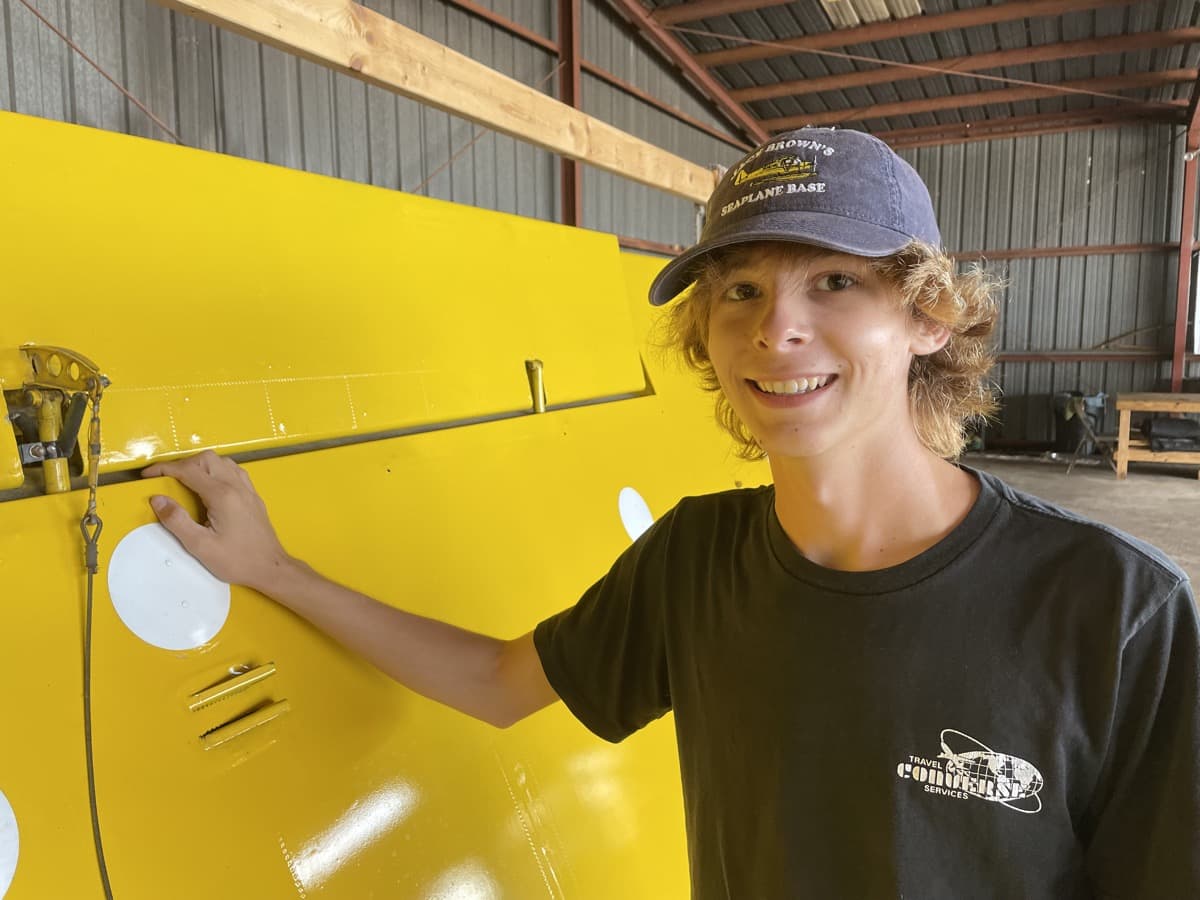
He now welds and wires and bends tubing and hangs engines. He applies fabric and dope and color to the finished product. He’s playing an important role in the process of keeping those 34,000 airplanes and seaplanes flying. And perhaps, just perhaps, he’s becoming the person he hoped he’d be one day. Without student debt. Without years of sitting on the sidelines.
The mainstream may think of kids as unworthy or unskilled, just as they think of the fabric-covering shop as an anachronistic symbol of the past. Yet, it is very much a reality of the now and a potentially lucrative business in the future — all based on a skillset few seek out, but thousands upon thousands of aircraft owners desperately need.
That sounds like a golden opportunity to me.

I swear I can smell the dope just looking at the second pic!
Covering aircraft is a dying trade. The new synthetic systems are more reliable and stronger and sending wings and tail feathers to those shops that still survive is very expensive ….IE…covering a Cub could run 20k!!! with repairs and upgrades…..
Great article and I loved the way you wrote it…….
Regards
Excellent article. Congratulations to the young man who is figuring out who he is in this field of aviation. No debt is a real bonus.
Great story, there are many such skills that are harder and harder to find and a great opportunity for a motivated youngster: aircraft welding, small engine overhaul, refurbishing gauges, repairing old electronics, etc.