

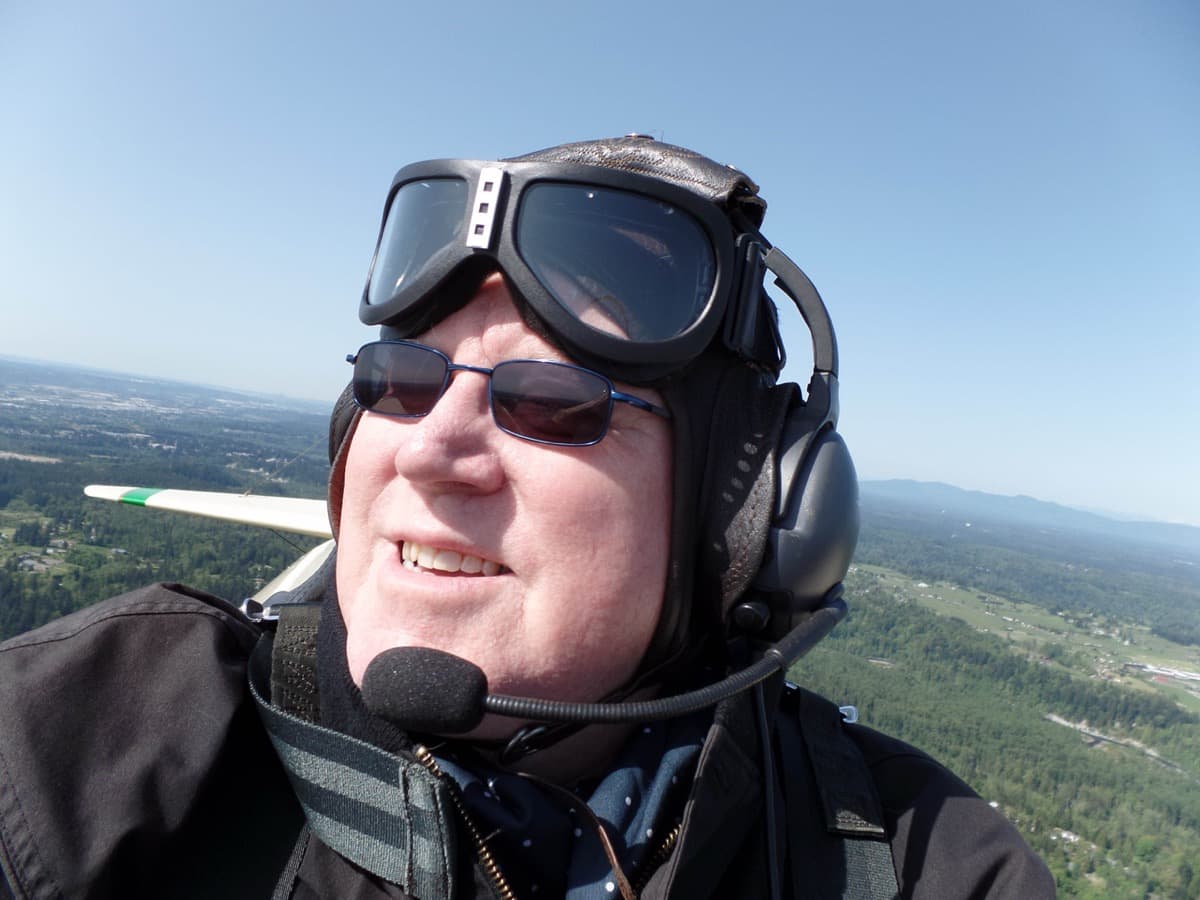
When the average individual retires from a long and distinguished career, they may receive a gold watch. Perhaps they gather their significant other and launch off on the vacation of a lifetime. Some even purchase their dream car, or boat, or mountain cabin that has spurred them on throughout the difficult patches of their work life.
Not Ron Wanttaja. When Ron finally called an end to his years as a space systems engineer, he did something different. He got a tattoo. And not just any tattoo. His features the depiction of a rocket taken from the mission patch created for one of the many projects he worked on.
Accompanying that art is an equation. Specifically, Konstantin Tsiolkovsky’s formula for calculating a rocket’s maximum change in velocity considering its exhaust speed, initial mass, and its dry mass.
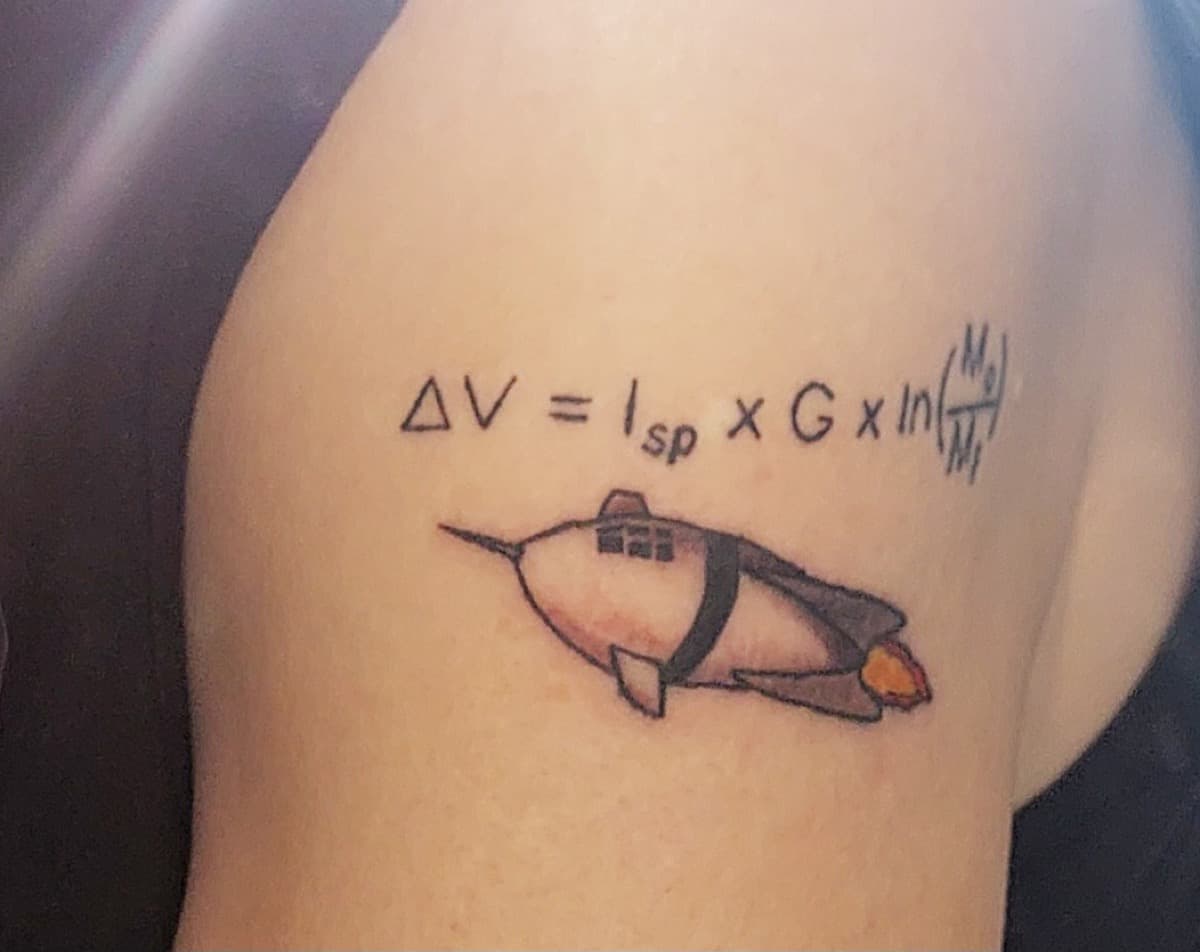
In layman’s terms, it’s an expression that tells us how fast a rocket will need to go in order to achieve its mission objective of reaching orbit. After working on 18 satellite projects, some of which remain in orbit to this day, Tsiolkovsky’s formula has good reason to be permanently attached to Wanttaja’s physical form.
While the tattoo is permanent, the orbiting satellites are not.
“Nothing’s going to last up there forever,” says Wanttaja.
He is a man of vision, but he is a man of practicality as well.
On the other end of the spectrum, Ron is an active participant in aviation at lower levels — much lower. He’s a recognized authority on the topic of homebuilding with a distinct focus on Peter M. Bowers’ creation, the Fly Baby. He’s owned the one he’s currently flying since 1996 — an aircraft he purchased for a very reasonable $10,000.
Cheap to buy. Easy to maintain. Inexpensive to fly. The Fly Baby hits all the high points of a general aviation enthusiast. Prior to the Fly Baby, Wanttaja owned an interest in a classic Stinson 108. But the Fly Baby design he’d become so enamored of earlier in life called out to him.
“I just missed the open cockpit flying,” Ron admits.
The airplane is not entirely stock as it came from the original builder. He’s mounted a handheld radio and an external antenna on the aircraft, designed to help communicate with other traffic in the skies around Portland, Oregon.
“It’s been working great for about 15 years,” Wanttaja says with noticeable pride.
He’s also used his considerable talents to add a powered seat to the machine. As most Social Security recipients know, anything that relieves stress on the knees can be considered a blessing. The seat allows up to 8 inches of travel, easing his body into the cockpit without requiring much effort. Best of all, it only adds about six pounds to the airframe.

Where It Began
Wanttaja knew he was destined for something aeronautical as early as 3 years old.
“When I was growing up in Fargo, North Dakota, I’d see the F-89 Scorpions come overhead,” he recalls.
That was just the start of things. His interest didn’t fade. If anything, it intensified over the years.
“I joined the Civil Air Patrol,” he says. “I got a flight scholarship.”
He ultimately rose to the rank of Cadet Colonel. His undeniable tenacity and determination led to even more opportunities. “They offered me an hour in a Citabria in exchange for cleaning the office,” Wanttaja remembers, adding it was an offer he made good on.
Years later, he experienced what so many general aviation pilots dread: An engine failure shortly after takeoff. While at the controls of a Cessna 150, he managed the challenge of a propeller winding down while the engine takes a rest. The cause turned out to be water suspended in the fuel. It didn’t show up when he sumped the tanks. His samples came out a clear red.
Yes, at one time a common fuel for low compression general aviation engines was dyed red. It was 80/87 octane with a relatively low lead content. But in Ron’s case, water had found a way to suspend itself in the fuel. It wasn’t visible to the naked eye. Once he fired up the airplane, the engine vibrations caused the water to coalesce. Droplets crashed into each other, forming larger droplets, which sank to the bottom of the tank — where the pick-up is located.
“I pulled four gallons of water out of that airplane,” Ron says, remembering the aftermath.
That experience led Wanttaja into a new field of endeavor. After writing up the experience, he sent it to a magazine. An editor took a shine to it. The story was published and a whole new avenue of self-expression became available.
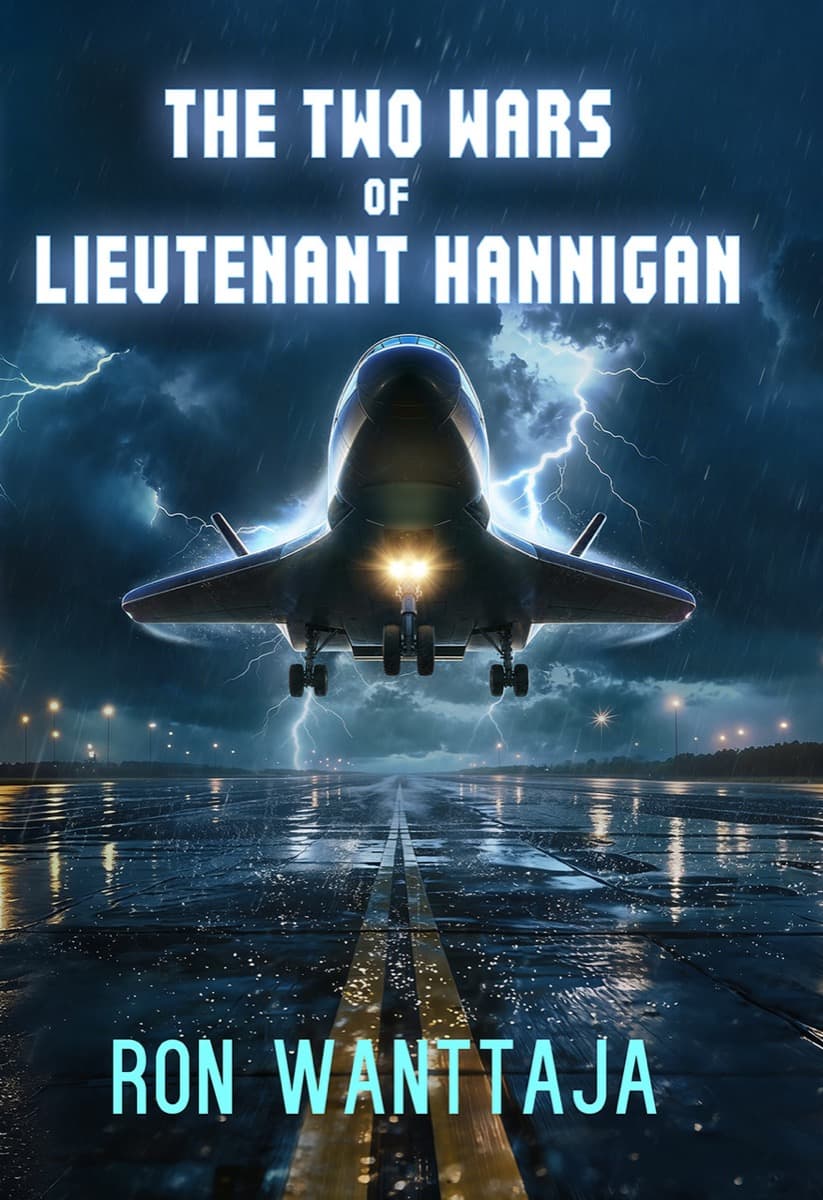
As if being a space systems engineer and a general aviation pilot wasn’t enough, he began to write. Hundreds of articles later and several books down the road, both fiction and non-fiction, Ron has recently released a new novel, “The Two Wars of Lieutenant Hannigan.”
Of course, becoming a published author doesn’t happen overnight. Just as his interest in aviation was sparked by jet fighters flying over a little boy’s head, the desire to write came over time — fueled by a fair amount of boredom and a considerable quantity of free time.
It started when he was in the Air Force. From the age of 21 through 25 he served his country while sitting in a darkened room awaiting hostilities to begin.
“I was an on-duty officer for the early warning system,” Wanttaja explains.
Those with enough years on them to remember the Cold War era may understand the assignment. “Things were quiet,” he utters perhaps the most appreciated words in world history.
Quiet led to boredom. And in a room staffed with young, bored men, it is imperative each individual find an adequate distraction from the tedium.
“I needed reading material,” he says.
His search led him to the Horatio Hornblower series of 11 books. Written by C.S. Forester over a 30-year period starting in the late 1930s, the Hornblower series was a huge success.
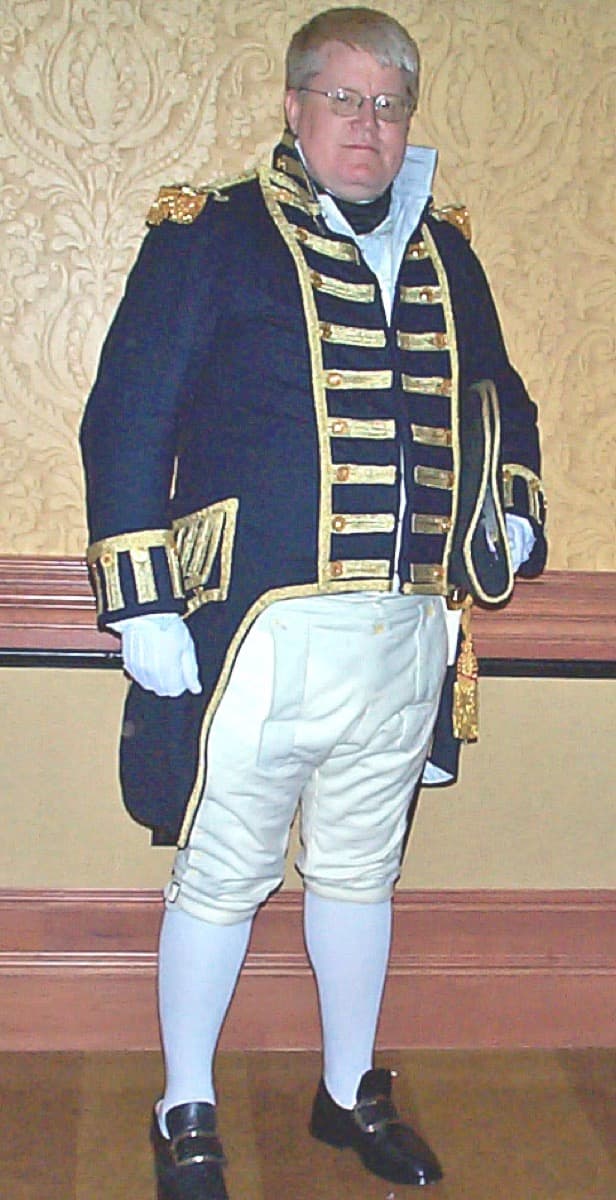
Set in the Napoleonic War, the action took place on wooden ships powered by sail and manned by sailors of the British Royal Navy. Those stories are a long way from the threat of imminent nuclear war, or satellite technology, or even a Fly Baby. Yet they made an impression on the young Wanttaja that persists to this day. That’s perhaps best illustrated by the fact that Ron owns and has been known to wear on special occasions a full-blown military officer’s uniform of the era.
The heaving deck of a wooden ship even makes an appearance in Wanttaja’s latest novel. That’s quite a trick considering his main character, Lieutenant Chatan Hannigan, lives in the near future, operates a spacecraft known as a Diamond, and serves as a member of the 14th Space Operations Squadron of the U.S. Space Force.
“I’d like to think it’s one heck of a good adventure novel,” says Wanttaja before adding a welcome reference. “This is what the Royal Flying Corps was like in 1914.”
An apt comparison considering both outfits, the real and the fictional, deal with a level of technology that’s a mystery to the general public — yet a technology that is actively being developed, adapted, and applied in real life. Ultimately, it has become so commonplace that most Americans stopped watching the moon landings after Apollo 12.
So, if you meet Ron out and about on the streets of Portland, be sure to offer a snappy salute. Thank him for his service. Congratulate him on writing a ripping good tale. And maybe, just maybe, ask him if he would be willing to explain the mathematics behind that spiffy new tattoo.
For more information: WarbugPress.com

Thanks, Jamie! Great article!
Honestly Kent, it’s not bad that you choose to follow that OT text for yourself. But to think that you somehow have a say on how others choose to live their lives is quite another matter, especially on something that has little ethical or moral standing in behaviors. A tattoo isn’t going to cause anyone to drive recklessly or commit a crime. Especially this one, which relates to ancient Egyptian slavery practices. For that matter Isaiah 44:5 says to go do it. Chill and live. Ron is an outstanding gentleman and scholar for the Fly Baby and A-65 crowd.
Leviticus 19:28