

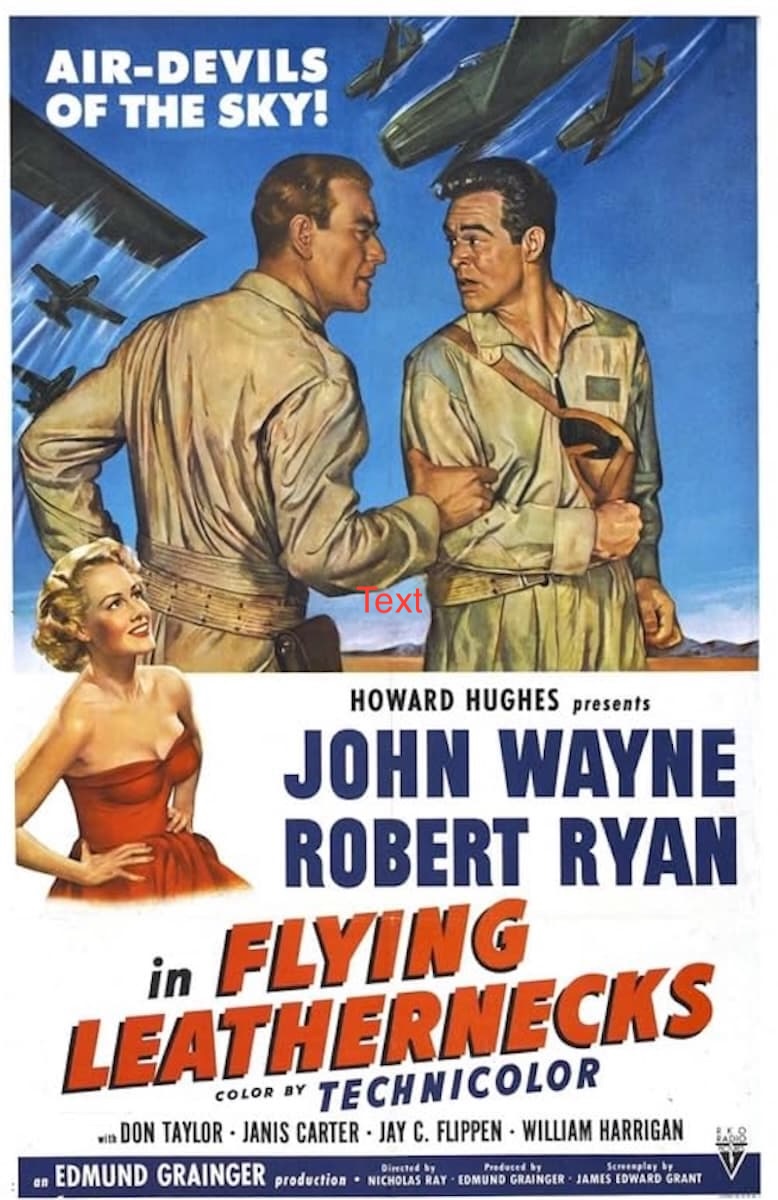
In 1951 RKO Pictures released the John Wayne epic, “Flying Leathernecks.” The Duke led a squadron of U.S. Marine pilots into aerial combat in the South Pacific. It was in effect a recruiting film dressed up in World War II nostalgia.
It’s worth noting that RKO was owned by Howard Hughes, a pioneer of the Golden Age who transformed an aviation industry of individual hobbyists and small manufacturers into globe-spanning transportation. Thank you, Howard.
Filmed in brilliant color, a rarity at the time, I saw Flying Leathernecks on TV, not in a movie theater. On the small screen it was still riveting for a teenager with big dreams. One of the themes that stuck with me was the Duke’s insistence that one of his pilots, a Texan with attitude, not fly while wearing cowboy boots.
The cowboy boots weren’t really all that important. They merely represented a theme. Namely, a lax sense of commitment to established standards and the acknowledgement of leadership roles. The offending pilot, gregarious and charming as he was, didn’t live until the end of the movie. His attitude, which was, essentially, I’ll do it my way, got him in the end.
I’ve remembered that scenario throughout my adult life. I took it to heart. To this day I’ve never climbed into the cockpit while wearing cowboy boots. Not once.
Which is not to say I take a dim view of cowboy boots. I actually like them. I own two pairs. Brown for casual wear and black for formal occasions. You can call me a redneck if you like. I take no offense. From my perspective, I think of myself as more of a renaissance redneck. A hick perhaps, but a hick with culture and an appreciation for the arts.
This topic came back to me in a big way when I took on my first flying job. I was instructing at a small flight school. There were two other instructors on the books. One I’d gone to flight school with. The other was a new friend who flew well, had real ambition, and was quick with a genuine smile. I walked to the airplane with him for what turned out to be his last flight.
He was wearing cowboy boots.
While my buddy’s accident and death had nothing whatsoever to do with his choice of footwear, the theme took on almost mythic proportion for me. And so, I keep my boots for social occasions. They never get anywhere near the airplane.
Deciding what we might cover our feet with is — and should be — a real consideration for many pilots. In some aircraft we have all the room in the world. I had the pleasure of flying a BT-13 long ago. I’m pretty sure I could have operated the rudder pedals acceptably even if I was wearing ski boots. The cockpit was cavernous. The pedals enormous.
On the other hand, sitting in the back seat of a J-3 Cub with a good-sized passenger up front can be an issue.

The rudder pedals are positioned between the sides of the fuselage and the passenger’s butt as it spills over the tandem seat in front of the pilot. Light, flexible shoes are a must. Some pilots fly without shoes at all. Just a pair of socks separate their feet from the steel tube that makes up what passes for a pedal.
Footwear is not an entirely unimportant decision.
Recently I’ve noticed this as a whole new issue creeping into the cockpit. I watched a new CFI welcome his student to the cockpit just a few days ago. The CFI wore a pair of good quality sneakers. Short laces. Flexible soles. A good choice. His student wore Crocs. A pair of rubberized slip-ons that could just as easily slip off at an inopportune moment.
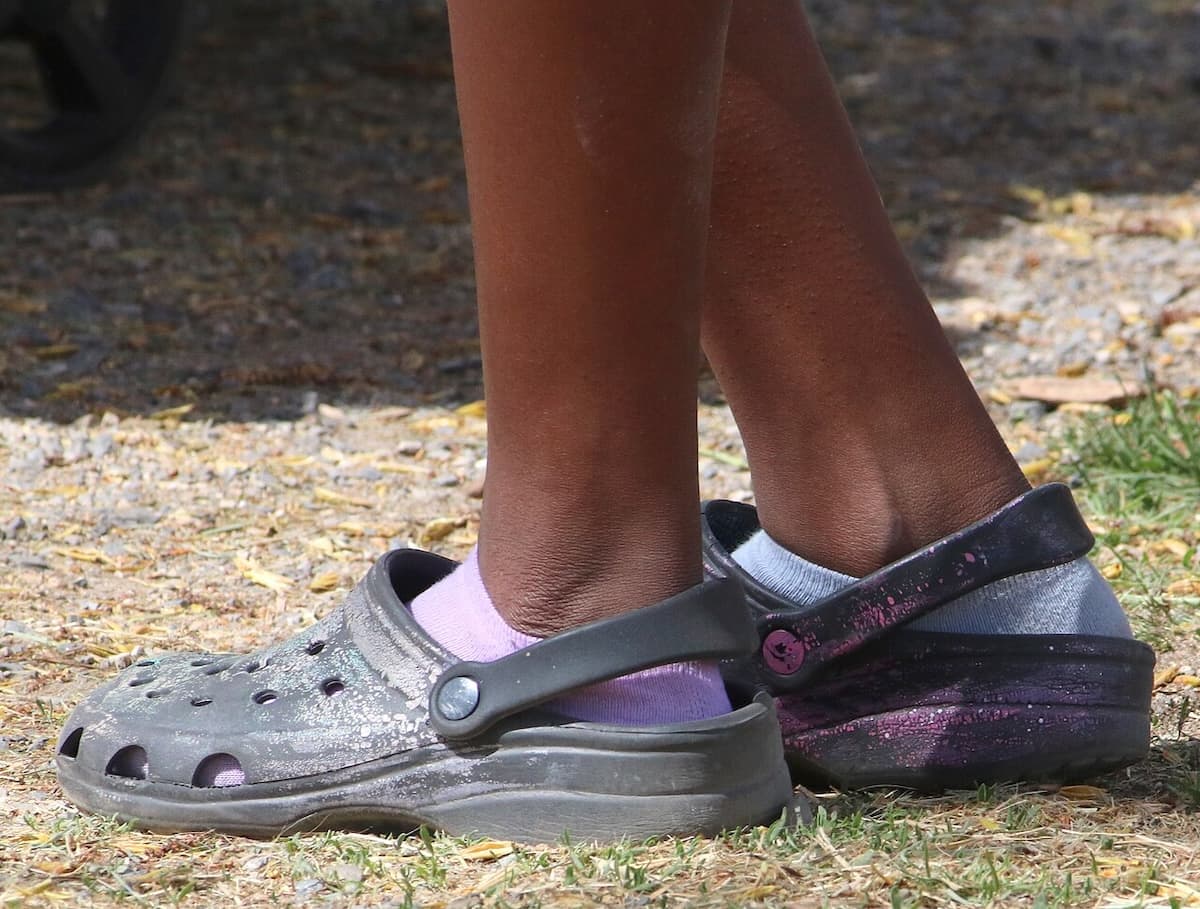
There’s nothing like an errant shoe stuck under a rudder pedal at touchdown to make a pilot realize how fast a small mistake can manifest into a disaster.
I’ve seen flight students show up for a lesson wearing all kinds of odd footwear. Perhaps the intent was to make a statement. But for me, the statement is, we’re going to have a talk, then reschedule this lesson.
Not every decision that affects the safety of flight happens in the cockpit. Some occur at home well before we even head for the airport.
I’ve seen fuzzy bedroom slippers shuffle across the ramp. More than once, I’ve seen platform shoes, generally worn by people who would like to be an inch or two taller. Frankly, I have no idea how one might operate the rudder effectively or differentiate between the rudder and the brake with all that extra shoe material between their tootsies and the pedal.
I’ll never know, either. Because I’m not about to put my safety into the hands of someone whose fashion choices outweigh their desire to effectively function in the situation they’ve chosen to put themselves in.
When the Croc student returned from his flight, I waited until the young CFI was free and clear. With my mentor hat firmly in place, I reminded him that he is PIC on instructional flights. The maneuvers aren’t the only thing we’re expected to teach. Risk assessment and mitigation are of some importance, too. I recommended he turn situations like the one he’d just had into a learning experience. Something he admitted he hadn’t considered.
The job of a CFI is varied. The basics may seem obvious. Teach others to fly. To manage a machine as it moves through the air. In reality it’s a fair bit more nuanced than that. We should be teaching judgment, preparation, and an acute awareness of the environment around us and how we might best fit into it. Perhaps, most of all, we have the opportunity and the ability to recognize an error and take corrective action before it becomes a real problem.
That last item is something we can address well before we ever get into the aircraft. Politely, privately, with compassion and understanding. Those are the lessons taught with the fewest distractions and the lowest workload. The ones that will be best remembered. And that includes the choice of shoes, or slippers, or cleats we might choose to wear when we show up on the flightline.
Because it’s the little things — the things we assume are no big deal — that can get you.

Primary concern should be that you can operate the controls in a safe manner. I did tailwheel training in a Taylorcraft last fall, and had to cut down the heels of my left size 12 sneaker because it keot getting caught between the heel brake and fuselage tubing….a potentially dangerous situation.
I’m surprised no one has brought up Tex Johnston, the legendary Boeing test pilot who rolled the prototype 707 at Seafair in 1955….he always wore Cowboy Boots….the ones he wore on that flight are on display at the Boeing Museum of Flight. That said I agree wearing Crocs, given how they fit on your foot are a poor choice for flying
Great article! Common sense. Just think ahead, again…This is aviation.
Dense cotton, leather, nomex, etc fabrics/materials initially ‘char’ when subject to high heat/flames…. giving many seconds of protection for for survival… and may injure flesh by thru-heat exposure… but rarely ever stick/embed into flesh.
Dacron, rayon, nylon, polyester, etc synthetic fabfics [by themselves or mixed with cotton], plastics, rubbers, etc rapidly decompose and can burst into flames and/or melt. providing litle or no initial protection frm high heat and flames… and become disasterous in embedded-contact with flesh.
Certified aircraft… especially newer generations… have mandated fire protection features built into interior components… seats, liners, wainscoting plastics, etc… to prove a element of fire protection for crew/pax in-flight and for a short duration post-crash.
I am always amazed at how fast homebuilts and older aircraft burn to ashes during severe crashes. In a survivable crash, flash-fire is a terrible way to die… or worse, perhaps… to survive when intensly burned.
There are FAA discussions of clothing centered around extreme cold weather and other survival situations… but nothong about good clothing selection for routine flying.
Soooo…
When approaching any aspect of aviation, remember this movie quote by John Wayne…
“Life is hard. It’s harder when you’re stupid.” — John Wayne.
My take is that you wear shoes to meet the area and enviroment you are flying over. When I was in Alaska, the few times I flew in winter I wore my bunny boots. Awkward yes, but if I went down I woulld be warm enough. I at least wear something I can walk in because of a forced landing.
Let me preface, I own a dozen pairs of various style western boots.
I grew up in Cowboy boots. I constantly wore them in high school and much to mother’s chagrin, I wore them for my graduation. Along about that same time, I learned to fly in a J-3, with my dad as instructor. He just shook his head and but never said no. He was a 20,000+ ag pilot and WWII B-24 pilot as well as USAF IP. He disliked cowboy boots, but I like them and he went along with it. Fast forward several years, after four years in a small Military College on the Hudson, north of NYC, I found myself at Ft Sill, OK and getting married….in uniform with black Justin Ropers in lieu of standard black low quarters. I was also still flying in cowboy boots. I was flying with a museum and flew a BT-13 in cowboy boots. Still flew a J-3 in Cowboy boots. In fact, I flew most planes in boots, either Cowboy or Corcoran Jump boots. Never have either been an issue in any cockpit. That could be more function of size than style. I wore a 9-1/2 10.
I don’t disagree footwear is a definite consideration. Modern running shoes have been an issue in my RV-4 due to flared out bottom of soles being wider than insole by a wide margin. They wedge between rudder pedal and cockpit sidewalk and rod to rear seat rudder pedals. Same shoes work fine in my J-3.
Today, due to a really bad broken ankle many years ago, my boot wearing is limited to mostly Justin Ropers. But yes, always be aware of the shoe cockpit interface before starting the engine. But please, don’t be hating on Cowboy boots. 😀
I had a special leather tennis shoe I used only for flying for 25 years. Nice stiff sole worked with the heel brakes. Leather to give a little tilt to fire safety. Having rubber shoes melt on your feet during an emergency didn’t sound very appealing. Same reason I wore cotton, not polyester. Jeans not slacks. Aviation is about tilting the odds in you favor.
I worked with some folks that got in flight training while performing otherwise boring traffic reporting flights. It was a good deal for everyone BUT.. one of the regular CFIs felt that his Florida standard issue flip flops were just fine. His students followed suit. I spoke with him and I spoke w the owner. Neither thought much of it. I don’t have a scary “lesson learned”. Far as I can tell they lived but.. imagine having a flat tire somewhere down that 6,000’ asphalt runway on a 95* Florida day. There are lots of bitey things, sand spurs most prevalent, God forbid you are hiking out of a less agreeable environment. Even cowboy boots are better. I’ve got a simple pair of light weight running shoes, sorta thin soled, that work as I’ve long since stored my flight boots (they wouldn’t work in ANYTHING I fly now). I don’t wear my Nomex flight gloves anymore but probably should. Good piece, thanks. Now we’ve got a couple good movies to re watch.
I too love cowboy boots, war movies and my early hero, John Wayne. For a catalog of his war movies visit: https://movieweb.com/john-wayne-war-movies/ It’s quite an inventory and probably a major influence of young men enlisting in the armed services.
I wear slip on house shoes when flying. They get me in and out of the plane and are hands free for “bare footin'” while actually flying. They easily slip off in cruise flying and slip back on to land my tail dragger where “happy feet” are a must.
In college, the Viet Nam War was in full swing. The Duke starred in The Green Berets, one of his most controversial movies. I lost faith in Mr. Wayne. Too much of his political views seemed to be creeping into his characters. Later, I enjoyed his character in True Grit where he played Rooster Cogburn, a drunkard.
Further research answered my questions about John Wayne’s military involvement. There was none. He never enlisted nor was he ever drafted into any branch of the armed services.
But I digress . . .
Interesting article. I agree on not wearing clogs ,slippers or any kind of loose fitting footwear when flying. However, I disagree with you on the cowboy boots. As a young man in my early thirties I learned to fly from an older gentleman who was a seasoned instructor, and he never cautioned me about not wearing cowboy boots to fly and that’s ALL I ever wore while learning. Never had a problem.
That’s like saying “I’ve been driving for 50 years and never needed a seat belt.”
No one ever needs a seat belt… until you do.
Wearing a seatbelt has no relevance to wearing cowboy boots while flying.
I wear only Vans Hi-tops when I fly. They are flexible and give me good feel of the pedals
Excellent article, Jamie!
Jamie, you made me laugh. This is something that I go over with every student that I am working on a tail wheel endorsement. Thanks.
And not just the pilot! I cringe when I see airline passengers wearing thin sandals and other open toe shoes. I think they will regret their choice of footwear if we have to evacuate the airplane quickly, or worse, experience an onboard fire.
I wear solid, comfortable shoes when I fly my plane mostly because I want good shoes in case of an off airport landing.
As usual, hit the nail on the head. Thank you.
Excellent points! This should be one of the things a CFI discusses with a student before their first lesson.
Dress for success!
Had a girlfriend get her high heel stuck between the rudder and brake on my Warrior II on a training flight. Stupid shoes!