

In the advertisements the bike looked just fine. It had all the required equipment. Two wheels, a seat, handgrips on the handlebars, and a coaster brake. It even had a cute little luggage rack over the back tire for our lunch boxes.
When the bike made it from the store to our homes, it worked perfectly. Every aspect of the machine was as advertised. We children of the 1960s rode them with abandon. We pedaled them to school. We launched off to the store when mom asked us to. Most families had only one car back then. Dad usually took the automobile to work. Mom’s quick trips to the market often involved the kids acting as bicycle-riding proxies.
The luggage rack was good, but wouldn’t a basket on the handlebars be better? So much easier to carry a gallon of milk or a loaf of bread.
The modifications we made were practical. They improved the functionality of the bike. Then something happened. We sought to be cool. Playing cards mounted to flit between the spokes made our pedal bikes sound like they were motorized. High rise handlebars looked amazing. While our sisters wanted colorful streamers flowing from their handgrips, our brothers got busy installing banana seats and stripping off fenders.
We raked the forks out as far as they would go, turning our two-wheelers into mini choppers. We were cool and we knew it.
Sometimes those alterations left us with the most sought after bike on the block. Sometimes we were left with a less functional, barely controllable ride.
Modifications can be a crapshoot. Sometimes they work. Sometimes they mostly work. Sometimes they flat out don’t work.
In aviation the modification fever hit hard. There are few airframes or powerplants that haven’t been tweaked in some way to fit an owner’s preference. From the largest to the smallest we’ve made changes to suit our interests. It would take a whole book to provide even a glimpse of the full spectrum of alterations we’ve made over the years. A series of books. And we’re not done yet.
At the 2026 SUN ‘n FUN Aerospace Expo in Lakeland, Florida, many visitors got a close-up look at NASA’s Super Guppy. A bulbous, four-engine transport with polished aluminum skin above a blue and white belly.
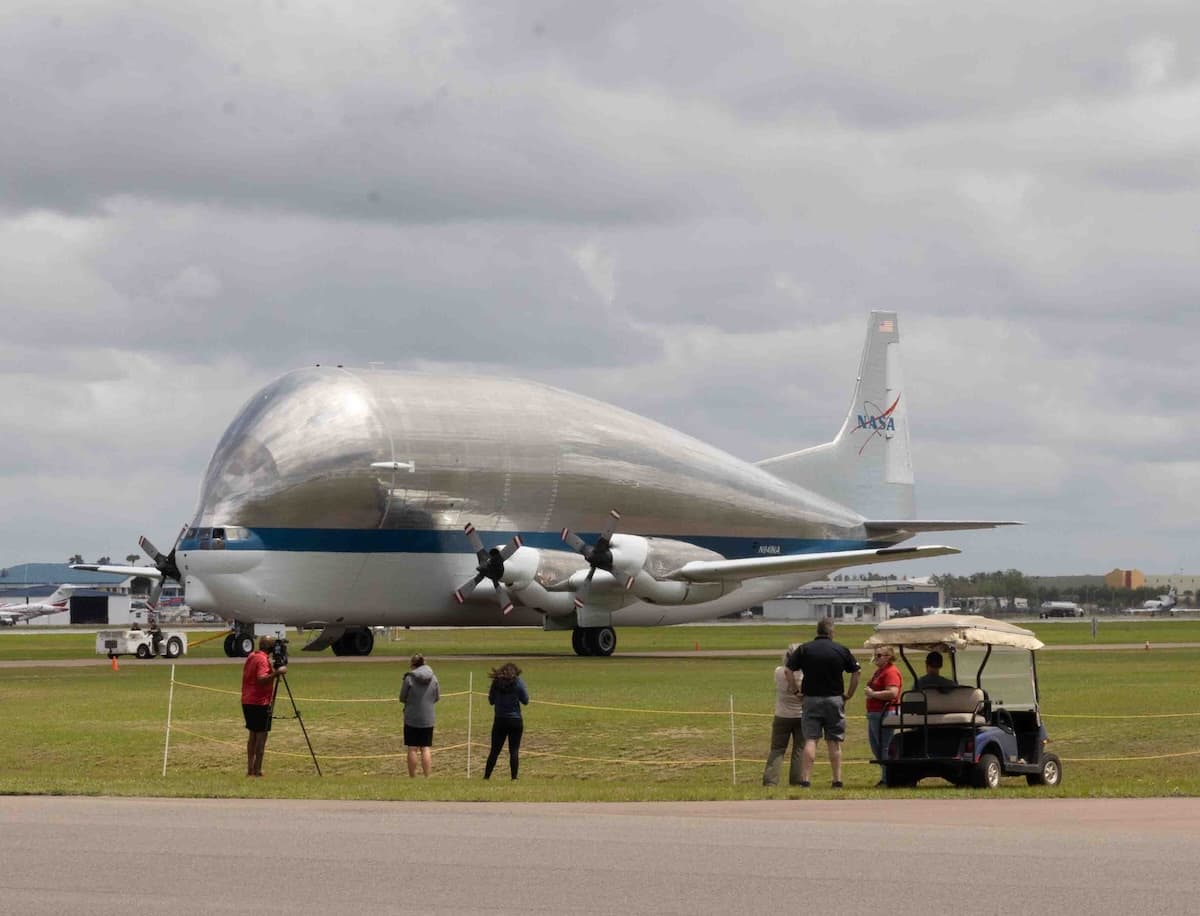
The Super Guppy is an eye catcher of an aircraft. It is virtually impossible to ignore it on the ramp. Any ramp.
As if its size and ridiculously bloated shape weren’t enough to grab the attention of passersby, the entire nose hinges open to reveal a cavernous cargo area. It’s big enough to hold a school bus, or a small house, or sections of a rocket that will later make its way out of Earth orbit.

What’s less obvious is that the Super Guppy is a modified passenger aircraft. At one time, long ago, it cruised over the Pacific Ocean to the exotic island of Hawaii before it was a state and Tokyo not so long after the end of World War II. Now it hauls space freight.
Time marches on.
There is hardly an airframe on earth that cannot be modified if the need or the interest arises. A prime example is the Basler BT-67. It looks like a DC-3. In fact, it once was a DC-3. But after a multitude of modifications, including an extension of the fuselage and the installation of two Pratt & Whitney turboprop engines, the workhorse of the late 1930s and 1940s has become a viable aircraft of the 21st Century.
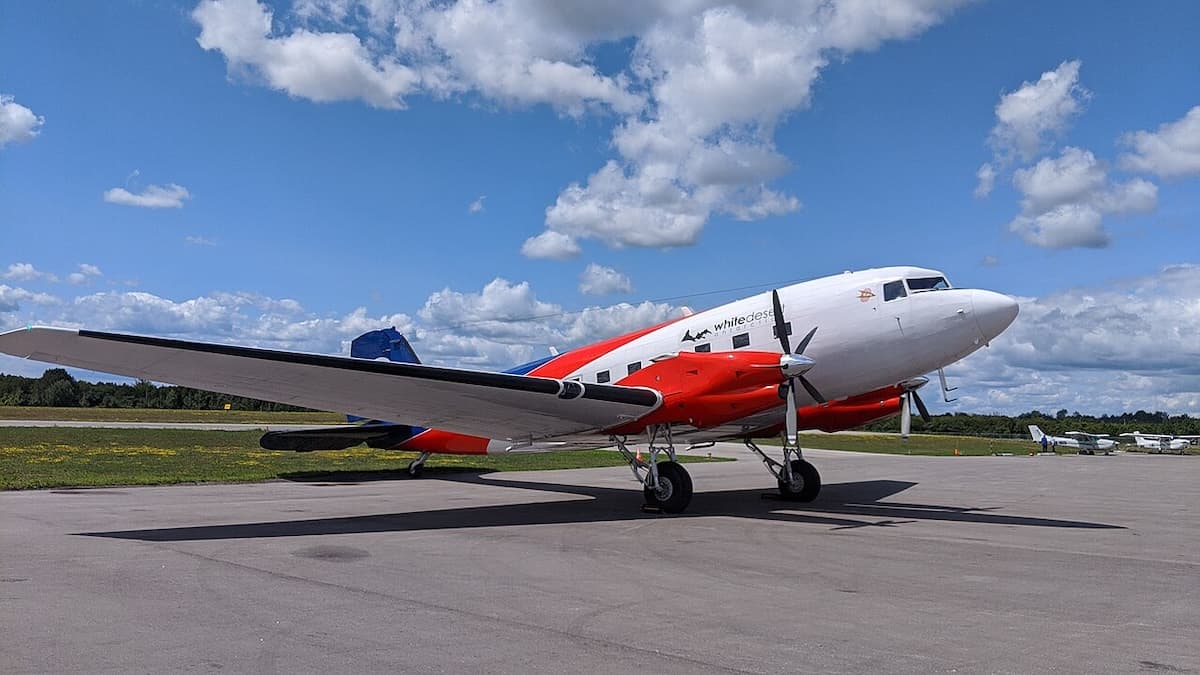
It’s not just the big boys that get this treatment, however. Those of us at the lighter end of the market have imposed our own creative initiatives on the aircraft of our choice. Sometimes to the aircraft’s detriment. Often to their benefit. Whether the change is beneficial or not is often a subjective determination.
The Clipped Wing Cub is a prime example. In its simplest form the owner simply shortens the wing to improve roll rate, making the airplane far more aerobatic.

Better yet are the versions that have strengthened structures in order to handle the higher loads imposed during aerobatic flight.
The airplane looks like a Cub from a distance, because it is a Cub. But with a wing as much as 40 inches shorter, it’s a performer in a way the original design could never match.
An increase in horsepower never hurts either. Bumping the powerplant up to 100 horsepower may seem a minor alteration — 100 horsepower isn’t likely to get anyone excited. But in the Cub that’s an upgrade of almost 54%.
Lighter, quicker, more powerful. All good things. Who could argue with that?
With all improvements come challenges. The Clipped Wing Cub has less wing area, hence, less lift. The gross weight is reduced, effectively relegating this two-seat aircraft to be capable of carrying only a single occupant. Takeoff and landing speeds are higher, which results in the need for a longer runway. The Clipped Wing may roll more quickly and be aerobatic, but it won’t take off in 300 or 400 feet anymore. And setting up to land on a small patch of grass isn’t the best idea.
The general aviation market is filled with aircraft that started out as tricycle gear but have been converted into a taildragger. There are a few horrendous looking machines that started out as taildraggers but were altered to become tricycle gear.
Granted tricycle gear is more stable and predictable on the ground than conventional gear. But, goodness gracious sakes alive, it’s an unattractive look.
Wings that came from the factory covered in fabric have been metalized, increasing weight but extending life. It’s all a trade-off. We get something but we also give something up.
To date there is no airplane known to man that cruises at impressively high speed, carries an enormous load, gets off the ground quickly, burns little fuel, and lands slowly on a short runway. There are airplanes that do all those things, but no one airplane combines all those attributes into one aircraft.
This state of affairs reminds me of the battle between B-17 pilots and B-24 pilots of the World War II era. B-24 crews were fond of claiming their aircraft could fly faster, fly farther, and carry more weight than the B-17. In response the B-17 crews would counter by acknowledging all those things were true, but claim the B-24 couldn’t do any two of those things at the same time.
Modify away, designers and builders. The rest of us are thankful for the options you’ve presented us with. We will continue to cheer you on in the years to come.

The 5 flight characteristics you mention brings to mind the V-22, and Harrier, which do at least 4 of the 5 functions.
There are thousands of STCs for GA aircraft.!
I have added 2 of them to my 1961 Cessna 175B; flap gap seals and Hoerner wing tips.
The results are amazing; 10 mph reduced stall speed and 23% reduced fuel use.
So it now stalls at 40 mph and has 7 hrs of fuel.