

The beginning of the end came on a Wednesday night. It was June 19, 1972, to be specific. That’s when Hurricane Agnes came ashore near Panama City, Florida.
Clocking in as a Category 1 storm, this was nothing the panhandle hadn’t seen before. Damage to the south was considerable, but not debilitating on the scale Hurricanes Andrew and Katrina would bring in the years to come.
The storm moved inland at a leisurely pace. It predictably weakened. Then it unpredictably strengthened back to Tropical Storm levels. The rain fell. It kept falling for two whole days. Torrential rain battered the landscape and flooded the lowlands. The Susquehanna River breached its banks in New York, Maryland, and Pennsylvania. Severe devastation flowed into towns throughout the mid-Atlantic states. The water was as much as 10 feet deep in parts of Lock Haven, Pennsylvania, the home of Piper Aircraft.
And so it came to be the 15-year production run of the popular and well-respected PA-24 Comanche ended. The project did not crash and burn. It drowned. Piper chose not to rebuild the damaged tooling or move production to Florida where the Cherokee was being built. The highly praised performance of the Comanche line came to a heartbreaking end thanks to a hurricane, the resulting flood, and the extensive cost of re-tooling the entire project.
But even today, the Comanche has its fans.
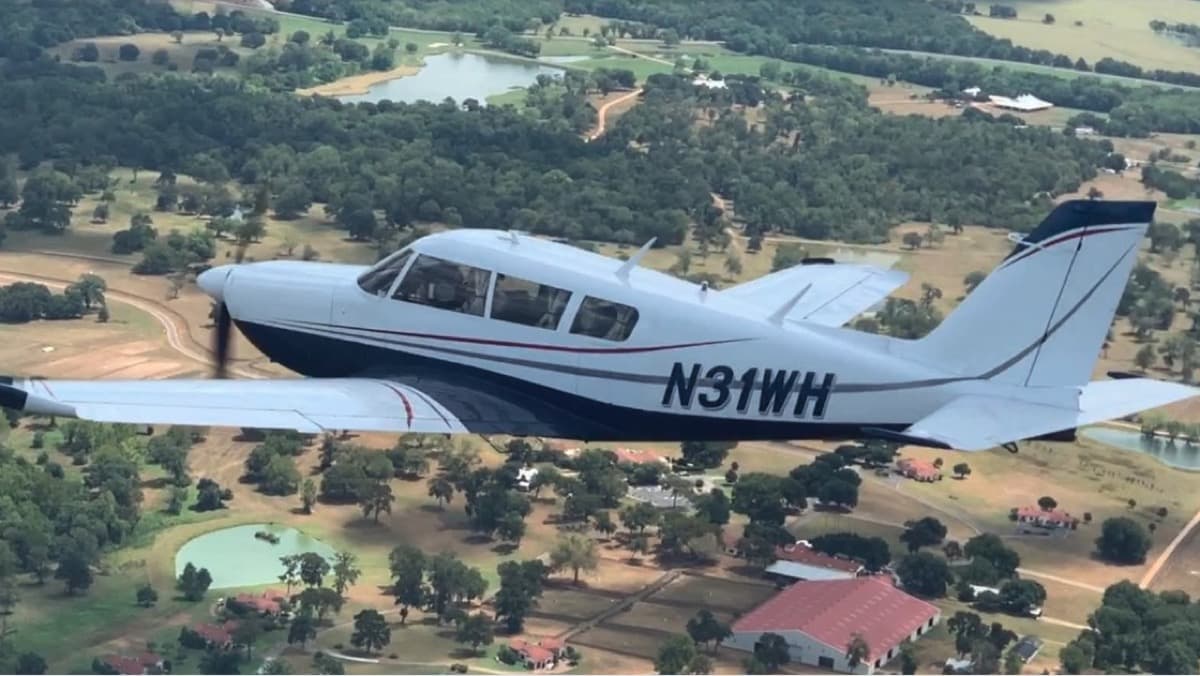
“I’ve always liked the look of the Comanche,” says Pat Brown. “I think it’s one of the best looking GA airplanes, particularly the 1969 C models with the elongated snout.”
A long-time resident of Houston, Texas, Brown is an avid general aviation pilot, a designated pilot examiner, and the proud co-owner of a PA-24 260. Pat and his partner Dave Derbecker have owned a 1969 Comanche C model for years. More than a decade. For the two of them the PA-24 has been a fantastic traveling machine. Texas being as large or larger than many countries, the airplane gets a fair bit of use as the two travel independently and together around the Lone Star State and beyond.
One of their regular trips is the annual Spring pilgrimage to Lakeland, Florida, ironically the place Piper set up shop following the flood that damaged the Lock Haven facilities. They don’t come to celebrate Piper’s now vacated facility in the Sunshine State, however. They come for the same reason thousands of others flock to this popular destination. They come for the SUN ’n FUN Aerospace Expo and they usually come in the Comanche.
The performance and comfort of the type are just too irresistible for them to fly across half the country in anything else.
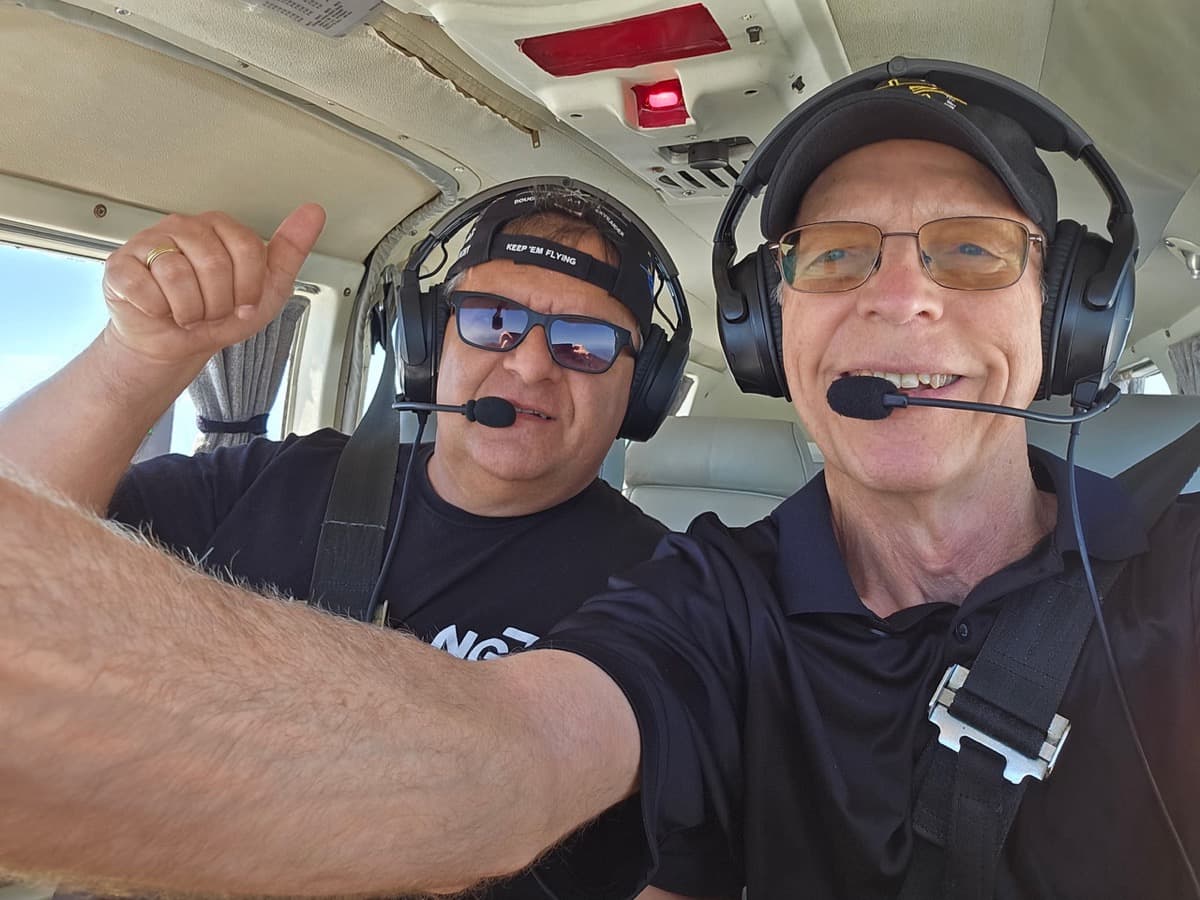
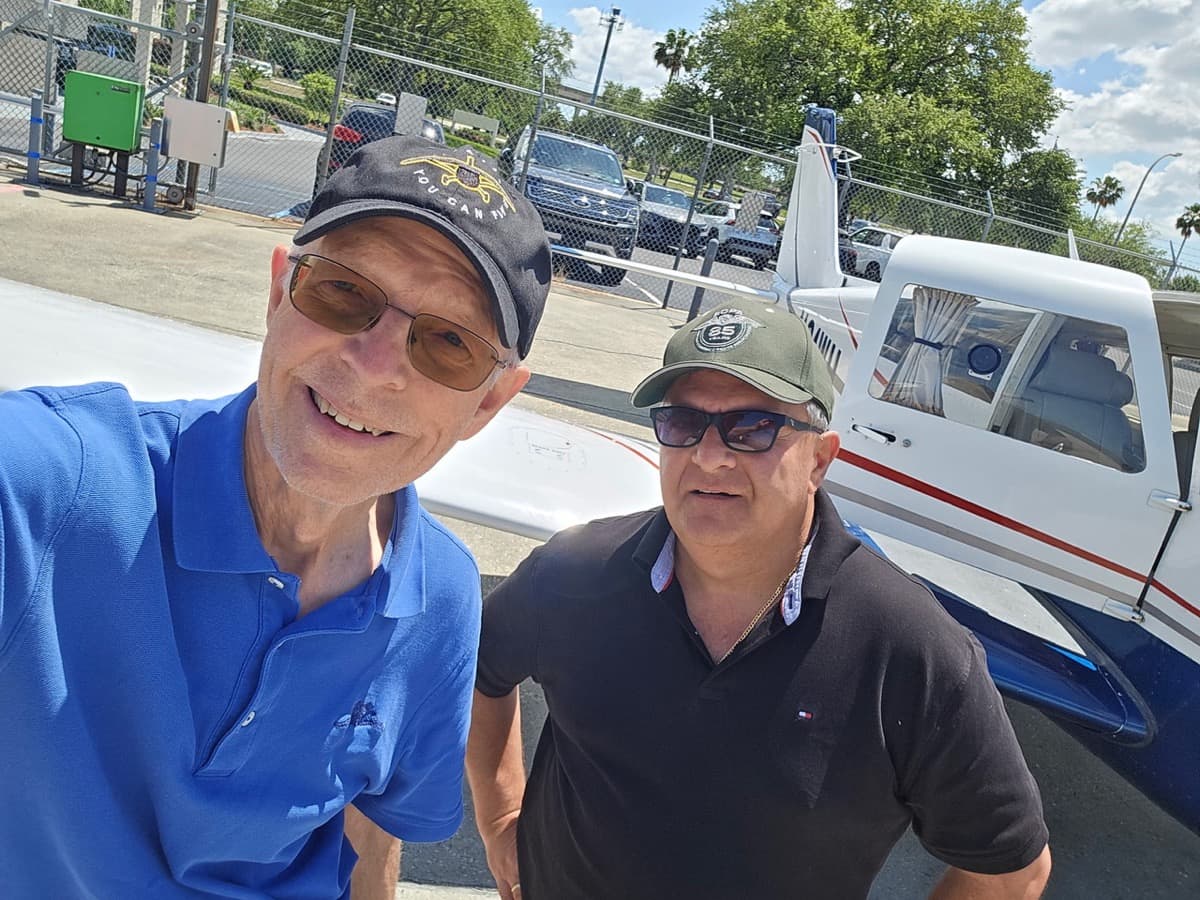
Due to a scheduling conflict Dave couldn’t make the trip this year. So Pat brought along another aeronautical friend, Carlos Sisso.
But Dave’s schedule wasn’t the only challenge they faced this time around. Their battle was against metal shavings, maintenance costs, and the inescapable march of calendar pages flipping past day after day.
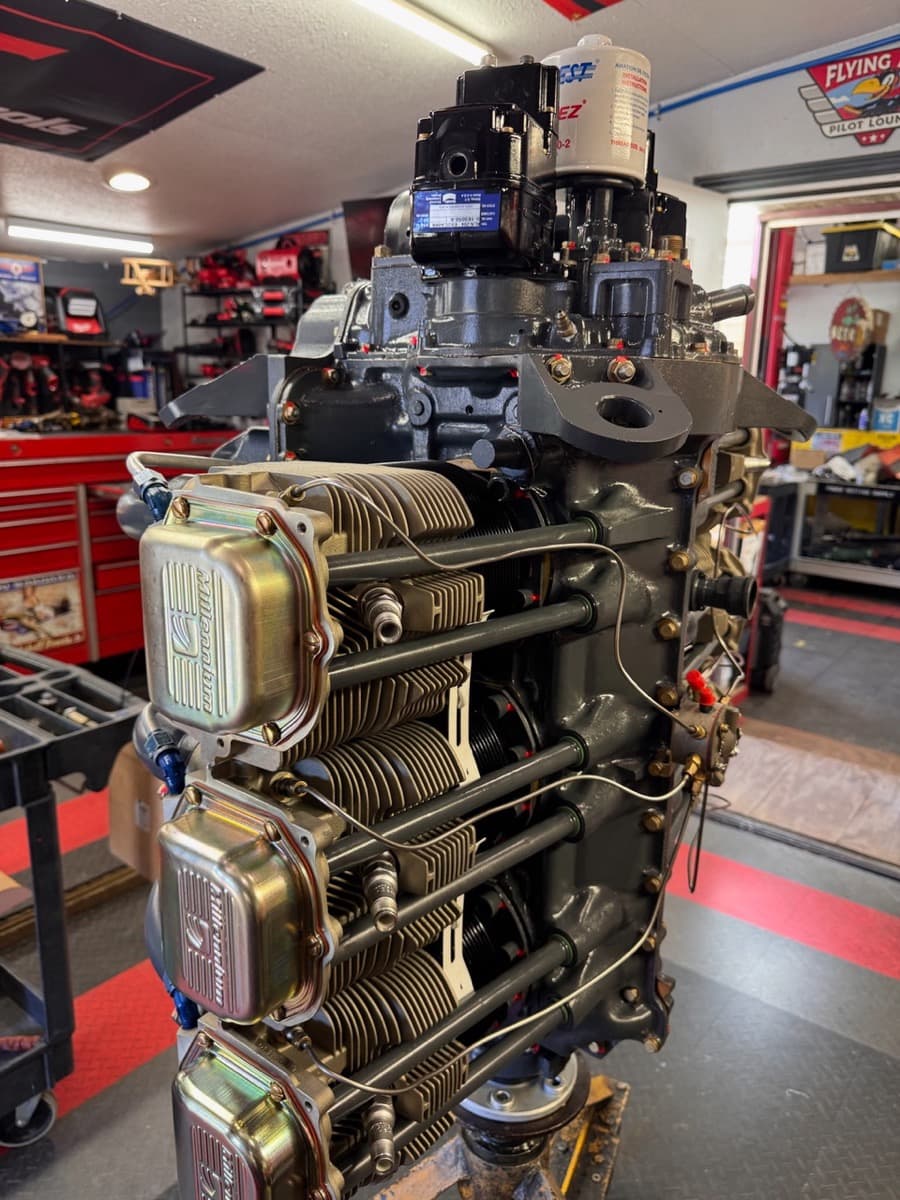
Some months ago, the Comanche went into maintenance for a scheduled oil change. That’s where the metal shavings popped up, right there in the oil filter element. Further investigation revealed a sheared magneto shaft, loose ball bearings, and the inescapable knowledge that it was time for an engine overhaul.
The clock was ticking. The goal was to have the Comanche back in the air and headed east by April 14, 2026, the opening day of SUN ’n FUN. But overhauls don’t happen quickly. Or near where most pilots live.
“We certainly wanted to get it done,” says Brown. “Things were falling into place. We would have a good solid 10 days, give or take, to fly off 7 or 8 hours and do an oil change before departing for the show.”
Having a plan rather than a wish can make all the difference when safety is your goal.
Thankfully, the engine overhaul was completed, reinstalled, and the break-in flights took place as expected.
“We were able to get a good solid 10 hours on it before we took off for SUN ’n FUN,” he reported.
This is where the Comanche can stretch its legs and really prove itself. The journey from Houston to their intended destination of Kissimmee, Florida, covers roughly 800 miles. One fuel stop en route has proven to be sufficient for them in years gone by.
“The round trip was just shy of 11.5 hours,” says Brown. “We were truing out [True Airspeed] at 162 to 164 knots depending on altitude the entire trip.”
He noted they were typically cruising at 5,500 MSL while headed east and 6,500 MSL when headed west. Tailwinds favored them in both directions. A truly unusual occurrence.
“We were actually doing more than 200 mph over the ground,” Brown chuckles.
Normal fuel flow at those altitudes would typically put them in the 13.5 to 13.7 gallon per hour range.
“We were probably burning closer to 16 because the engine is brand new,” Brown suggests. “That engine is so tight right now. There’s more friction. More heat.”
Oil consumption on that newly overhauled engine was minimal. Pat and Carlos flew from Houston to Kissimmee, then back to New Orleans for a lunch stop on the return trip before the engine needed a quart of oil added.
“Let’s call it 9 hours,” he says. “That’s pretty good.”
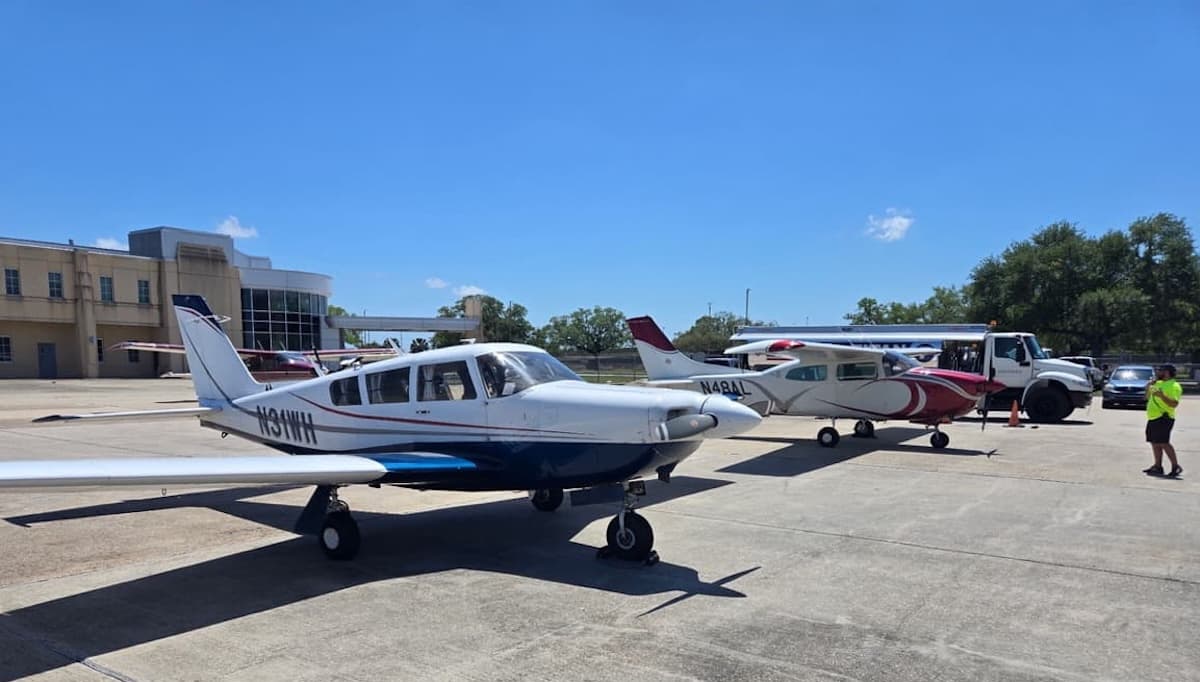
“It’s a great airplane,” claims Brown. “It’s still my favorite airplane out of all the ones I’ve owned.”
That’s saying something, too. Brown has owned or been a co-owner of as many as 15 airplanes over the course of his career. Ticking them off, he gazes toward the ceiling as he tries to recall each of his former aircraft: “I had a Cessna 172, two Mooneys, a Warrior, four Cessna 182s (including the one he owns today), two Cirrus, a Malibu, a Citabria, and two Decathlons.”
To say the man is enthusiastic about general aviation is an understatement.
Of course, maintenance on all those airplanes hasn’t always been as trouble free as an owner might hope. That’s true of the Comanche as well.
“We’ve replaced a couple cylinders on it,” Brown admits, noting that’s over the course of a decade or more and prior to the overhaul done earlier this year.
And then there was the flood.
Agnes may have sunk Piper’s plans to stay in Pennsylvania and continue producing the Comanche, but it was Hurricane Harvey that touched this particular Comanche in a definitively unhealthy way.
Hurricane Harvey came ashore in 2017. It dropped unprecedented amounts of rain on Texas over the course of four days. Houston saw between 3 and 4 feet of rainfall. In some sections of east Texas as many as 60 inches of rain saturated the ground and flooded the region.
“It got flooded in Harvey,” Brown acknowledges with noticeable sorrow. “It got water up into the bottom of the fuselage.”
The memory of the flooding and what it did to homes, businesses, and his airplane all blend together in a mélange of mourning.
“We had to take the gear motor out, the flap motor, the autopilot servos,” he said. “All that had to be done.”
Even the landing gear bungees had to be replaced after being waterlogged for days on end.
With all that in mind — the travel, the speed, the comfort, the camaraderie, balanced by the heartache and expense of maintenance issues beyond his control — the question that begs to be answered is: Has it been worth it? Would he buy the Comanche again? Would he buy any of them?
“It’s been a fun ride,” says the satisfied owner of the airplane he still calls his favorite.
In fact he’s planning another long distance flight for later this year. Maybe in the Comanche. Maybe in his Cessna 182. Whichever he chooses, you can bet Pat Brown, his partners, and passengers will be smiling as every scenic mile falls behind them into the slipstream.

Pat Brown is a legend in the Houston area.
Nine or so years ago, I was contemplating getting active in flying again after laying out for almost forty years. I was starting to meet some of the Houston Area Aviators and had been invited to go on a hamburger run. There were a dozen or so guys sitting around the table and I mentioned that I was going to drive to San Antonio the next weekend for a Rusty Pilot Seminar. Pat, whom I had not yet even met, spoke up and said “You can fly over with me!” I said “Oh! Are you going, too!”
He replied “I’m teaching it!”
So, I got some right seat time in Pat’s Cirrus and a friendship was born. I’ve flown with Pat a few times since, plus he flew with me in my Ercoupe for a few Flight Reviews.
Despite what Jamie may say about him, Pat’s a pretty good guy! 🙂
I would do it a first time if I had the money. Since the 1950’s, a favorite of mine.
we moved to Florida after the flood and my dad continue to work for Piper and retired from the Lakeland plant in the early 80s, I remember they brought in Chuck Yeager and he toured the plant and he set a speed record in the Cherokee
I owned a comanche 260-B for a little over 13 years N8871P, It is a gem of an airplane, best plane I ever owned easy to fly, docile , very responsive, fast and lands very easy and nice. I installed many speed modes gap seals, wing tips etc. never had a bit of trouble or problems, I would do it again if I had the chance..