

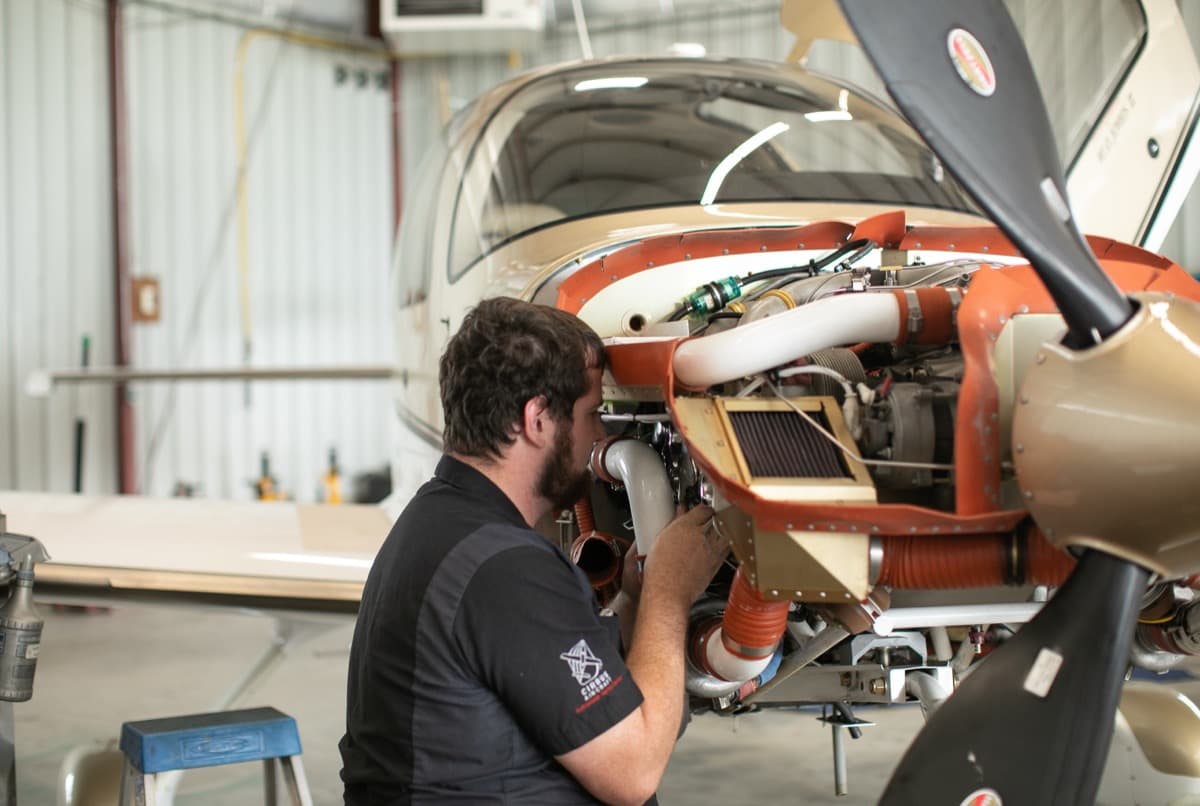
Machines break. As much as we might wish that to be untrue, it is an unavoidable fact. And so, we submit to the scourge and cost of required maintenance as the schedule demands of us. For aircraft. For ourselves — although we tend to let that slide.
A quick scan of the coffee klatch at any given FBO reveals in short order a disparity between the maintenance we schedule for our aircraft and the same preventive care we participate in personally. As our bellies become ever rounder and our butts cover a greater surface area with each passing year, we distract ourselves with thoughts of other things.
If we just ignore the problem, it will eventually go away, right?
Truthfully, there is a reason aircraft require annual inspections, 100-hour inspections, and all the various fixes that go along with them. Corrosion happens. Leaks occur. Wear is never ending. Seals give out.
If we treated our aircraft as we treat ourselves, we wouldn’t be flying for long. The aircraft would eventually fail us. Preferably on the ground. To fail in flight would be far worse.
As we sit amicably with friends, quaffing coffee and considering whether one more donut might satisfy that sweet tooth, we rarely consider how much repair we might need ourselves. And rest assured, dear reader, repair is in order.

I met up with old friends recently. We were old men who used to be boys. Fifty years after our last encounter, the conversation had shifted significantly. Rather than considering our chances with a young woman who had caught our eye, or which concert we were hoping to get tickets to, our concerns had become more personal. On our docket now were discussions of blood pressure readings, cholesterol levels, A1C numbers, and which medications our doctors had most recently prescribed.
The airplane is an amazing machine. The physical shape of the craft is a major factor in its capabilities. A sleek, clean, flowing line creates less drag than a boxy, dented, version covered in flaked paint and dead bug carcasses. Less drag allows for greater speed — or at least a reduced power requirement to reach the same speed.
Excess weight limits the airplane’s ability to excel. Too much will keep the craft from leaving the ground at all. A truly unlucky pilot will find themselves aloft in ground effect without the ability to climb any higher. As the trees at the end of the runway grow larger, the errant pilot might consider in his final moments the wisdom of taking off without running the numbers and calculating the performance of the machine. Conditions vary over time.
The pilot who maintains his machine with care but ignores his or her own physical condition may face a similar fate, albeit in an entirely different venue.
Over time, as our weight creeps upward, our resting heart rate climbs, our vital numbers head in the wrong direction little by little, we are playing a dangerous game of chance. For many, our airplanes will outlast us. And there’s little wonder as to why that is. We lavish more care on the aircraft than we do ourselves.
Fortunately, there is a solution. A preventive and restorative process we can engage in that very well may extend our lifespan. Better yet, it may increase our performance to the point we can stop making excuses for why we no longer do things we used to enjoy. Yes, it may hurt too much or just tire us out too much. The question is why?
The answer to that question is not a mystery.
I speak of diet and exercise. Just as our aircraft need the right fuel, in the right quantity, and to be run and flown in order to maintain their vitality — so do we.
Neither the diet nor the exercise has to be extreme, however. Sore muscles, bland dinners, and dull beverages aren’t a requirement. We’re not training for the Olympics. Rather, we’re prepping for the distance event called life. We’re going for the long haul, not the quick finish.
Take a walk. Seriously, just take a walk. Around the block is a good start. Drink a glass of water, head out for a stroll, and count yourself lucky you still have the ability. Not all of us are so lucky. Over time, extend that walk. Quicken the pace. Take a friend along. A productive change in lifestyle doesn’t have to be a burden of isolation and deprivation.
In the long run, you’ll be glad you tweaked your daily routine.
My favorite coffee shop is a smidge over two miles from my house. Three days a week I walk there, grab a black coffee, and swap stories with friends until it’s time to go to work. Then I walk home. My whole day is downhill from there. Before I send my first email or answer my first call, I’ve already gotten a solid start to the day.
Eat real food. And by real food I do not mean a manufactured food product that comes in a cardboard box that was trucked in and moved by forklift to a store near you. I mean food that came from a farm or a garden. Actual food your grandparents would have cooked and eaten in their prime. Food that has actual nutritional value, not just flavor-enhancing additives.

We have all looked with appreciation upon a classic aircraft of the Golden Age taxiing past in regal splendor. And we have all seen the ramp queens abandoned, degrading into tatters due to disuse and lack of care.
We are not so different from our aircraft. With effort and care we can survive and thrive for many years. But if we give in to the belief maintenance is too much of a bother, the ending that befalls us will not be pretty or far off.

It has several years since I have communicated with Mr. Beckett. But again, as many of his comments ring true to me. I am now 82 years old and after a lifetime of flying and owning various aircraft, I sold my last plane at age 80, (told myself that I would fly until I was 80 – just never realized that it would come so quickly). I now restrict myself to flying right seat only, along with a couple great friends that welcome my company to fly with them. It was much harder to give up my airplane than I ever anticipated, but I know that it was the right thing to do.
Continuity helps, too. I’ve had the same primary care physician for 15 years so far, she knows me, she monitors trends, she notices “divergences” immediately, she takes the “long view” of my health (as do I). My wife has had at least four physicians (plus VA, which is a revolving door, you never see the same doctor twice) and each visit is completely new, starts from zero with no medical history. The difference shows.
I also take a pizza to each exam. She says don’t do that any more (between bites) because everything stops in her office when I do (as she enjoys it anyway). Everyone looks forward to my visits and they take good care of me because I am nice to them and bring pizza. (So the secret to long life and health is to bring pizza to your doctor? Hmmm.)
I treat my medical records like my aircraft logbooks. Read, interpret, ask questions, make (occasional) corrections, keep them sorted and organized. If there is ever a question, I can refer back to the paperwork immediately, and that saves a lot of unnecessary tests because we already have the answer.
Take care of your body, you only have one, and you’ll fly for years and years to come.