

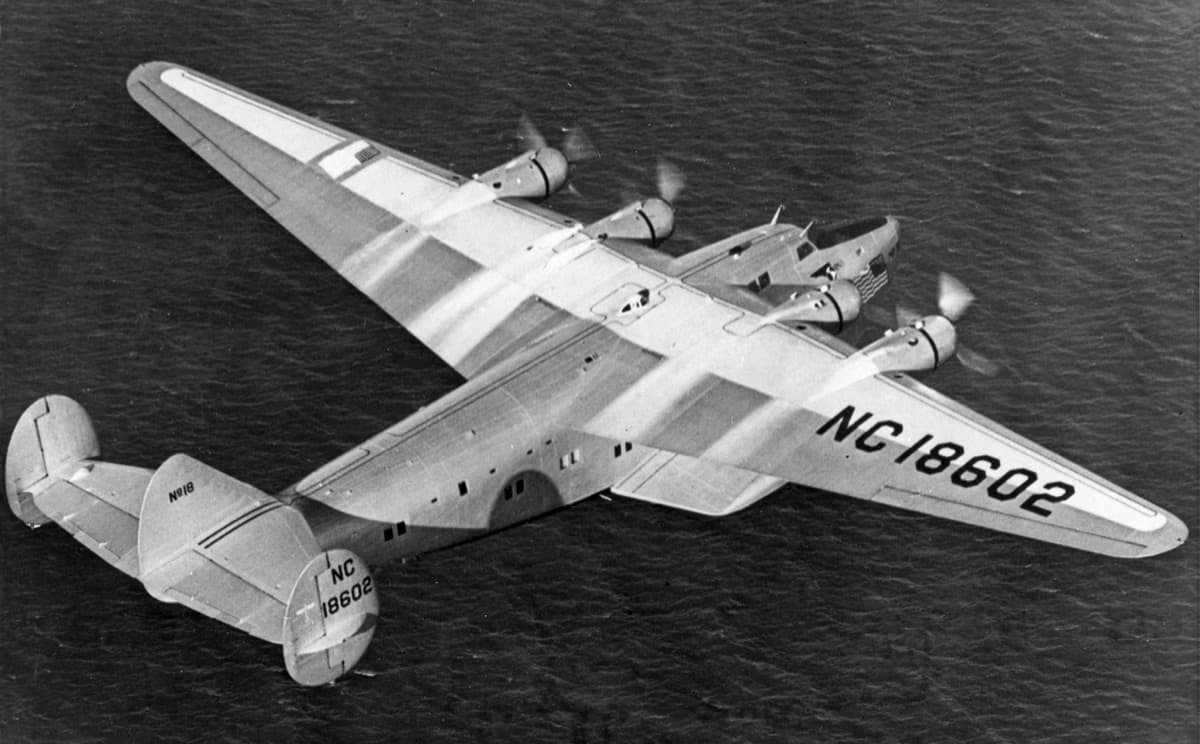
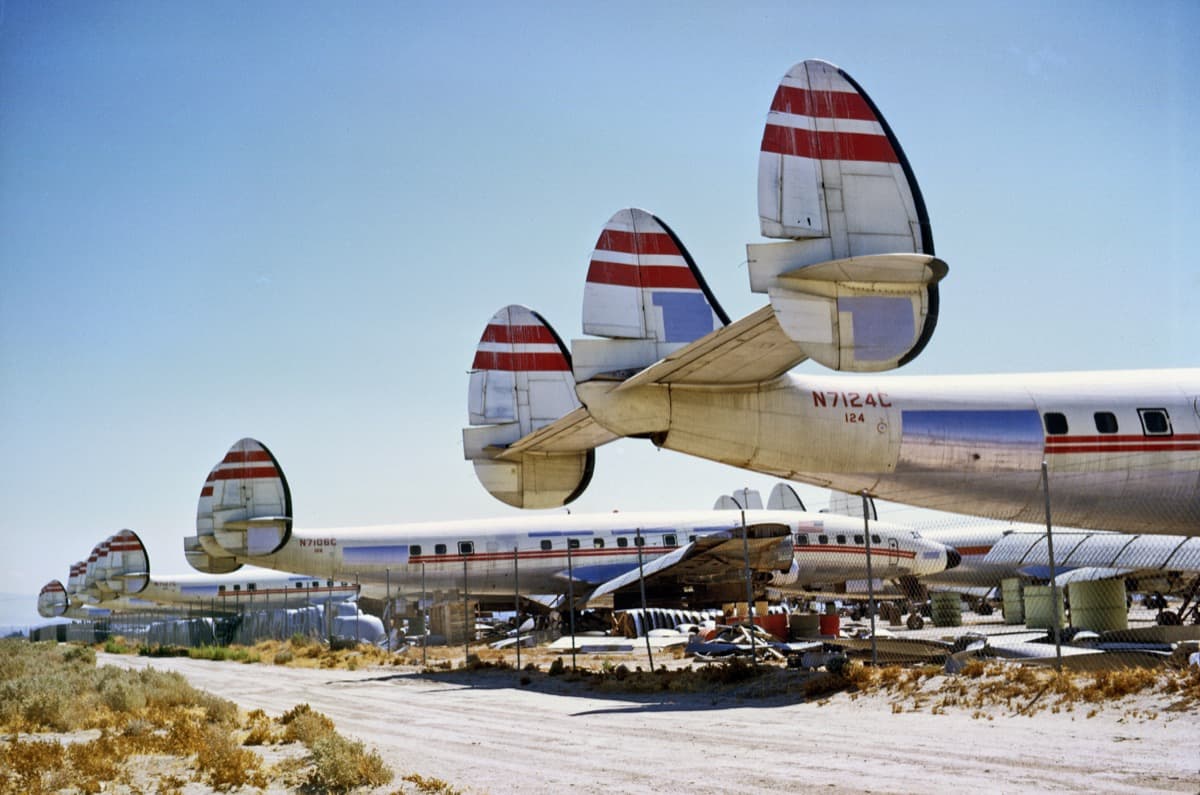
Three airliner projects of the late 1930s and early 1940s embraced the use of triple tails with three vertical fins accompanied by two or three movable rudders. The triple-tail look became a signature of the drop-dead gorgeous Lockheed Constellation, as well as the Boeing 314 Clipper and the prototype DC-4E by Douglas.
What was behind the use of three vertical fins?
The rudder of an airplane exists, in an extreme oversimplification, to keep the rear fuselage behind the nose, trailing smoothly and efficiently, and then following the nose into a turn when commanded. Additionally, the phenomenon known as Dutch roll can find the tail “wagging” while the wings roll in an undesired yaw-roll coupling.
Aeronautical engineers and aerodynamicists have grappled with the need for adequate vertical tail surfaces to handle such situations as Dutch roll, damping it out, while not overbuilding the vertical fin and rudder area to the detriment of weight and drag penalties or further destabilizing the design. The sweet spot is a balance between directional stability and lateral stability.
When Wellwood Beall and his team of designers at Boeing executed the Model 314 flying boat to meet a Pan American Airways need, they expediently adapted the wing from Boeing’s XB-15 bomber for use on the Clipper. A single vertical fin and rudder was built onto the first Model 314 Clipper, the height of which may have been limited by the interior height of Pan Am’s servicing hangars.
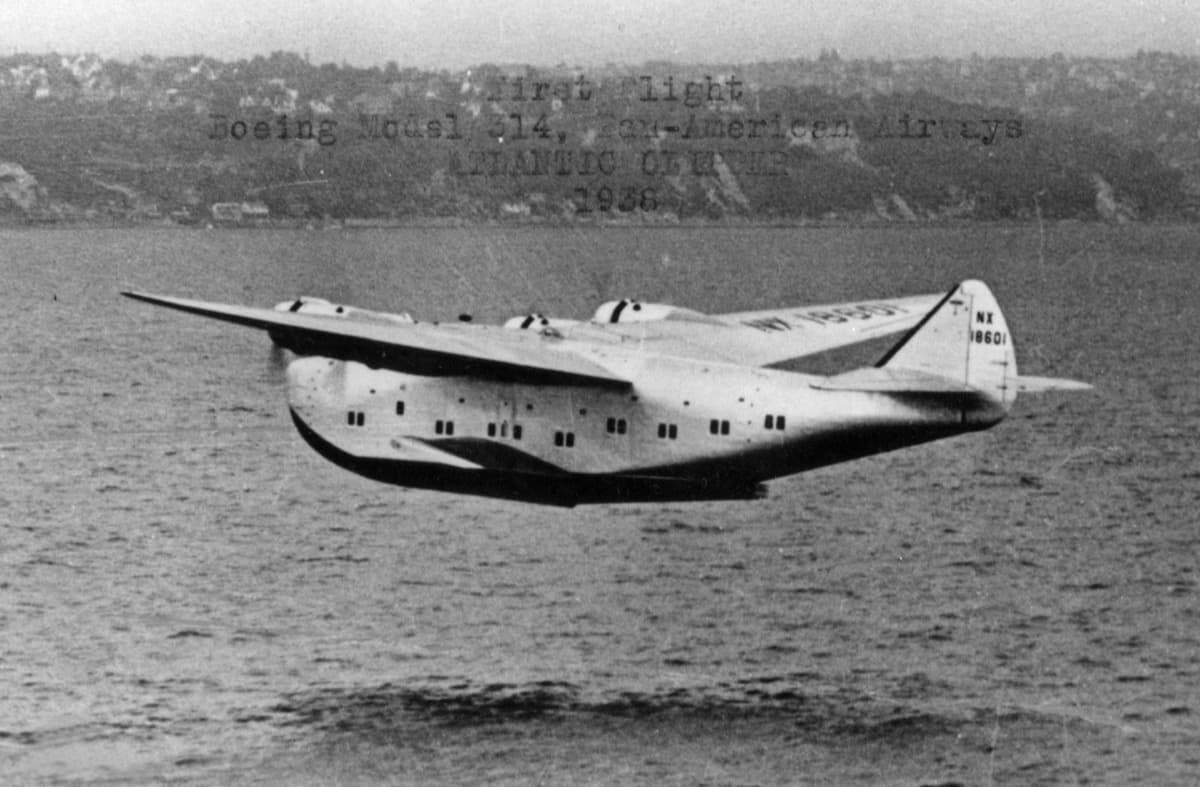
Beall told an audience at the 1938 Air Transport meeting of the Institute of Aeronautical Sciences that the lines of the upper part of the aft fuselage of the Model 314 flying boat “were rather difficult to fair” because the design team wanted to keep the hull large enough to have a useful interior as far aft as possible, and to provide for “a good stiff attachment of the tail surfaces.” Even though wind tunnel testing said the final hull lines were satisfactory, the team “learned during our flight tests that these lines interfered somewhat with the satisfactory function of the original fin and rudder,” he shared.
Flight tests also showed more vertical tail area was needed to combat Dutch roll. The big hull had high lateral stability, and engineering ratios showed a need for “considerable more directional stability,” Beall said, “to keep the ratio of lateral and directional stabilities within a reasonable range.”
This boiled down to a requirement for more vertical fin and rudder surfaces to help damp the Dutch roll tendency as well as to offset the “effect of the after hull lines.”
The limited effectiveness of the single centrally mounted rudder gave way to a twin-tail modification that still did not fully address the issue, so a fixed central fin with no movable rudder was added, giving the Boeing 314 one of its signature visible traits — three vertical tail surfaces.
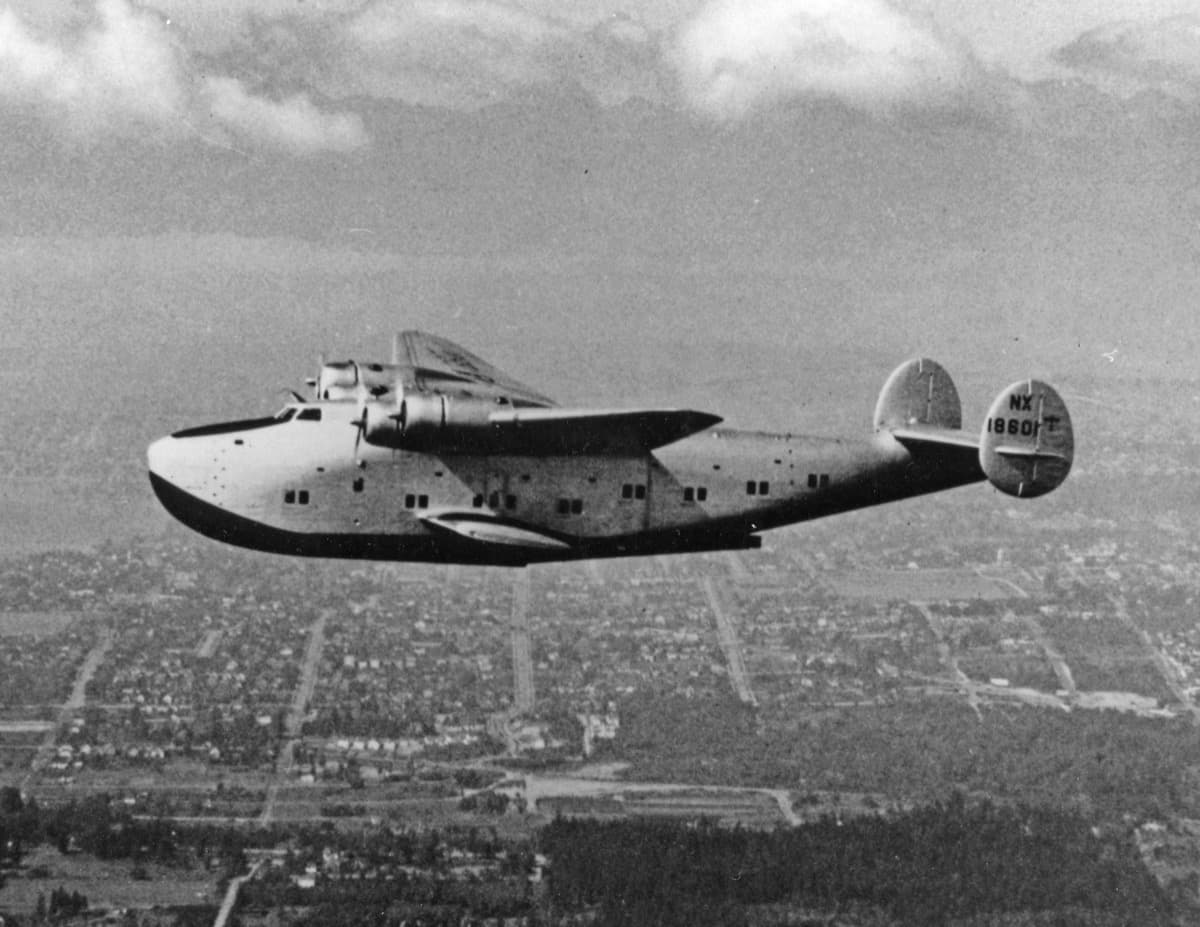
One can speculate that the Model 314 Clipper exacerbated the Dutch roll tendencies by placing the XB-15 wing high on the flying boat’s fuselage instead of the mid- to low-mounting it had on the XB-15 bomber. Wings mounted well above the center of gravity are said to make Dutch roll worse. And the dihedral of the wing contributed to this phenomenon.
The resulting triple-tailed Clipper was an elegant expression of the planemaker’s art of the 1930s.
In 1939, after Wellwood Beall’s discussion of the Boeing Model 314’s triple-tail evolution was known in the industry, Lockheed designers were at work on a proposed pressurized four-engine airliner. One interested prospective customer, TWA, specifically wanted an aircraft that could fit inside its existing maintenance hangars.
Since this put a tall tail out of the question for the Lockheed design, smaller triple tailfins and rudders were designed for the swoopy, sleek, curvy Constellation, as the new airliner came to be known. Seldom has form-follows-function design yielded such beauty as embodied by the Lockheed Constellation. Original Constellations topped out at 23 feet, 8 inches tall.
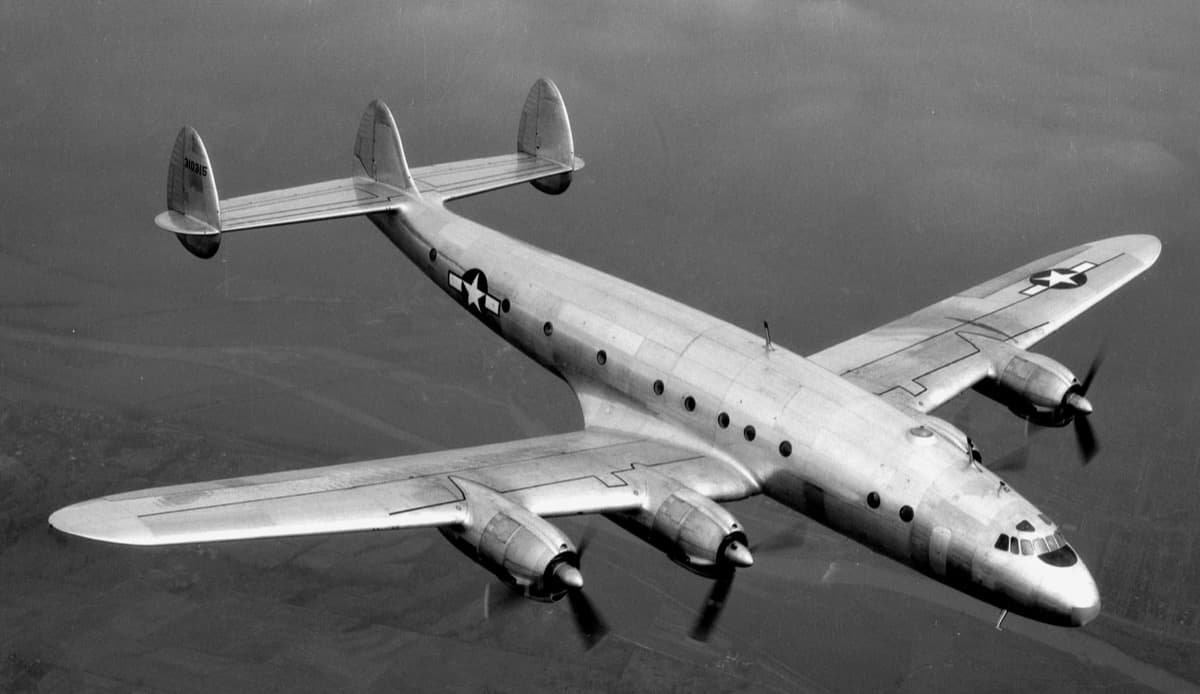
So compelling was the promise of the Constellation — top speed estimated to be 360 mph, faster than a P-40 fighter — airlines signed up for production slots, giving Lockheed an 84-aircraft forecast initial production run. That was the signal the company needed to commit to building this elegant airliner in 1940.
The threat that World War II would involve the United States in combat, plus the needs of foreign countries already at war, placed manufacturers like Lockheed in the position of having lots of work to do. In addition to the nascent Constellation airliner, Lockheed had the promising P-38 Lightning fighter and a series of twin-engine bombers and transports to deliver. By early 1941, Lockheed’s scheduling fell under priorities and directions from the government that helped slow the development and construction of the first Constellations.
Problems with early R-3350 engines, also plaguing Boeing’s B-29, further set back development of the Constellation.
Lockheed’s sculpted beauty first took flight on Jan. 9, 1943. It would remain for the post-war boom in air travel for the Lockheed Constellation to blossom into an airliner of world-shrinking significance.
Before the Clipper and the Connie were built, as far back as 1935 Douglas Aircraft began contemplating a large four-engine airliner, intended to double the capacity of the twin-engine DC-3. The resulting DC-4E was a different aircraft than the later mass-produced DC-4 transports made by Douglas. It was filled with new ideas and technologies, and was considered the largest transport aircraft to ride on tricycle gear when it was rolled out.
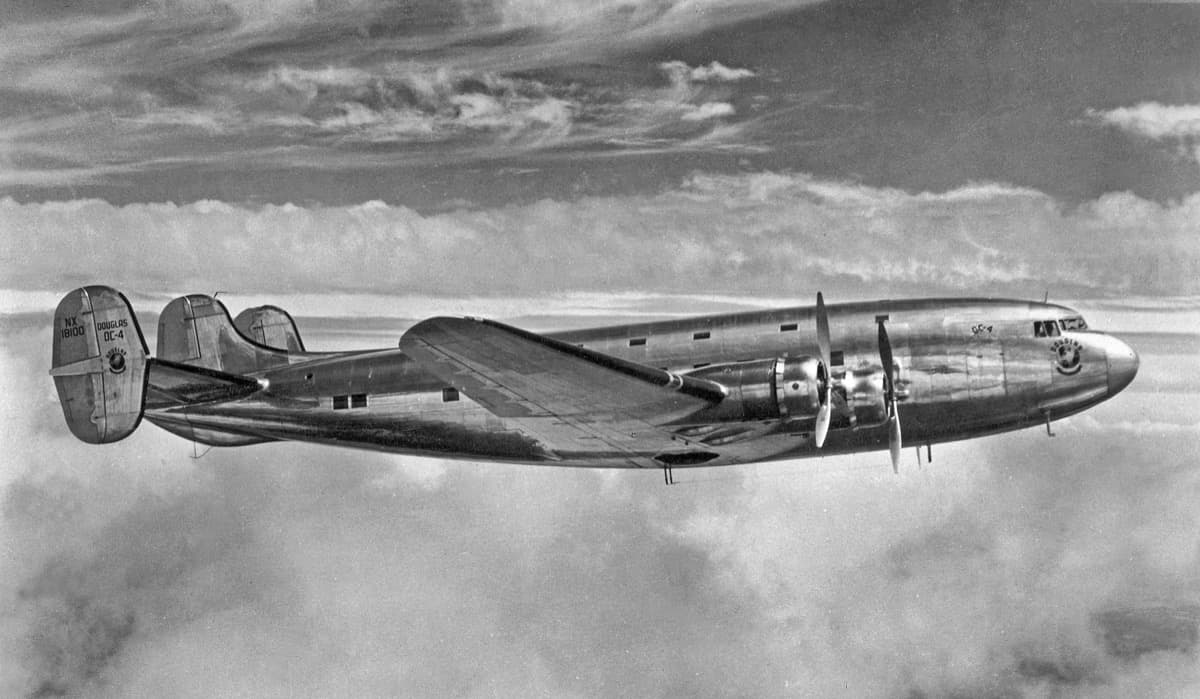
The collaborative buy-in by several U.S. airlines into the development of the DC-4E included their input on features like overall height for hangar clearance. The result was a tail with three vertical fins and three movable rudders. With tricycle gear and upsweep on the horizontal stabilizers, the DC-4E could afford to place much of the outboard vertical tails below the elevator line, contributing to the experimental airliner’s low overall height of 24 feet, 6-½ inches.
Douglas touted the DC-4E’s three vertical tails as the Triple-S Tail, standing for Stability, Strength, and Safety in an era when flying — and flying safety — were less well-established in the public eye than in later decades.
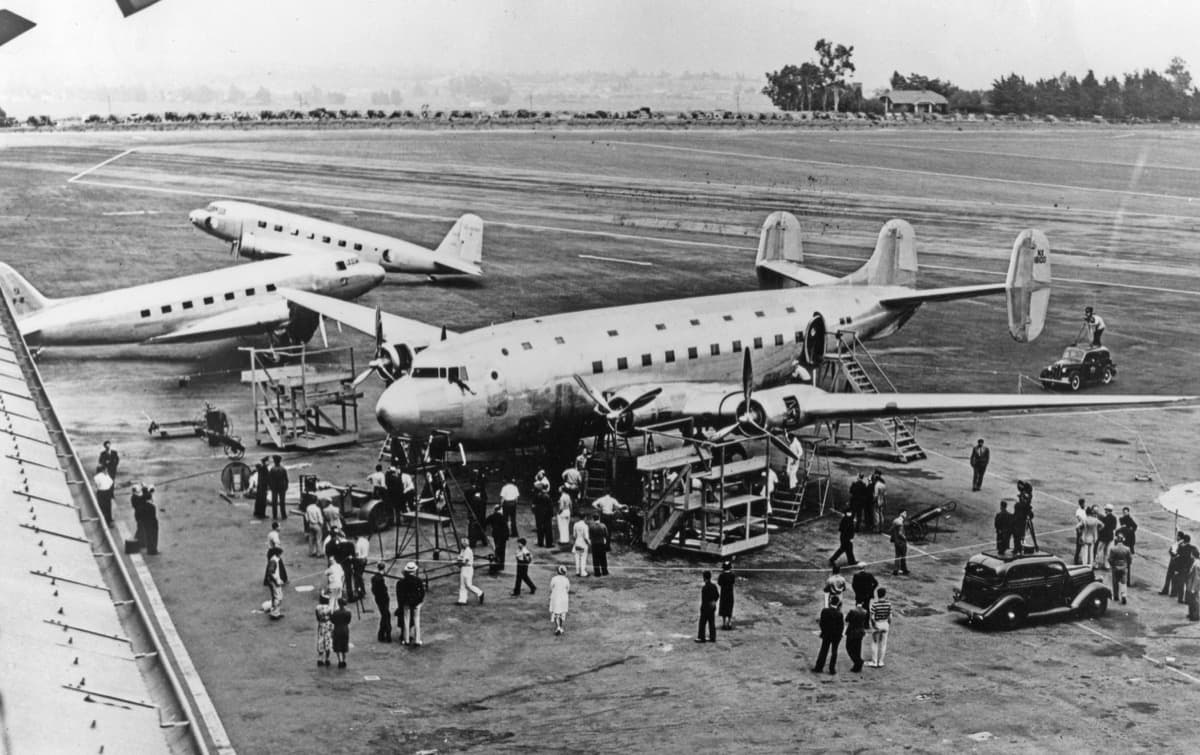
The Douglas DC-4E first flew on the same date, June 7, 1938, as the first flight of Boeing’s 314 Clipper. Was this simple coincidence or an attempt at competitive headline scene-grabbing by one or the other of the two manufacturers? We’ve not found any evidence to explain this circumstance one way or the other.
Flown from the outset with a triple tail, the DC-4E escaped the redesign phase that affected the Boeing Clipper’s tail. But the DC-4E may have been reaching beyond the state-of-the-art’s grasp for 1938. After tests and evaluations, this prototype was shelved and ultimately sold to pre-war Japan, where it likely influenced a Japanese four-engine bomber design.
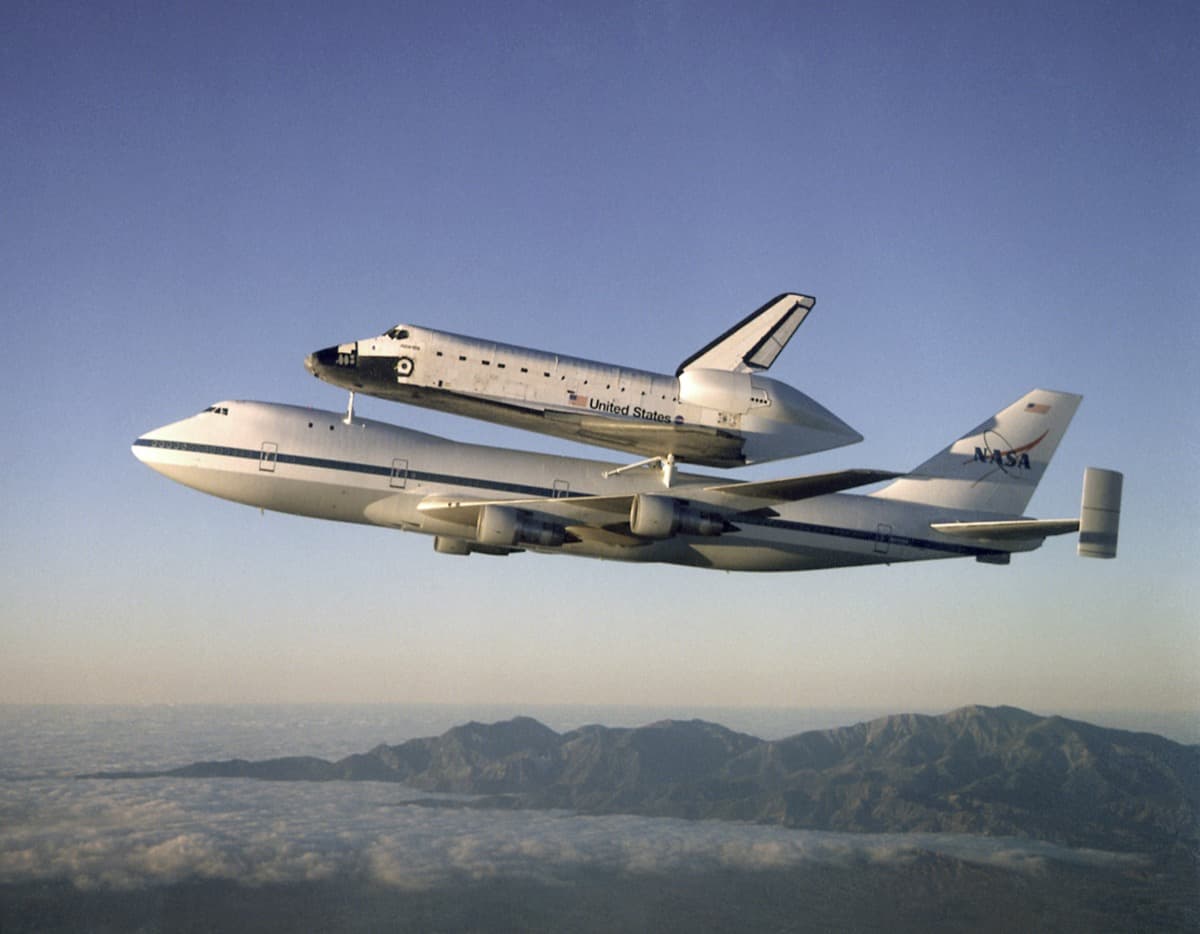
These three triple-tail transports, products of late 1930s design rationale, ultimately enjoyed decent flying characteristics. Other triple tail aircraft have come and gone. Readers may remember the two NASA Boeing 747 Shuttle Carrier Aircraft (SCA) capable of ferrying a Space Shuttle mounted atop the 747’s fuselage. The aerodynamic obstruction caused by the big Shuttle affected directional stability and a pair of brutalist rectangular vertical fins was added to both 747 SCAs to right that.

What became of the two Boeing 747 SCAs?
One is on display in Palmdale, California at the airport, and the other is displayed with a replica shuttle on its back at Johnson Space Center, Houston.