

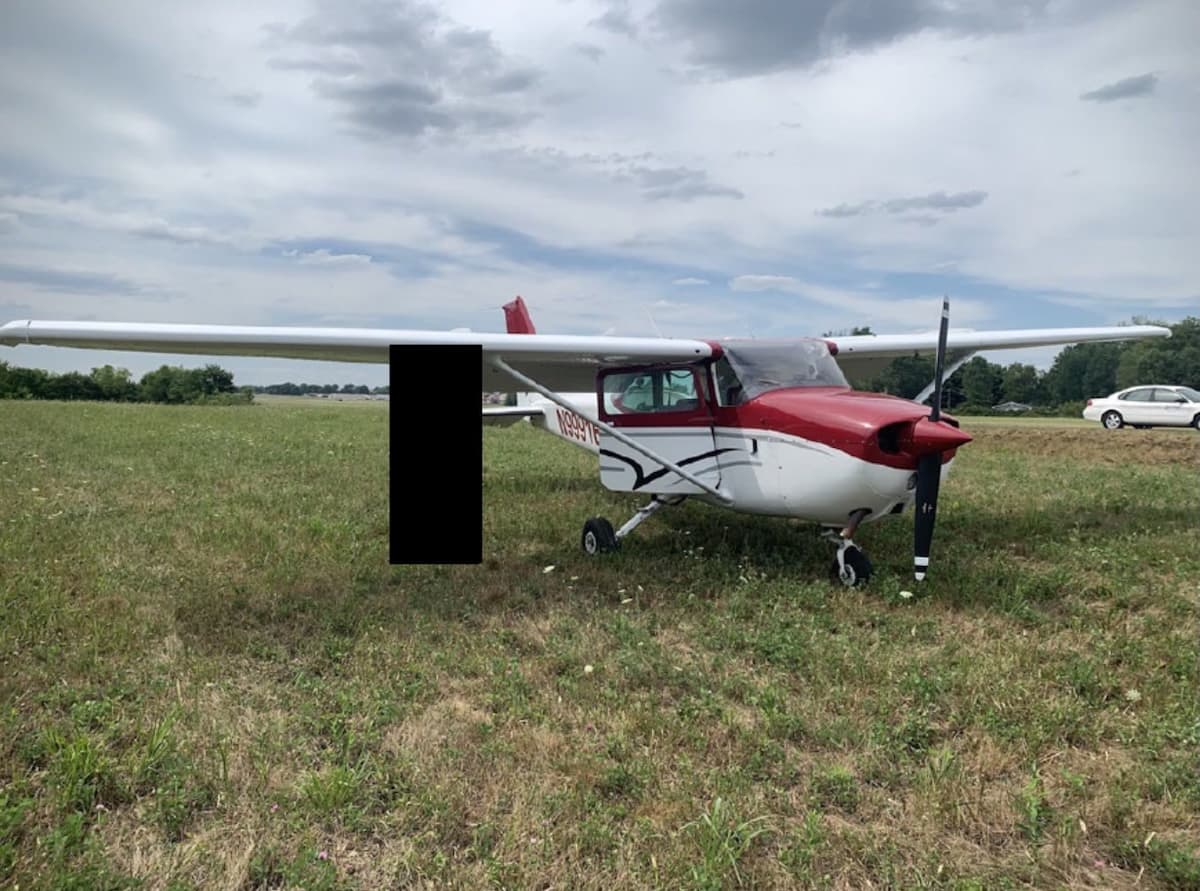
The private pilot, who was the Pilot In Command for the flight, was flying with two passengers in the Cessna 172. One, who was seated in the right front pilot seat, held a commercial pilot certificate and had more flight experience than the private pilot.
The pilot-rated passenger in the right front seat told investigators that during the approach to the airport in Danville, Kentucky, she commented to the pilot twice about the airplane’s airspeed, and that she had nudged the yoke forward with one finger as an indication to the pilot to lower the nose. Instead, the PIC pulled back on the yoke and added power to cushion the landing, which resulted in several bounces on the runway before the airplane traveled off the left side.
She further described that the landing flare occurred while the airplane was too high above the runway and at too slow a speed, about 15 feet above the runway and at an airspeed decreasing to less than 50 knots.
The PIC reported that during the landing attempt, after the passenger pushed the yoke forward, he pulled back because he did not want the nose of the airplane to strike the runway first, which resulted in a hard landing and subsequent bounce.
As the pilot was attempting to regain control of the airplane, the passenger increased the engine power to full in an attempt to abort the landing, but the airplane then veered to the left and departed the runway surface.
The airplane came to rest upright in a grass area next to the runway. The fuselage was substantially damaged during the accident.
The pilot told investigators that, “We will need to improve the communication between me as the PIC and any pilot-rated passengers, such as informing me of their concern rather than touching the control, especially during landing.”
Probable Cause: The pilot’s failure to maintain control of the airplane while landing and his inadequate communication to the pilot-rated passenger of her role during the flight.
To download the final report. Click here. This will trigger a PDF download to your device.
This July 2024 accident report is provided by the National Transportation Safety Board. Published as an educational tool, it is intended to help pilots learn from the misfortunes of others.
“Probable Cause: The pilot’s failure to maintain control of the airplane while landing and his inadequate communication to the pilot-rated passenger of her role during the flight.”
Lots of things went wrong in this incident. Although it would be easy to lay all the blame on the pilot in the left seat, I think both pilots share responsibility for the outcome.
Before you judge otherwise, read the following 7 Jan 2016 GAN article for some context concerning the PIC:
https://generalaviationnews.com/2016/01/07/big-news-for-two-able-flight-pilots/