

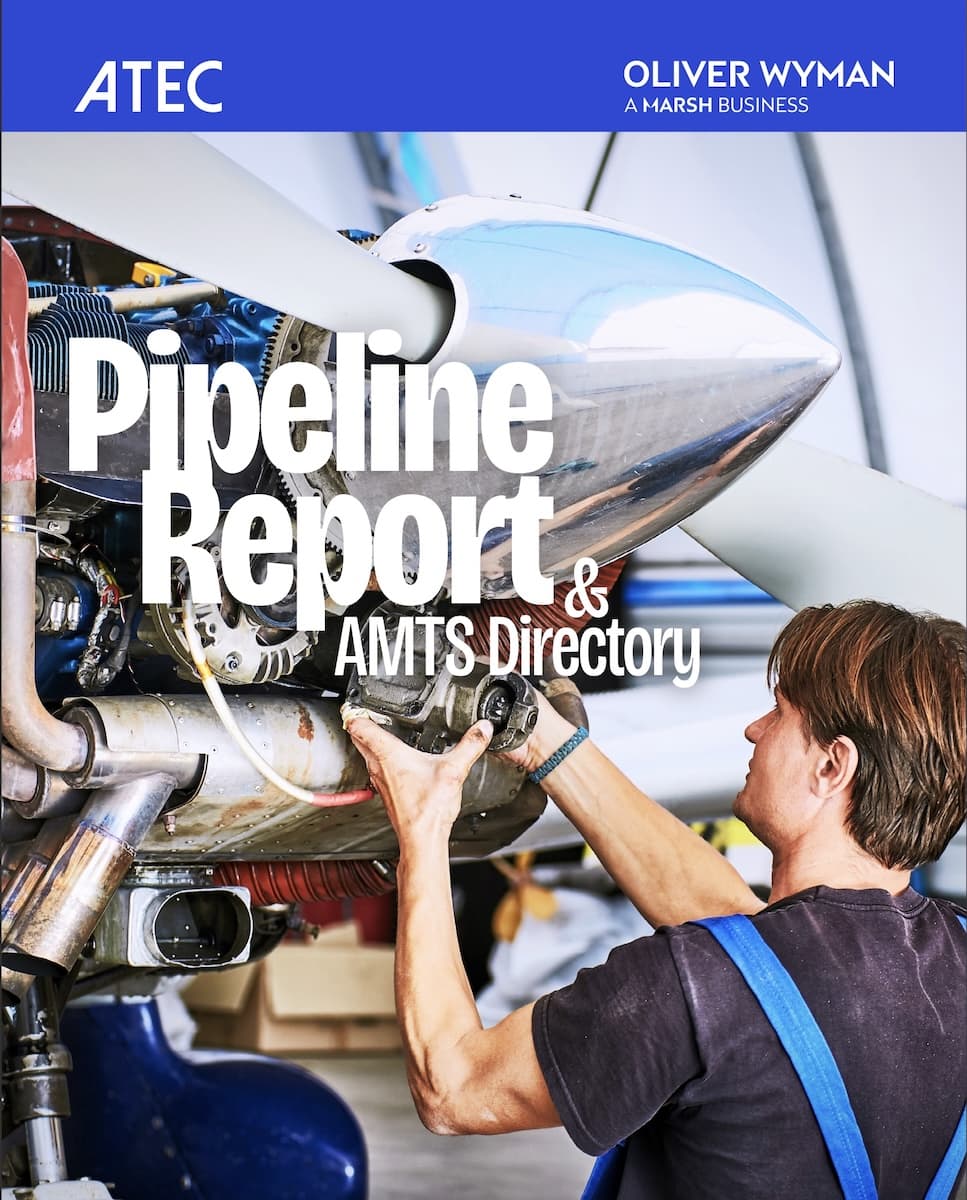
A new report reveals the FAA issued a record number of aviation mechanic certificates in 2025.
According to the 2026 Pipeline Report, jointly produced by the Aviation Technician Education Council (ATEC) and consulting firm Oliver Wyman, the FAA issued a record 11,103 new mechanic certificates in 2025 — 23.2% more than in 2024 and the highest annual total since the agency began publishing the data.
And while that’s good news, the aviation industry’s expansion and looming retirements will continue to put pressure on the supply of qualified mechanics, the report noted.
According to the report, aviation maintenance technician schools (AMTS) drove the 2025 record-setting total. The number of mechanics certificated through the school pathway reached an all-time high of 7,496, increasing 27% from 2024. A 13% increase in overall AMTS enrollment backed that growth, and the outlook for 2026 is even better, respondents to the survey that underpin the report show.
The civilian-experience pathway also posted strong gains. The number of mechanics qualifying through programs such as apprenticeships increased 21% in 2025, far exceeding the pathway’s average annual growth rate of less than 3% over the previous decade. This acceleration points to greater engagement by employers to gain more control of their workforce pipelines, the report notes.
Certificates earned based on military experience increased 5% to 1,375, an encouraging turnaround from the 2025 Report’s 14% decline.
Women are slowly helping fill the workforce pipeline. This year’s report reveals women reached 3% of the certificated mechanic population for the first time — compared to 2.9% in 2025 — continuing a slow but steady year-over-year increase.
“The overall growth trend and underlying drivers are encouraging signs that industry is making progress in its effort to expand and diversify the technical workforce pipeline,” said Crystal Maguire, Executive Director of ATEC. “We need to continue building momentum to meet both near-term and long-term demand needs, and that includes ensuring we’re attracting sufficient resources as well as workforce candidates.”
Trends and Challenges
The aviation mechanic population continues to grow older, with 44% over the age of 60 — a 3% increase over 2025’s report. The aging population will create a retirement wave during the next 10 years that is expected to include more than 39,000 mechanics.
Officials with Oliver Wyman project a North American shortfall of approximately 25,000 aviation technical personnel this year, including 9,100 certificated mechanics. By 2030, the certificated mechanic deficit is projected to reach approximately 20,000 — equal to 12% of anticipated demand.
AMTS enrollment rose 13.5% in 2025 to 27,740 — nearly three times the 10-year average annual growth rate of 4.6%. Even with that growth, the AMTS student load factor — the share of available A&P program seats filled by enrolled students — stood at 62%. Increasing enrollment remains a key step in closing the certificated mechanic deficit.
While AMTS are growing, many are hampered by resource constraints. Respondents to an AMTS survey conducted for the Pipeline Report identified insufficient funding — for facilities, tools, materials, and/or equipment — as the single largest barrier to program growth. The second largest driver was the inability to hire and retain faculty.
You can read the full report at ATEC-amt.org
Leave a Reply