

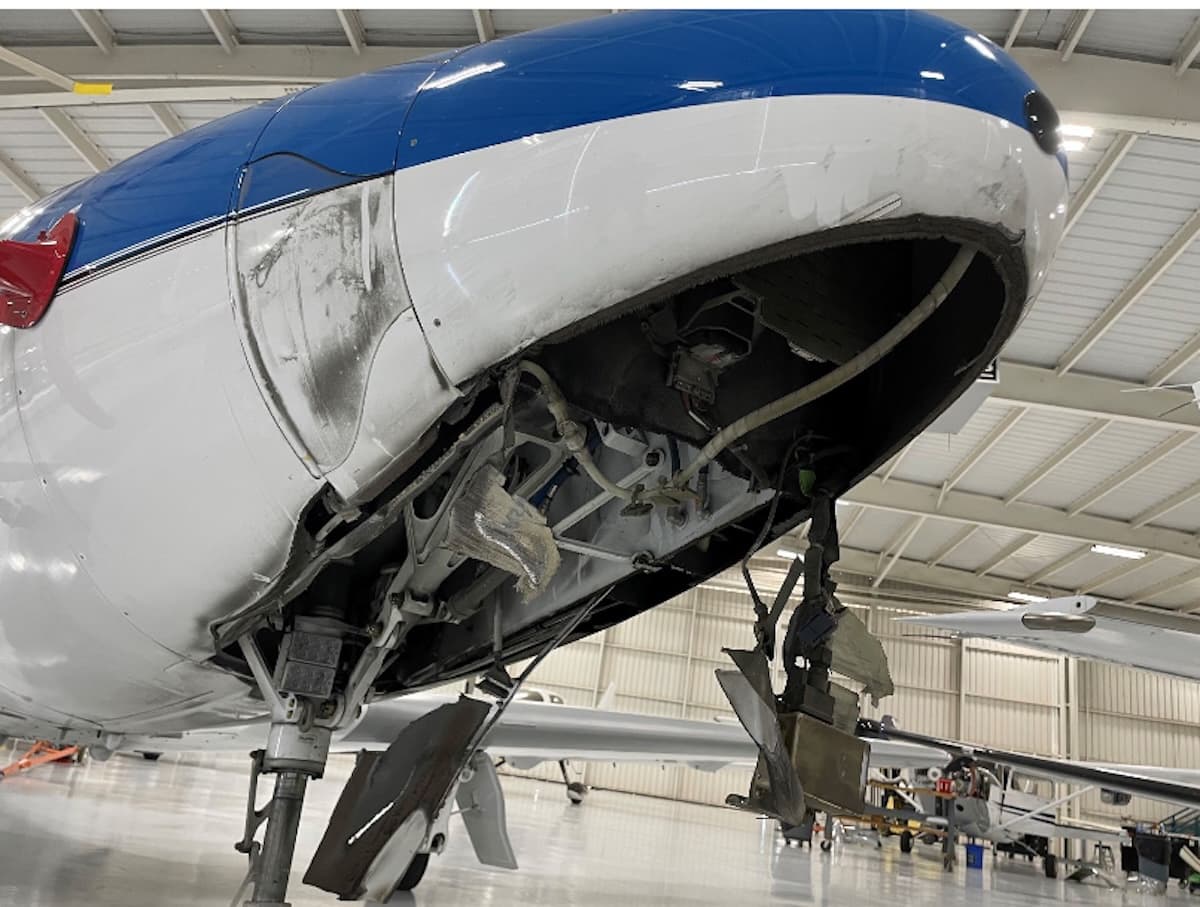
According to the pilot, while conducting a takeoff from the airport in Mesa, Arizona, he heard an unrecognizable sound and aborted the takeoff roll. He applied brakes and pulled the throttle simultaneously. The Cirrus SF50 lifted off the ground and returned to the runway surface on the nose, which resulted in a collapse of the nose landing gear.
The airplane’s emergency procedures include a caution that states “the airplane might rotate and lift off the ground if thrust lever is abruptly brought to IDLE prior to brake application.”
A post-accident review of the airplane’s flight data from the Recoverable Data Module (RDM) revealed that the landing gear lever was in the UP position during the takeoff roll when one of the weight on wheel (WOW) sensors showed it airborne. A few seconds later, the WOW sensor reactivated and the airplane settled on the nose gear.
The nose gear was in the transitory and unlocked position at that time and collapsed.
When the airplane came to rest, the landing gear lever was placed in the DOWN position. Pitch angle and radar altimeter data from the RDM also showed that the airplane remained on the runway surface during the takeoff and abort.
The pilot reported no failures or malfunctions with the airplane that would have precluded normal operation.
Probable Cause: The pilot’s improper landing gear selection during the takeoff roll and failure to maintain airplane control during a rejected takeoff, which resulted in abnormal contact with the runway and a collapse of the nose landing gear.
To download the final report. Click here. This will trigger a PDF download to your device.
This November 2024 accident report is provided by the National Transportation Safety Board. Published as an educational tool, it is intended to help pilots learn from the misfortunes of others.
Leave a Reply