
• Skip to primary navigation
  • Skip to main content
General Aviation News

General Aviation News

Because flying is cool

  • Pictures of the Day
    • Submit Picture of the Day
  • Stories
    • News
    • Features
    • Opinion
    • Products
    • NTSB Accidents
    • ASRS Reports
  • Comments
  • Classifieds
    • Place Classified Ad
  • Events
  • Print Archives
  • Subscribe
  • Show Search
Hide Search

Nose-Turreted Liberators: The Rigors of War

By Frederick Johnsen · March 27, 2026 · 1 Comment

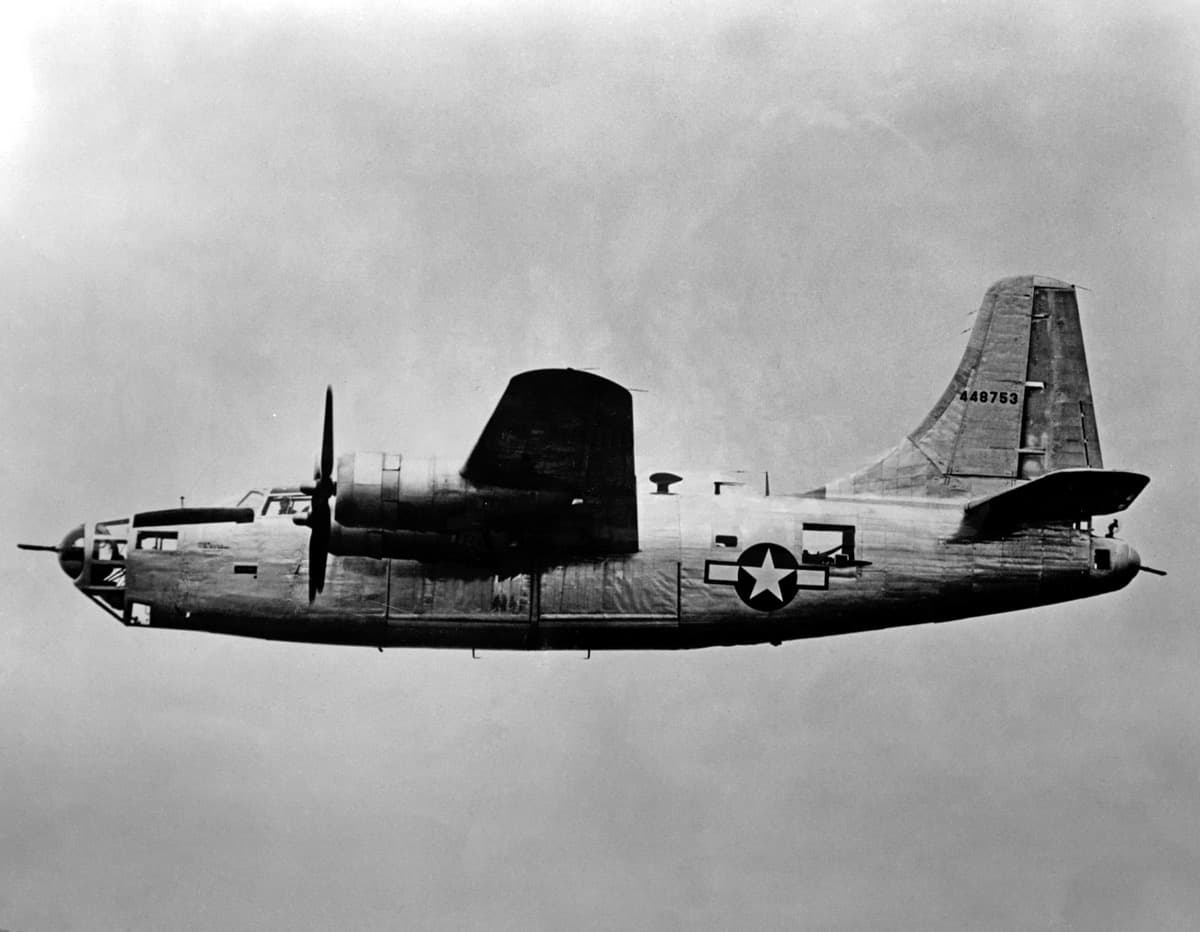
The B-24N, intended for large-scale production by Ford and canceled with victory in 1945, featured a new nose turret with greater nose glazing and a better over-the-nose view for the pilots. (Photo from the John Campbell collection)

In a previous column, we looked at the early-war B-24 Liberators that embraced a large glazed nosepiece with plenty of visibility for the bombardier and, perhaps naively, insufficient defensive firepower to discourage head-on attacks by fighters.

Japanese and German fighter pilots made head-on attacks with closing speeds sometimes exceeding 500 miles per hour. Eventually, production B-24s would feature a manned nose turret with rapid powered movement, two .50-caliber machine guns, and a sophisticated optical gunsight, but in early 1943 the first B-24 nose turret configuration was a successful cut-and-try experiment with existing greenhouse B-24Ds.

Credit for the design goes to Lt. Col. Marion Unruh of the 5th Bomb Group, an early Pacific user of Liberator bombers. He foresaw relocating the B-24D’s powered tailgun turret into the upper part of the nose. The idea offered several viable solutions simultaneously. It reallocated weight for a better overall weight-and-balance configuration for the B-24D. It gave the B-24 better forward firepower. And in the tail position, where enemy attacks did not have the rapid closing speed of frontal assaults, an open-air lightweight tailgun placement with a pair of .50-caliber guns on a simple post proved sufficient for defense.

The Hawaiian Air Depot undertook conversion of more than 200 greenhouse B-24Ds that received distinctive nose turret modifications for use in combat.
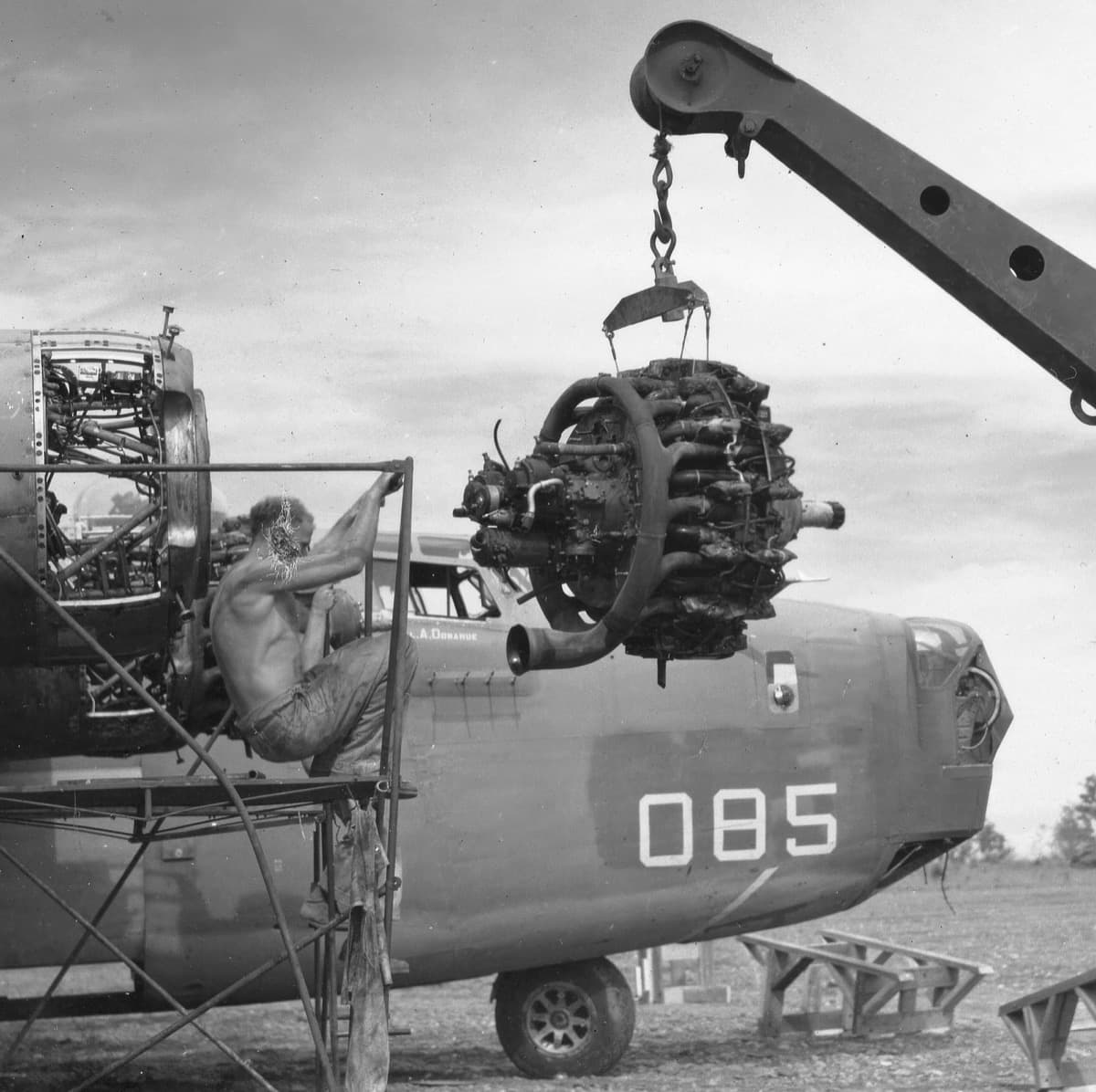
The end of the line for this B-24D with the Hawaii Air Depot nose turret modification came at a salvage yard in Nadzab, New Guinea, late in the war. The Hawaii nose jobs are recognizable by the shallow, understated bombardier’s station beneath the turret. Darker olive drab paint around the nose is a telltale sign of modification. (Photo from the Air Force Historical Research Agency via the author’s collection)

And at the Oklahoma City Air Depot, hands-on designers and mechanics rendered their own version of a B-24D with a nose turret, differing from the Hawaiian product by deepening the chin area to give the bombardier more room and side windows for situational awareness.
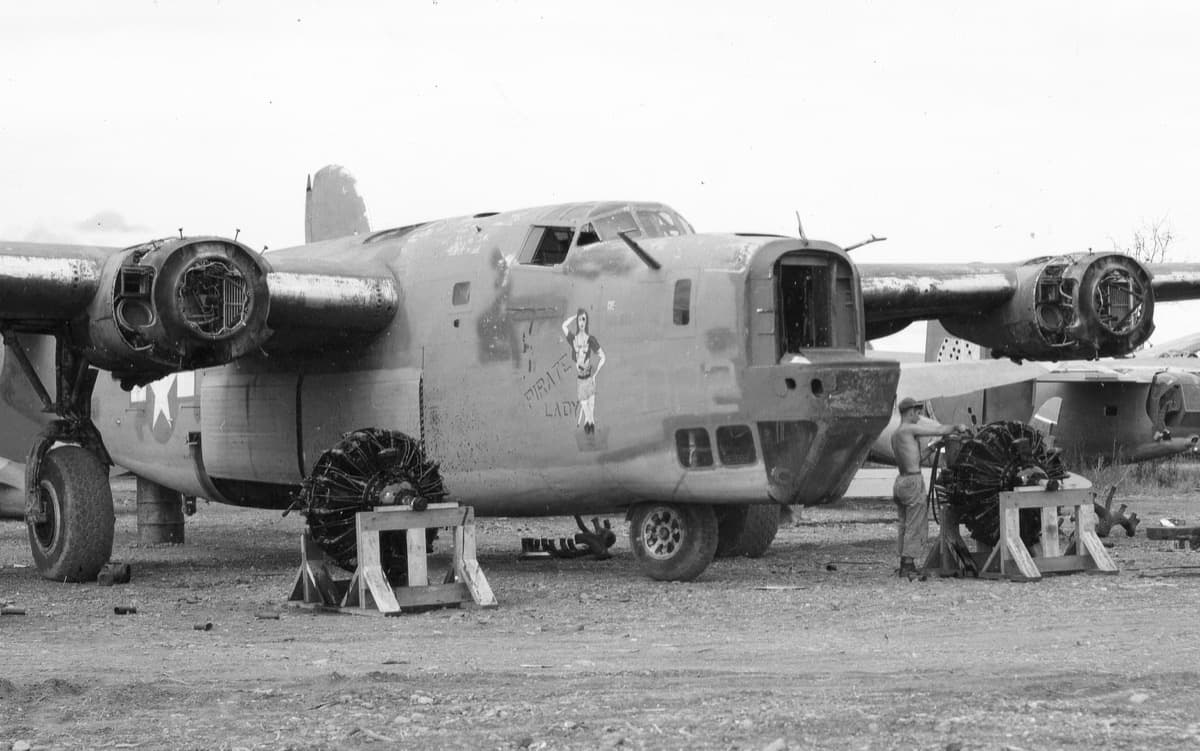
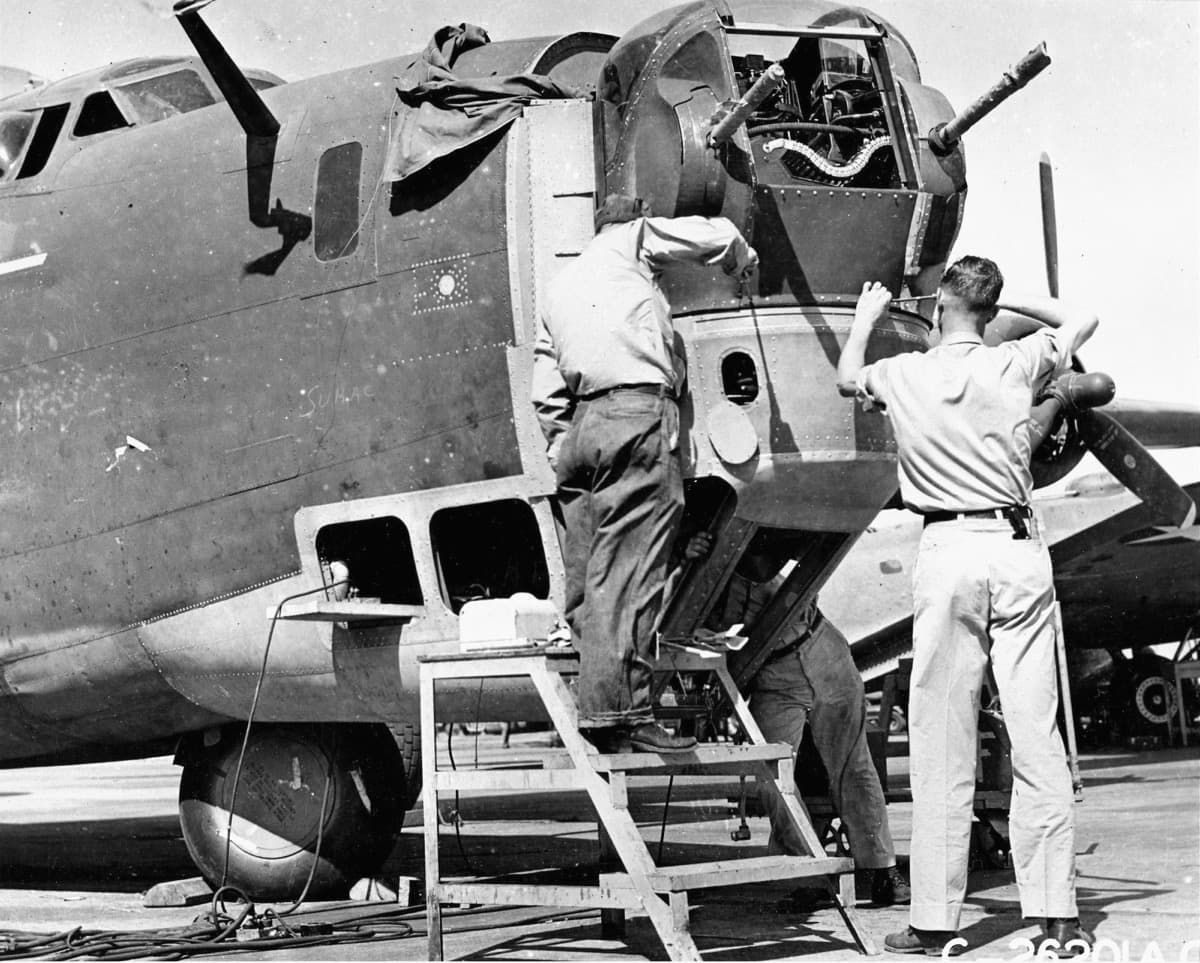
The Oklahoma City Air Depot version of placing a nose turret in a B-24D gave the Liberator a deeper chin with more space, windows, and visibility for the bombardier. Later production B-24s with nose turrets would offer a deep chin, though not as pronounced as the Oklahoma City conversions. (Photo from the Air Force Historical Research Agency via author’s collection)
New metal in light zinc-chromate primer shows the scope of the modifications to this B-24D at the Oklahoma City Air Depot in 1943. (Photo from the Tinker AFB history office via the author’s collection)

Consolidated Aircraft in San Diego and Ford Motor Co. in Willow Run, Michigan, wrestled with the best way to give future B-24 Liberators a nose turret on the production line. Although several iterations and modifications of the Consolidated tail turret would find their way into Consolidated’s early factory-built Liberators with nose turrets, Ford mastered the use of the new Emerson Electric turret, once intended as a B-24 tail turret, and now embraced as the optimal and available nose turret of choice for B-24s. The Emerson’s electric motors were said to give the gunner quicker responses when tracking an enemy aircraft.

The rush to produce nose-turreted B-24s gave Ford the honor of delivering the first Liberator so equipped from the factory on the last day of June 1943. It was a new Ford B-24H.
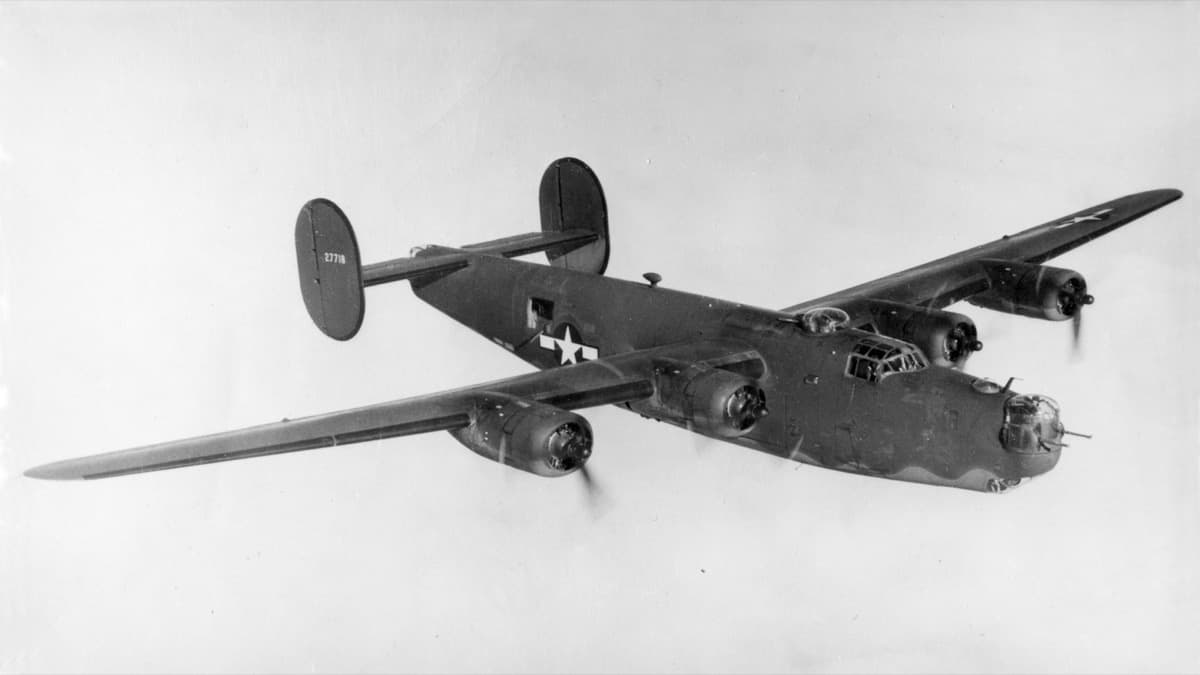
This early Ford-built B-24H typifies the first production Liberators fitted with nose turrets, using the Emerson electrically-driven A-15 model. (Photo from the Peter M. Bowers collection)

Even as depot-level rebuilding of B-24Ds to incorporate nose turrets began earlier that year, the manufacturers understood the need to introduce nose turrets for all future production Liberators. The threat from enemy fighters was real and the duration of the war was still an unknown date somewhere in the future.

Consolidated in San Diego and Ford in Willow Run adapted Liberators with nose turrets in 1943. The results gave a distinct look to the noses of Ford-built B-24s, different from that of Consolidated products. Both styles endured through the end of B-24 production in 1945.
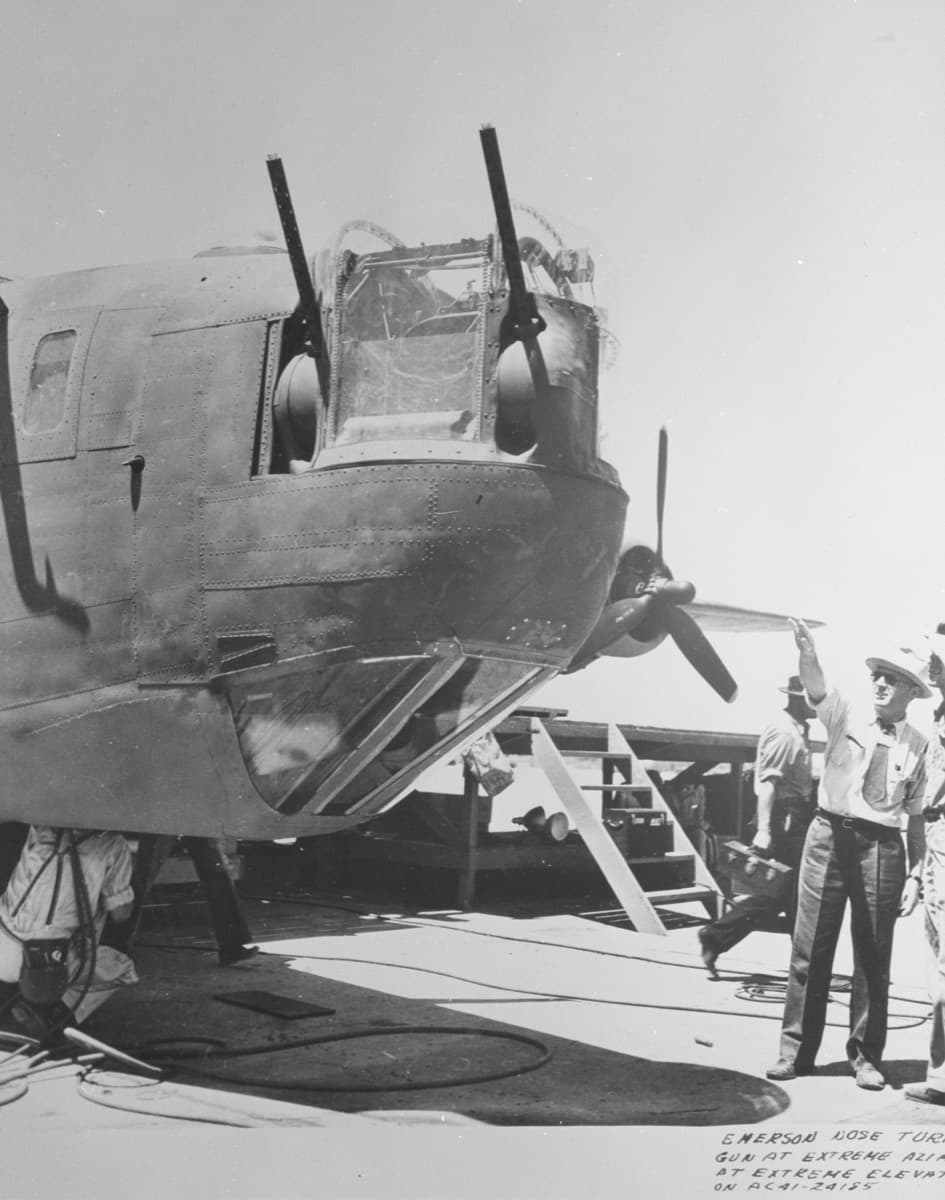
At San Diego in 1943, Consolidated installed an Emerson electric turret in the nose of former greenhouse B-24D number 41-24185. The redesigned nose would evolve slightly, but Consolidated and Ford B-24 designs were distinctly different. The sweep of the turret, and its tracking speed, made this a formidable defensive armament for the Liberator. (Photo from the Barksdale AFB museum collection)

Unlike the underslung chin turret that gave the B-17G frontal protection, nose turrets on B-24s added one more hump to inhibit forward visibility for Liberator pilots.
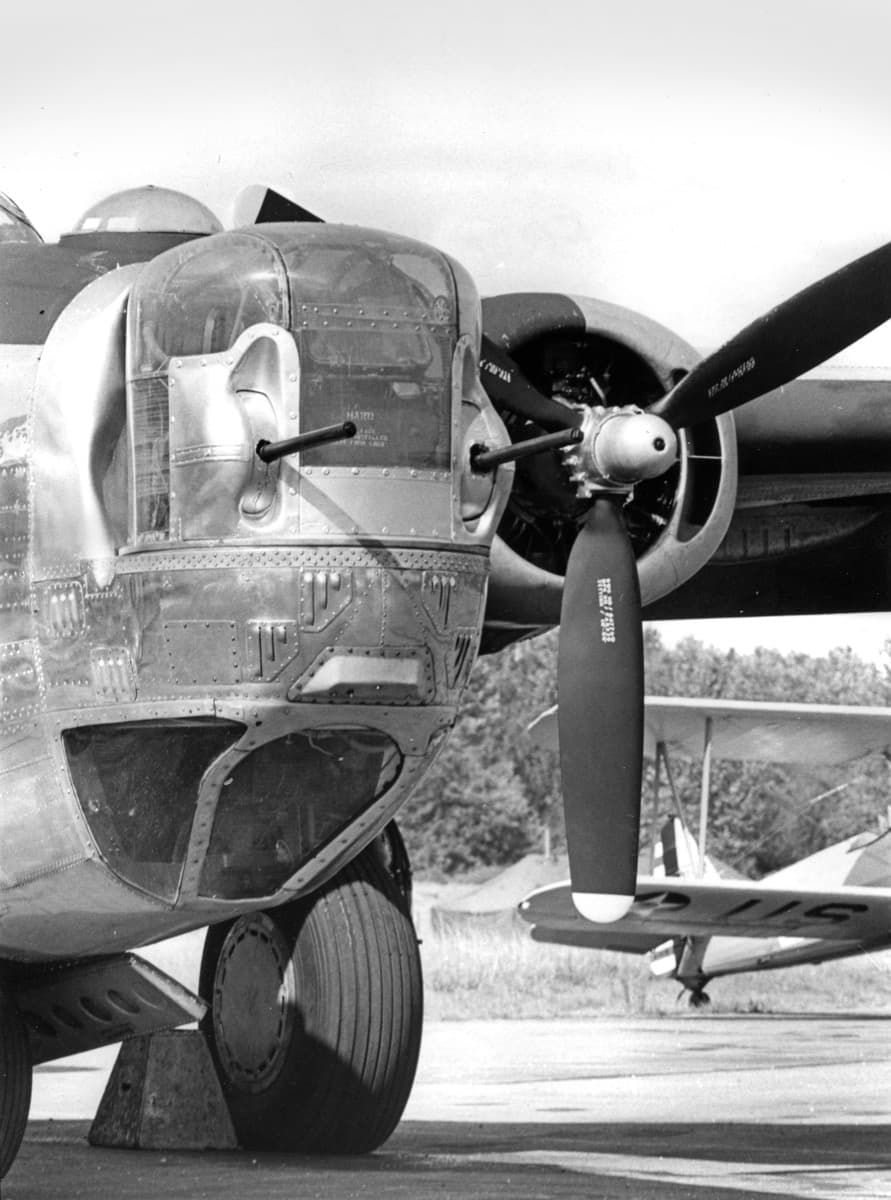
The B-24J built by Consolidated in Fort Worth, and flown by David Tallichet when photographed in 1977, featured an Emerson turret in the nose style adopted by Consolidated in San Diego and Fort Worth. Rapid movement capable with the Emerson electric turret made it the go-to nose turret for later B-24 mass production. (Photo by Frederick A. Johnsen)

While the Army Air Forces (AAF) converted B-24Ds to accept nose turrets, the Navy took its own perspective on the problem of forward armament, and added the round Erco bow turret. (Yes, it’s the Navy, so it was a bow turret, not a nose turret!)
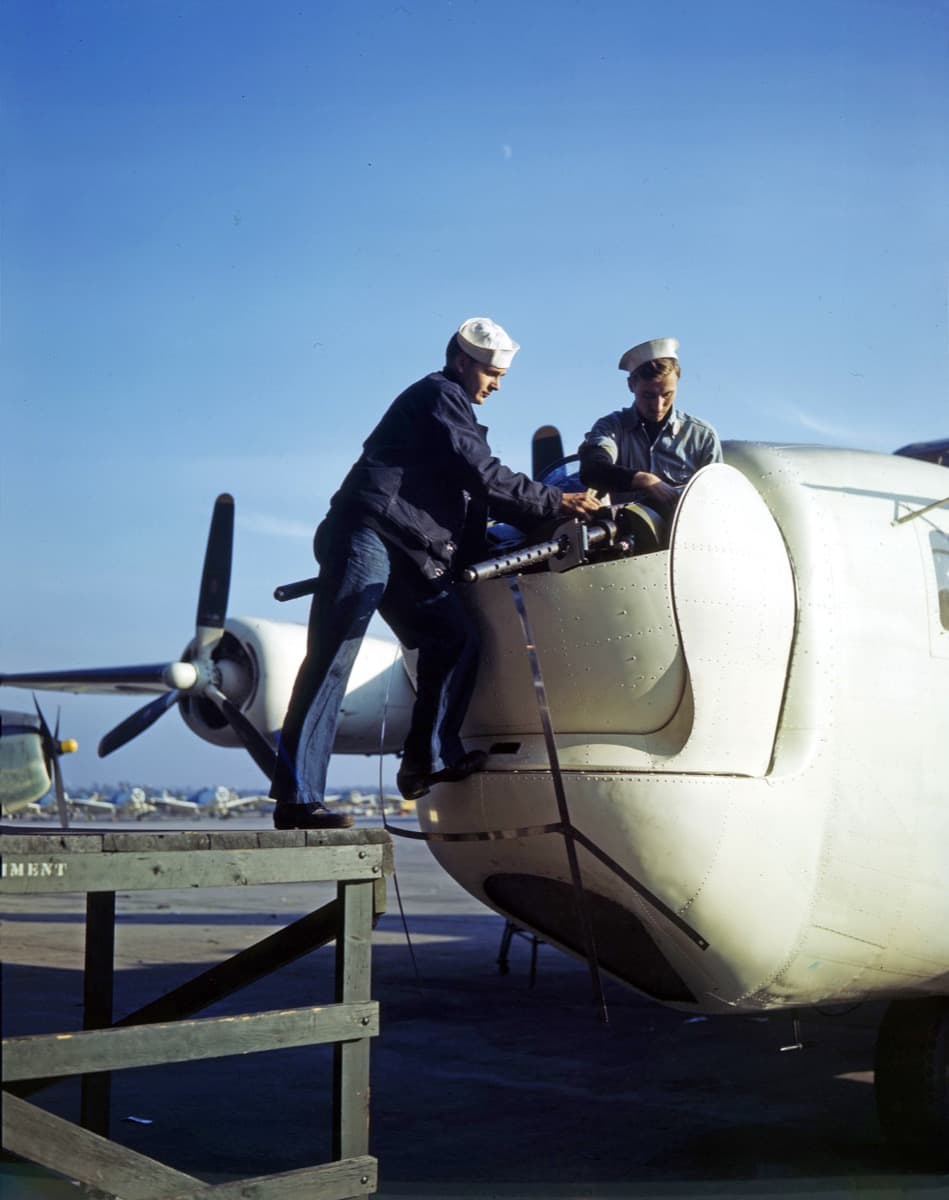
The U.S. Navy chose its own path for nose turrets on its PB4Y-1 versions of the Liberator, settling on a spherical Erco turret, seen here with its Plexiglas dome removed for servicing. (U.S. Navy Photo via the National Archives)

As 1943 roared into 1944 and 1945 before war’s end, the AAF grappled with issues of visibility, for pilots as well as bombardiers, brought about by the placement of vital nose turrets. The ultimate answer, conceived and applied to only eight single-tail B-24N models by Ford, was a new style of Emerson ball turret fitted into a nose that had many glazed panels.
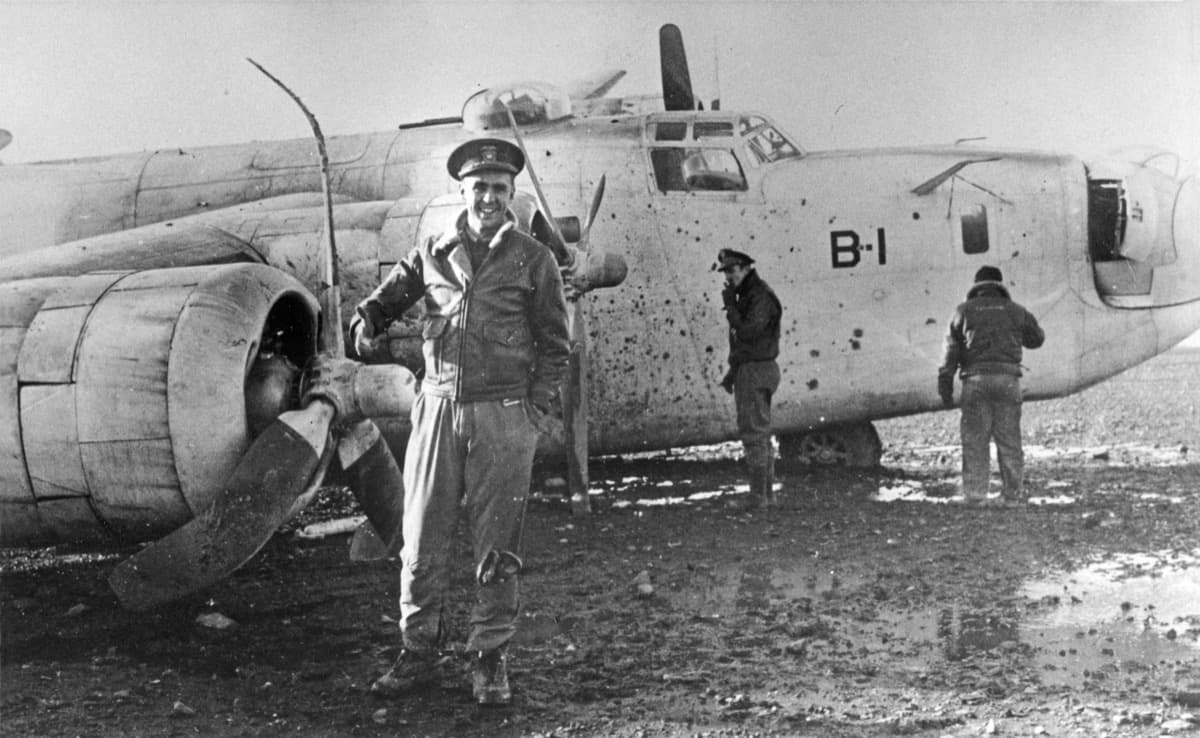
A danger faced by turret gunners like the one who sat in this Navy PB4Y-1 bow turret was the potential for the turret to jam when turned to the side, making egress back into the fuselage impossible in flight. Targeted by German flak, this Liberator had one prop feathered, an inoperative right main landing gear, and a trapped turret gunner. Returning in darkness to England, pilot Charles F. Willis, Jr., faced the ordeal of setting his crippled bomber down in an unlit potato field, which he accomplished so successfully the gunner was unharmed and Willis flew the repaired Liberator from the farm. Willis went on to become president of Alaska Airlines decades later. (Photo from the Charles F. Willis Jr. collection)

That cleaner nose job was slated for incorporation on a production run of more than 5,000 B-24Ns, but the end of the war axed the contract in 1945.

And remember Marion Unruh, who helped pioneer the use of power turrets in the noses of B-24s? He went on to be a well-known, well-liked, aircraft homebuilder in Kansas. Unruh died in the crash of one of his aircraft in April 1968.
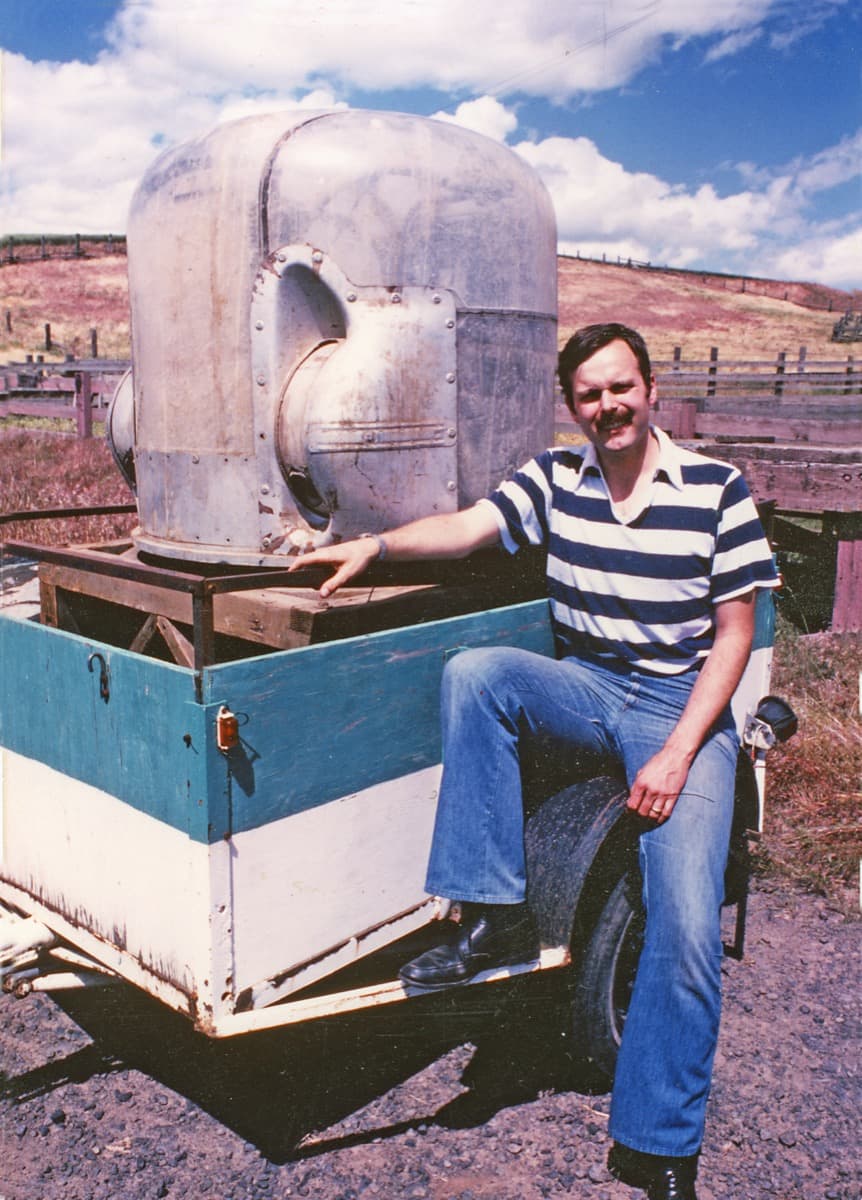
The author’s association with B-24 nose turrets includes this Emerson A-15 he plucked from a barn where chickens roosted in eastern Oregon in 1980. (Photo courtesy Frederick A. Johnsen)

About Frederick Johnsen

Fred Johnsen is a product of the historical aviation scene in the Pacific Northwest. The author of numerous historical aviation books and articles, Fred was an Air Force historian and curator. Now he devotes his energies to coverage for GAN as well as the Airailimages YouTube Channel. You can reach him at [email protected].

Reader Interactions

Share this story

  • Share on Twitter Share on Twitter
  • Share on Facebook Share on Facebook
  • Share on LinkedIn Share on LinkedIn
  • Share on Reddit Share on Reddit
  • Share via Email Share via Email

Become a better informed pilot.

Join 110,000 readers each month and get the latest news and entertainment from the world of general aviation direct to your inbox, daily.

This field is for validation purposes and should be left unchanged.

Curious to know what fellow pilots think on random stories on the General Aviation News website? Click on our Recent Comments page to find out. Read our Comment Policy here.

Comments

  1. Flying B says

    April 1, 2026 at 2:11 pm

    Thanks Fred for the article on B-24 nose turrets. My dad worked on B-24’s at the San Diego plant early in the war. He then joined and flew combat missions as a Navigator in B-24’s in Europe. He didn’t speak a lot about the war, but every-time he saw a B-24 he said he much preferred the H models when he was flying in combat. I think he felt it gave him the best chance to make it home.

    Reply

Leave a Reply Cancel reply

Your email address will not be published. Required fields are marked *

This site uses Akismet to reduce spam. Learn how your comment data is processed.

© 2026 Flyer Media, Inc. All rights reserved. Privacy Policy.

  • About
  • Advertise
  • Comment Policy
  • Submit Press Release
  • Contact Us
  • Privacy Policy
  • Writer’s Guidelines
  • Photographer’s Guidelines