

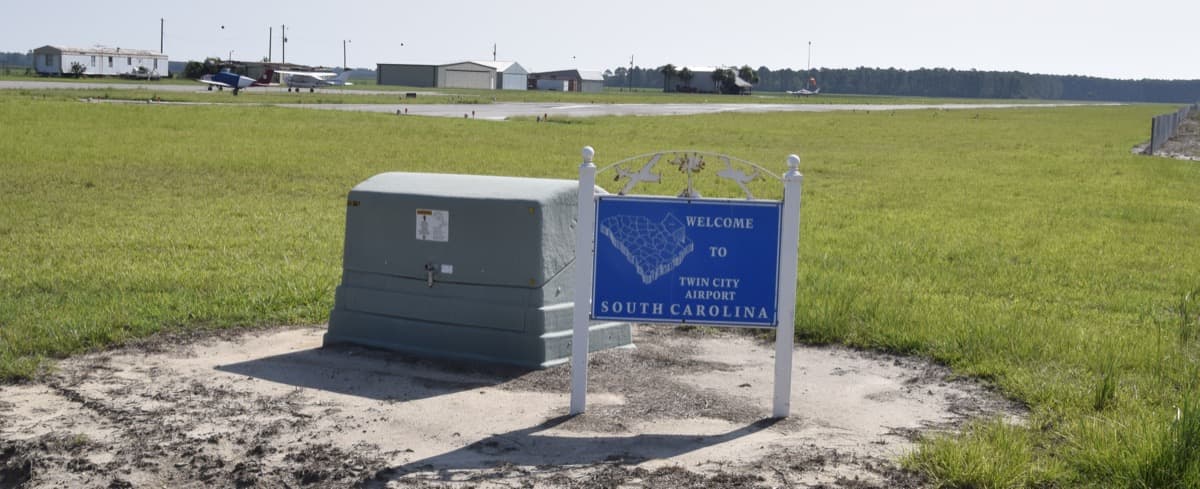
A June 29, 2026, letter to the pilots and business owners at Twin City Airport (5J9) in Loris, South Carolina, struck like a lightning bolt: The Horry County Department of Airports announced it is closing the airfield as a cost-saving measure.
Why was a tradition-rich rural airport in one of South Carolina’s most prosperous counties condemned to closure? That’s what aviators around the state want to know.
Twin City has existed as a public airport for more than a half century in the shadow of larger general aviation facilities in the county, including Grand Strand Airport (KCRE) in North Myrtle Beach and Conway-Horry County Airport (KHYW), as well as Myrtle Beach International Airport (KMYR).
Through the years Twin City Airport survived without a manager or fuel or even a single restroom on the airfield.
But now it appears 5J9’s luck has run out.
“Unfortunately, the amount of investment required by Horry County to rehabilitate the runway surface and bring Twin Cities Airport up to current standards cannot be justified due to the lack of utilization and the availability of alternative general aviation facilities within the county,” read the letter from Deputy County Attorney H. Randolph Haldi. “As such, we wanted to make you aware that the Horry County Department of Airports has made the difficult decision to initiate discussions with the FAA to close the runway and remove Twin Cities Airport from the National Airspace System.”
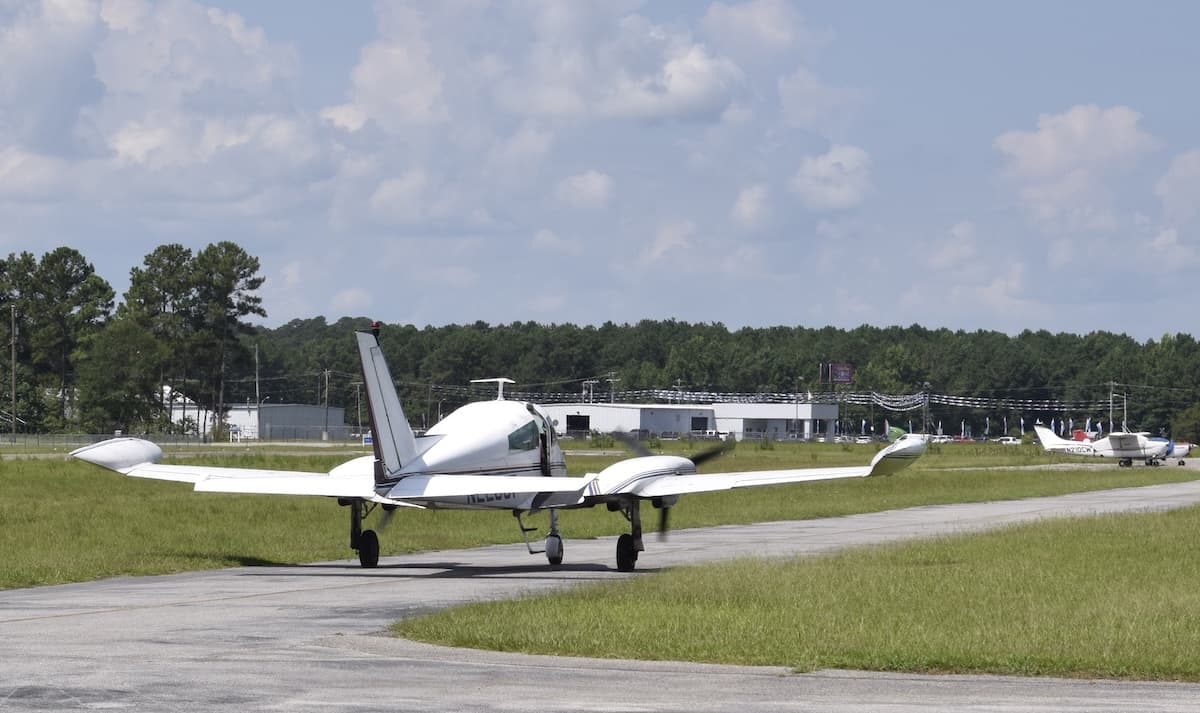
The letter touched off a barrage of complaints from pilots and the two longtime aviation businessmen on the field, including John Stephenson, who operates Attitude Aviators Flight School from 5J9.
“The county has done little to support the airport for many years,” he said. “And county data on the number of daily operations is inaccurate and in large part based on a flawed eight-year-old study commissioned by the airport board. We have a flight school. We have a good mechanic here with inspection authorization and we have far more planes than the airport board has listed. It’s a very good airport for training. Why close it? The difficulties the county cites can be dealt with, but we’ve never even had a sit down with the county to discuss how we all might be able to make this airport prosper. What kind of business logic is that?”
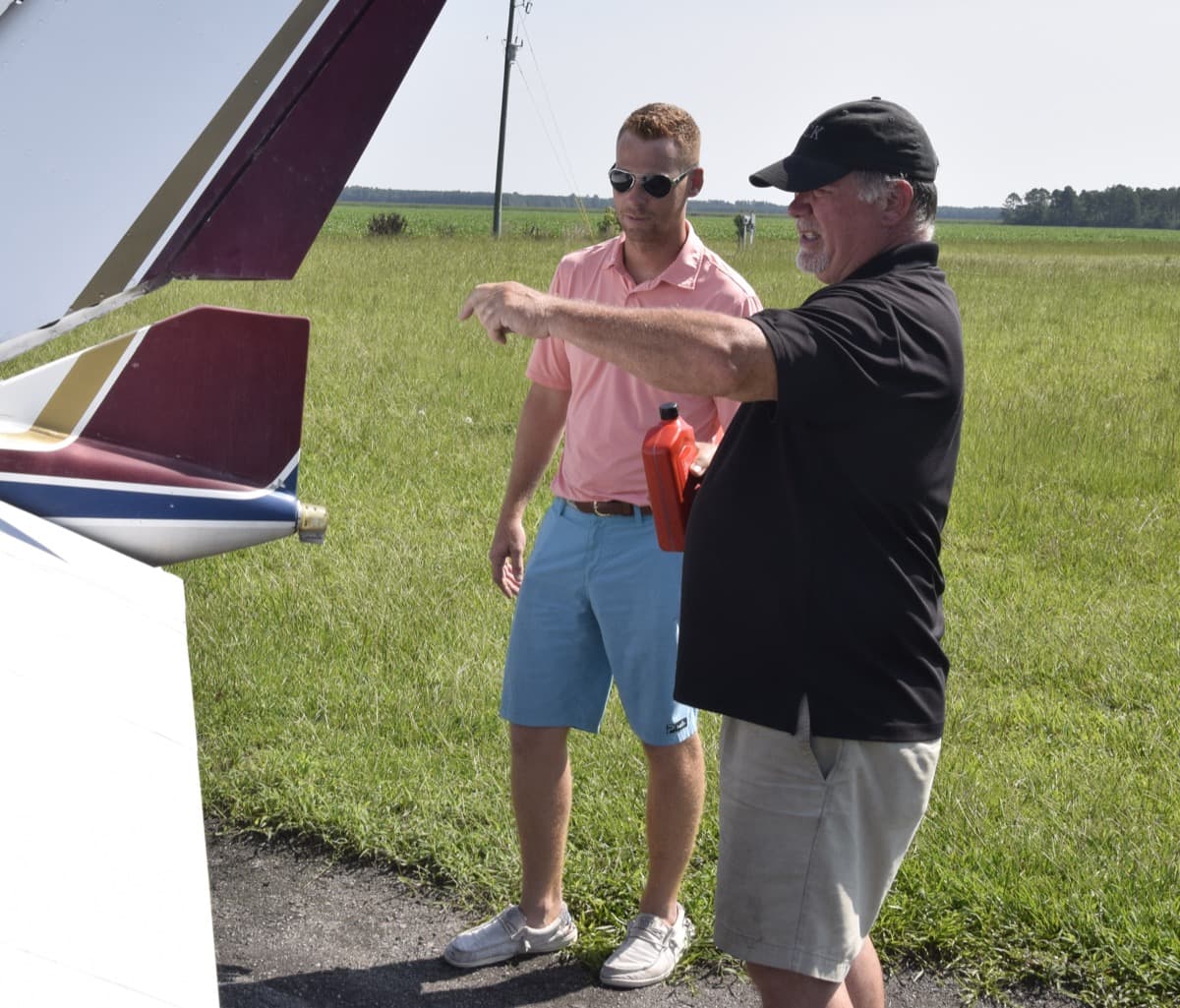
According to county officials, it’s all about the numbers.
“In 2021, the FAA removed the Twin Cities Airport from federal funding eligibility because it no longer met the minimum operational criteria, including maintaining at least 10 based aircraft,” said Assistant Director of Horry County Airports Ryan Betcher. “Since then, Horry County has been solely responsible for funding the airport’s operation, maintenance, and future capital improvements.”
“While annual maintenance costs range from approximately $65,000 to $100,000, the airport’s runway, taxiway, and supporting infrastructure are nearing the end of their useful life,” he continued. “Rehabilitation costs are expected to total $7 million to meet current federal standards.”
He noted the county did not make the decision to close the airport lightly, recognizing that the closure will affect “the small number of individuals who currently use” the airport.
“Throughout this process, the county’s priority has been the responsible stewardship of public funds while continuing to provide safe and efficient aviation services,” he said. “General aviation users will continue to have access to nearby facilities at Grand Strand Airport and Conway-Horry County Airport, both of which are well-equipped to accommodate the operational needs currently served by Twin Cities Airport.”
A Real Estate Boom
5J9 is tucked into an agricultural landscape only 20 miles inland from the Atlantic Coast and the tourist-heavy Myrtle Beach Grand Strand area. The twin in the Twin City name is Tabor City, a similarly small North Carolina town of about 3,500 residents, only three miles from the airport. In many ways, the little airport is typical of small-town public airfields across the length and breadth of America.
Horry (pronounced oh-ree), the largest county in the state by land mass with an approximately $827 million yearly budget, has been at the national forefront in new home construction and population growth in recent years. But that real estate boom has only recently approached the outskirts of Loris, a town of about 3,000 residents along Highway 9 that leads to Interstate 95, about 30 highway miles distant.
“They’re building houses in every open field up and down Highway 9,” said Dr. John Jordan, a pilot who owns a hangar at the airport. “This airport, with 102 acres, would be a prime building space and someone is determined to get it.”

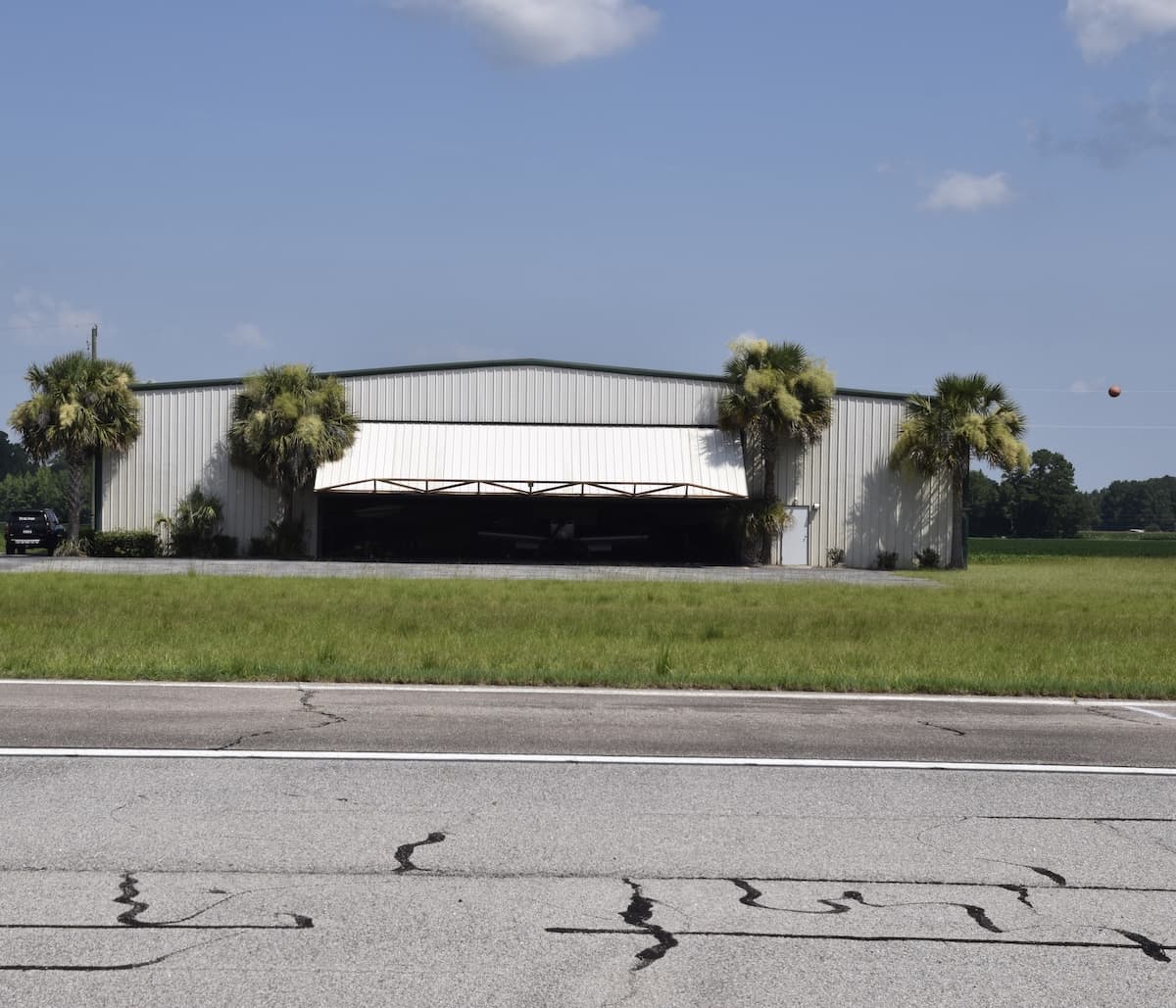
There are now six aircraft hangars on the field, all owned by pilots and 10 or 11 aircraft housed or tied down there at any given time, according to the pilots. The runway (8-26) is 3,694-feet x 60-feet with an asphalt surface rated in good condition on ForeFlight.
“It’s usable,” Stephenson said. “There is some up and down roll in the paving. It simply was a poor paving job the last time they did it that got us to this point.”
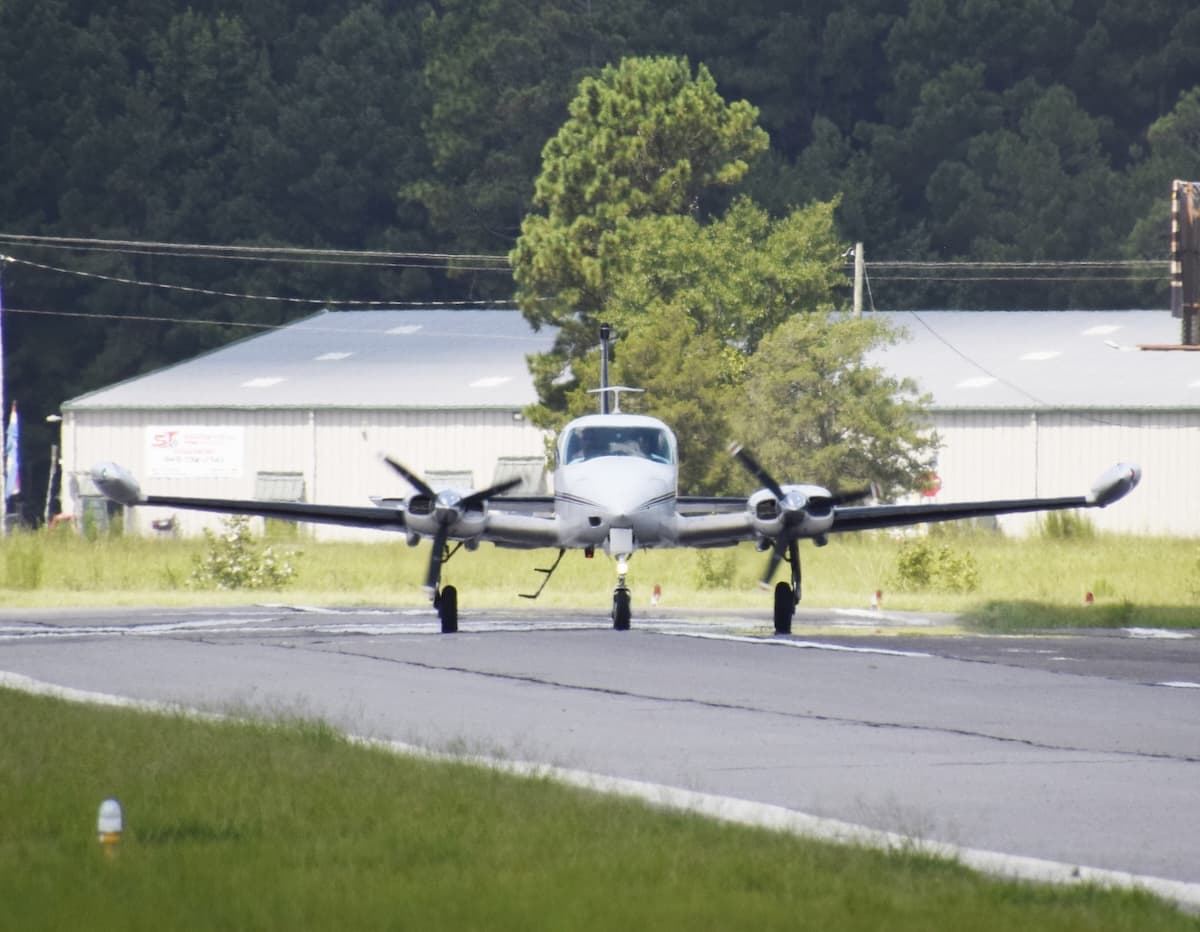
Soon after the pilots’ criticisms were made public, a Facebook page “Friends of Loris Twin City Airport (5J9)” was established. Within days the membership had reached 258 and the additional comments totaled more than 300. Nearly all comments were in favor of keeping the airport open.
One of those in favor of keeping the airport open is Loris Mayor Mike Suggs.
“I have received absolutely no information from Horry County about this issue,” he said. “If not for a call from John Stephenson I would not have known about it. I hope this decision can be reconsidered. An airport is a place where young people get inspired to fly and to have careers in aerospace. I will do what I can to keep this airport open.”
According to Betcher, the Department of Airports had no obligation to notify the mayor about the imminent closure of the airport.
“The city of Loris was not included in the initial notifications because the airport is owned and operated by Horry County, and the initial notifications were directed to those most directly affected by the proposed closure,” he explained. “As this process moves forward, the county will continue communicating with interested stakeholders as appropriate.”
A History Lesson
The man who knows more about the airport than anyone else is Sammy Sarvis, an A&P/IA who runs Sarvis Aviation, an FAA-approved repair station on the field.
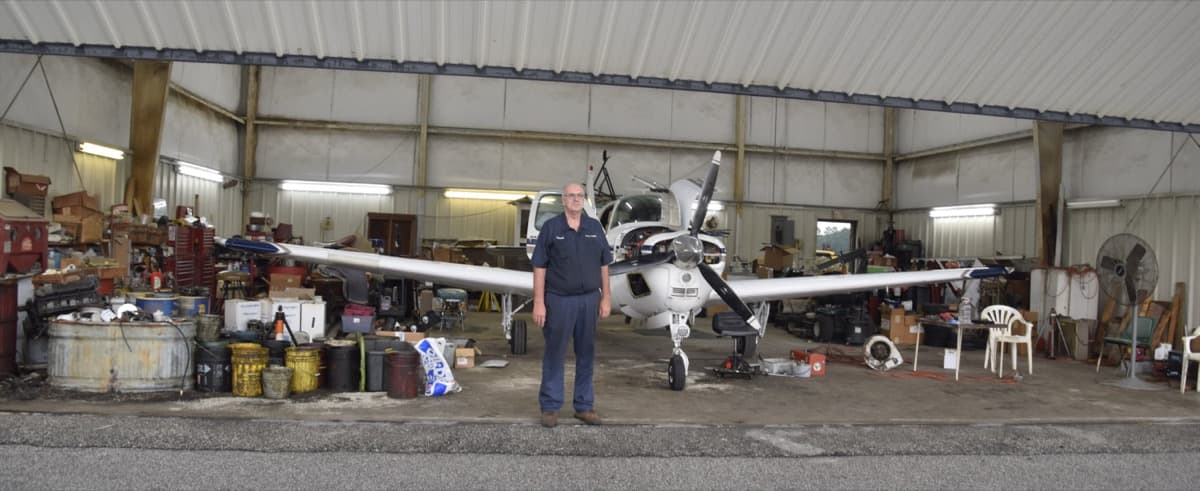
He is the son of Sam Sarvis, the man who, with four others, purchased a 32-acre site that eventually became 5J9. In the early 1960s the group created a 3,000-foot grass runway with a 20-foot-wide paved strip down the middle.
According to a Loris history brochure, the owners of the airport donated the airport property to Horry County in 1963. The airfield became the Twin City Airport, the pride of two small Carolina border towns. In that turnover, the hangars and building lots alongside the runway remained in private hands, according to Sarvis. Over the years the county enlarged the footprint of the airport to its current 102 acres.
For six decades the elder Sarvis was a key individual at the airport. He lived alongside the field and ran Sarvis Aviation where he repaired aircraft and conducted a crop spraying operation. He died in 2012 and his son stepped in to lead Sarvis Aviation.
Sammy Sarvis said the claim by the county it has maintained and improved the airport is far short of the truth.
“When my dad was alive and working on airplanes at the field, we had a little hangar office and he provided a bathroom. A storm turned our old hangar into a wreck and when I tried to build it back the airport commission said I could not. In all the years the county has had control of the airport — more than 50 years — they have never even put a bathroom here. There is no fuel, no drinking water, and no covered public place for aircraft crew and passengers who get weathered in here.”
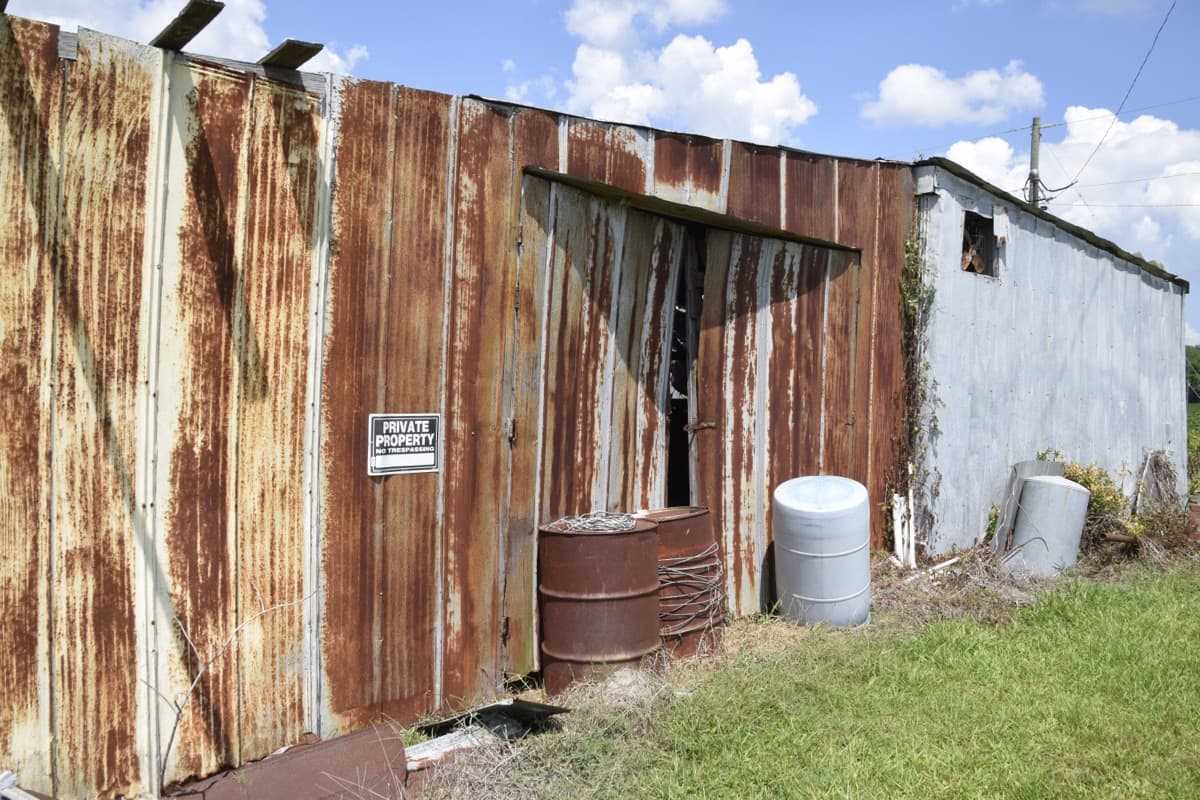
Stephenson, who listened to Sarvis’ comments, added, “He’s right, no bathroom and no fuel. When someone lands and needs a bathroom, I have to tell them to go out behind my hangar or they can try to make it a quarter mile on foot to Tractor Supply on the corner. Meanwhile, look at the North Myrtle Beach and Conway airports. They’ve got pilot rooms, bathrooms, hangars, fuel — the things an airport needs to be successful. How could we have a chance to be successful like this with nothing?”
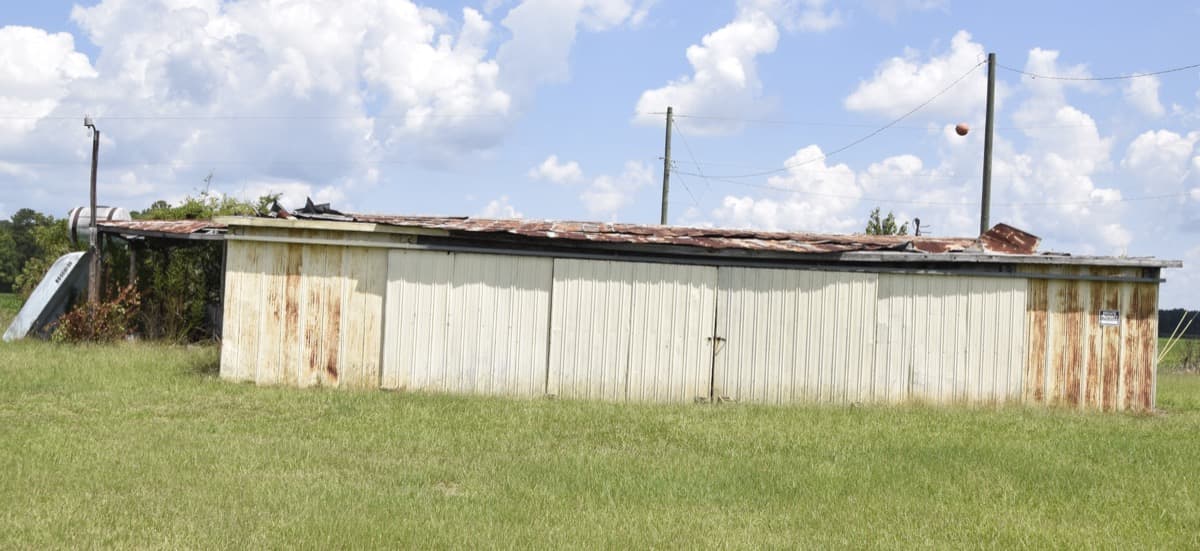
Both Stephenson and Sarvis said the Department of Airports is either misinformed or purposely not telling the truth about the other two airports being equipped to accommodate the needs currently served by the Loris airport.
“First of all, try to get a hangar in this county for your airplane,” Stephenson said. “I challenge you to find one. Maybe you’ll get a tie-down out in the weather for hundreds of dollars. I have a 104- by 48-foot hangar here and it is ideal for four aircraft. Find that for me at either of those two airports.”
“This is the place we have had our repair station for decades,” Sarvis added. “I lose my hangar and I lose my job if they close us down. Many of the area pilots depend on me for their annuals because of the convenience of coming here. They should not be closing this place down. They should be improving it.”
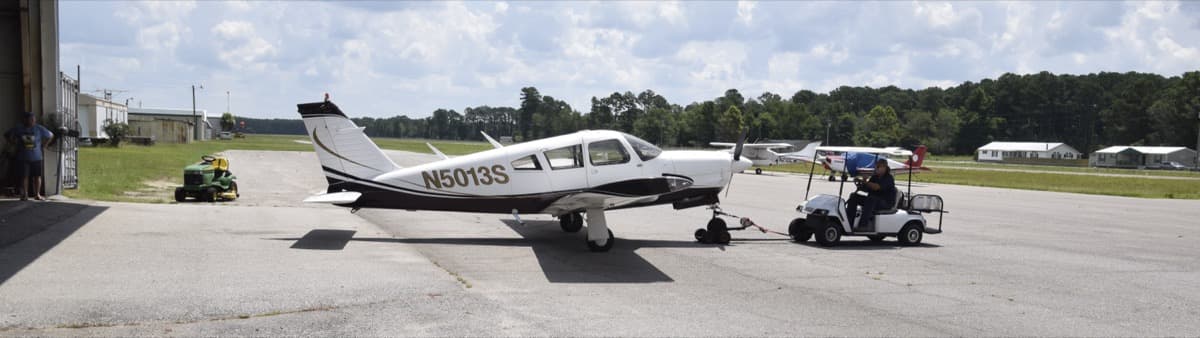
John Jordan, the retired physician, has two hangars and a Piper Arrow on the airport. He said the county was not truthful in describing the cost of maintaining the airport.
“They mowed the grass only twice last year,” he said. “We do the mowing around our hangars.”
A Disappointing Move
The imminent closure is a disappointment, according to South Carolina Aeronautics Commission Chairman Gary Siegfried.
“We are always disappointed whenever a public-use airport is proposed for closure,” he said. “Regardless of its size, every airport in our statewide system contributes to the efficiency and resiliency of both South Carolina’s and the nation’s transportation network. One of our greatest concerns is the continuing shortage of aircraft hangars across South Carolina. We are seeing unprecedented demand for aircraft storage throughout the state, and whenever a public-use airport closes, it removes aviation infrastructure that is increasingly difficult and expensive to replace. While Twin City Airport was relatively small, the loss of any public-use airport further contributes to that statewide shortage.”
According to Siegfried, the possibility of closing the airport isn’t a new topic.
He points to the 2018 planning study that evaluated several alternatives, including continued investment, runway modifications, airport relocation, transfer of ownership, and airport closure.
“As a result, closure has been under consideration for several years as one of the options evaluated by Horry County and its consultants,” he said. “An important point is that the planning study did not begin with the assumption that the airport should close. Rather, it evaluated multiple alternatives before concluding that closure was one of the options available to the county.”
“While we are disappointed that closure appears to be the selected course of action, we also recognize that airports are owned and operated by their local sponsors,” he continued. “Decisions regarding whether to continue operating an airport ultimately rest with those local owners, subject to FAA requirements and the federal airport closure process.”
For Chris Bethea, the State Aeronautics Commission member for District 7, which includes 5J9, the decision hits close to home.
“I have two airplanes in Horry County,” he said. “During fires at nearby Carolina Forest, I saw first-hand the value of an airport like Loris for staging. Also, Loris is important as a hurricane staging area. And the airport provides a place for aviation support of the McLeod hospital in Loris in case of medical emergencies. You can easily get a King Air into 5J9. I hope this runway is not plowed under.”
A call into the FAA’s Atlanta Airports District office found that a formal request has not been received by the agency on the closure of 5J9.
“The FAA’s policy is to strengthen the national airports system,” a statement from the office noted. “When considering a request to close an airport permanently, the FAA must follow all relevant laws, regulations, and policies. The FAA considers each request on a case-by-case basis, weighing the public interest, user impact, and the airport’s role in the National Airspace System.”
Back to the Numbers
According to Stephenson, the often-heard claim there are only four aircraft based at the 5J9 can easily be disproved. On Friday, July 17, 2026, the pilots rolled out most of the aircraft from the hangars and flightline to establish the tally for on-field aircraft.
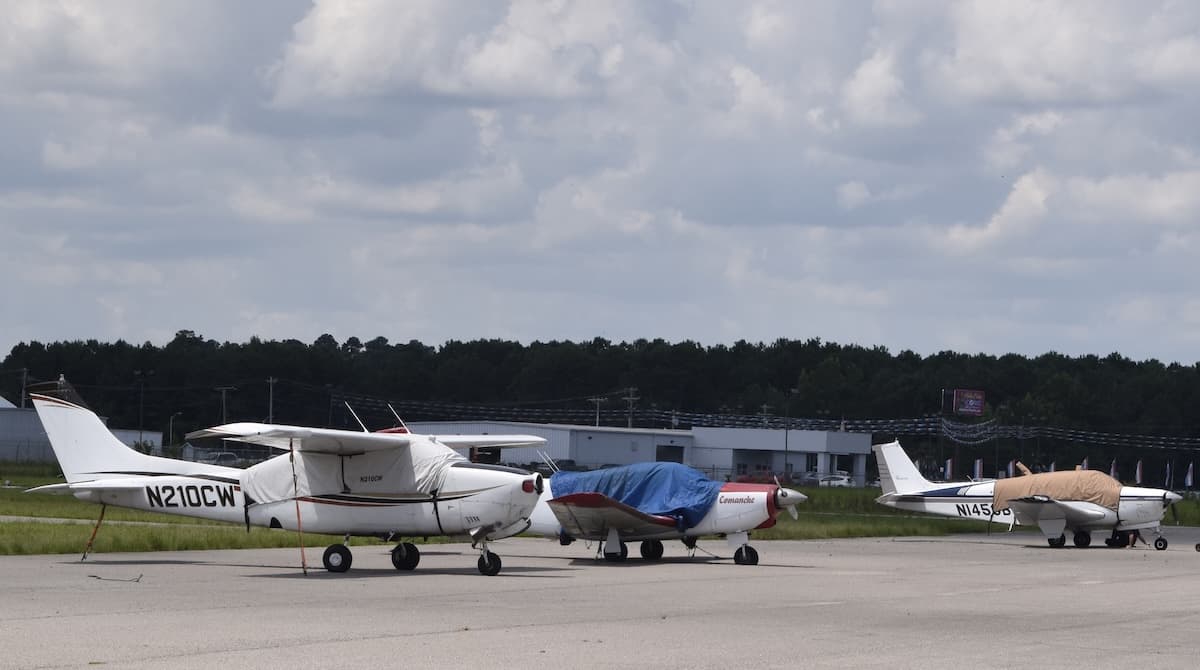
“We counted 11 planes this morning,” Stephenson said. “I have four in my hangar alone and one outside, plus several tie-downs. That’s more than double the planes the county says we have here.”
Retired anesthesiologist Dr. George Hernandez has used the airport for 25 years. He began in 2001 with a tie-down spot and in 2018 built an 80-foot x 40-foot hangar worth approximately $250,000.
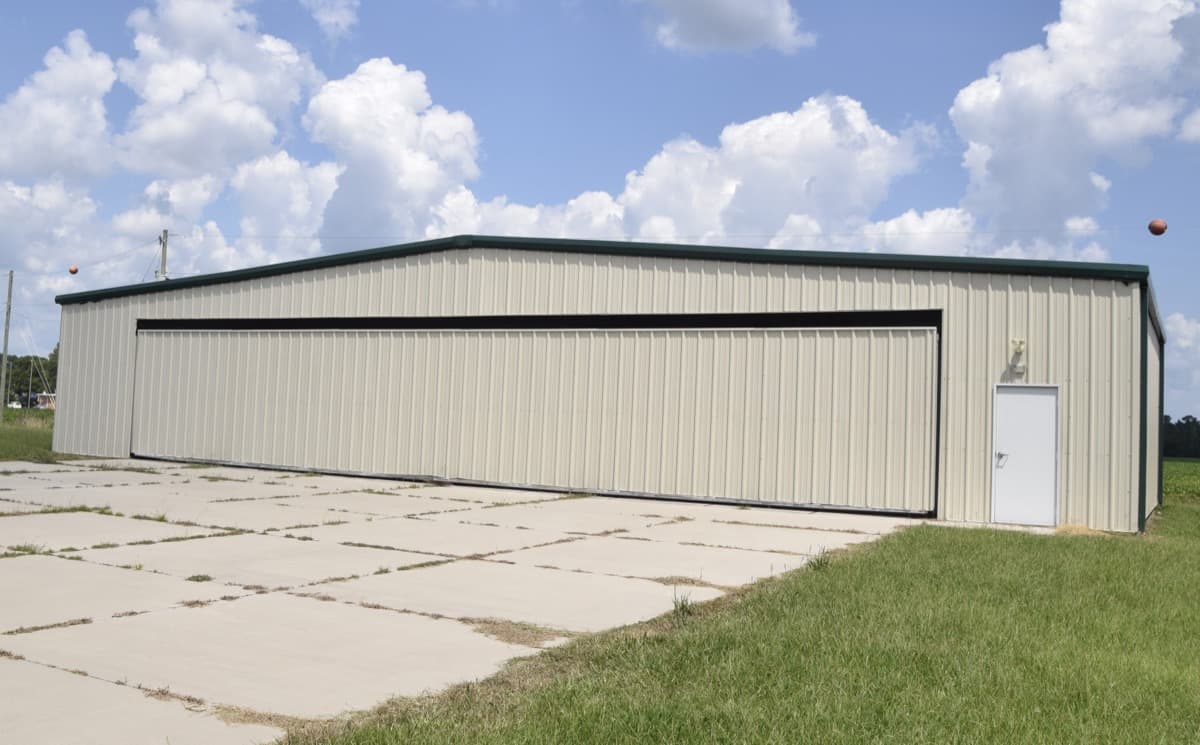
“In all the years I have been here as a pilot, no one from the Airport Commission ever spoke to me about anything concerning my aircraft,” said Hernandez, who flies a Sling 2 Light-Sport Aircraft. “Then I received this closure letter. Removing the runway will make our hangars worthless. I would probably have to give up flying, which I enjoy tremendously.”

Hernandez added he had come to accept what he called the long-time neglect of the airport by the county.
“This is a very nice small airport away from the coast and you can imagine what it would be like if they had fuel and an FBO,” he said. “But they haven’t done anything to improve the place and haven’t improved the runway in a long time.”
“Follow the money on what the county has done to support each of the three airports and you will see that 5J9 has literally been systematically starved of financial support for decades,” Stephenson added.
A check of the State Aeronautics Commission grant database shows no grant made to the airport in 41 years. The two grants listed were $21,232.03 (plus $21,232.03 local funds) in support of a 700-foot runway extension in 1983. In 1985 the commission matched local funding of $15,145.40 for rehabilitation of the runway by routing and sealing cracks. The combined state and local project total for the airport from 1980 to 2026 was $72,754.86.
By contrast, KHYW received 15 grants from 1980 to 2024 totaling approximately $13.4 million, while KCRE received 19 grants from the Aeronautics Commission with matching federal and local funds totaling approximately $22 million over the same time period.
“The lack of grants represents a stunning and calculated failure to invest in this airport over the years,” Stephenson said. “Can’t the county see the economic benefit of having a good, small inland airport in Loris? They need to be equitably serving all three general aviation airports in the county and they have not done that. We need all three airports.”
Concerning the large difference in financial support for 5J9 versus the other two Horry County general aviation airports, Aeronautics Commission Director Gary Siegfried said he would caution against drawing any conclusions based solely on the number or dollar value of grants reflected in the commission’s capital grant database.
“The commission’s role is to partner with airport sponsors by providing funding for eligible projects that are identified and advanced by the local airport owner,” he explained. “We do not determine which capital improvement projects are undertaken at an airport, nor can we fund projects that are not proposed by the airport sponsor. It’s also important to recognize that the capital grant database does not capture every form of assistance the commission provides. In addition to administering capital improvement grants, we offer technical assistance and statewide programs that support airport maintenance and operations. For example, Horry County participated in the commission’s statewide vegetation management contract, through which approximately $15,000 in vegetation management services were provided at Twin City Airport from 2021 to present. While that work would not appear as a capital improvement grant, it nevertheless represents a level of support for the airport by Horry County.”
Horry County Assistant Airport director Ryan Betcher was asked about the imbalance of financial support for 5J9 versus Grand Strand and Conway.
In a written response, he noted: “Because the grant history you’re referencing spans more than 40 years and much of it predates the current airport administration, we’re not in a position to speculate as to why certain grant opportunities may or may not have been pursued during that time. Generally speaking, capital grant funding is driven by an airport’s operational activity, infrastructure needs, and the projects necessary to support those operations. Airports such as Grand Strand Airport and Conway-Horry County Airport have historically experienced higher levels of aviation activity and demand, resulting in greater capital investment over the years.”
The most annoying day-to-day issues for pilots and users of 5J9 are the lack of a restroom on the field, no public place to shelter from the weather, and no fuel.
When queried on those issues Betcher wrote, “Twin City Airport has historically served a much smaller aviation population and never generated the level of activity needed to justify the type of facilities found at Grand Strand Airport or Conway-Horry County Airport. In addition, the airport has limited county-owned property available to accommodate aviation support facilities such as an FBO or fuel farm. As activity continued to decline and the airport ultimately lost federal funding eligibility in 2021, investing additional public funds into those types of improvements was not considered a responsible use of airport system resources.”
Betcher was asked why the number of aircraft on the field appeared to meet the FAA minimum, despite Airport Department claims to the contrary. This claimed deficiency was cited as one of the reasons the airport lost its federal funding privileges five years ago.
“It’s important to distinguish between based aircraft and through-the-fence aircraft,” he said. “A based aircraft is one that is physically stored on airport property and is counted by the FAA for planning and federal funding purposes. Aircraft that are stored on adjacent private property and access the runway through private agreements, commonly referred to as through-the-fence aircraft, may use the airport regularly but are not included in the FAA’s based aircraft count because they are not based on airport property. The FAA’s current Terminal Area Forecast identifies four based aircraft at Twin City Airport. The airport no longer met the FAA’s minimum criteria for inclusion in the National Plan of Integrated Airport Systems (NPIAS), including maintaining at least 10 based aircraft, which resulted in the airport losing eligibility for federal Airport Improvement Program funding in 2021.”
There is no fence surrounding the airfield or separating the hangars from the nearby tie-down apron, but the hangars are still characterized as being on the other side of a through-the-fence operation. The aircraft in the hangars were counted for decades by the FAA until they suddenly were not, according to Stephenson.
Betcher also was asked about complaints that no one in the Department of Airports had made any sort of outreach to the pilots and owners in the last quarter century. They complained that they had been ignored and not consulted in any way about suggestions to get the airport out of its condemned status. They also complained that airport business in Horry County is conducted in secret and in violation of state law.
“Horry County Department of Airports operates as a department of Horry County government, and decisions involving county-owned airports are made through the county’s public process,” Betcher replied. “Matters requiring approval are presented to the Horry County Infrastructure and Regulation Committee and ultimately to Horry County Council during publicly noticed meetings that are open to the public.”
When asked about future development of the potential closed airport site, he noted that the county has no current plans to sell or redevelop the property.
“Should the airport ultimately close, the property is expected to remain vacant while the county evaluates its long-term future use,” he said. “Any future proposal involving the property would be subject to Horry County’s public review and approval process, including consideration by County Council during publicly noticed meetings. Any suggestion that the county has predetermined plans for residential development is simply inaccurate.”
Flight school owner John Stephenson claims the lack of transparency is concerning.
“The evidence points to a series of decisions that have financially starved and economically suffocated 5J9 for decades,” he said. “ It’s difficult to not think they simply want this airport to die. Is there an official anywhere in airport administration in the civilized world who would not readily admit that a restroom at a public airport is a basic requirement? I hope the Loris community and all the people who value small airports will speak up and remind the Horry County Department of Airports their responsibility to our airport is to support its growth and success.”

“We are a small airport, but we are vital to general aviation and proud of it,” he continued. “This airport deserves to live and there are several hundred people who are going to work to see that it does. It will be a tragedy if 5J9 is shut down using factually inaccurate information.”
For more information: HorryCountysc.gov/Departments/Airports, AttitudeAviators.com
I got my instrument rating flying out of 5J9 an have done many tailwheel and multi training flights out of there since. This airport is an important piece of training student pilots in the area and would be a shame if it was lost to us. We need to keep 5J9 or else we will continue to eliminate good training options for the next generation of pilots.
While giving flight reviews and IPC’s I frequently use 5J9. It is an asset to both the local and general aviation communities. It is also an asset for emergencies that might require “fixed wing” or helicopter use for medical or weather related evacuations. The county should be looking into upgrading 5J9 to meet FAA standards instead of closing it.
When doing my biannual flight review, my instructor uses this Airport to do engine out emergency and IFR procedures training. There’s no way given the high activity of the other airports in the area to be able to do this with the degree of safety this Airport provides.
It’s a shame how the county airport administration has neglected this airport and then is surprised that it’s not thriving like the other’s in the area. 
Just the benefit of emergency helicopter evacuations alone provides tremendous value.
Absolute shame if closed. 
I frequently use this airport for flight training with my students, operating out of KMYR. Its 60-foot-wide runway is particularly well-suited for students who are developing centerline control skills—the added margin reinforces good technique without sacrificing precision. Beyond its training value, this airport also serves an important safety function. Having more airports available in the area increases the number of viable options for an emergency landing, rather than being forced to put an aircraft down in a field, on a street, or elsewhere unplanned. It also provides a place to land and wait out a pop-up storm when conditions require it.
That is absolutely a bad decision. The Airport in Manning, KMNI has received numerous dollars for repaving that was not even necessary. Look further into this before you close it. I land there sometimes and like the atmosphere. Please DON’T CLOSE THIS AIRPORT
This is a crying shame for our county. Im licensed pilot an when i was activly flying Twin City was the best in county for smaller panes. i still own hanger and enjoy waching an keeping up with pilots landing here. No one understands safty net for pilots flying in to other local airports on coast that cant land there because of weather. i spend lot time just talking to people from all over the country that land here waiting for weather clear on coast. Shame on those set on closing a Great asset for our county an community. 1 life save3d isa worth more than all the funds discussed!!!!! Mickey V Greene Sr
A common problem with municipality-owned airports. It becomes a cost center and liability in the eyes of bureaucrats. They fail to understand that airports need to be run like a business (because they are), with people in place who understand the aviation industry and have a business mindset for recognizing opportunity and growth potential. No government is capable of that.
I am an instructor and received my multi-engine instructor rating at 5J9. It is a great airport for teaching students both VFR and IFR skills. It sits back from the coast so it provides a secure environment with less traffic so students can learn and hone their skills. If the airport is closed, a great flight school and maintenance facility would be lost. The flight school is used by people all over the country. It would be a tremendous loss to the aviation community locally and country-wide.
I trained here in a 310 to get my multi rating. What a great airport. I can’t believe they would close such a treasured asset.
I flew into Loris from Norfolk in 1978 to visit my sister and her husband who worked in a manufacturing plant. They made zippers if I recall. The airport was nice the people were friendly and we had a good time there. Sad to see this.
I began pursuing my dream to fly 20 + years ago. I knew I could not afford the Cessna or other general aviation aircraft but after researching I realized I could get a Light Sport Trike. I spent hours trying to find a certified flight instructor in the weight shift category and it seemed like it wasn’t going to happen but I finally found an instructor in Dunn NC with his own back yard runway. After I got my solo endorsement I would trailer my trike to 5j9, set-up and practice my takeoffs, landing and other maneuvers and radio procedures. This small airport was perfect for training. Upon getting my Pilots license I researched on getting a hanger. I went to Horry County in Conway where I was told “we would put me on the list.” ( I maybe still on that list. lol) Tried Grand Strand where I was told point blank that they don’t want “ultralights on the field” even though my plane is Light Sport, N Numbered and has all the airworthy paperwork. After multiple phone calls and months of trying, even putting out flyers trying to get someone to share hanger space, I gave up and figured I was out of luck. I would trailer my plane to 5j9 on Fridays after work, Set up and fly for a couple hours then tie down overnight and fly again the following morning. Getting two flights per set up.
Dr. John Jordan and Sam Sarvis would see me doing this in sub 30 temps and in the summer heat with no shade available. Sam Sarvis AP on the field would do my yearly inspections until I got my repairman’s license. Finally, Dr. John five years ago offered me a spot in one of his hangers and I have been there ever since. Taking my plane out and flying every chance I get.
What I never understood is why the Horry county never invested in Twin Cities Airport. They could of put up hangers for both GA and ultra light pilots. Every month I’m asked if there is hanger space available there. A restroom would of been a nice addition too. By investing in the airport facilities, the airport could attract flying clubs, young aviators, ultralight groups and paragliders. No body wants to be flying into an airport at 30mph when a Lear jet is coming and that’s why 5j9 is perfect for small planes, learning, practice and reviewing pilotage. If it goes away, I will be forced to give up my wings. Please save it.
Small town politics + the pressure to develop: Sadly, a chronic combination that is tough to overcome, even if it’s a NPIAS airstrip.
I did my spin training to become a CFI at this airport back in 2021. Such a great little airport that isn’t crazy with traffic like so many others. I hope they reconsider as it would be a shame to lose this one.
As a local flight school that has trained hundreds of pilots in Horry County, Falcon Flight Academy believes Twin City Airport (5J9) is an invaluable community asset and deserves every opportunity to remain open.
General aviation airports are much more than a runway. They support flight training, emergency response, business aviation, aircraft maintenance, disaster relief, and economic development. Once an airport is closed, it is almost never replaced.
From a training standpoint, 5J9 fills a role that cannot simply be replaced by nearby airports. Student pilots need an environment where they can safely develop their skills without the congestion and complexity of larger airports. While airports like Myrtle Beach International and Grand Strand are excellent facilities, they serve very different missions. Twin City provides an ideal setting for repetitive takeoffs and landings, emergency procedures, and confidence-building exercises while reducing workload on both students and instructors. That ultimately produces safer, better-trained pilots.
The airport also provides an important operational alternative when weather, maintenance, traffic, or other circumstances affect surrounding airports. Having multiple airports available strengthens the resiliency of our local aviation infrastructure and improves safety for everyone who flies in our region.
We recognize the County’s responsibility to carefully manage public resources, and we appreciate the difficult decisions that come with that responsibility. However, before considering the permanent closure of a public-use airport, we believe every reasonable alternative should be explored. Public-private partnerships, increased aviation activity, business development, infrastructure improvements, and long-term strategic planning all deserve serious consideration.
General aviation contributes far more to our community than many people realize. It creates skilled jobs, supports local businesses, provides access for emergency services, attracts investment, and inspires future pilots, mechanics, engineers, and aviation professionals. Those long-term benefits cannot always be measured by yearly operating costs or aircraft counts alone.
We encourage county leaders, airport users, local businesses, and the aviation community to work together in an open and transparent process to determine whether there is a sustainable future for 5J9. Decisions involving public infrastructure of this significance should involve the entire community and consider not only today’s challenges, but the opportunities this airport can provide for future generations.
Falcon Flight Academy remains committed to supporting aviation in Horry County and hopes to be part of the conversation about preserving this important resource.
— Falcon Flight Academy
North Myrtle Beach, South Carolina
We were just looking at Loris as someplace to retire in a couple of years and having an airport was one of the reasons we looked at Loris! It would be a shame to lose such a valuable asset in the community!
Closing this airport would be a huge loss for the community and aviation in general. I’ve done recurrent multi training there. It is much more convenient than the larger busier airports. I also wonder whether this would be an unconstitutional taking…the hangar owners would basically have worthless sheds without an airport. Someone should look into the legalities of that.
It does not make sense to destroy a facility for the public good that costs very little to keep open. Horry county has made no effort toward addressing its value. There are ways to address and solve any issue that block use of federal money there. People forget the importance of an asset like 5j9 until an emergency arises and their loved one needs to be flown out for special services.
Thank you for publishing this important story. Not sure if it’s just me, but there appears to be a problem with comments posting on the article. Is there anything I need to do to correct this?
I did my multi training at this airport and have flown in here many times. As an instructor, I think it’s a great place for students to learn to land. It’s unfortunate that the county has decided to close this small airport. With the loss of Dillon airport, also in South Carolina, seems like South Carolina might not be so general aviation friendly anymore.
Don’t close it! Small general aviation airports are what make avaition so great in this country!
I trained here for much of my twin training. Sad to hear the news of the potential closing. It will be a devastating loss for the general aviation community, not only for those who are based there but also for those who train there from out of town. Sounds very much like the county neglected this space for many many years. I sincerely hope it does not close. Can’t stand that the only option along the coast is North Myrtle or Myrtle Beach. Very unfriendly service of those two airports. Obvious it’s a business and not a place that loves general aviation except for Jets and turbo props.
5J9 is a vital part of the aviation industry for Horry County. The County, State and FAA have severely underinvested in this airport for too long, lacking an FBO, restroom facility or fuel! Should these entities decide to invest in the airport, it would thrive! Not to mention should the county decide to build hangars, they are low maintenance, revenue generating assets that would have what I assume to be a waiting list like at other Horry county and surrounding area airports. “Build it and they will come.” The “through the fence” metric for counting aircraft based here is unfair and, in my opinion, a sly attempt at skewing numbers to close the airport for what I assume is probably a back door, kickback, word of mouth deal to build a housing development.
I’ve personally benefitted from this airport and the folks that utilize it! I got two ratings here toward being a commercial pilot, both of which helped me become a Captain at United Airlines. The idea of losing airfields like this one is disdainful. Not to mention that each time you remove a viable airport, you take away an option for a safe landing when aircraft find themselves in need of a safe place to land. The rise of airplanes landing on the street and in people’s back yards is directly correlated to the disappearance of airfields.
I’ve used this airport a couple times and its always on my list as a safe place to go if the weather changes or I have an emergency. Ive used both when training, and jist flying ip and down the coast from Charleston area. Lots of little fields like thus that dot this country help keep aviation safe.
Horry county has forgotten that the purpose of a county owned airport isn’t to directly make them direct cash flow. It is a public asset, for the good of the community. No difference really than any county owned road or bridge. For the past 100 years most every small to midsized town has fought to have an airport. It helps to attract business and people to locate to and contribute to their community. Just like the roads and bridges that lead to town, the airport is apart of the towns transportation infrastructure. Shame on our county for being to myopic and greedy.
I’m a long time resident of Loris airport and very experienced (old) flight instructor. I’ve probably trained upward of 1000 students out of Loris airport. Everything from private pilot’s to multi and tailwheel and flight instructors. This year alone I’ve completed 2 initial flight instructors along with a dozen or so tailwheel and spin endorsements! Many many if my former students are professional pilots today. Military, airlines and corporate. All races, both sexes, all welcome.
Mr Walker, did the airport commission comment on using an 8 year old study for their current decision to close the airport? I ask because I’ve read that report, and most of the concerns could be addressed with just a couple small changes. I wonder why that wasn’t done.
Mr. Stephenson, the Horry Department of Airports did not specifically cite the 2018 study as the reason for closing the airport. The Department wrote that the primary reason for closure was the expense of maintaining the airport and the cost of maintaining the airport’s aging runway and airfield infrastructure. The S.C. Aeronautics Commission acknowledged the study and the fact that closure was one of the possibilities mentioned in the study. The low number of aircraft counted on the field by the FAA came from a separate five-year-old report cited by the county as the reason for a loss of federal funds. The report apparently excluded all the aircraft in hangars at 5J9, labeling them as a through the fence arrangement, and apparently making the aircraft ineligible to count toward the required minimum of 10 aircraft on the field. Not meeting that minimum was one of the deficiencies cited for losing federal funds. In previous decades the planes had counted, according to longtime airport A&P IA Sammy Sarvis. He said at one time he was responsible for assisting with the count, but not in 2021. The best place to get a more precise answer on what role the eight-year-old study played in the closure announcement is the Horry County Department of Airports.
What about money from the aviation trust fund on fuel that was used at MYR to support airlines? How did that happen?
That money was for general aviation and airport improvement. What is in that fund why can’t it be used at the Loris Twin City airport?
Mr Smith, this is news to me. Where can we get additional information? Thanks, John