

The pilot departed with full fuel tanks, which should have provided about 3.5 hours of endurance. While en route, he noted the fuel levels in the two fuel tanks were uneven and were draining faster than expected and that the left fuel gauge appeared lower than the right gauge.
The pilot told investigators he had difficulty monitoring the Luscombe 8’s fuel levels because he perceived the fuel gauges to be inaccurate and the needles were bouncing.
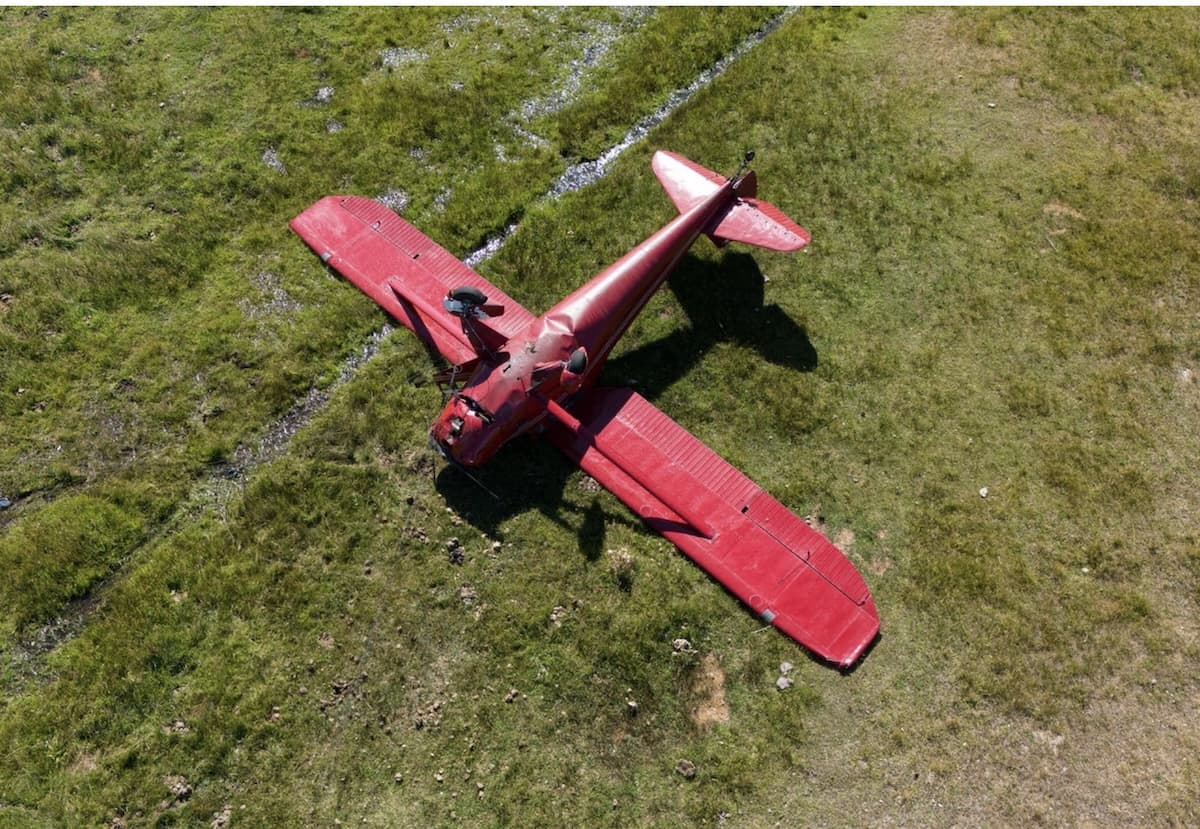
As the airplane approached the destination airport at the conclusion of the 2.5-hour flight, the engine suffered a total loss of power. The pilot performed a forced landing in a field near Bend, Oregon. During the forced landing, the airplane hit a fence and came to rest inverted, sustaining substantial damage to the fuselage and empennage.
Post-accident photos revealed the lower cabin insulation was fuel soaked, and fuel staining was observed beneath the left fuel valve.
The pilot told investigators that both fuel tanks were empty after he hit the ground. When fuel was fed into the airplane’s left fuel line after the accident, the left fuel valve began to leak from around the valve shaft.
Based on the available information, it is likely that the airplane lost an unknown quantity of fuel due to a leak in the left fuel valve, which resulted in fuel exhaustion and a total loss of engine power.
Probable Cause: A failure of the left fuel valve, which resulted in fuel exhaustion and a total loss of engine power.
To download the final report. Click here. This will trigger a PDF download to your device.
This August 2024 accident report is provided by the National Transportation Safety Board. Published as an educational tool, it is intended to help pilots learn from the misfortunes of others.
That doesn’t sound like the kind of failure that “Just now happened”. It sounds like a slow and months-long problem.
Hard to belive the pilot didn;t smell that much fuel soaked insulation.