

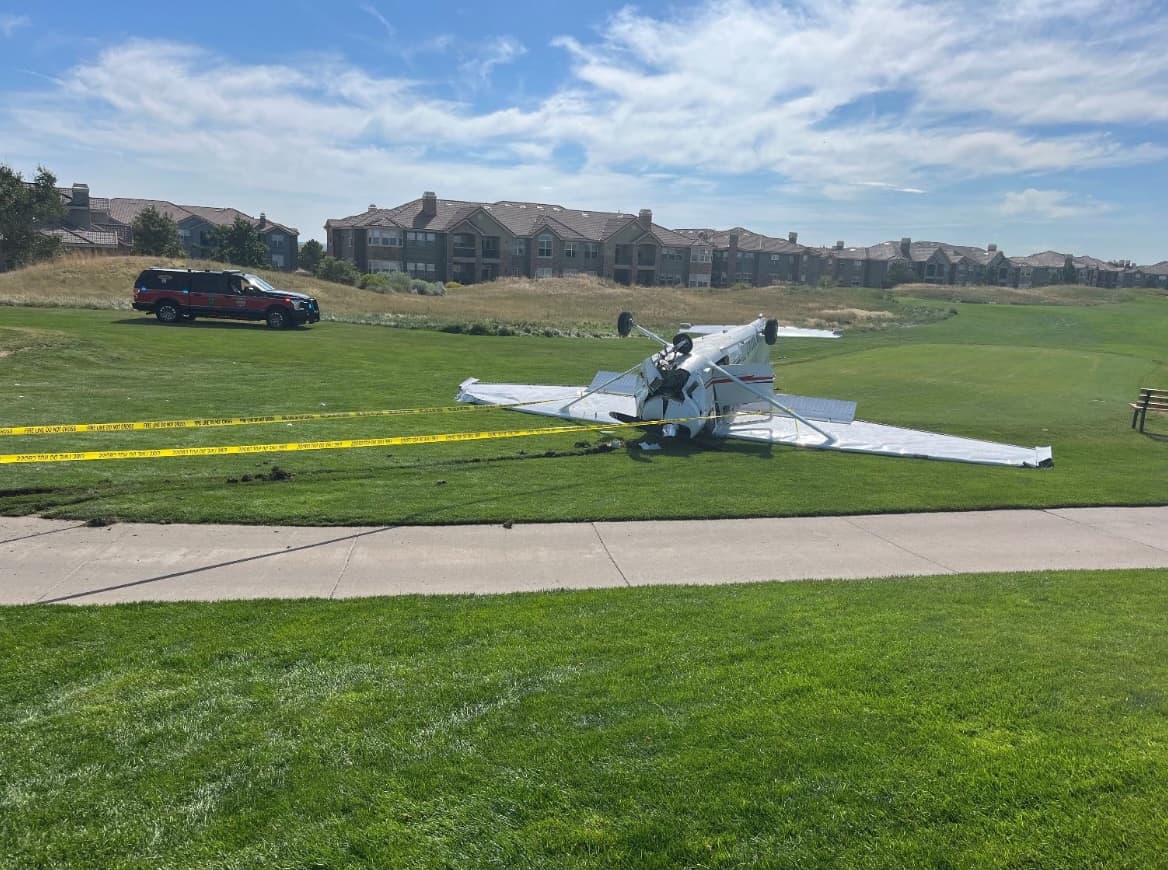
The flight instructor and student were performing touch-and-go landings on Runway 17R at Centennial Airport (KAPA) in Englewood, Colorado. On climbout for the traffic pattern, when the Cessna 172S was about 200 feet AGL, they noticed a partial loss of engine power.
The CFI, who reported the tachometer read 2,100 and then 1,600 rpm, performed a forced landing on a golf course. During the landing roll, the nose landing gear collapsed and the airplane came to rest inverted.
The flight instructor was not injured, while the student pilot sustained minor injuries.
A review of maintenance logbook entries found that on Sept. 5, 2024, about a week before the accident, another pilot reported that the airplane “was only getting 2,000 rpm at max power and was backfiring constantly in the run-up.”
However, maintenance personnel found that the engine operated satisfactorily during a subsequent ground run-up. The airplane was then flown daily without any reported engine problems until the accident takeoff.
A post-impact examination of the engine revealed no evidence of any pre-impact mechanical malfunctions or failures that would have precluded normal operation.
However, during a bench test of the engine’s fuel injection servo (AVStar part number LFR-NNSS5), fuel flow was below the minimum service limit at most test points. When the servo was disassembled, a thick blue liquid consistent with a fuel-oil mixture was found in the venturi chambers. Oil residue was noted in the hex plug and air diaphragm, the spring and stem assembly, and the air passage to the air diaphragm.
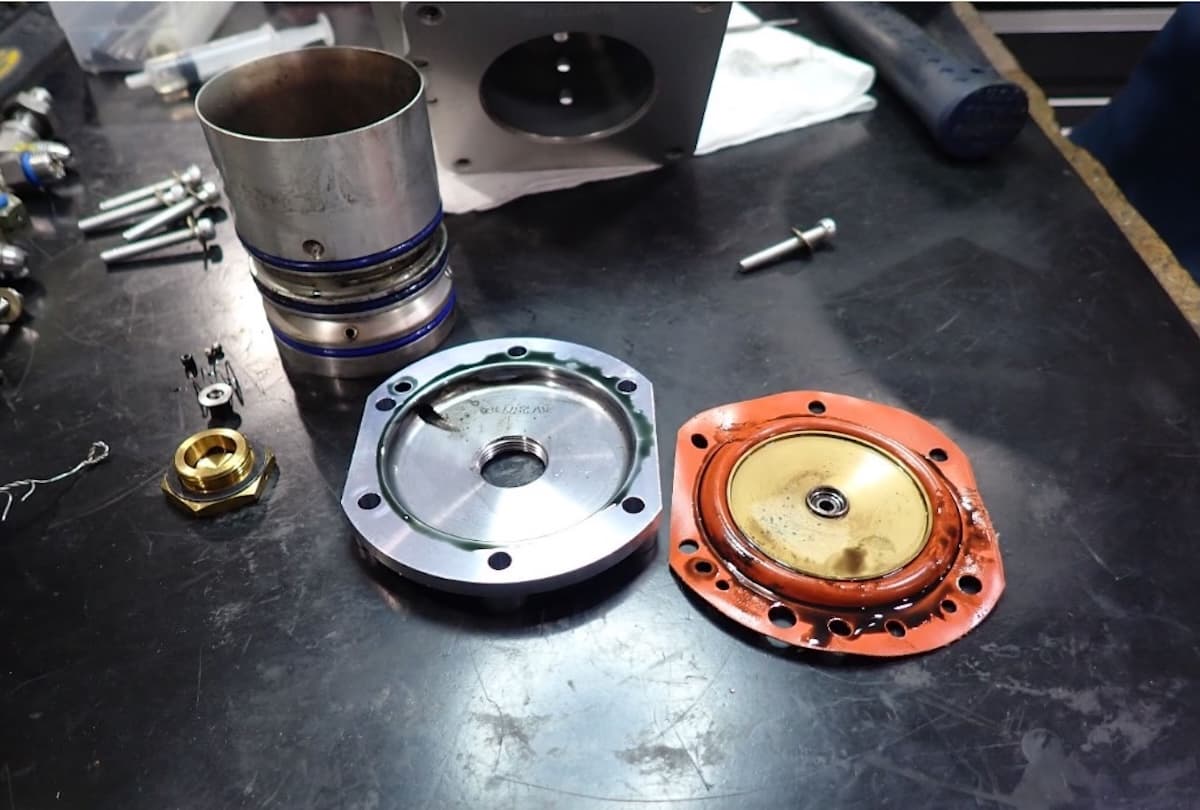
The AVStar LFR-NNSS5 is a variant of the RSA-5AD1 fuel injection servo and was mounted in an updraft configuration on the airplane. AVStar service bulletin AFS-SB10, Fuel Servos Installed in an Updraft Configuration, which is applicable to RSA-5AD1 servos, states: There have been occasional reports of servo-equipped engines that exhibit one or more of the following characteristics — gradually deteriorating idle, difficulty starting and/or cold engine acceleration performance. These engines may have the servo mounted in an updraft or nearly updraft configuration. Close inspection of the servo may reveal oily contaminant in the bore of the servo that is green/blue in color. It is also possible for this contaminant to migrate into the air section of the regulator.
The Precision Airmotive service information letter SIL RS-40, Service Information For RSA-5 Series Fuel Injection Servos Installed in Updraft Configuration, similarly notes reports of reduced engine performance and recommends inspection of fuel injection servos for contamination if these problems are experienced.
The flight school’s maintenance personnel stated they were aware of AVStar AFS-SB10 and Precision Airmotive SIL RS-40 and routinely inspected their airplanes that had any symptoms listed in AFS-SB10.
In addition, they reported that they caution their pilots against over-priming the engine during engine starts.
Probable Cause: A partial loss of engine power due to fuel-oil contamination of the fuel injection servo.
To download the final report. Click here. This will trigger a PDF download to your device.
This September 2024 accident report is provided by the National Transportation Safety Board. Published as an educational tool, it is intended to help pilots learn from the misfortunes of others.
Check Service Information Letter #40
@David. according to install specs doc. …sounds like oil gets in air chamber flowing down from engine. makes sense since this updraft assembly. so oil could leak down into it. probably somewhere in the SB it has more detailed info. i couldn’t find it
Very interesting, being a mechanic, when reading these reports i seldom see what the actual root cause is. I wonder how the fuel got contaminated with oil, where did it come from ? how did it get into the servo ? if i remember right it’s a derated 540 with the induction path through the oil sump (a channel that is separate from the oil, or at least supposed to be) could the sump been compromised in some way ?
RSA service info letter #RS 40 addresses this problem.
https://precisionairmotive.com/technical-data/
No explanation where the oil comes from…maybe worn intake valve guides.?