

By JACK TERRELL
Terry Alberta remembers what aviation looked like when he was young: A world visible through a fence, but not necessarily open to him.
“When I was growing up, we didn’t have programs like this,” he said. “You were always on the wrong side of the fence and it was intimidating.”
Today, Alberta is one of the volunteer pilots helping young people cross that boundary through STEM Flights. The non-profit organization pairs students with pilots for educational missions, but the flight is only part of its purpose. For kids from families without aviation connections, a volunteer pilot can become a guide into an unfamiliar and closely connected community.
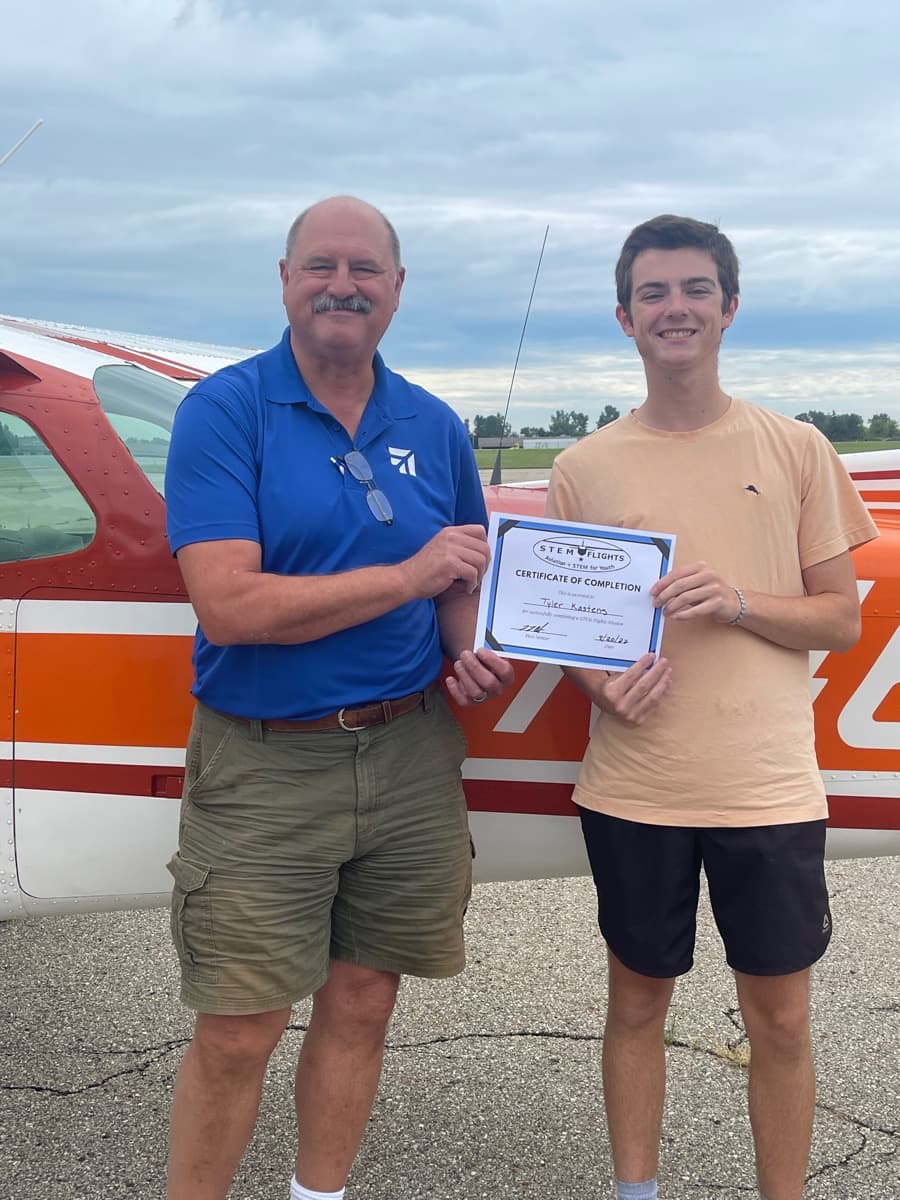
Former students have gone on to pursue a wide range of opportunities in aviation, STEM, and beyond. Some have continued flying, earned pilot certificates, or pursued aviation-related studies and careers. Others have applied the confidence and technical skills they developed through STEM Flights to fields such as engineering, aerospace, and the military.
Several alumni have also gone on to attend highly selective programs, including acceptance to the United States Air Force Academy. Their journeys reflect the lasting impact of hands-on flight experiences and the mentors who encourage students to keep exploring what is possible.
These experiences illustrate the larger story behind the program. A flight can spark a young person’s imagination, but access to people, knowledge, and encouragement can turn that inspiration into a path forward.
Created by Brigadier General (Ret.) Dave Brubaker, STEM Flights has grown into a national organization with more than 600 volunteer pilots flying in almost every state. The non-profit has received more than 2,300 student applications and completed more than 2,000 missions since its inception in 2018.

Students prepare before stepping onto the ramp, according to veteran volunteer pilot Rick Turley, who noted participants complete advance work and obtain a recommendation, giving them more “skin in the game” than they might bring to a typical introductory flight. He notes his STEM Flights missions often last about twice as long as standard discovery flights and include meaningful time at the controls.
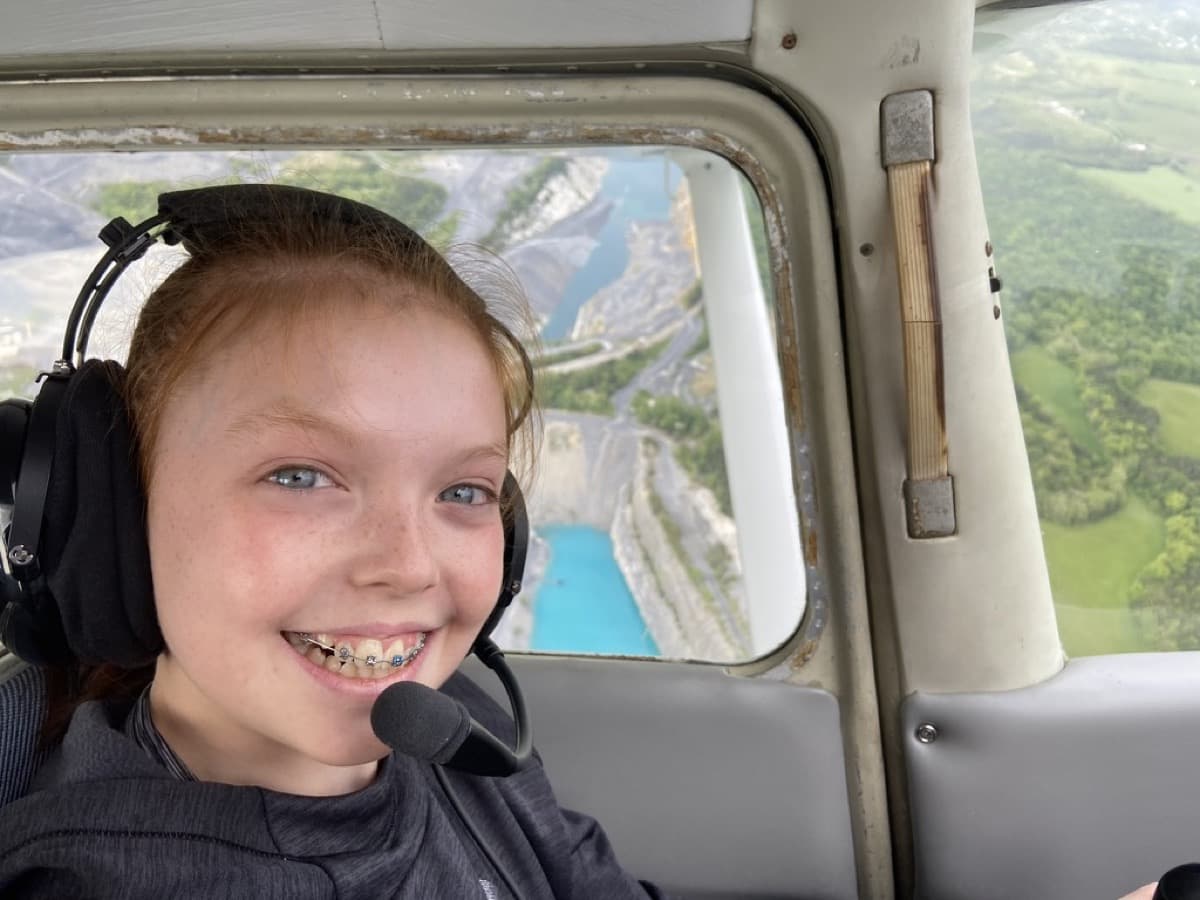
“STEM Flights students, I would argue, are virtually 100% wildly enthusiastic,” Turley said. “It makes it enjoyable as a pilot to share the cockpit with them.”
Although many students arrive interested in becoming pilots, flight experiences can also introduce them to engineering, coding, artificial intelligence, drones, climate science, and other STEM careers. Pilots answer questions, explain possible routes into the field, and help aviation feel more approachable.
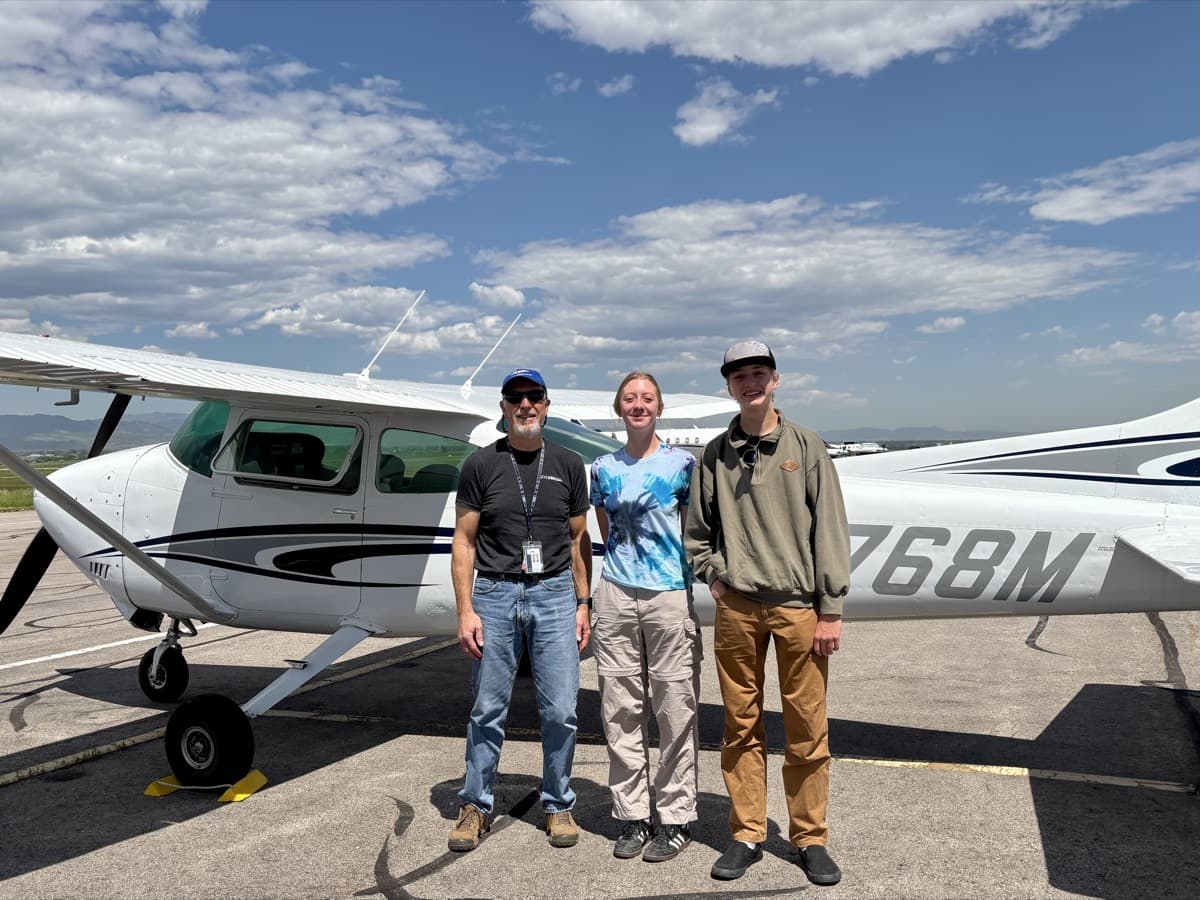
Alberta’s favorite missions are often those involving students who have never flown in a small aircraft.
“As soon as the wheels leave the ground, their eyes are wide,” he said. “It’s a feeling that never gets old.”
The excitement begins in the air, but the program’s potential extends beyond it. One pilot meets one student, questions are answered, and a connection is formed. A career that once seemed distant begins to feel possible. A single flight may last only an afternoon, but the connection it creates can help shape a young person’s future.
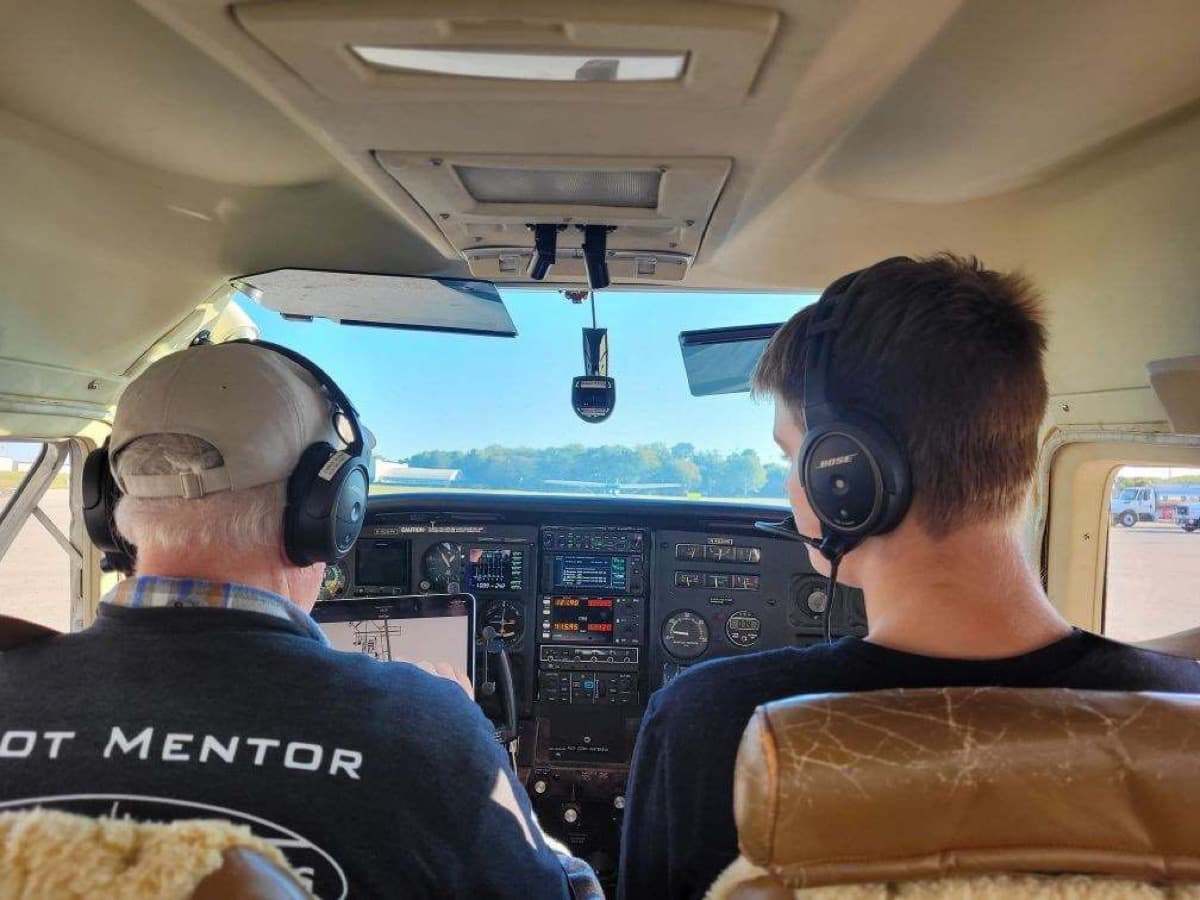
STEM Flights is seeking volunteer pilots willing to share their aircraft, experience, and time, as well as students eager to explore aviation and other STEM careers. Pilots, students and parents can learn more or apply at STEMFights.org.
Leave a Reply