

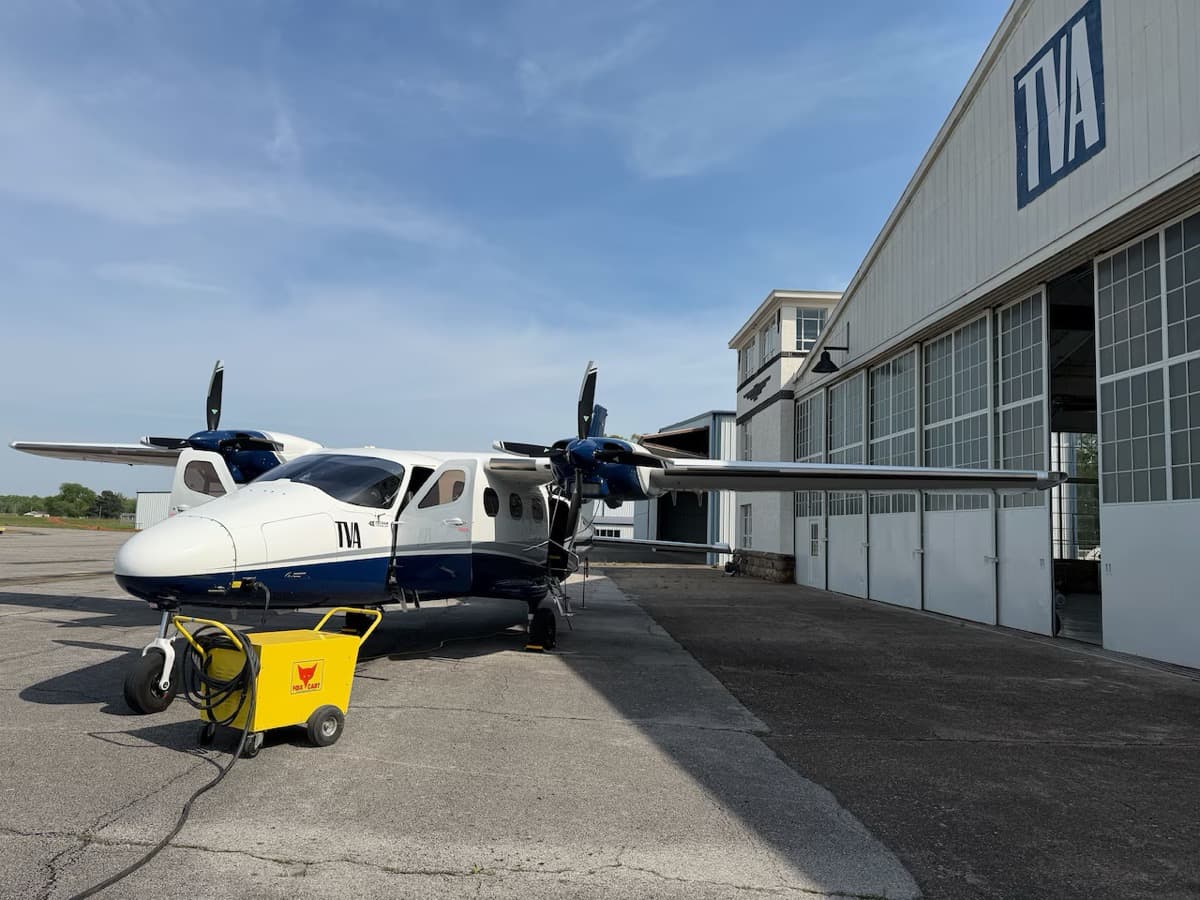
The Tennessee Valley Authority (TVA) is utilizing a Tecnam P2012 Special Mission Platform (SMP) to survey more than 16,000 miles of electrical transmission lines across its service network.
Equipped with a LiDAR laser scanner and four cameras, the twin-engine aircraft surveys more than three acres of land per second, according to TVA officials. The collected sensor data and imagery enable transmission foresters to pinpoint encroaching vegetation and dispatch maintenance personnel directly to affected locations, according to officials.
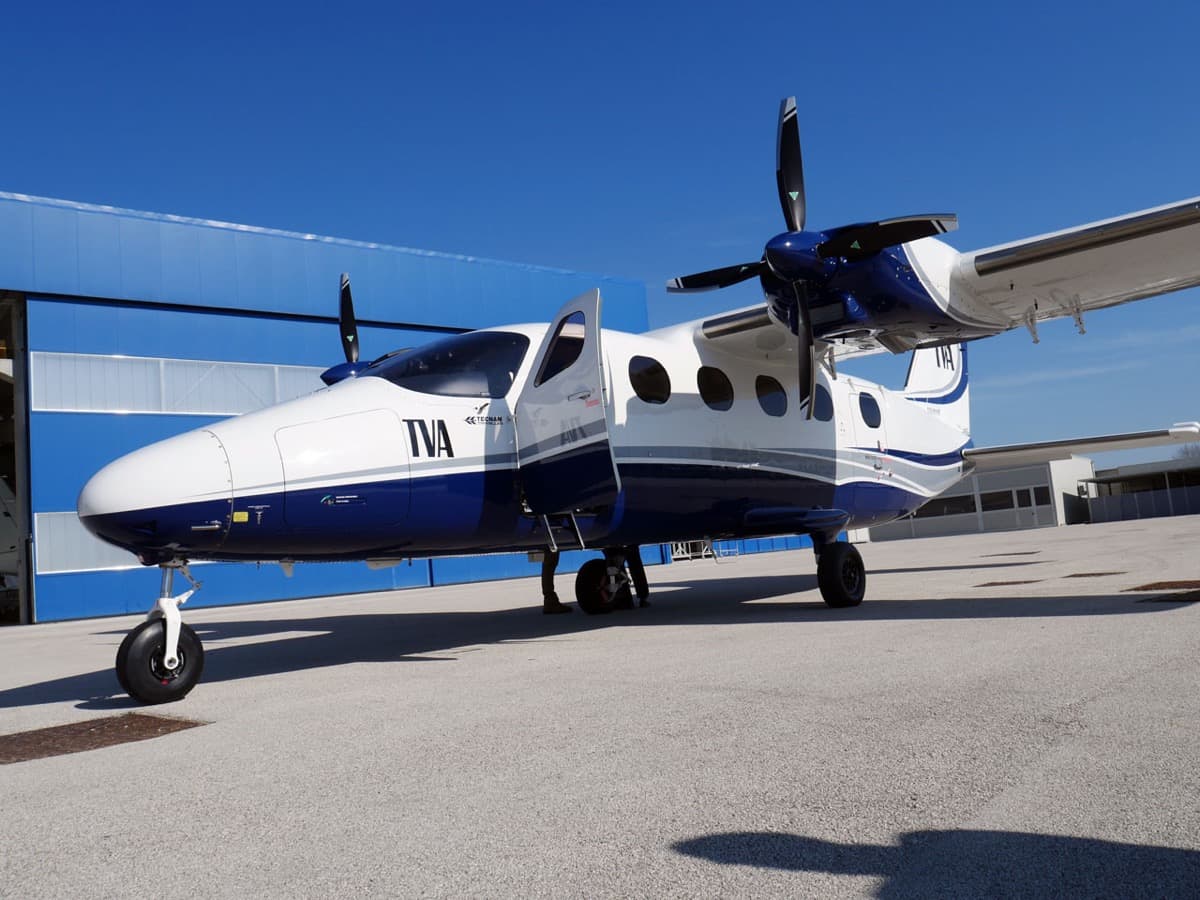
Operating economics prompted the utility to transition from rotorcraft to fixed-wing operations. Helicopter operating expenses were 75% higher than the airplane’s operating costs, according to TVA Aviation Manager Phil Kanagy, who previously conducted the surveys by helicopter.
“We’re able to collect the data much faster than before, much cheaper than before, and at a higher altitude than we were with helicopters,” Kanagy said.
The aerial platform also reduces safety risks for field personnel surveying corridors on foot. Work that previously required months of ground analysis now takes approximately 15 to 20 minutes, according to TVA Transmission Forester Matthew Townsend.
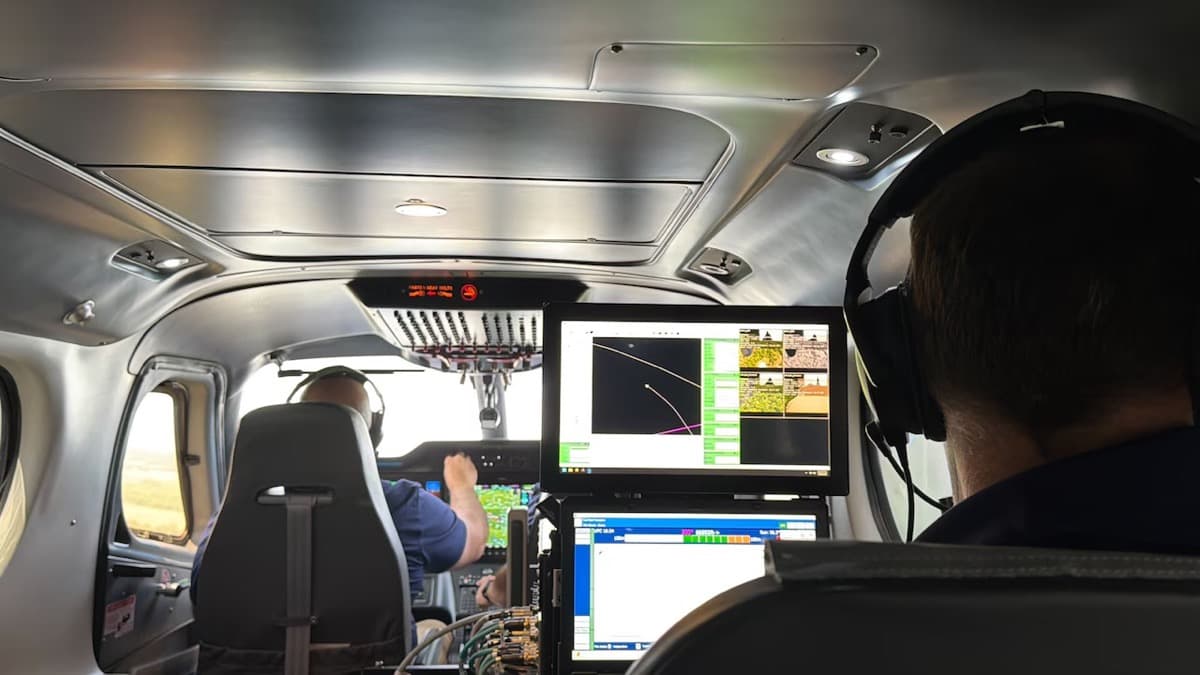
“Saves us a lot of time, a lot of money, and it saves us from any potential heat stress, snake bites, anything like that that could hurt us out in the field,” he said.
The program surveys more than 5,000 miles of critical transmission corridors annually during vegetation management cycles. A two-pilot crew covers approximately 450 miles per day, compared to up to five miles per day managed by ground crews.
Powered by twin Lycoming TEO-540-C1A piston engines, the P2012 SMP consumes approximately 31 gallons of fuel per hour and incorporates dual ventral hatches configured for sensor payloads.
For more information: Tecnam.com, TVA.com
My old flight instructor used to fly an MU-2 for a company and would use it to do pipeline patrol, never would take me with him though. I guess it took alot less time than a 172. He did my instruction for 100 bucks, I worked at the FBO so I got the plane for cost and “may have” borrowed the gas from the truck.
Months of ground analysis down to 15 to 20 minutes is the kind of tech that actually earns its keep. The line about heat stress and snake bites will ring true for anybody who has walked a right-of-way in July. We run a job board for traveling trades workers, and that is the test we try to hold our own tools to: does it save the person in the field time or risk, or is it just a demo. Here is where we put AI to work on a trades job board, and where we keep it out. A two-pilot crew covering 450 miles a day against five on foot is hard to argue with.
From a helicopter to this? WOW! With those tiny cockpit windows, seems a midair collision waiting to happen!