

The adage often attributed to Henry Ford says “Whether you believe you can do a thing or not, you are right.” That spirit may have informed Kansas businessman R. Andrew Rearwin.
Successful at several business efforts, including coal, lumber, and petroleum products in Salina, Kansas, Rearwin was not a pilot and had no background in aircraft manufacturing when he set out to build a better general aviation airplane in 1928.
It was the heady post-Lindbergh wave of air-mindedness in the years just before the stock market crash of 1929 when Rearwin set his sights on aviation as his next accomplishment. As early as 1927, Rearwin and his sons Kenneth and Royce toured aircraft plants in Wichita, fueling the entrepreneurial fire within him.
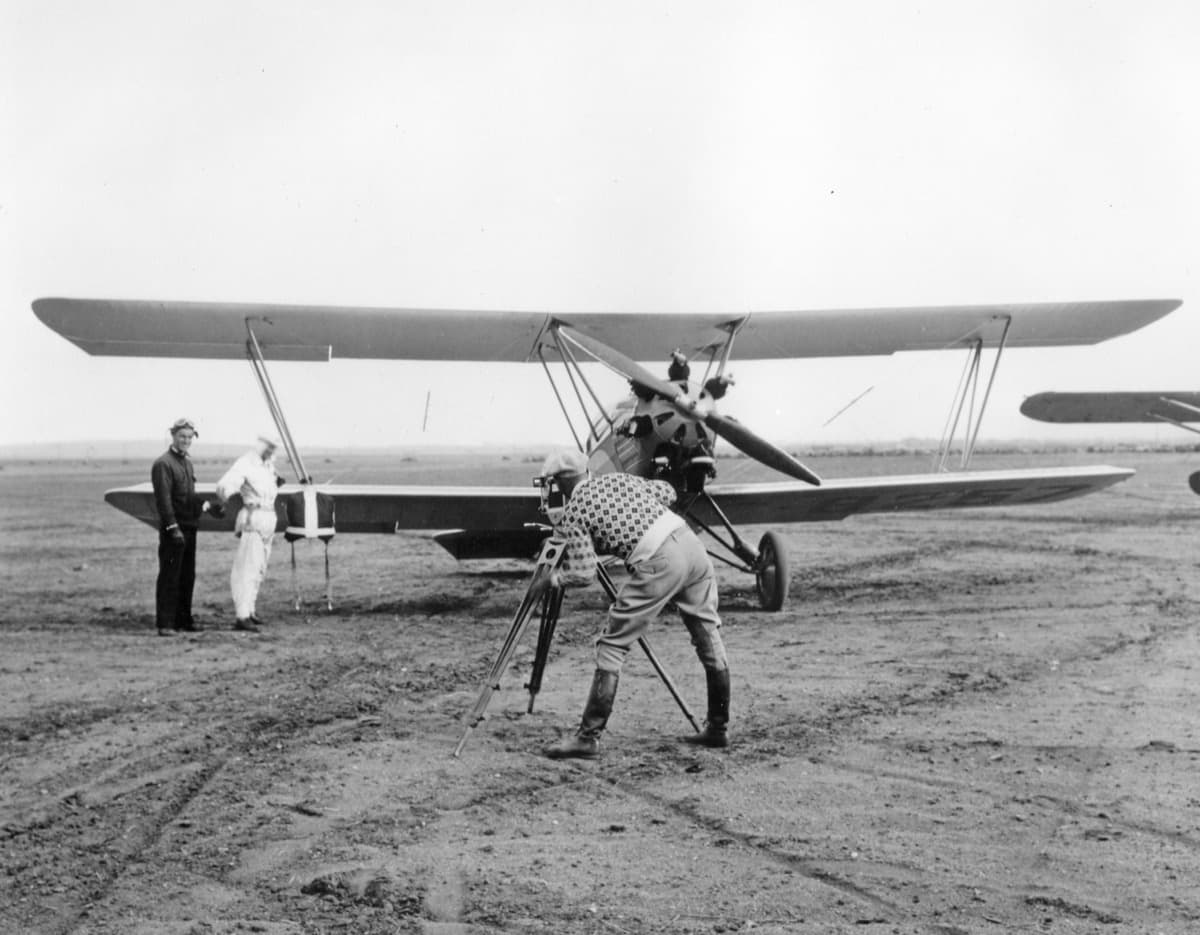
A garage in Salina became the factory for Rearwin’s first airplane, under the supervision of former Travel Air engineer Fred Landgraf, with help from William Guselman and J.J. Clark. It was a traditional-looking open cockpit biplane with room in the front seat for two. Rearwin named the machine after his two sons, Kenneth and Royce, calling it the Ken-Royce Model 2000-C. Rearwin operations soon moved from the converted garage in Salina to a new location on Fairfax Field in Kansas City.
Historian Joseph Juptner says the Ken-Royce 2000-C was expeditiously ready for the Chicago Air Show of December 1928, while others cite its birth as January 1929.
Rearwin embraced the value of publicity for his biplane, and entered the Model 2000-C in the Miami-to-Cleveland Air Derby of 1929. Pilot George Halsey won first in class with the Ken-Royce.
Accounts vary, but somewhere between five and seven Ken-Royce 2000 biplanes were built. The first three Model 2000-C aircraft employed a 170-hp Curtiss Challenger radial engine. Cruising at 110 mph and landing at 45, this Ken-Royce had a cruising range of 500 miles.
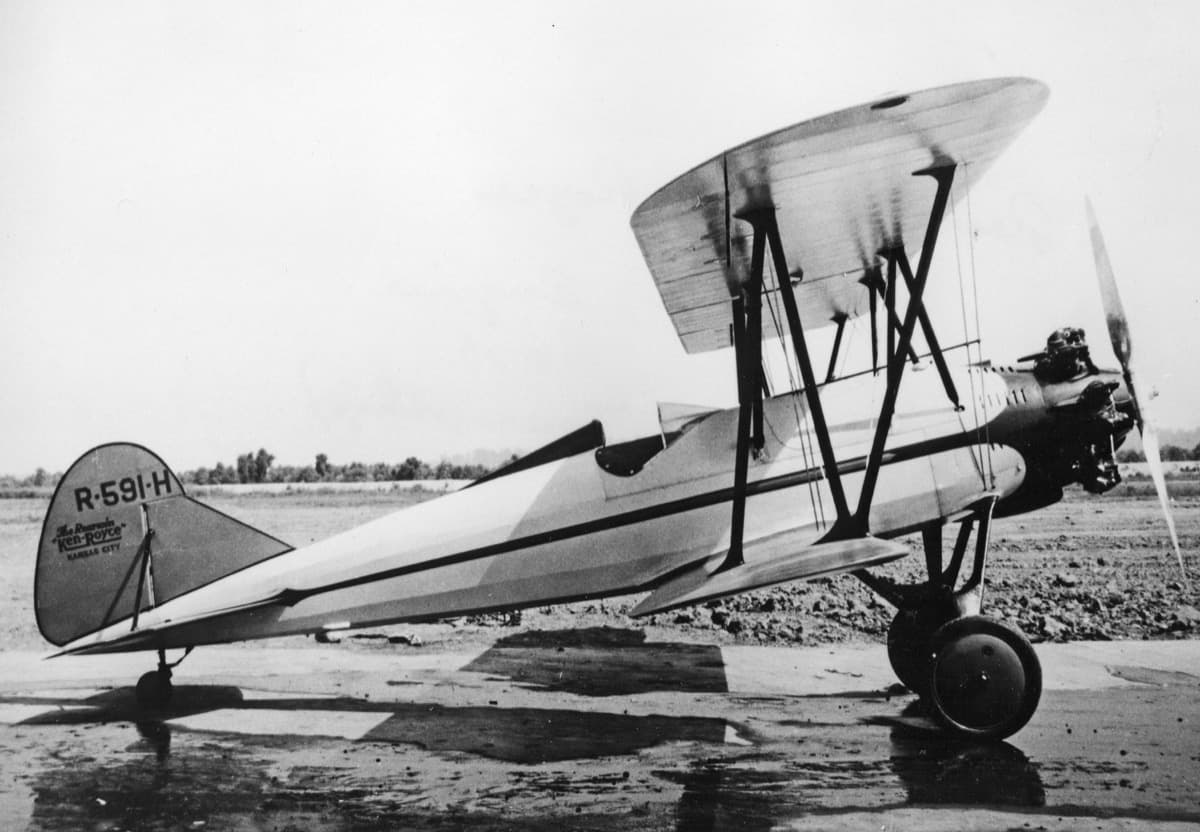
Span was 35 feet for the larger upper wing, length was 25 feet. Empty weight was 1,495 pounds, with a useful load of 885 pounds, including 55 gallons of gasoline. After gas, the payload was 358 pounds.
Welded steel tubing comprised the fuselage, faired and fabric-covered. Wings used laminated spruce spar beams hosting wooden web ribs under fabric covering. Tail surfaces were metal structure, fabric covered. A tailwheel was provided as standard instead of a skid, and Bendix brakes helped slow the landing roll.
Rearwin initially announced the price of the 2000-C at $8,000. Financial woes of 1929 probably contributed to a drop to $6,750.
Rearwin stoically marched into the 1930 Depression year with an improved version of the Ken-Royce biplane, Model 2000-CO. The salient difference was the use of a radial Continental motor producing 165 horsepower. The result was an airplane lighter than the Curtiss-powered models, with virtually the same performance. Perhaps as few as two of the CO-versions were built.
Rearwin felt the pain of Depression budgets that hampered aircraft sales. Even the reduced price tag of $6,750 for the Ken-Royce biplane was about the same as the average price of buying a home in the U.S. that year. Rearwin pivoted to the inexpensive flying flivver concept as a way to sell more airplanes in hard times.
Rearwin’s foray into light flying flivver aircraft came ready-made when he bought the design of a two-seat, high-wing, open-cockpit monoplane from Douglas Webber in 1931.
Rearwin opted to use an engine called the Poyer, a three-cylinder radial producing 40 horsepower, for the second of his flying flivvers, known as the Rearwin Junior, Model 3000. But that engine had growing pains that complicated the schedule. The engine of choice became the Szekely 45.
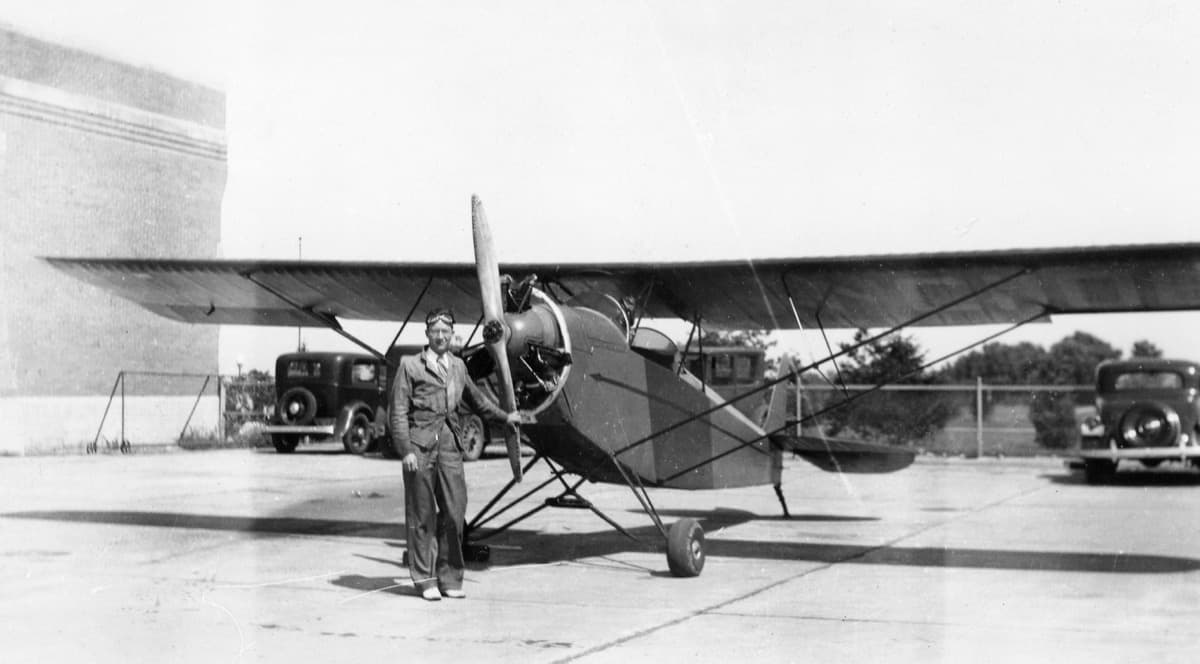
The Rearwin 3000 spanned 36 feet, with a length of just under 22 feet. With a top speed of 85 mph from the little three-cylinder motor, the Rearwin Junior cruised at 75.
Rearwin’s goal was to price the Junior around $1,500 to reach a larger market share. The price actually settled at $1,795, still not bad. Alas, the dwindling Depression-era market for airplanes did not bring Rearwin huge orders for the Junior.
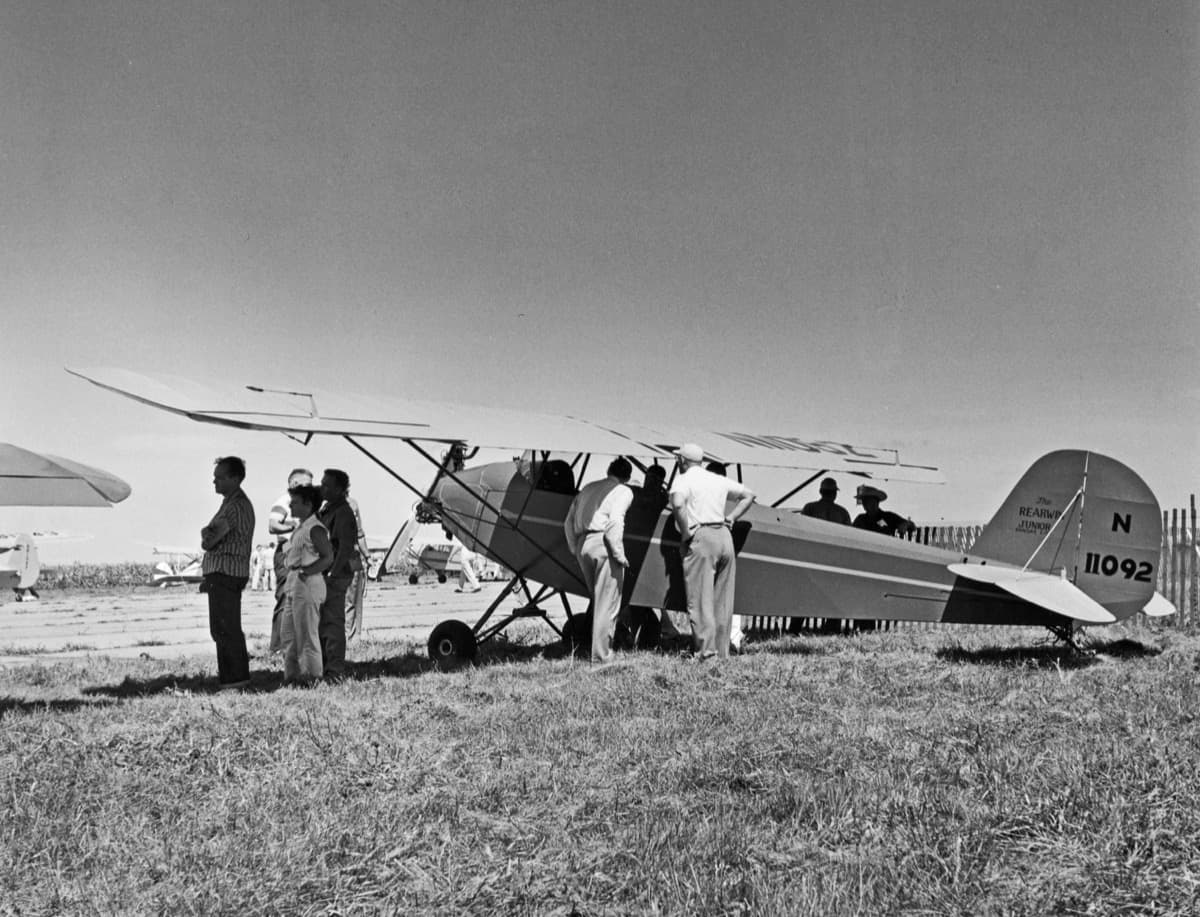
Rearwin’s Junior became the Model 4000 with an Aeromarine AR-3 three-cylinder radial. What followed was the Junior 3100, using an improved Szekely three-cylinder engine of 50 horsepower in 1932. That year, Rearwin suspended production of airplanes that weren’t selling in quantity in the Depression and went on a designing binge for two years.
The first result of Rearwin’s production sabbatical was the Model 7000 Sportster of 1935. A five-cylinder LeBlond radial put out 70 horsepower to give the two-seat tandem Sportster a cruising speed of 100 mph. The Sportster was a conventional-looking high-wing cabin monoplane. It kept up with the general aviation airframe state of the art in a workmanlike manner, but its employment of a radial engine may have signaled a dead-end with the coming wave of opposed-cylinder air-cooled engines.
Bridging the gap between small training planes and more expensive sport aircraft, the Sportster 7000 found a sweet spot for sales. Somebody computed its operating cost in terms of gasoline burn to be a penny a mile, attractive in that or any era.
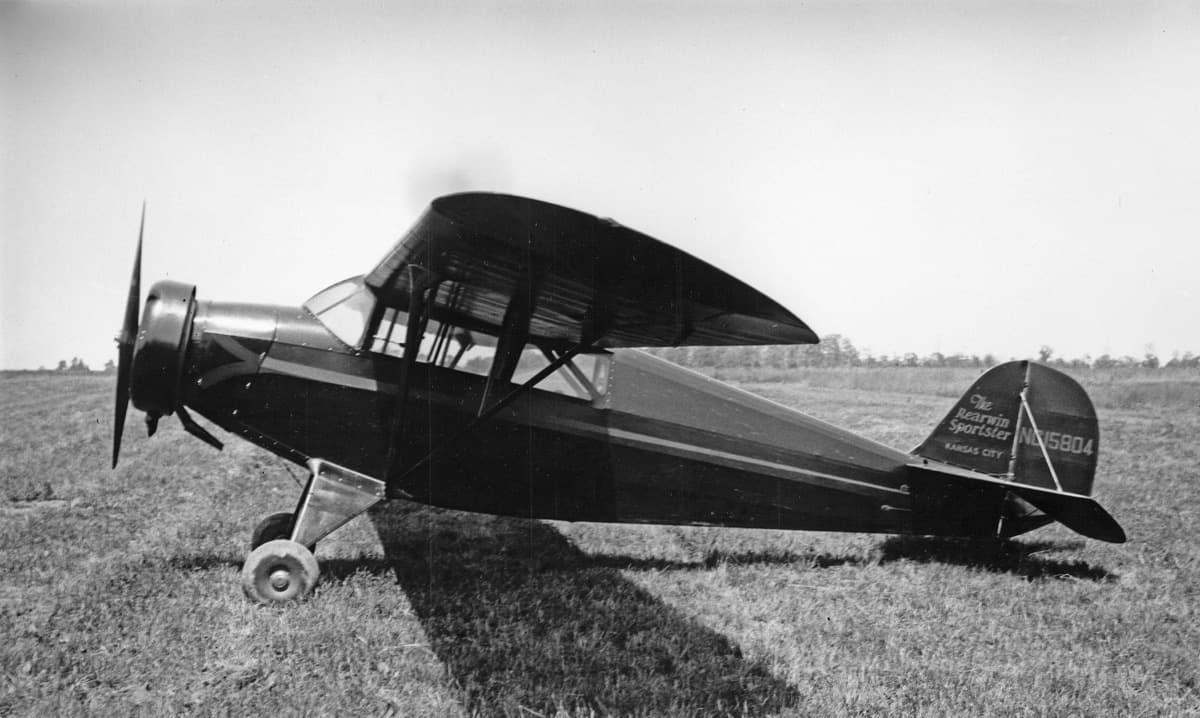
The Rearwin Sportster spanned 35 feet. Overall length was 22 feet, 3 inches. Amended figures used by Rearwin for weights include 853 pounds empty and 607 pounds useful load for a gross weight of 1,460 pounds. The first 13 Sportsters necessitated lower weights, grossing 1,365 pounds.
A steel-tube fuselage, faired with wood formers and covered in fabric, were traditional for the era. Wing spars were spruce. Wooden ribs were built up. Aluminum provided a smooth wing leading edge, all fabric covered. Welded steel tubing and channels comprised the fabric-covered tail group. The horizontal stabilizer was flight-adjustable. A leaf spring tailskid was standard, with a tailwheel as an option.
The 100-mph cruise could be bested by a top speed of 110, while the Sportster landed at 38-40. The LeBlond radial gave a service ceiling of 14,000 feet.
Prices at the factory started at $2,095 in 1935, raised to $2,468 in 1937. At least 75 of these Rearwin Sportsters were manufactured.
Rearwin Sportster models continued to evolve their radial engines. The Model 8500 used an 85-hp LeBlond five-cylinder. When that engine was re-rated to 90 horsepower, the Sportster 9000 was born.
Model 9000 Rearwins were identified as 9000-L with the LeBlond engine and 9000-KR when powered by the similar 90-hp Ken-Royce radial. In 1938, Rearwin bought LeBlond’s engine manufacturing assets and rights, and new motor models based on LeBlond came out as Ken-Royce engines. A 9000-KR was said to cruise at 113 mph.
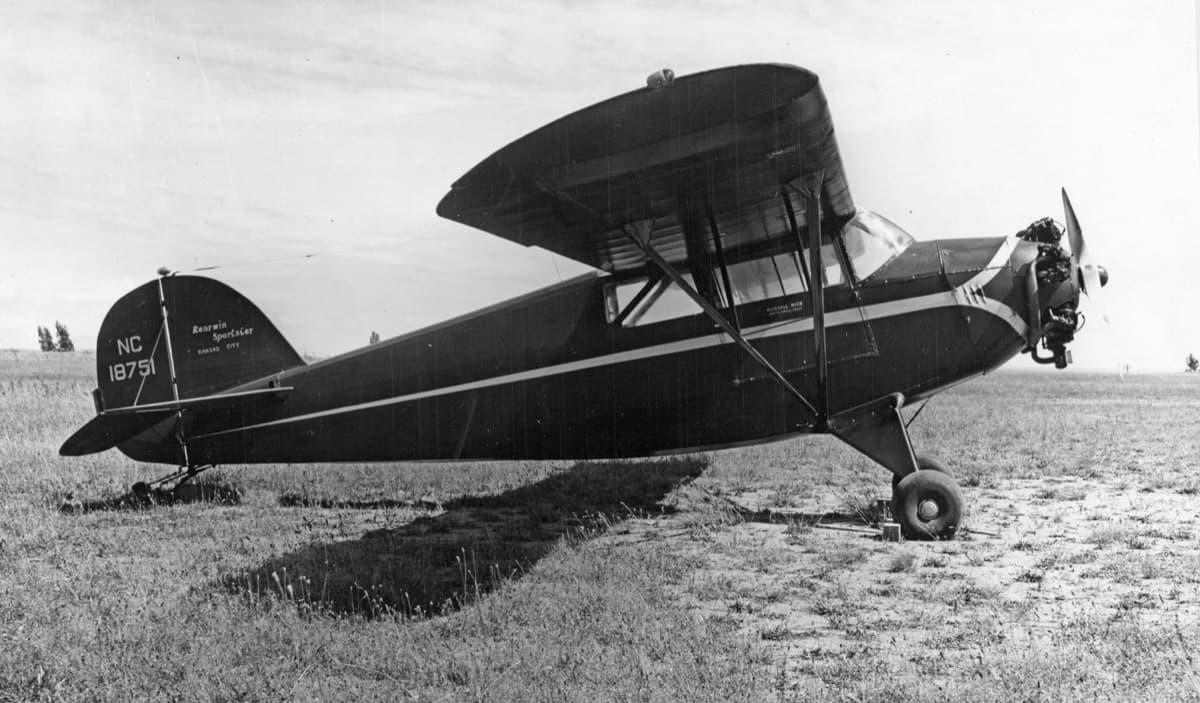
It has been suggested that Rearwin’s commitment to radials, by purchasing the LeBlond engine line and evolving it under the name Ken-Royce, may have limited the future of Rearwin aircraft as opposed-cylinder engines stole the march in general aviation. The LeBlond, and subsequent Ken-Royce powerplants, enjoyed modularity, interchangeable parts, and the use of valve springs of a design said to be particularly long-lasting.
Another take on the Sportster was the Model 9000-W fitted with a Warner five-cylinder Scarab Jr. radial engine of 90 horsepower. The Sportster line earned a reputation for rugged construction, and this durability suited them for training use.
The last Sportster 9000 left the plant in 1941. Tallies for the number of Sportsters built range from about 260 to 273. The discrepancy might be due to reports of 13 Sportsters manufactured in Sweden under license.
This history of Rearwin aircraft started as a look into a small company that blossomed into a larger story. It is presented in two parts, with the second installment in an upcoming post.

Leave a Reply