

(This is the second in a two-part series. You can read the first part here.)
When R. Andrew Rearwin took his plunge into aircraft manufacturing in the late 1920s, few would have predicted how far his Kansas-based company would evolve over the next two decades. In the second part of this series, we pick up where Part 1 left off, as the Rearwin team enters the late 1930s ready to push its designs further — transforming a general aviation machine into a parachute-equipped airline trainer, experimenting with sleek inline engines, and ultimately handing the reins to a wartime successor.
Following the success of the Model 9000 Sportster, Rearwin introduced the Cloudster in 1939. Sometimes considered an evolution of the Model 9000 Sportster, Rearwin’s 1939 Cloudster flew with model numbers 8090, 8125, and 8135. Around 125 Cloudsters were built, including a batch shipped to Iran as trainers and utility aircraft.
The Cloudster was a side-by-side two-seater or three-seater, depending on model.
It first flew as a two-place airplane in April 1939. Sometimes initially referred to as the Coupe, the Cloudster could be built with either a five-cylinder or seven-cylinder Ken-Royce radial engine.
The Model 8090 was a two-place, five-cylinder airplane. The Model 8125 of 1940 could be had as either a two- or three-place machine, powered by a seven-cylinder Ken-Royce motor. And the ultimate Cloudster 8135 was a dedicated three-place aircraft. The passenger in back was seated sideways.
When Pan American Airways went shopping for a navigation trainer, the airline influenced the development of a tandem-seat version, the Rearwin 8135-T. Probably 20 to 25 of these trainers were manufactured, contributing to the Cloudster production tally.
Some flew with Pan Am and others served Parks Air College, the Civil Aeronautics Administration (the predecessor of the FAA), and Spartan School of Aeronautics.
The basic Rearwin Cloudster airframe used a wing spanning 34 feet, 2 inches. Length was 21 feet, 6 inches.
The initial Model 8090’s 90-hp Ken-Royce five-cylinder radial delivered a cruising speed of 108 mph. The Model 8125 two-seater version had a seven-cylinder Ken-Royce 120-hp engine giving a cruising speed of 120 mph. And the three-place Model 8135 used the 120-hp Ken-Royce 7-G seven-cylinder motor to cruise at 120 mph. The tandem trainer cruised at sea level at 122 mph using that same 7-G engine.
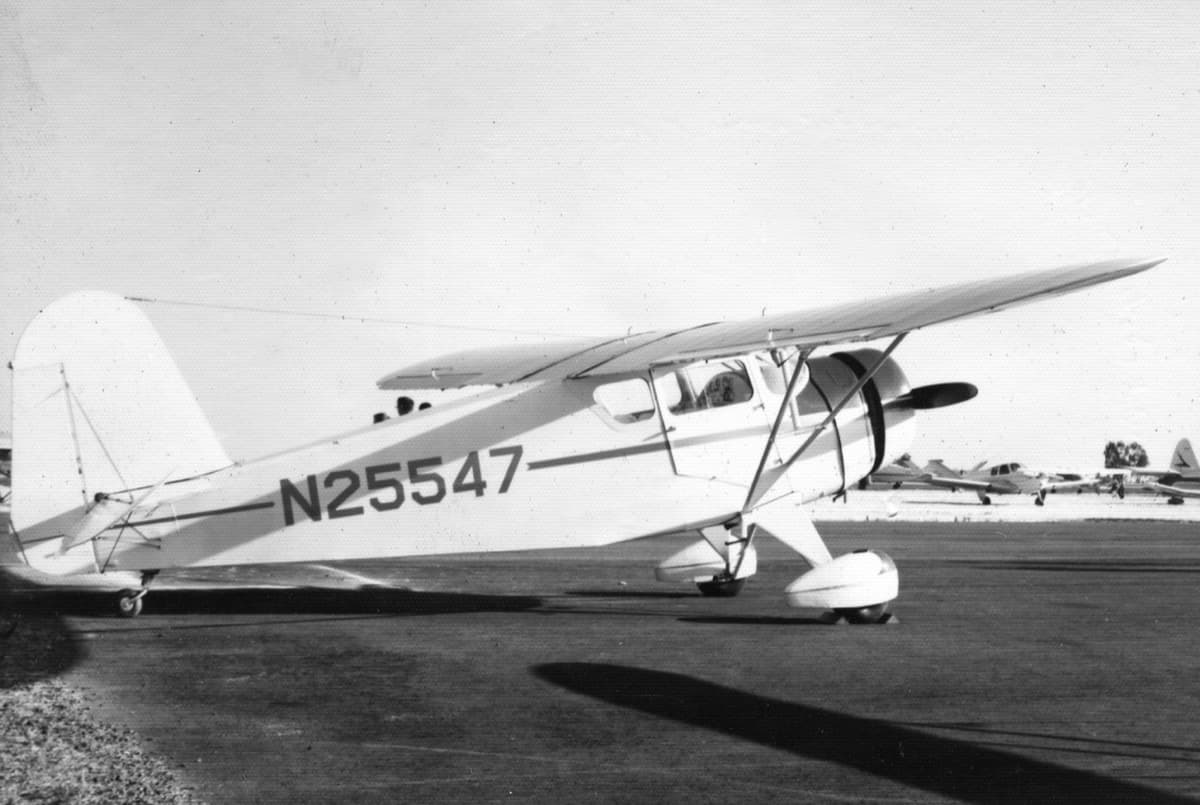
As a navigation trainer, the 8135-T featured doors that could be jettisoned by an instructor and student, both of whom could wear parachutes.
Though certificated in late September 1937, the Rearwin Speedster 6000 first flew in mid-1934. It broke with Rearwin’s longstanding preference for radial engines by using a four-cylinder Cirrus inline air-cooled engine, made in America but of European origin. During the long gestation period for the Speedster, the Cirrus went out of production, and the small number of Speedsters built after that flew with a four-cylinder air-cooled Menasco engine.
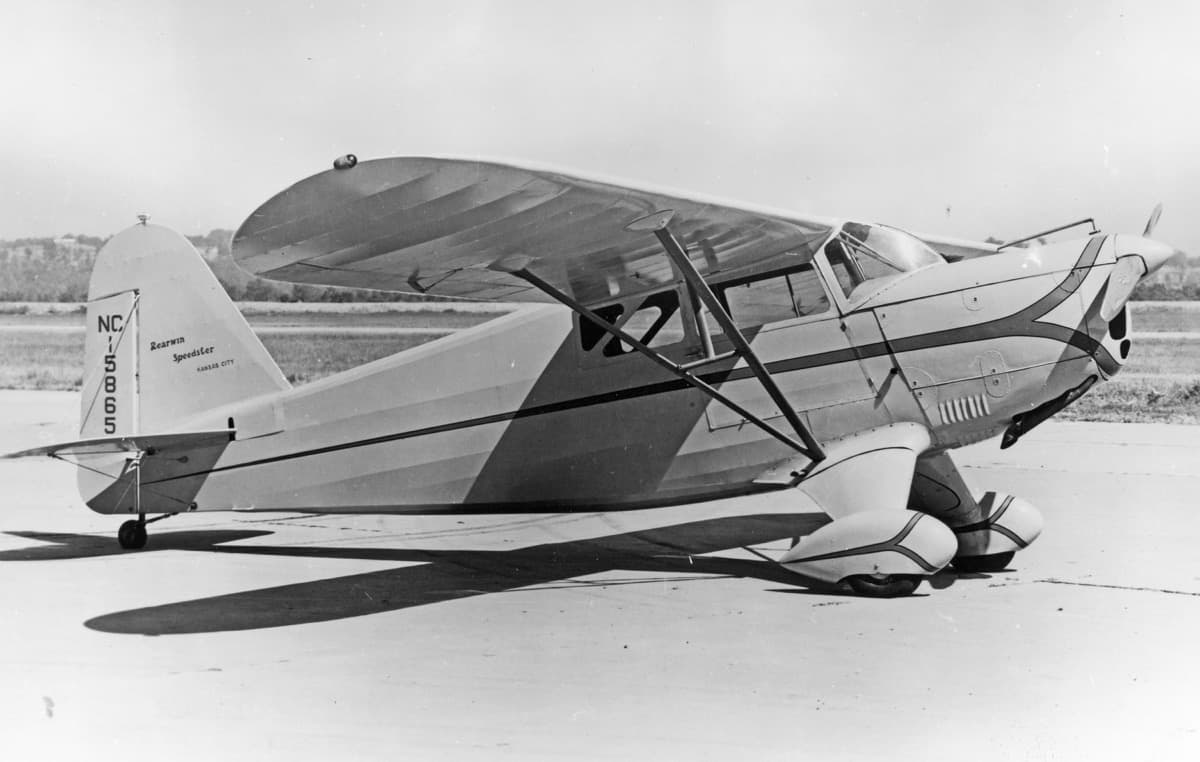
The delay in certification of the Speedster 6000 was because it initially could not meet a government standard for spin recovery. Though Rearwin pilots demonstrated the ability to recover the Speedster, it remained for the company to modify control surfaces before the Department of Commerce would grant an Approved Type Certificate.
One test pilot said the final version was not as good an airplane as the original. And the lapse of three years before certification saw the market move away from sport planes of this style.
Wingspan of the Speedster 6000 was 32 feet, 2 inches. Length was 22 feet, 2 inches after spin-control modifications. The aircraft cruised at 122 mph as measured at 800 feet altitude.
Taking advantage of the small front area of the inline four-cylinder engine, the Speedster had a narrow head-on aspect.
Re-engining the Speedster with a 125-hp Menasco four-cylinder engine resulted in a new Type Certificate for the 6000-M, said to cruise at 135 mph. Probably 11 Speedsters were built at the Rearwin plant; most were Menasco-powered.
While the company founder was fond of radial engines, even the Rearwin company eventually embraced economical opposed-cylinder air-cooled engines toward the end of its production of aircraft.
The two-place side-by-side Rearwin Skyranger first flew in April 1940. About 80 Skyrangers were built by Rearwin before wartime military production shut down civilian aircraft of this type in 1942.
Early Skyrangers were offered with a variety of Franklin and Continental engines ranging from 65 to 90 horsepower. Standard was the Continental 75-hp A-75-8 engine, which gave the Skyranger a cruising speed of 100 mph.
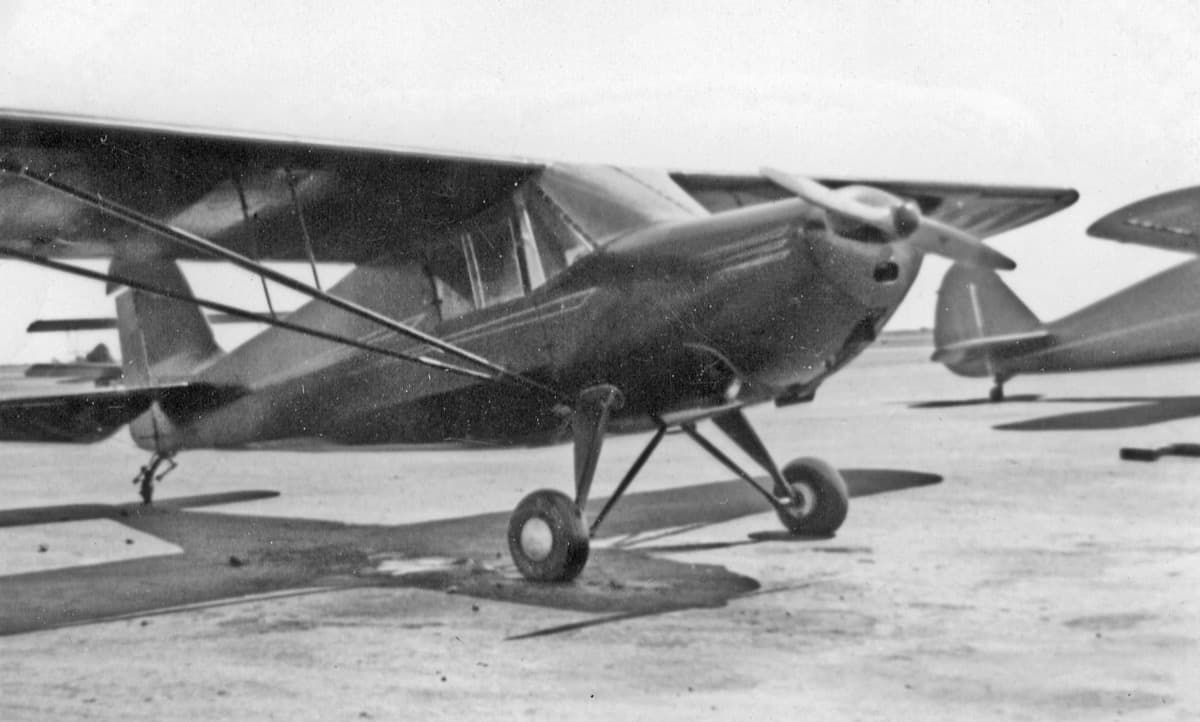
The Skyranger wingspan was 34 feet. The wing incorporated fixed slots to improve low-speed airflow and aileron controllability. Length was 21 feet, 9 inches.
The Rearwin organization had undergone some technical changes in ownership and financing through the Depression-era gauntlet. In October 1942, Rearwin was willing to sell the company bearing his name and retire in southern California. In hindsight, it looks like another prescient move by the savvy businessman from Salina, Kansas. A group of New York investors bought the company and reorganized it by January 1943 under the name Commonwealth Aircraft Corporation.
Inheriting a lucrative Rearwin government contract, Commonwealth’s wartime efforts were the construction of CG-3 and, more importantly, CG-4 gliders for the Army Air Forces. About 1,500 of the military gliders were made by Rearwin and then Commonwealth in Kansas City.
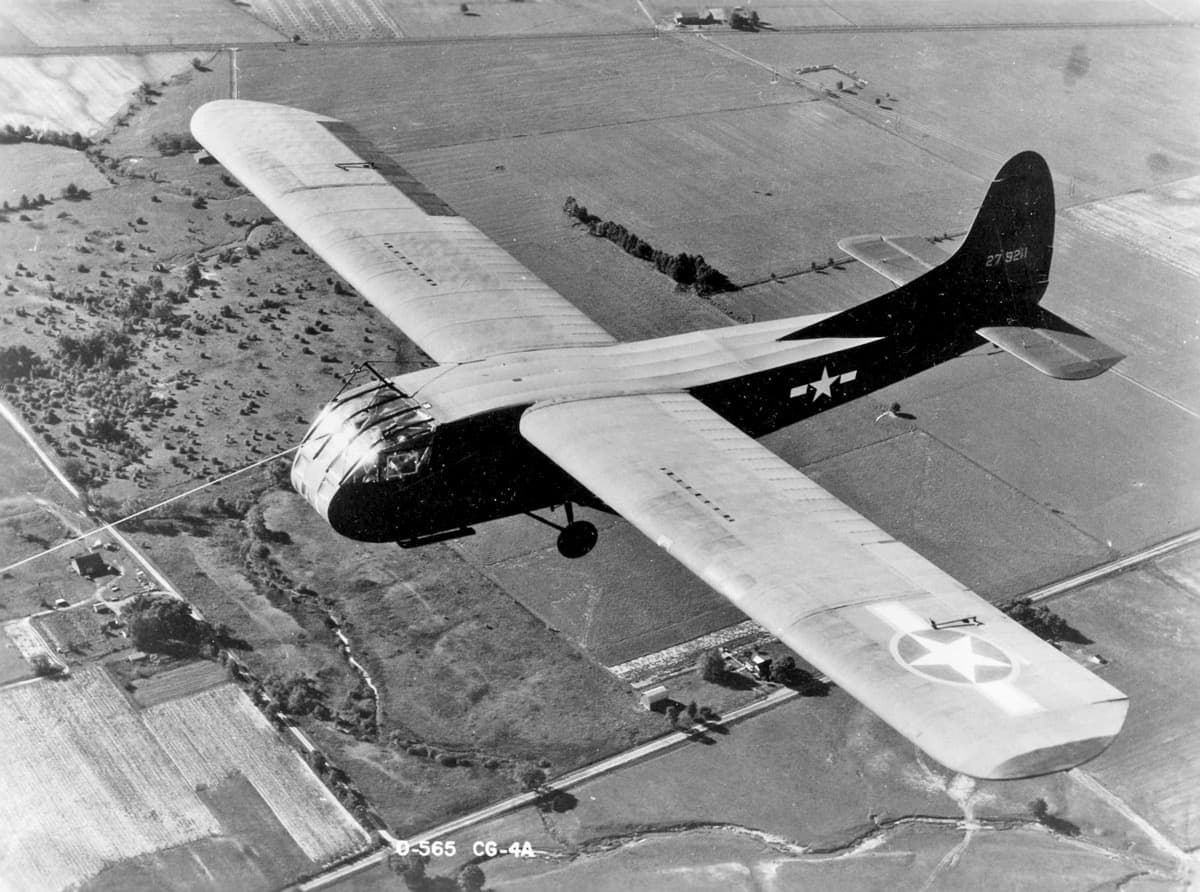
With peace in 1945, Commonwealth built some Skyrangers at Kansas City before moving manufacturing to Long Island. Long Island production favored the Model 185, using a Continental C-85-12 engine of 85 horsepower. Postwar Skyrangers with a Commonwealth pedigree numbered about 275 aircraft. A softer-than-predicted post-war market for general aviation aircraft helped end the run. Commonwealth Aircraft was bankrupt by March 1947.
Some Rearwin aircraft survive in museums and collections, testaments to generally robust construction and dogged determination by the Rearwin team.
For many years in the Pacific Northwest in the 1960s and 1970s, Skeeter Carlson kept a touch of Rearwin alive when he flew his Thomas-Morse S-4 World War I biplane, re-engined with a Ken-Royce seven cylinder 120-hp radial motor.
And members of the Rearwin family established an aerospace scholarship fund in San Diego County in 2000 in the name of R. Andrew Rearwin, adding a 21st Century cachet to the name of the businessman who decided he could launch an airplane manufacturing company nearly 100 years ago.
Leave a Reply