


In this series of articles, we’ve discussed individual ownership of aircraft and co-ownership of aircraft. Both options have privileges many find appealing. They also have responsibilities and costs that a great many general aviation pilots find to be beyond their budget.
Fear not. There is a third option that can bring the cost of accessing an aircraft down to a point virtually anyone can afford to have what is best termed as ownership-like rights.
It would be understandable for any random pilot to be suspicious of such a claim. Can you really gain access to an aircraft for less than the cost of a used motorcycle? Yes, you can. Could that aircraft be modern, well-equipped, and professionally maintained? Absolutely.
The key to creating this opportunity comes from the economy of scale — the same concept that has brought down the price of a slew of consumer products. Imagine what a toaster oven might cost if it was built as a one-off item. Yet toaster ovens are ubiquitous in homes across America. As are large screen televisions, cell phones, and microwave ovens — all high-tech products that were at one time quite expensive but now sell in discount stores for a fraction of their original cost.
The reason is clear. Volume. When built one-by-one or in small batches, these products are pricey. When built and sold in massive numbers, the price per unit falls dramatically.
The average general aviation pilot in the U.S. flies somewhere between 50 and 100 hours a year. Contrast that number with the fact that each year contains more than 8,700 hours. Knowing that, it becomes clear that individually owned aircraft spend the bulk of their time sitting unused. Even if we cut out half the hours for pilots who prefer to avoid night flights, we’re left with something on the order of 4,200 hours of idle time each year.
That’s a lot of downtime. Now imagine a dozen pilots sharing that aircraft — pilots who all flew the upper range of average hours per year. The aircraft would still be unused for 3,000 hours each year.
This is just the opening salvo of why flying clubs make such good sense for so many of us. By establishing a social organization around the common goal of owning and operating an aircraft, the economy of scale can drive the cost down to extraordinarily low numbers. This ultimately makes it possible for almost anyone to bear the cost without undue stress.
Both the Aircraft Owners and Pilots Association (AOPA) and the Experimental Aircraft Association (EAA) host webpages for members that provide contact information for flying clubs across the country.
Some clubs offer membership for less than $100 a month, a figure that falls well short of the hangar fee most owners pay. Others may have a buy-in of $2,000 or so with monthly dues of roughly $100. Still others may require an initial investment of several thousand dollars. There is no one-size-fits-all model. But there is absolutely a model that fits your goals, fits your budget, and is viable for the mission you want to fly.
These are no fly-by-night outfits. A well-managed flying club can grow to well over 100 members and possess multiple aircraft. Some have been successfully operating for more than half a century.
Even a small club with as few as 10 members contributing $100 per month banks $12,000 per year. Those funds can cover hangar fees, insurance, and a small reserve fund that grows over time. And being a non-profit entity (as the FAA requires flying clubs to be), there is no rental rate for the aircraft. Members pay the actual operating cost. That’s all.
Ten pilots can easily share a single aircraft without getting in each other’s way. This has been proven for years upon years of successful operation. An even higher ratio of pilots to aircraft has been managed by a great many clubs, to the economic advantage of all concerned.
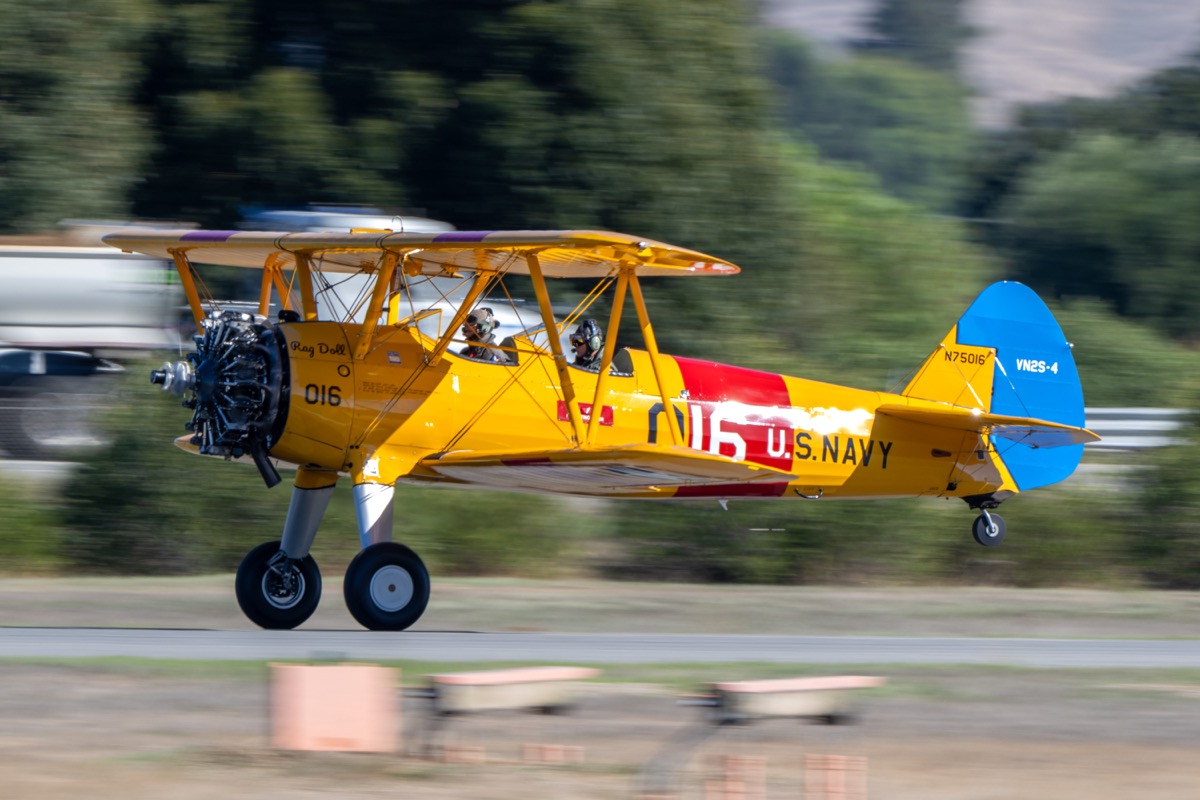
Perhaps most appealing of all is the ability to form or join a club whose members decide to fly something really special. Something that’s not generally available for rent. A Stearman. An AirCam. A de Havilland Beaver on floats. A Cirrus SR22. They’re all options that can be fit into a flying club model that is both affordable and long-lasting.
Now, you’ll notice there isn’t a word in the Federal Aviation Regulations about flying clubs. But rules do exist. You’ll find them in FAA Order 5190.6C, also known as the Airport Compliance Manual. Flip to Chapter 10.6 and you’ll find a very specific, highly concise explanation of what a flying club is and what it is entitled to and exempted from. The whole section is only two pages long, but very thorough.
In brief, the FAA defines a flying club as a non-profit entity organized for the express purpose of providing its members with aircraft for their personal use and enjoyment only. Members of the club can use the aircraft to receive flight instruction, if the club allows for it. CFIs and A&Ps who are members can either be paid for their services or receive a credit toward their club fees, but not both. And even if the club membership exceeds 100 pilots and the club operates multiple aircraft, the club is to be treated by the host airport management as an individual, not a commercial entity.
That last part is important. A flying club cannot under any circumstances advertise or hold itself out as an FBO or a flight training provider. The club’s role is to provide affordable access to aircraft, not to compete with existing businesses on the field.
The economics of the club model make every aspect of general aviation more affordable and more socially relevant.
It’s been my great pleasure to help a number of pilots find their way to forming a flying club that had real value to its members. You can do this if you’d like to fly more affordably. It’s not nearly as hard or as expensive as you might fear. And there is help to be had only a quick email or phone call away.
Flying for less of an investment? Yes, please.

As an A&P working in general aviation I agree with this article. Most of the planes I would annual would have less than 50 hours since last inspection. Some less than 2 hours. I would suggest to the owner to develop a partnership for the plane. Split expenses and utilization of the aircraft in an efficient manner. Aircraft do not like to sit and hourly costs are ridiculous. I would only suggest this once. I have never had an owner agree it was a good idea and it was always refused.
I want to express my concerns regarding the rising costs of aircraft ownership and maintenance, which are being further exacerbated by state-level policies, specifically the aircraft use tax imposed by Utah.
While private owners struggle with increasing insurance and operational costs, the UDOT Aviation sector operates King Air aircraft completely tax-free. Furthermore, they utilize these aircraft to transport special interest groups without contributing to the maintenance of the very airports and airways they use.
It is unjust that private owners face threats of aircraft seizure for non-payment of this tax, while state entities operate under an entirely different and privileged set of rules. I urge you to look into this disparity and consider the financial strain this places on the general aviation community. They also use FAA documents and brand them under UDOT-Aviation as though they are the authors of this information. Who will stop this carnage of General Aviation in the future. Government over reach they are getting too big.
I assume UDOT is a reference to the Utah Department of Transportation. This article is aimed at pilots everywhere, inside and outside of Utah. While your issues with UDOT may be legitimate, they have no bearing on the message of this article. Flying clubs definitely do lower the cost of access to aircraft for members. That’s true in Utah, Montana, Maine, South Carolina, and every other U.S. state.
Your comment has value, but it is misplaced in this space. A better path would be to contact your Utah representatives to take action against what you see as government overreach. I wish you the best of luck in that effort.