

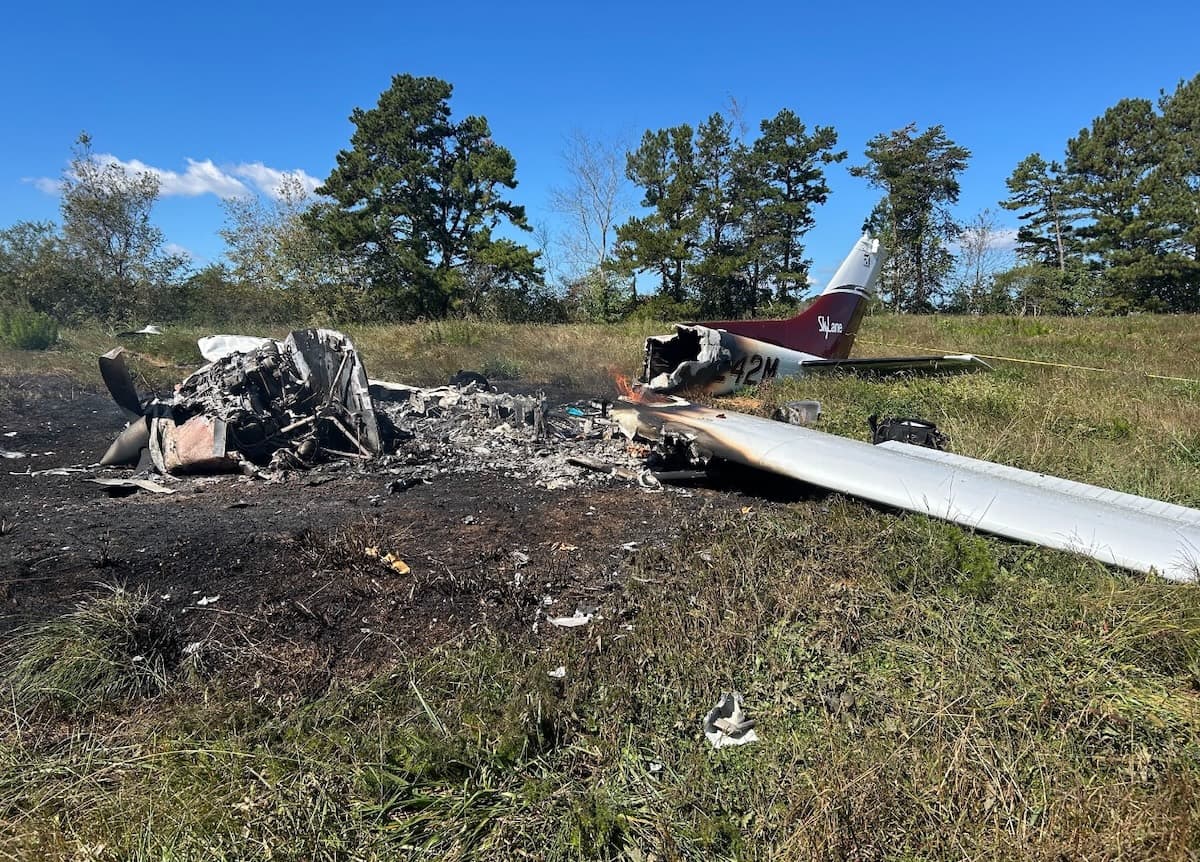
The pilot and owner of the Cessna 182 told investigators that he checked the winds when he was more than 15 miles from the airport in East Ellijay, Georgia, and again while established on the downwind leg of the traffic pattern.
He said the Automated Weather Observing System (AWOS) reported the winds were from 020° at 9 knots “with no gusts” and that he was landing on Runway 3.
When over the runway threshold, the nose dropped “due to a decrease in headwind,” so he initiated a go-around. After applying “full” engine power and while configuring the airplane for the go-around, an “extreme perpendicular crosswind from the west blew the airplane into the path of trees lining the runway,” he reported.
The pilot pulled back on the yoke to clear the trees, the right wing stalled, and the airplane landed hard in a flat attitude, resulting in substantial damage and igniting a fire in the engine compartment.
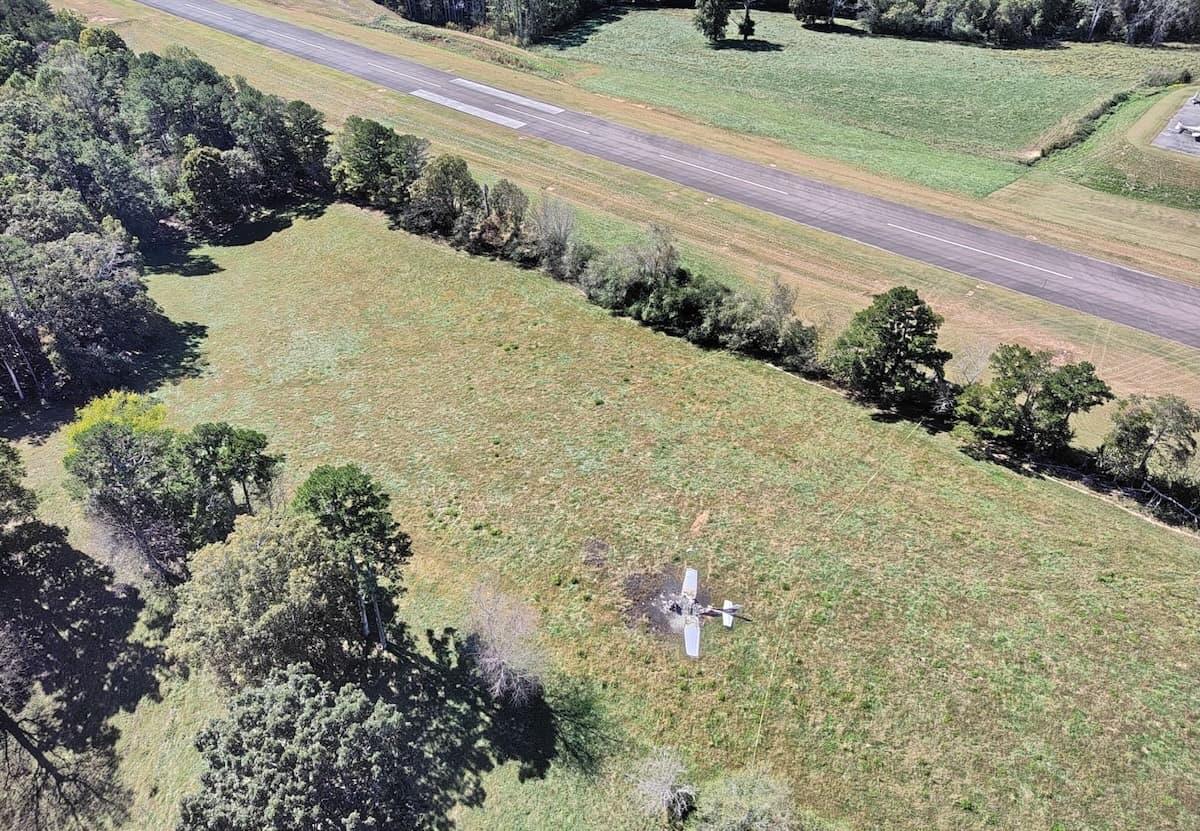
Three of the four occupants got out of the airplane with minor injuries while one occupant emerged uninjured.
The pilot reported there were no preimpact anomalies or failures that would have precluded normal operation of the airplane.
Examination of the AWOS information reported at the airport 15 minutes before arrival revealed winds from 020° at 11 knots gusting to 19 knots. At the time of the accident, winds were reported to be from 040° at 12 knots gusting to 19 knots.
Probable Cause: The pilot’s inadequate compensation for winds during landing, which resulted in a loss of control and an aerodynamic stall.
To download the final report. Click here. This will trigger a PDF download to your device.
This October 2024 accident report is provided by the National Transportation Safety Board. Published as an educational tool, it is intended to help pilots learn from the misfortunes of others.
Leave a Reply