

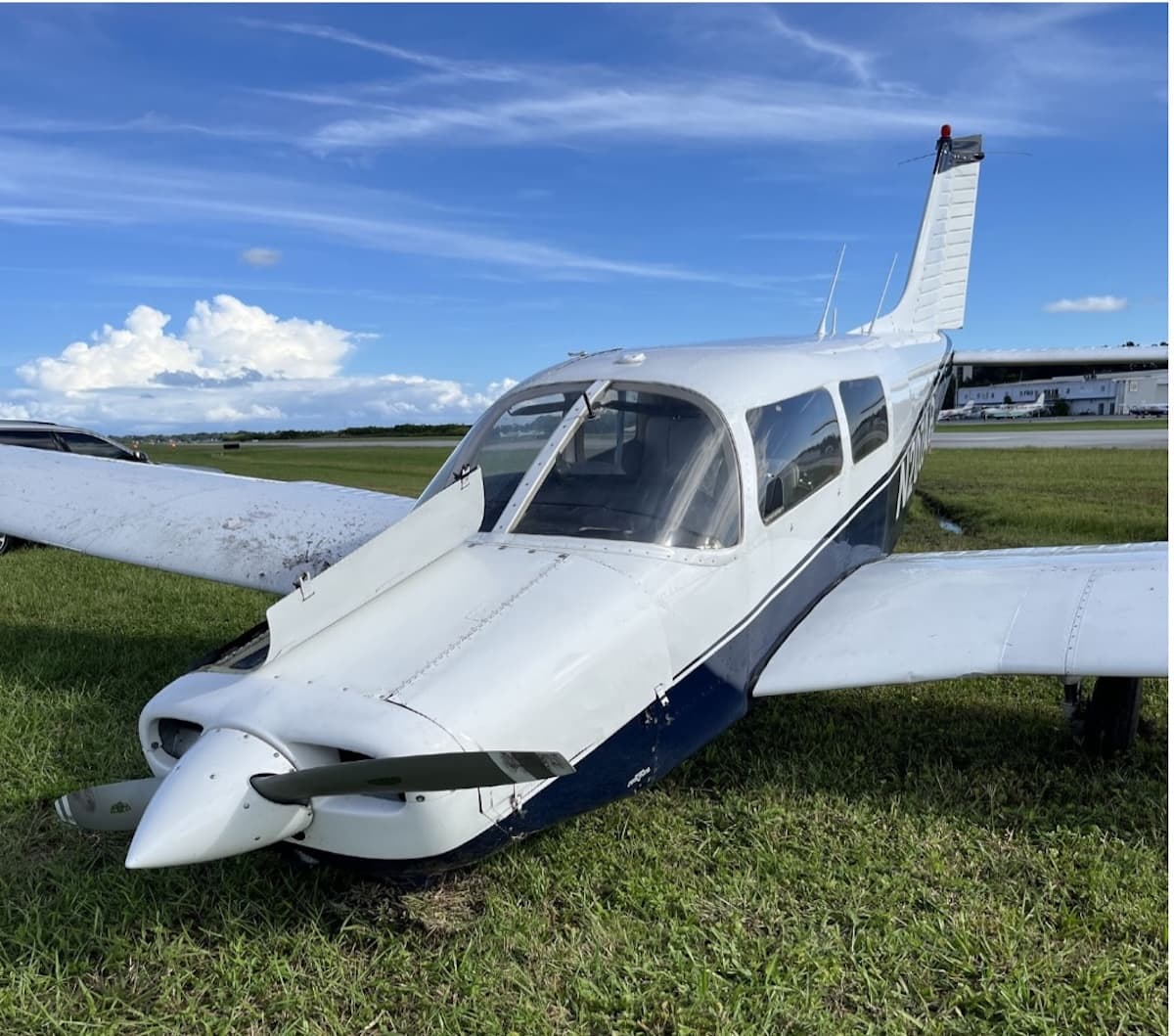
According to the pilot, the purpose of the flight was to build flight time with his safety pilot.
During the initial climb after takeoff on Runway 11 at the airport in Merritt Island, Florida, at an altitude of about 200 feet above ground level, the engine started to run rough. The pilot leveled the Piper PA-28-161, engaged the starter, and the engine restarted.
He decided to return to the airport and, during the turn back to the runway, the engine lost all power, so they decided to land downwind on Runway 29. They approached the runway at an airspeed of about 95 knots, which the pilot reported was fast.
The airplane touched down near the end of the 3,601-foot runway. He noticed they did not have enough runway to stop, and both the pilot and passenger applied heavy braking. The airplane started to skid off the right side of the runway and hit uneven terrain, during which the nose landing gear separated, resulting in substantial damage to the engine mounts.
FAA inspectors examined the airplane after the accident. They noted that when the right fuel tank was selected, fuel flowed normally to the carburetor. When the left fuel tank was selected, no fuel would flow.
Further examination of the fuel filter, carburetor screen, and left wing fuel tank screen revealed all were absent of debris contamination. The inspectors drained the left wing fuel tank and utilized a borescope to examine the interior for contamination, with none noted.
The inspectors examined the fuel selector valve and found that the handle/fuel tank position indicator could be manipulated past the detent, and that the valve was worn.
The airplane had completed seven 100-hour inspections before the accident. The airframe manufacturer’s service bulletin for the fuel selector was not applicable to this airplane due to the newer age of the airplane and newer design of the fuel selector.
No evidence of any pre-impact mechanical malfunctions or failures of the airframe or engine were identified that would have precluded normal operation.
The operator did not notify the NTSB that the accident had occurred until a month after the accident. By that time, the airplane had already been examined and released by an FAA inspector and the operator without NTSB involvement.
Probable Cause: A worn fuel selector valve, which resulted in a restriction of fuel flow to the engine and a total loss of engine power due to fuel starvation.
To download the final report. Click here. This will trigger a PDF download to your device.
This October 2024 accident report is provided by the National Transportation Safety Board. Published as an educational tool, it is intended to help pilots learn from the misfortunes of others.
Leave a Reply