

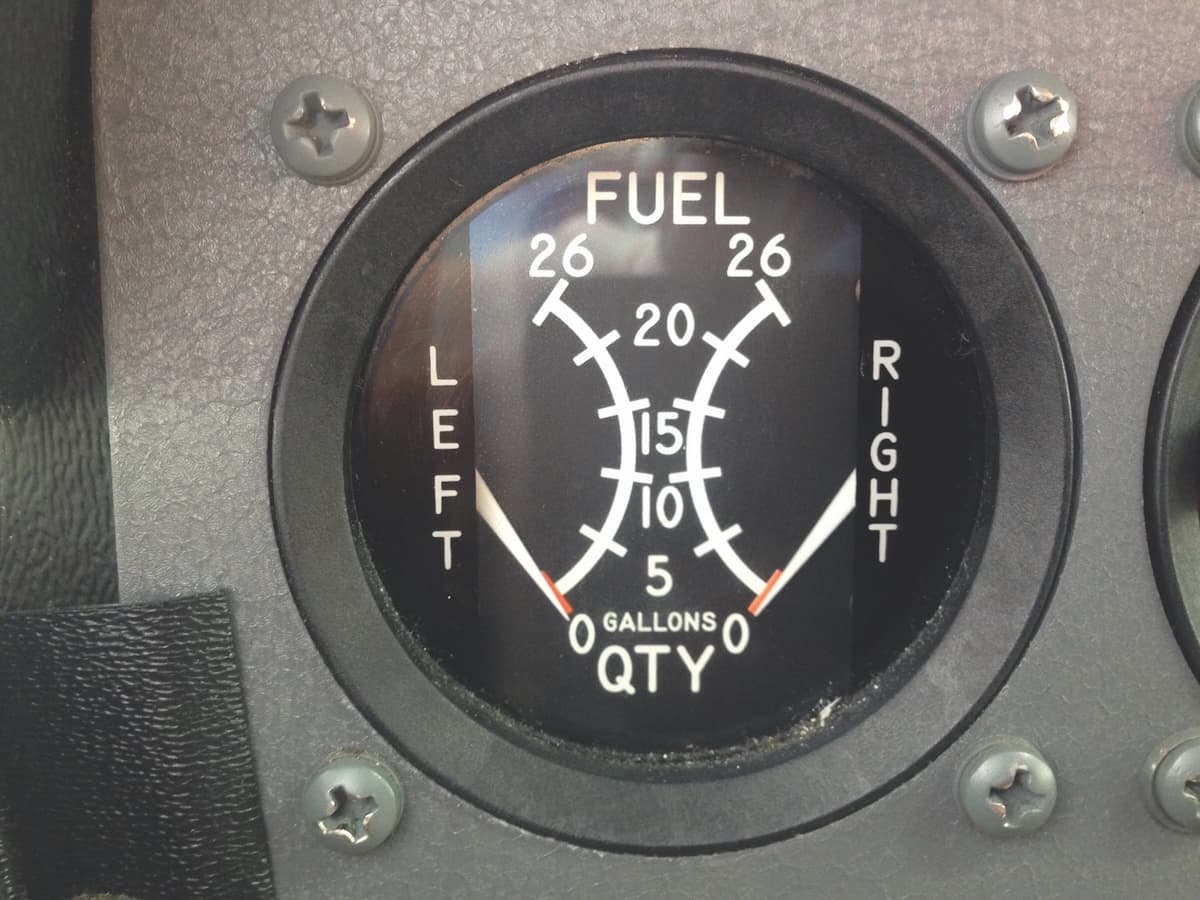
Reader Salvatore Sidoti is concerned about disappearing fuel.
“I know that the density of fuel changes with temperature fluctuations,” he said. “That may change your volume of fluid. However, I have difficulty reconciling the fuel that I have left in my tank at the end of a flight or after refueling and the next time I go to check the fuel. There’s always a bit of a discrepancy between the fuel quantity indicated in my JPI engine monitor and what I have actually left in there previously. I always use a dipstick to measure and then I’m always adjusting the JPI fuel level. Normally a half gallon or a gallon would not make a difference, but in my small Cessna 152 it does make a difference.”
There are two main answers to his question: Evaporation and changes in fuel density.
But before I get too far into a discussion, I need to make a physics point. In your aircraft, the fuel gauge measures the volume in the tank, while the carburetor meters by mass. This can make a significant difference in what appears to be your fuel consumption.
To meet the ASTM D910 specification for 100LL aviation gasoline, there is room to allow a certain amount of light, low-boiling-point hydrocarbons to aid starting, especially in cold weather. These lower-boiling-point components usually have excellent octane ratings and are less expensive than the bottomed aviation alkylate that they replace in the final blend.
When an aircraft sits in the sun, these components will usually boil off and be vented to the atmosphere, decreasing the volume in your tank. The amount of loss will depend on the vapor pressure of the original blend, the ambient temperature, whether the aircraft is located in direct sunlight or not, plus several other factors. The loss should be small, but without vapor recovery systems like on your car, it can be noticeable.
The expansion or contraction of fuel in your tank can be noticeable, but in actuality have little effect on your actual fuel usage.
For example, if you fill your tank with cool fuel from an underground tank on a hot day and let the plane sit in the hot sun, your gauge may go up slightly and you may think you gained fuel. But you still have the same mass of fuel in your tank, which will carry you the same distance as the lesser amount of fuel that your gauge indicated just after you refueled.
Likewise, if you fill your tank on a hot day from an above ground tank during the day and check your gauge the next day, you may think you lost a small amount of fuel, but the mass amount of fuel is still the same.
The Real Question
So the real question is when is the best time of day to refuel your aircraft?
If you’re refueling from an underground tank, it does not make that much difference because the temperature does not change that much.
But if you are refueling from an above ground tank at your FBO, then you will get slightly better miles per dollar if you refuel late at night or very early in the morning.
And if you own your own tank, it doesn’t matter when you refuel your aircraft. Just be careful and do not spill any.

Leave a Reply