

Even good pilots can have some bad habits.
Do any of these bad habits sound familiar? If so, you are probably not alone.
Taxiing Too Fast
How fast do you taxi your airplane? Are you in a hurry to get to the runway or do you just have a long way to taxi at your airport?

And how fast is too fast? A friend who is an airline captain tells me he does not taxi his Boeing faster than about 15 knots. The reason? In the event of the need for a sudden stop, it can be safely done, IF you are not taxiing too fast.
You should not have to “slam on” the brakes when taxiing. Just quick, firm braking. Depending on circumstances, of course.
Of course, if a ground vehicle suddenly cuts in front of you on a surface road, then you may suddenly have to brake hard. Hopefully this is not a problem at the smaller GA airports you fly out of.
Back when I was doing a lot of primary training, I had to remind my students of this regularly. Many pilots taxi too fast at first, until they learn to do better.
Poor Radio Communications
Speaking too fast, too slow, or being too wordy on the radio — all of these are bad.
Some pilots do this and are not even aware of it. They key the mike to transmit before their brain is engaged and they know what they are going to say.
Yes, the frequency can get busy and it can be tough to get a word in edgewise. We’ve all been there. However, you still need to be able to speak quickly, but not so fast that ATC cannot understand you.
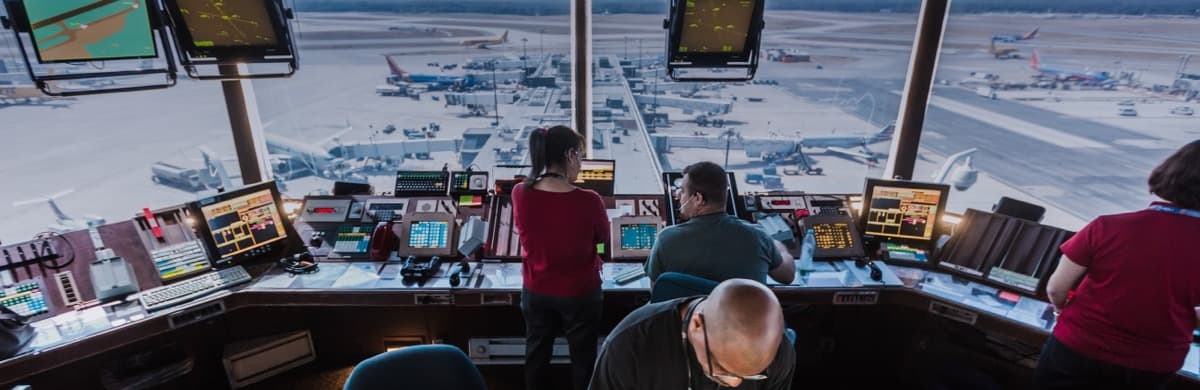
At the other extreme, and just as bad, is speaking t o o – s l o w l y. I had a tower controller tell me about this recently. Apparently a student pilot was transmitting v e r y – s l o w l y and as a result was tying up the frequency for everyone. Everyone had to wait until this person was finished transmitting. At a busy airport, this is a problem.
So speak clearly and articulately. If you speak too fast, then the controller may not be able to understand you and you will end up having to repeat yourself. And that takes more time.
Also, some pilots are way too wordy on the radio. What is too wordy?
It means using excessive words or verbiage in your radio transmissions. Because ATC radio is set up for only one person to transmit at a time, you have to learn to be concise on the radio. In other words, short and to the point! Said another way: Not like you normally talk.
Use essential words and terminology only. Leave out the articles and prepositions. What are prepositions? Think back to grade school English. Remember? Words like a, an, the, with, ok, etc. Instead of telling Ground Control, “Cessna XXX is at transient parking, ready to taxi for takeoff, with ATIS information Alpha,” say something shorter like this: “Ground, Cessna XXX, transient parking, taxi, Alpha.” Keep it short and to the point.
Keep in mind, the controller is busy and has several aircraft to talk to, probably giving the same taxi clearance over and over, as each successive aircraft calls for taxi clearance. So, keep your radio transmissions short and to the point.
No Before Takeoff Briefing
Do you have a before takeoff briefing that you say every time before you take off? Better yet, do you even know what a takeoff briefing is?
Many pilots of smaller, single-engine airplanes do not have a takeoff briefing. Not until you move up to larger aircraft (complex singles, twins, turboprops or jets) is this typically done. And, of course, the airlines do this before every takeoff.
So should you. It will ensure you have a plan if something goes wrong.
A before takeoff briefing is simply a short verbal description, with the flying pilot (even as a single pilot) stating out loud before takeoff essential items, such as confirming the correct runway (remember the Comair RJ that attempted takeoff on the wrong runway, at Lexington, Kentucky, in August 2006, resulting in 47 fatalities), the weather (ceiling/vis/wind/crosswind), especially if IFR and there is precipitation or wet runways, the departure procedure or noise abatement procedure if any, and what immediate action items will be accomplished from memory in the event of an aborted or rejected takeoff or an engine failure shortly after takeoff.
If something unexpected does happen, you will be ready and can react promptly and do whatever is necessary to maintain control of the aircraft so as to return for a safe landing, if necessary.
If you don’t have a before takeoff briefing now, it’s time to come up with one.
Overflying a Fuel Stop
This can be tempting — especially on a longer flight when you are close to home, but due to headwinds, you have less fuel than planned. So you press on and then find yourself short of fuel, but not yet at your destination. What to do? Where to land? Perhaps off airport in a field? There are no good answers for a situation that didn’t need to exist.
How many fuel-related accidents are there? In August 2017, the NTSB issued a Safety Alert addressing this called “Flying on Empty.” It reported that from 2011-2015, more than 50 accidents a year occurred due to fuel management issues. Fuel exhaustion accounted for 56% of fuel-related accidents, while 35% of the accidents were related to fuel starvation.
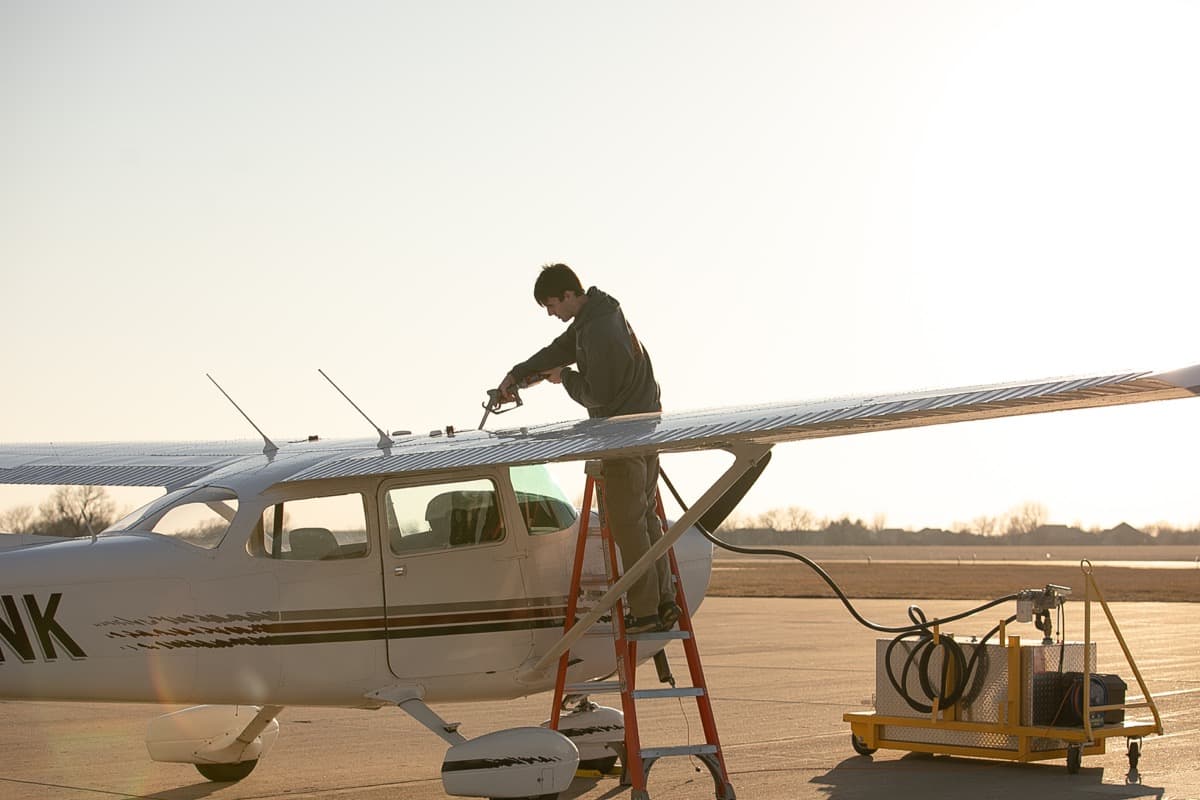
And, if you don’t know, fuel exhaustion is running out of fuel, while fuel starvation is having fuel on board, but it doesn’t get to the engine, for reasons such as a blocked fuel line, an improperly set fuel selector, or water contamination.
Most fuel-related accidents do not involve student pilots. They actually happen to more experienced pilots.
Get-There-Itis
How many pilots have been influenced to take off, or continue a flight, for personal or business reasons, such as an important meeting, instead of canceling or postponing a flight because conditions were marginal? This has happened to many well-meaning pilots, including me.
Even some professional corporate pilots have been pressured by the boss to fly to a destination when conditions were not good. The result was not good. It can be an insidious trap. I’ve heard a few such stories over the years.
While the boss signs the paychecks, when it comes to the flight, the boss needs to respect the experience of the pilot. They decide when it’s ok to fly or not to fly, depending on circumstances, not what the boss wants to happen. Every pilot has his or her own limitations and every airplane has its limitations.
Many years ago, early in my flying career, I planned to fly a Cessna 172 from Chicago Midway Airport to Cincinnati’s Lunken Airport to visit my girlfriend, but the weather conditions were marginal, as a cold front had just passed through the area. Hmm. What to do?
I should have asked a more experienced pilot how to deal with this. But I did not. I should have delayed the flight for a day and flown when the weather was better, but I foolishly thought I could make it, and scared myself silly in the process, scud-running part of the way. Never again! Many lessons were learned that day.
There’s an old saying you should take to heart: It is better to be on the ground wishing you were in the air than to be in the air wishing you were on the ground.
The PAVE Checklist
Several of these bad habits involve aeronautical decision making (ADM), such as overflying a fuel stop and get-there-it-is. Unfortunately, some pilots exercise poor or even bad judgment at times and then bad things happen.
This is why the FAA came out with the PAVE checklist — Pilot, Aircraft, EnVironment, and External Pressures, which is found in Chapter 2 of the Pilot’s Handbook of Aeronautical Knowledge.

Sometimes we let emotions get in the way of fact-based, practical, sound decision making, and bad things can happen as a result. We press on, instead of postponing a flight, when weather conditions or the aircraft’s condition dictate otherwise.
How about you? Are there any bad habits you have that you should consider changing? Maybe it’s time to review your habits and see how you could improve your flying.
Fly safely.

Leave a Reply