

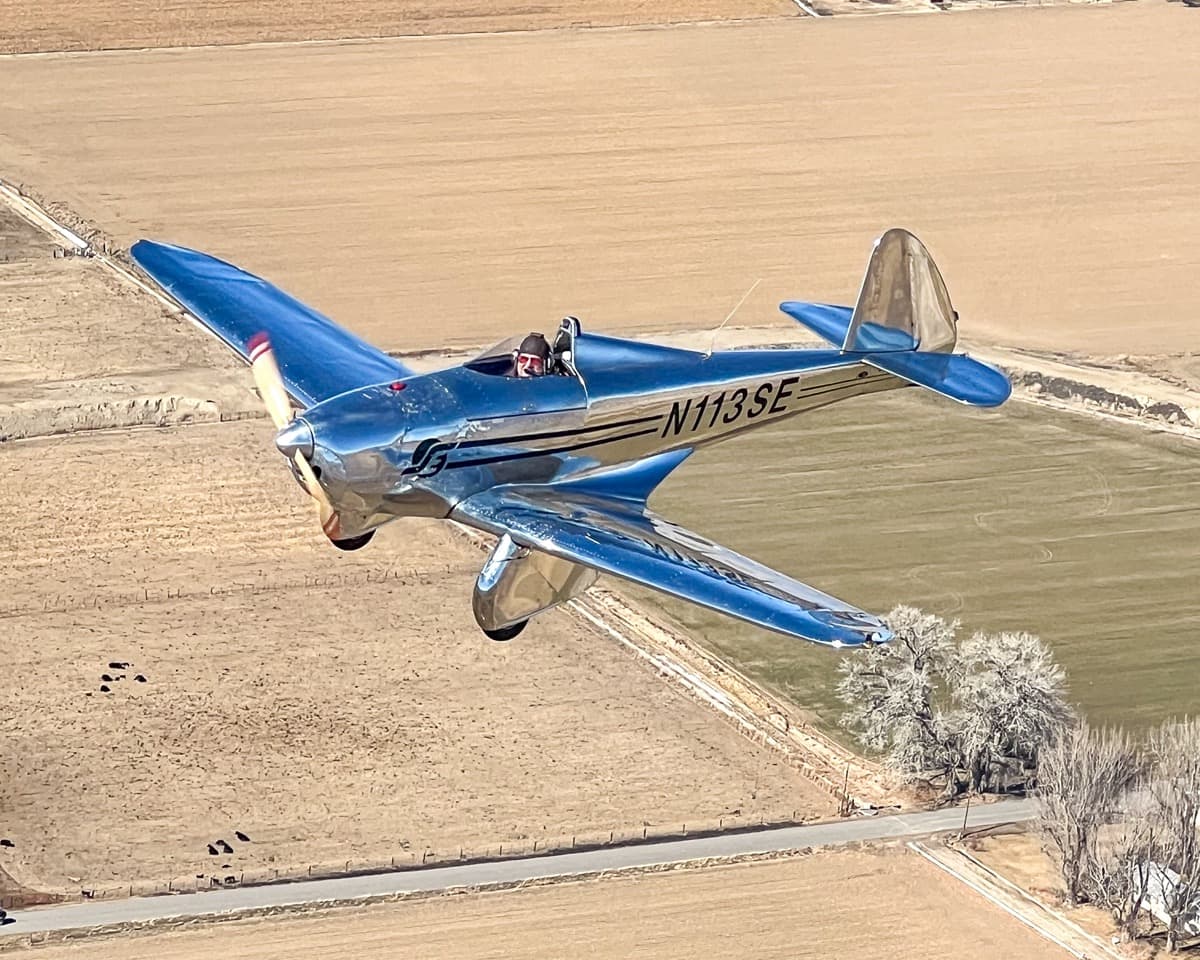
Whether you’re a daily pilot or a summertime air show enthusiast, I’ll bet you can agree with many of your aviation compatriots that the inherently graceful beauty of flight is enhanced when the flying machine brings its own graceful and beautiful design to the party.
That’s what stops you in your tracks when you first see the Spirit Engineering SE-1. Its shiny aluminum airframe looks deceptively curvy and yet simple. It conjures airplanes from an earlier era that were designed for aerodynamic efficiency that did not forget art.
Some have compared the SE-1 to a Spitfire, or a Ryan PT-22, or a Globe Swift — all aircraft that have attained cult status for their performance and aesthetics.
When I saw planview art of the SE-1, I tapped into the Bell Airacobra, a machine that took the streamlining of the late 1930s to a higher plane.
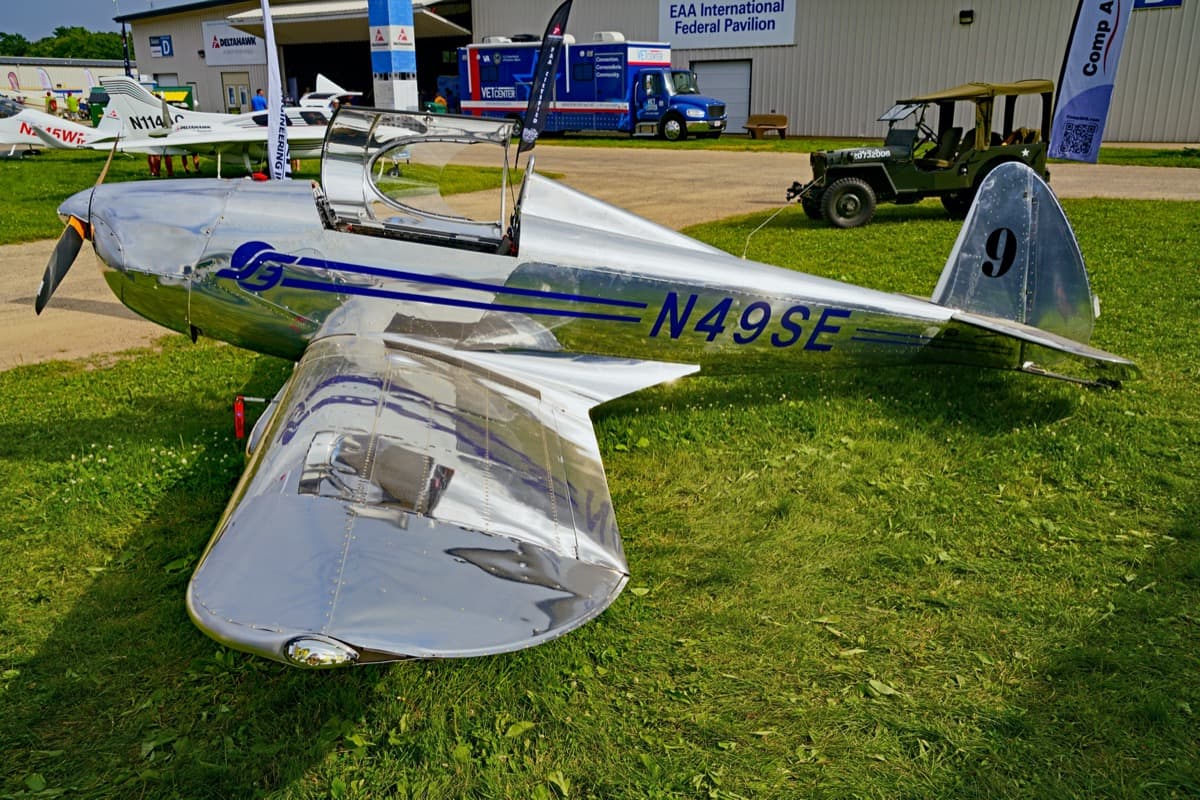
So here’s a low-wing, open-cockpit single-seater with elegant wheel pants. Its wings fold alongside the fuselage like a vintage Grumman product. If that sounds like a labor-intensive bauble for the ultra-wealthy, think again.
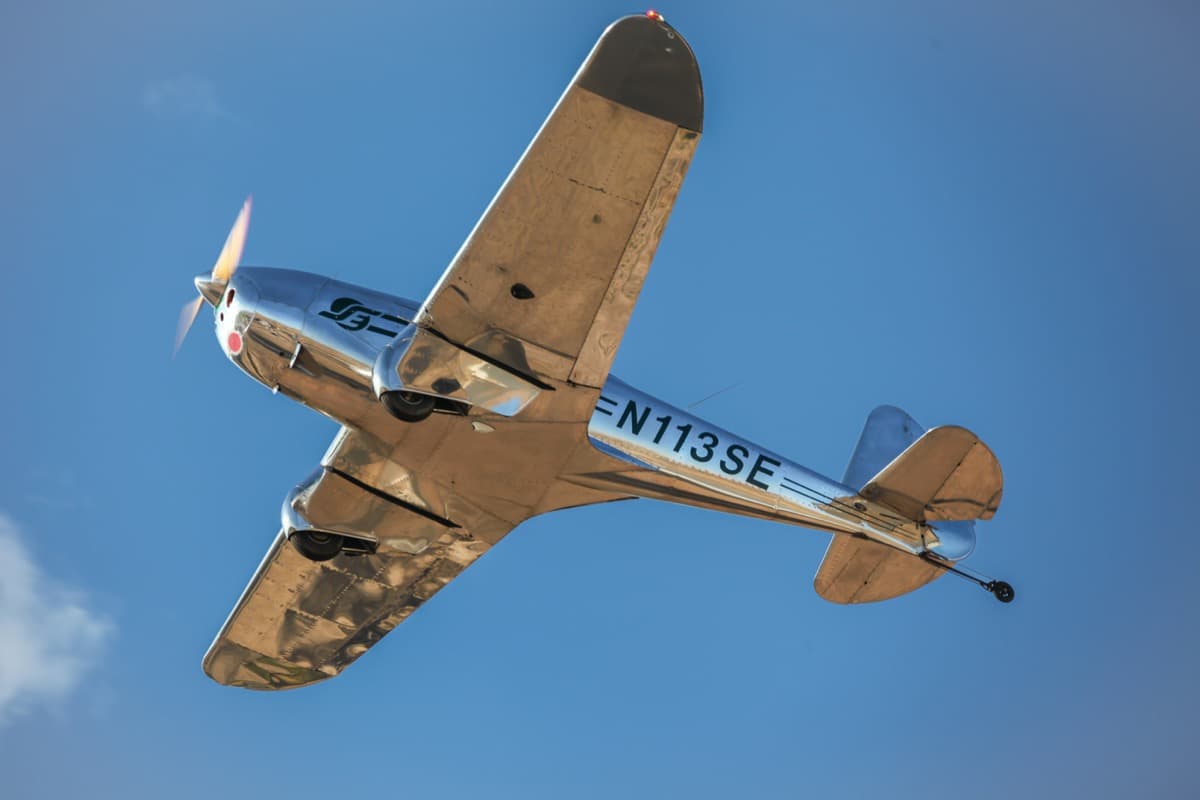
The SE-1 was engineered for ease of construction, while presenting a classically beautiful countenance. That deliberate simplicity results in a price tag Spirit Engineering likes to compare with the sticker on a new pick-up truck: Under $70,000.
Steve Wood, Spirit Engineering’s president, was happy to chat about his company’s brand-new SE-1 special light sport aircraft (SLSA), four of which flew to Oshkosh as an unannounced surprise unveiling at EAA AirVenture Oshkosh 2025 after 10 years in development.
According to Steve, the SE-1 can accommodate pilots ranging in height from 5 feet to 6 feet, 6 inches, weighing up to 275 pounds.
Controls are said to be light and responsive in the SE-1 compared to some other common tailwheel airplanes.
Tanking eight gallons of gas, the SE-1 is good for three-hour flight legs with reserve fuel. The airplane’s propeller is LSA compliant, and is a Sensenich design that rests in a sweet spot between climb and cruise performance, according to Steve.
One secret of the SE-1’s ability to be manufactured economically at the company’s factory in Colorado is the fact the airframe uses only five different part numbers with compound curves, repeating some for a total of just seven stretch-formed pieces. Three cowling panels, two parts of the wheel spats, and two wingtip bows are compound-curved. The wheel spat pieces are made from stainless steel instead of aluminum because the steel is easier to stretch form and is more resilient to bumps and knocks, according to Steve.
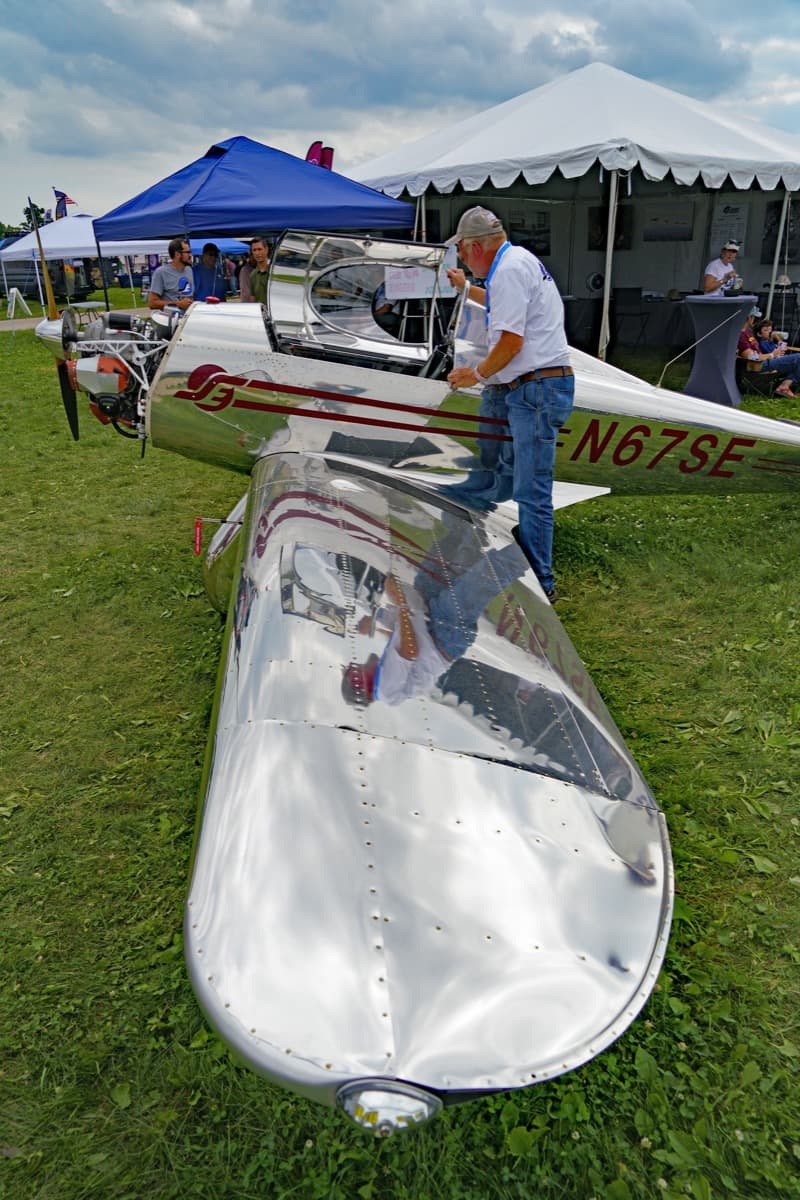
Markings on the SE-1, harking back to that 1930s simple elegance, are actually modern vinyl graphics that can be removed and changed by the owner of the airplane if desired.
The outboard wing panels have full span ailerons. No flaps are provided — another simplification for construction and operation — but the SE-1 “slips really nice,” Steve says.
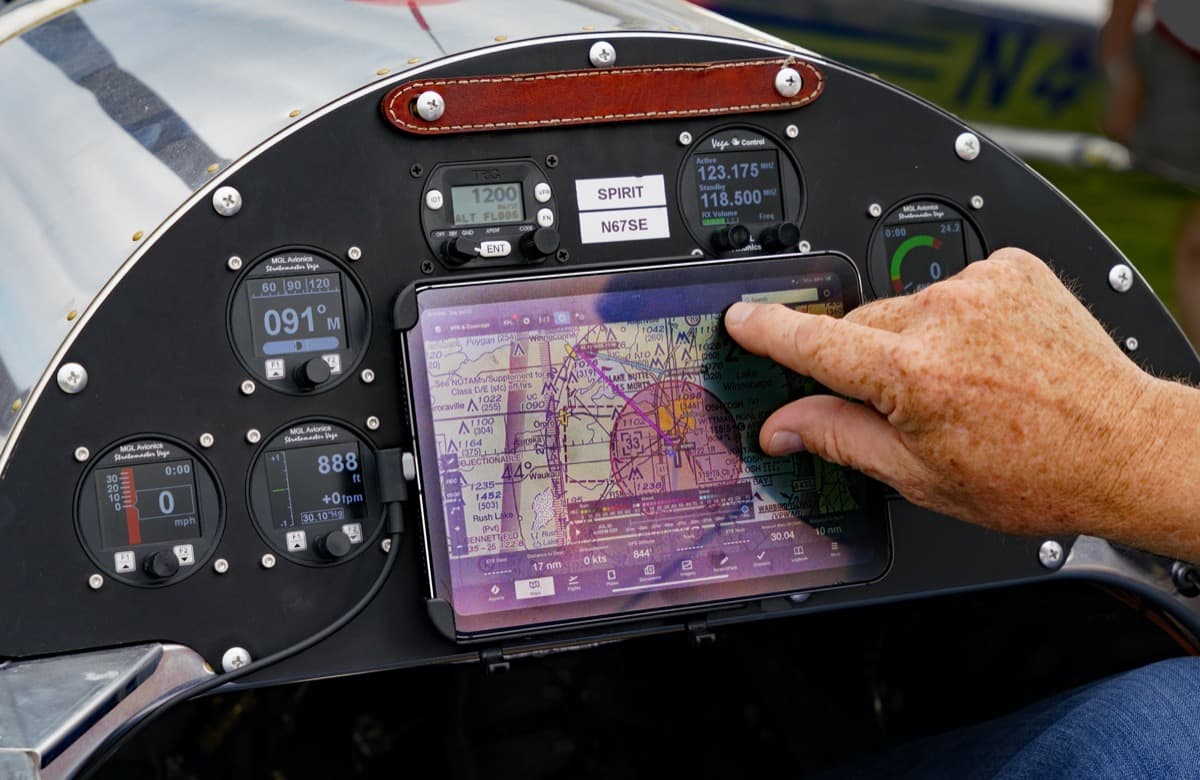
Baggage space of three cubic feet allows 20 pounds of gear to be stowed in the fuselage.
The manual wing folding design can readily be handled by the pilot. This takes the SE-1 from a modest flight wingspan of 24 feet, 7 inches, to a trailerable 7 feet, 5 inch width. The main wheels track at 5 feet, 3 inches wide. Length is 18 feet. And the empty weight of a fully equipped SE-1 is 440 pounds.
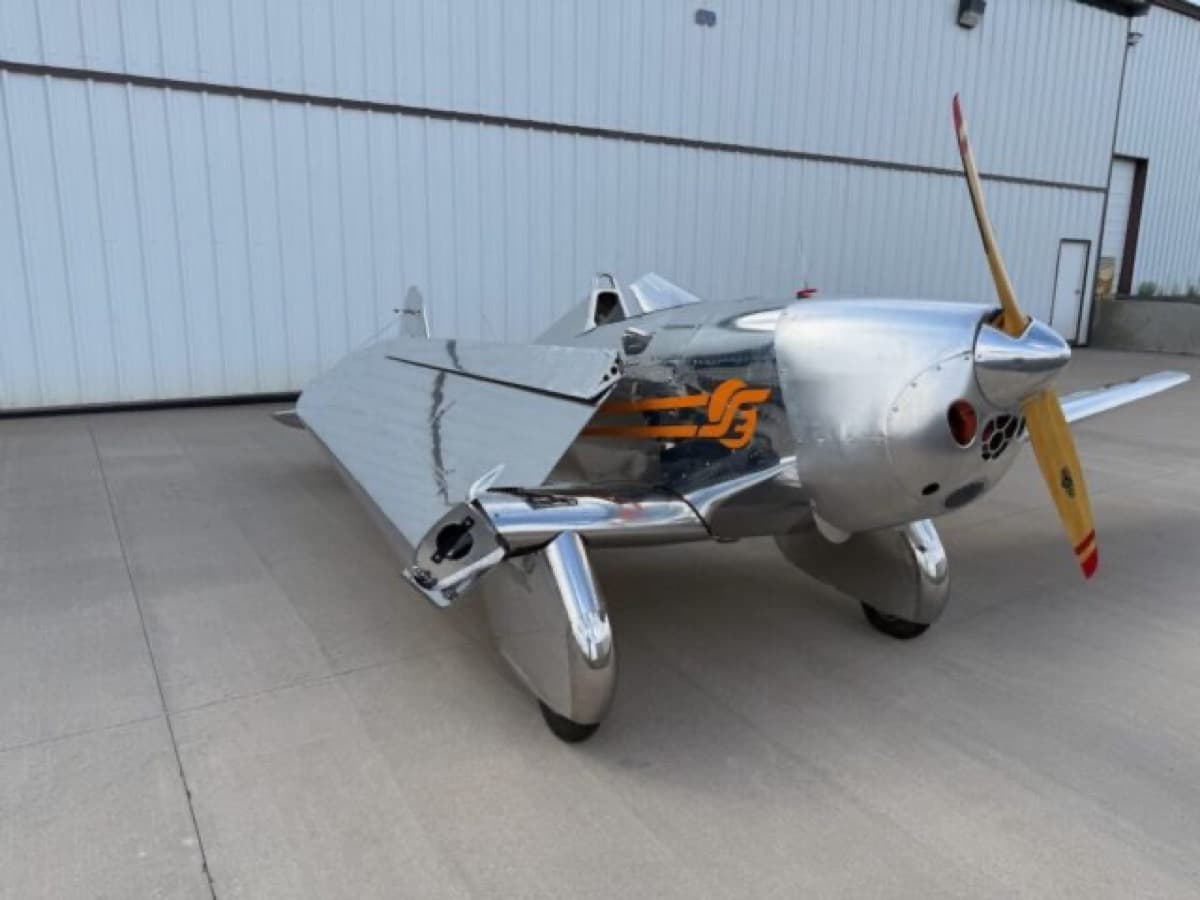
The implications are intriguing and deliberate: No hangar? No problem. Trailer the folded SE-1 home and put it in your garage.
The SE-1 design shuns plastics, fiberglass, and composites. This is a riveter’s aluminum airplane to build. The Spirit Engineering plant in Grand Junction, Colorado, is 60,000 square feet of promise and productivity, with airframes lined up as they near completion.

And there’s another facet to the company — Spirit Engineering designed and builds the air-cooled inverted V-2 engine that powers the SE-1.
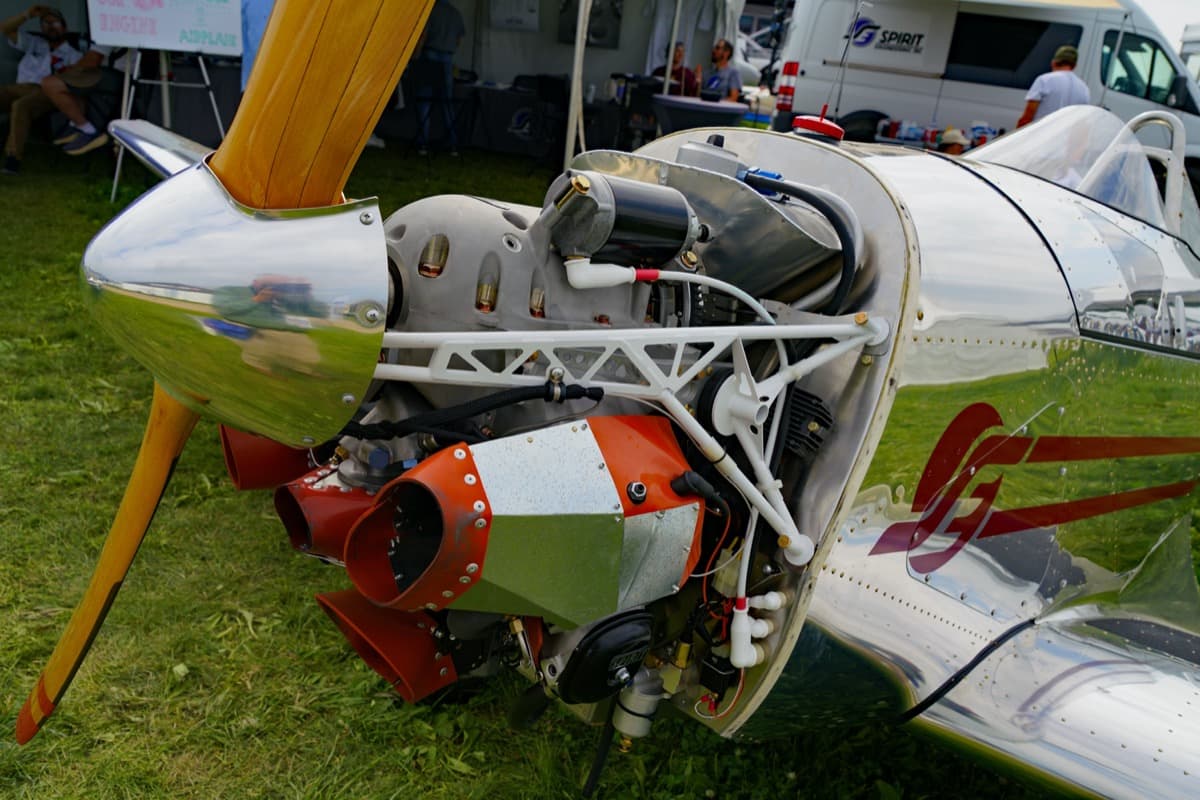
Putting out 42 horsepower and weighing 104 pounds, the engine has undergone torture testing in a company-located test cell to meet ASTM International (formerly known as American Society for Testing and Materials) standards. Steve explains the longer the engine runs productively in the test stand, the longer time-between-overhaul the motor can be granted.
Steve says the engine, similar in appearance to some motorcycle motors, is optimized for aircraft performance. So the designers at Spirit Engineering were not concerned with the motor’s low-end torque, but rather with reliable steady-state running at 2,400 to 3,000 rpm.
The team at Spirit Engineering has embraced the classic simple lines and ethos of the SE-1 as an open cockpit taildragger. Steve says an enclosed cockpit and tricycle gear are potential derivations, but his staff “enjoys the original configuration so much that they are not highly motivated to change it.”
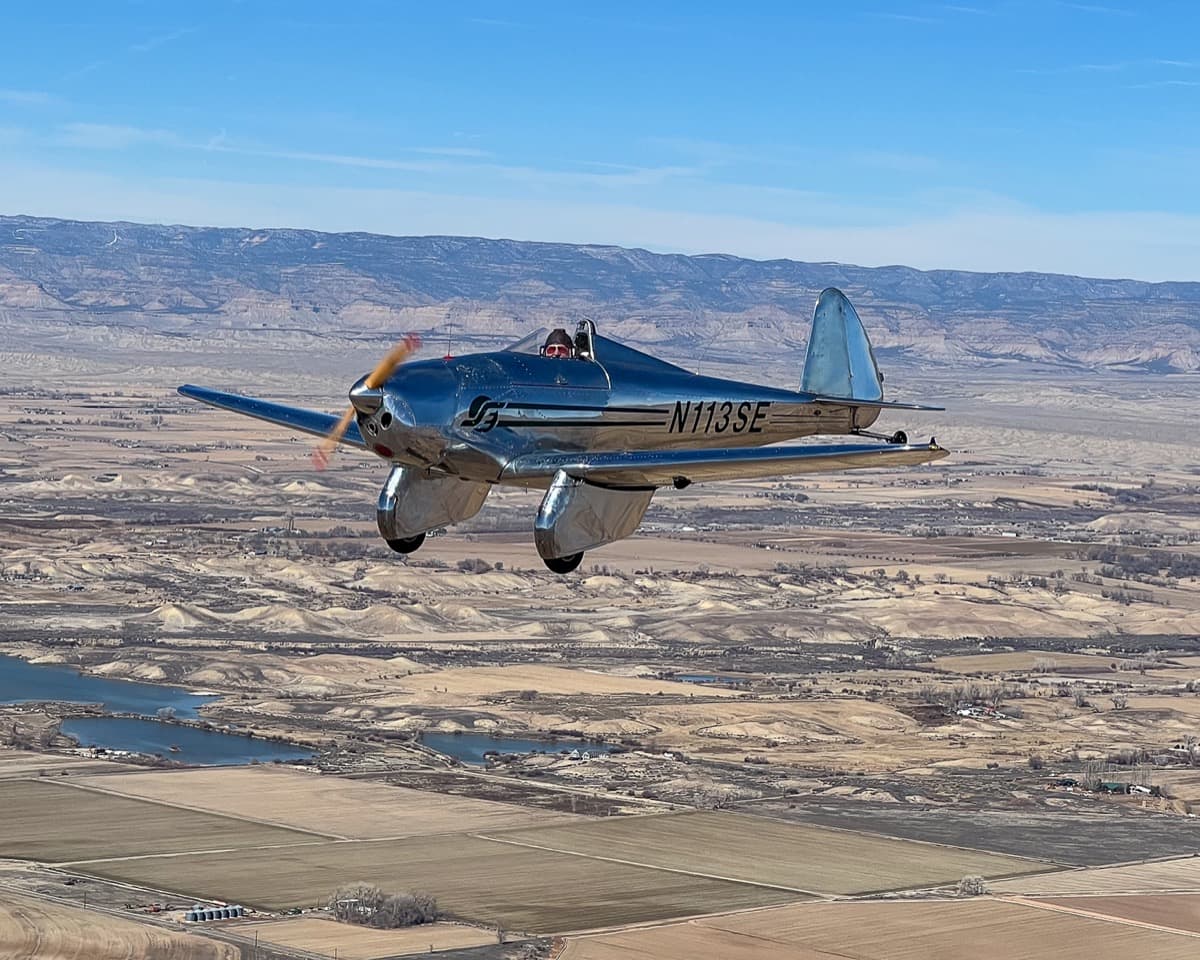
Spirit Engineering has started deliveries of the SE-1, adding a touch of grace to the skies.
Spirit Engineering SE-1 Design Specifications
- Wingspan: 24 feet, 7 inches
- Length: 18 feet
- Height: 6 feet, 8 inches, can be 5 feet in stowed ground configuration
- Empty weight: 440 pounds
- Design gross weight: 740 pounds
- Useful load: 300 pounds
- Max cruise speed: 112 mph
- Cruise at 75% power: 100 mph
- Stall speed: 45 mph
- Climb: 750 fpm
- Fuel capacity: 8 gallons
- Fuel consumption, cruise: 1.8 to 2.2 gph
- Fuel consumption, max: Up to 4 gph
- Approved fuels: 91 AKI (Anti-Knock Index) unleaded auto gas, 100LL avgas
For more information: SpiritEng.com

Very interested! How long wait time to receive completed plane?
Amazing little plane! Hopefully they’ll come out with a two-seater soon.
Still waiting on how to actually buy this thing. Lately, every airplane I fall in love with is unavailable?
Just contact Spirit Engineering, Grand Jct. CO
Been there, done that. There must be a secret to ordering 🙂
What did they tell you? Sold out their current production?
It looks a lot like the P-26, ‘Peashooter.!!
More like the, 1935 Miles Hawk Speed Six .2K6DDN8
I need!!!!!!!!!!!!
Really neat!
Somehow it reminds me of the Ford Flivver of 1926…