

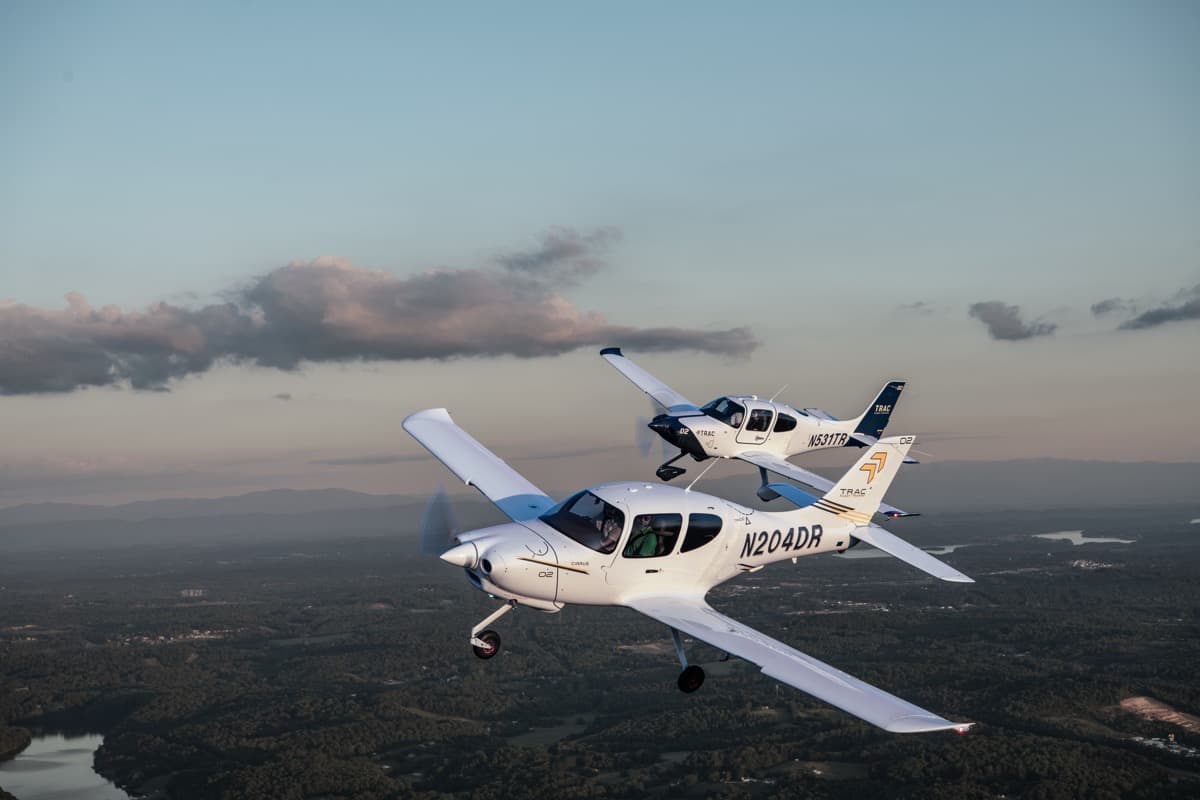
Cirrus has introduced the TRAC10, a newly designed flight training aircraft purpose-built for professional, collegiate, and career-oriented flight schools.
The introduction of the TRAC10 expands the existing TRAC flight training aircraft product line.
Featuring a turbocharged Rotax 916 iSc FADEC engine, Garmin flight deck, and Cirrus Airframe Parachute System (CAPS), the three-seat TRAC10 will be manufactured at Cirrus headquarters in Duluth, Minnesota. United States deliveries will begin in 2027, with international deliveries following in 2028.
Cirrus has already secured orders totaling more than 100 TRAC10 aircraft from 13 professional flight schools worldwide, according to company officials.
“Drawing on more than 30 years of designing, building, and supporting aircraft worldwide, the TRAC10 is our most deliberate answer yet to what professional flight schools need to succeed,” said Zean Nielsen, Chief Executive Officer at Cirrus.
“The TRAC10 is a complete reimagining of the modern training aircraft,” added Pat Waddick, President of Innovation & Operations at Cirrus. “Our team challenged decades-old norms and designed in industry-leading safety, durability, ergonomics, and operational efficiency with advanced technology delivered through simple, intuitive interfaces — creating a smarter platform for the next generation of pilots.”
Operational Efficiency
The 160-horsepower Rotax engine offers flight schools an optimized combination of operational reliability and efficiency, burning as little as 5.9 gallons per hour at 65% power in cruise, reducing total flight training costs. The Rotax engine also offers flexible fuel options, including 100LL avgas and lower-cost alternatives such as unleaded 91/94 and select Mogas blends. It is also backed by an industry-leading warranty program and support network, company officials noted.
Interior Designed for Productivity
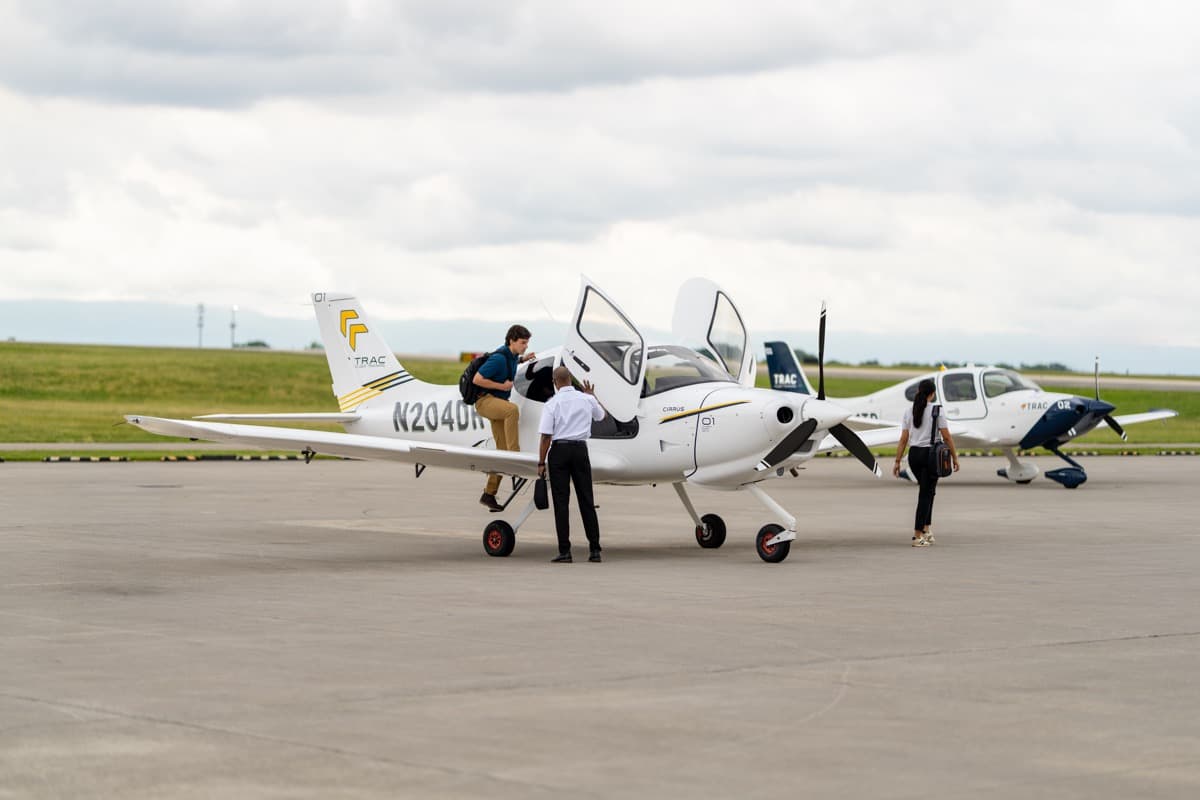
The TRAC10 is purpose-built to prepare student pilots for their professional aviation careers. A three-seat configuration optimizes learning efficiency by emphasizing crew-based observational training. The rear observer’s station is situated between two large windows with an elevated position for optimal flight deck visibility and can be equipped with a configurable display, so everyone is fully immersed in the flight deck workflow, Cirrus officials explained.
Seats and rudder pedals are adjustable to accommodate students and instructors heights. The interior also offers multiple USB-C ports, cup holders at each seat, and optional air conditioning.
Safety Features
Numerous safety systems are embedded in the aircraft, including the CAPS, Electronic Stability & Protection (ESP), and the Blue Level Button (LVL). In addition, the aircraft is fitted with airline-like stick shakers to warn of an impending stall and a cuffed-wing design to maximize spin resistance while promoting optimal controllability at low speeds, according to company officials.
The TRAC10 starts at $499,900.
For more information: CirrusAircraft.com/Trac10
Why not! Cirrus has taken most of the other GA market, why not a trainer that is low end. Not sure it has enough HP for the airframe, but I could not locate details on the airframe. From photos it looks the same as the SR platform adjusted to TRAC10/20/22 for the fleet training market. Might be the same, might not.
Watch out Piper and Cessna, fleet sales may have another competitor.