

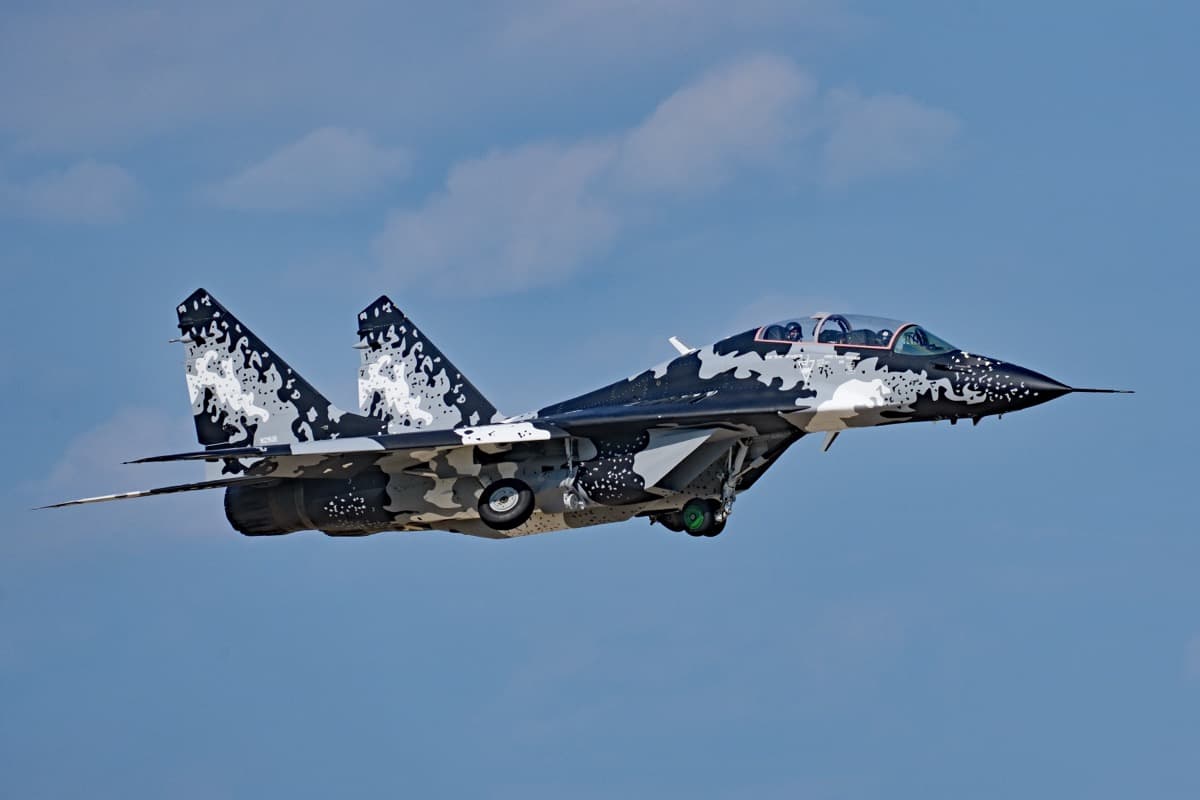
Two forces of nature — a supersonic MiG-29 jet fighter and Jared Isaacman, the jet’s pilot and owner — were featured at a Warbirds in Review session during EAA AirVenture Oshkosh 2026.
The jet showed its bona fides in its sculpted airframe, at once both angular and curvy. Isaacman opened up the presentation about his rare Cold War warbird, and then lit his metaphorical afterburners when he engaged in discussions about his role as the 15th administrator of the National Aeronautics and Space Administration (NASA).
The tried-and-true format for Warbirds in Review sessions is a straightforward discussion of the aircraft at hand, by pilots and restorers. While that took place this time, with Isaacman and retired U.S. Air Force pilots Col. Todd Ericson and Lt. Col. Sean Gustafson elaborating on the MiG-29, as well as one of Isaacman’s Northrop F-5s parked at the other end of the ramp, it became apparent that Isaacman is quickly animated by the promise of a revitalized NASA.
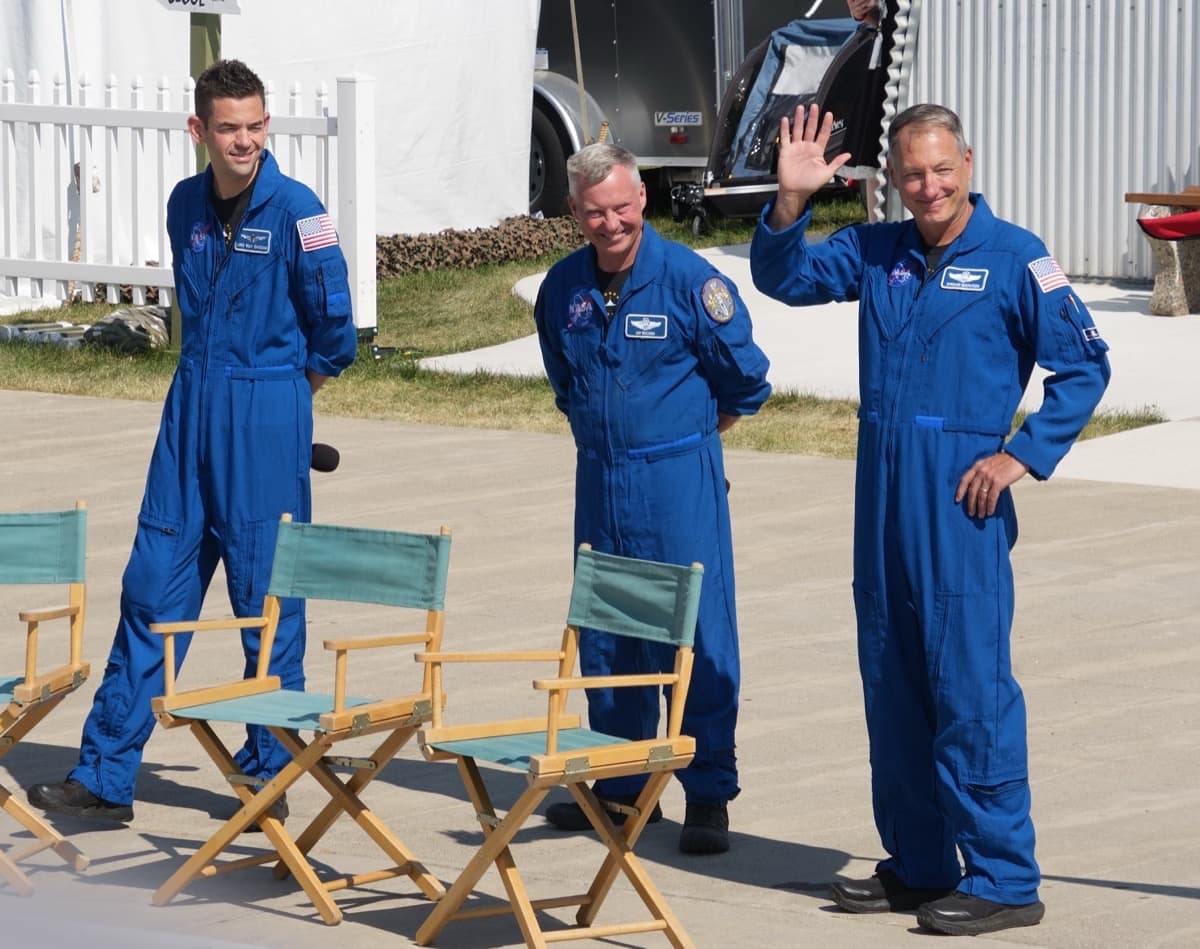
“It’s awesome to be here,” he told his AirVenture audience.
He shared that his childhood was informed by attending Space Camp in Huntsville, Alabama, and by television that shaped his interests. He is convinced that tens of thousands of people will visit space in the coming years, not just the rarified cadre of astronauts.
Talking with an aerospace-friendly audience at AirVenture, Isaacman said NASA’s Artemis lunar program must fly frequently. He quickly cited classic NASA spaceflight programs like Mercury, Gemini, and Apollo that launched as frequently as once every three-and-a-half months, not three-and-a-half years.
He predicts that, with a successful Artemis program, “NASA astronauts will return to the surface of the moon” in 2028. The applause from the crowd was spontaneous and quick.
“We had a very dark period of time at NASA when the Space Shuttle was retired,” he told the standing-room-only crowd.
He called the post-shuttle reliance on Russian launch capability to take astronauts to the International Space Station “a horrible setback.” Returning launch capability to the U.S. with options like the Falcon/Dragon commercial setup has yielded a major cost reduction, he added.
As he talked about returning to the moon, Isaacman offered a quick tongue-in-cheek aside to the AirVenture audience: “We definitely did it the first time,” he said, joking about Project Apollo rumors of faking the moon landings.
Discussions from the panel about unshackling NASA talent to achieve goals telegraphed a clear message. Isaacman, an experienced pilot, astronaut, entrepreneur and billionaire, is not a bureaucrat. His point-of-sale payments company, Shift4 Payments, fueled his growth in the aerospace world he embraces. He is rated in numerous jet fighters and has participated in spaceflight twice, including the first civilian stand-up extra-vehicular activity (SEVA) in 2024.
Isaacman’s vision for NASA and the agency’s role for the United States appears to be invigorated by his own history of accomplishment. It remains for the rest of the agency to keep up with him.
His remarks and responses to questions from the audience earned applause often. And then the microphone was handed to a small Wisconsin girl in a blue patch-emblazoned flightsuit, identified as Marki. Marki asked Isaacman for a hug.
The back story is when she attended Space Camp in Huntsville, he was there and Marki asked for a hug before departing. But, he recalled, he was ill and thought it wiser to forego the contact with her then. To the applause and heartfelt “awwwws…” of the AirVenture crowd, he gave her the illness-delayed hug at the Warbirds In Review ramp, while pulling a Velcro-attached patch from his own flightsuit to give her.
Isaacman has donated $25 million of his own funds to the Space Camp program.
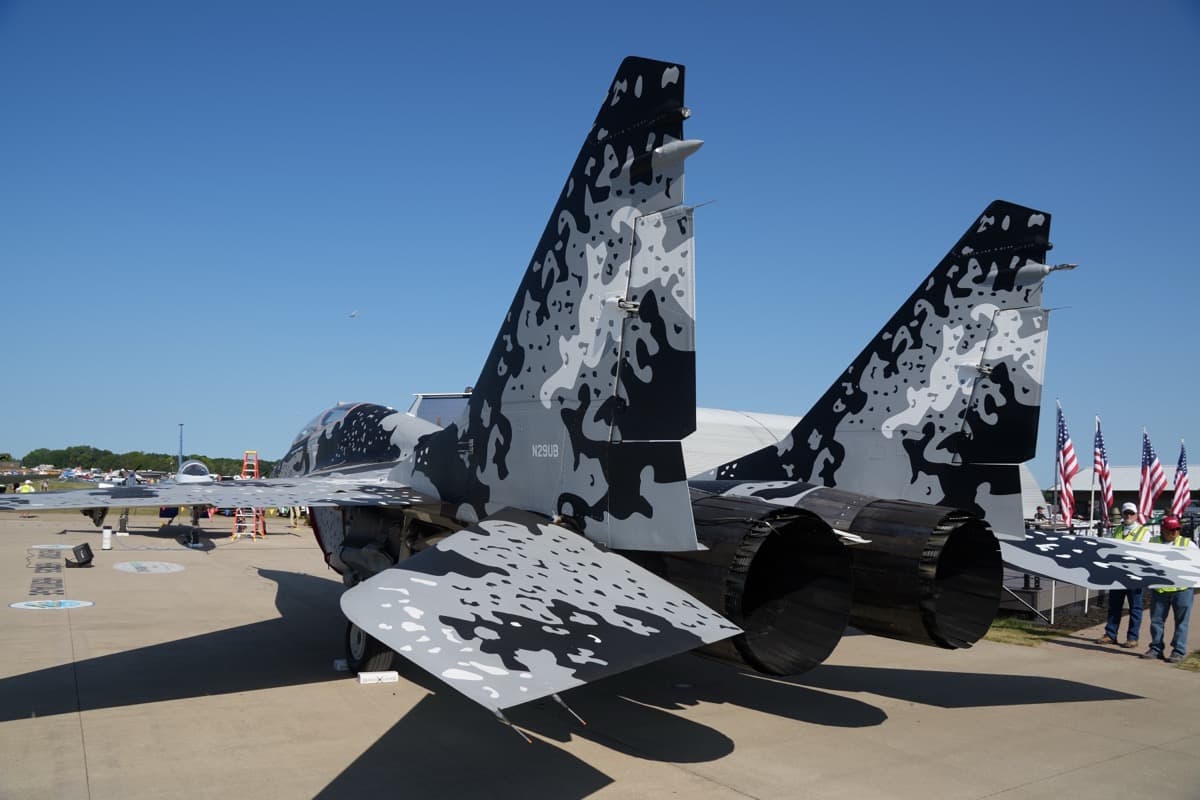
More on the MiG
And how about that MiG-29 that was parked nearby for discussion?
Isaacman described a key feature of some Soviet-era jet fighters like the MiG-29, that closed the huge inlets to the engines on takeoff, routing air from atop the fuselage in an effort to keep FOD — foreign object damage — away.
He called Russian runways “horrible” for their rough conditions.
“It’s totally an off-roading event,” he said.
The Russian fix was not with the quality of the runways, but with the inlets of jet warplanes like the MiG-29. The inlet remains closed on takeoff, with the engines in afterburner, “right up to about 130 knots,” he explained, at which time the main inlets open, prompting an acceleration that throws the pilot even farther back into the seat, and rapidly gaining another 30 knots as the jet accelerates.
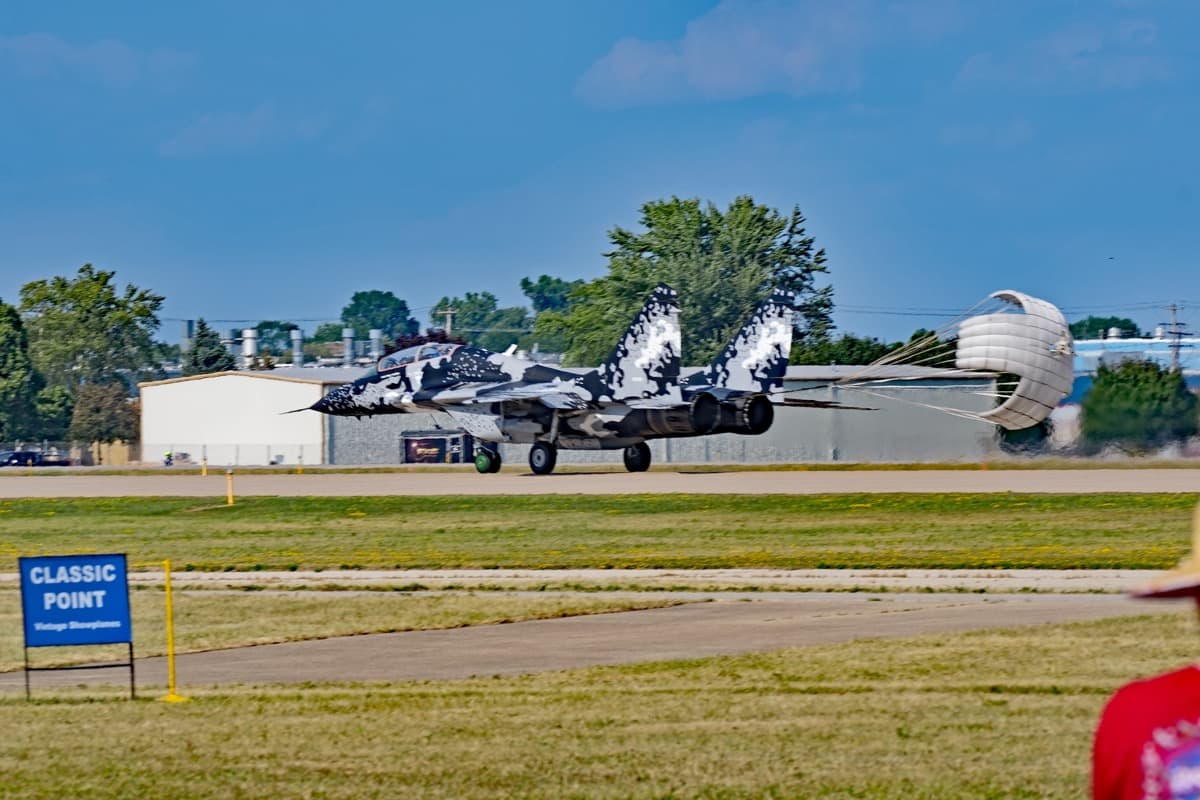
Then, on landing the hot jet, a cruciform drag ‘chute is always deployed, he told the audience, because the MiG-29’s brakes are like those of the older MiG-23, and need the help of a good braking parachute.

Leave a Reply