

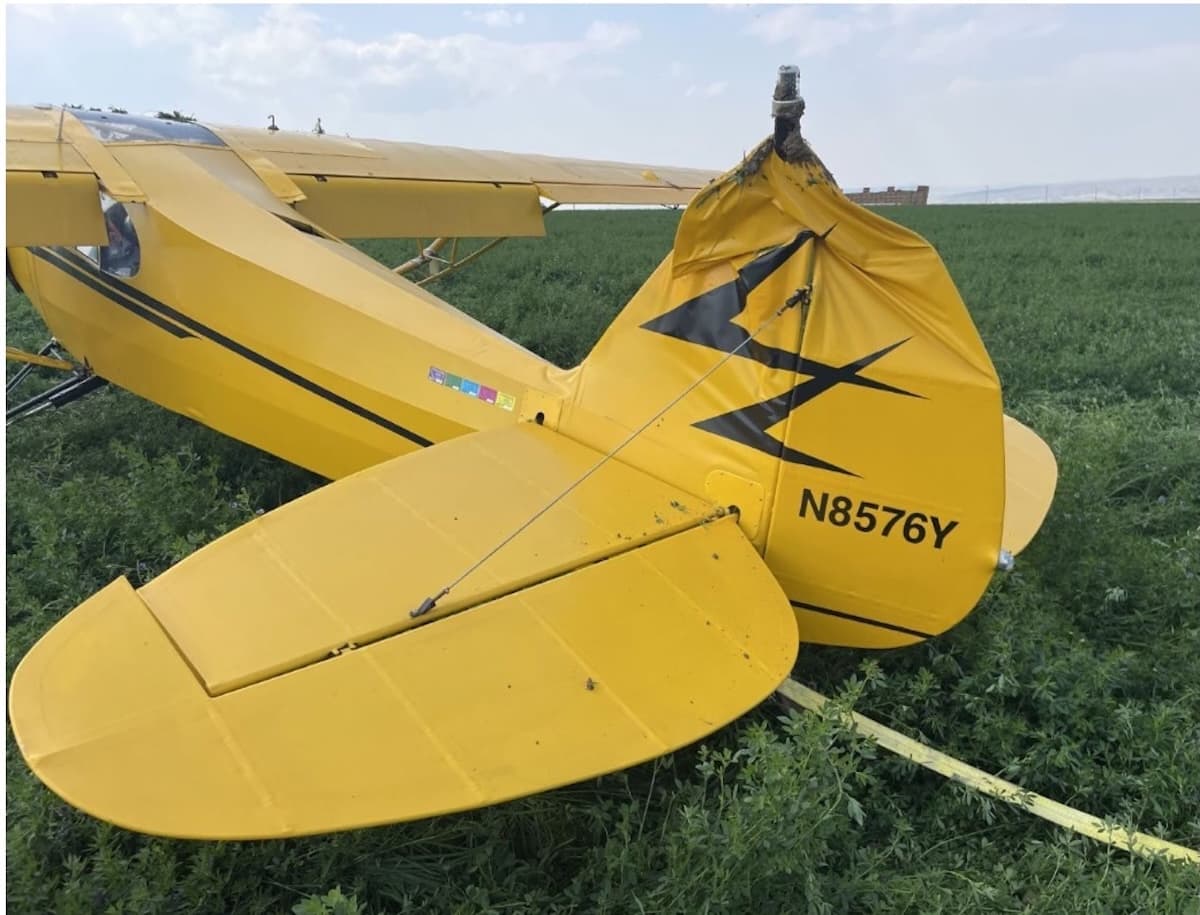
The CFI was giving dual instruction to a pilot-rated student in the Piper PA-18-150.
He told investigators that soon after departure from the airport in Manhattan, Montana, the engine RPM reduced to idle.
The pilot verified the throttle was at full power, adequate fuel was in both tanks, and applied carburetor heat, which restored the engine to full power.
After 10 seconds, the RPM began surging and the pilot then turned the carburetor heat off. He turned the carburetor heat on again and pumped the throttle repeatedly while the power continued to surge until the engine quit and he lost all power.
They were unable to restart the engine and landed the airplane in a nearby agricultural field. The airplane came to rest inverted, which resulted in substantial damage to the vertical stabilizer.
The engine ran normally on the ground after the airplane was returned to its upright position following the accident.
When the temperature and the dewpoint near the time of the accident were plotted on a carburetor icing probability graph, it was revealed that the airplane was likely operating in meteorological conditions conducive to the formation of carburetor icing (for glide power settings).
Probable Cause: A total loss of engine power due to carburetor icing.
To download the final report. Click here. This will trigger a PDF download to your device.
This August 2024 accident report is provided by the National Transportation Safety Board. Published as an educational tool, it is intended to help pilots learn from the misfortunes of others.
Leave a Reply