

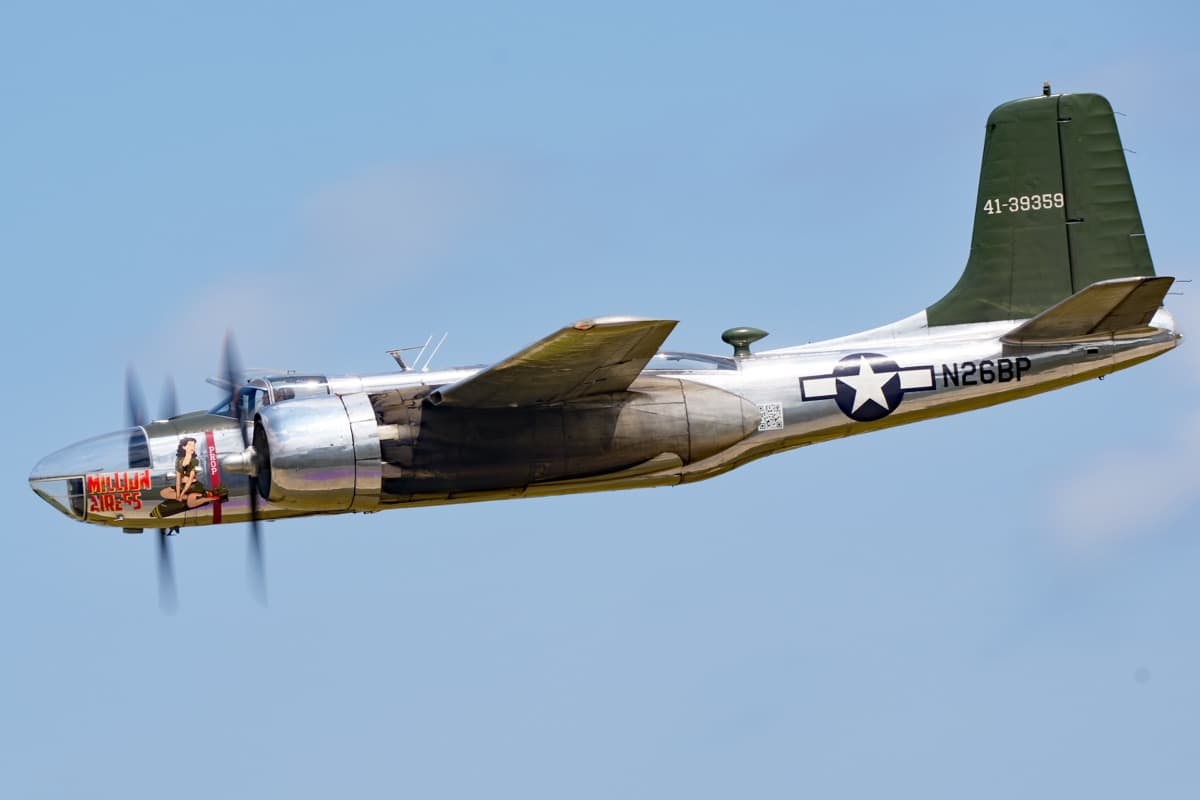
If you know the Douglas A-26 Invader, well, you know… If this is your first exposure to it, then you will know the A-26 from now on. Its angular, almost austere lines speak of speed even when it is parked and chocked.
A-26s are scarcer on today’s warbird scene than, say, the B-25 medium bomber. That made it memorable when three of probably five or six total flying Invaders took to the sky simultaneously during EAA AirVenture Oshkosh 2026. And on Thursday, July 23, an Invader shared the Warbirds in Review stage.
That Invader is nicknamed Million Airess, flown to air shows by the Million Air FBO organization. Million Air CEO Roger Woolsey was on hand to share details about his company’s A-26, serial number 41-39359.

A-26s first flew in combat in World War II in 1944 and some were called up again for the Korean War. Still viable for lower intensity conflicts into the 1960s, some Invaders served in the type’s third war in Southeast Asia.
Woolsey told the crowd Million Airess served in World War II, then in Korea years later. A timeline for 41-39359 shows it rolling out the door at the Douglas factory in Long Beach in November 1944, and entering combat with the Ninth Air Force over Europe during the Battle of the Bulge the following month. In July 1950, it flew with the Air Force’s Third Bomb Wing in Korea.
By 1956, the bomber was retired from the U.S. Air Force. It flew as an air tanker with Aero Union out of Chico, California, in the 1960s, moving to Conair at Abbotsford, British Columbia, where its firefighting days concluded in the 1980s.
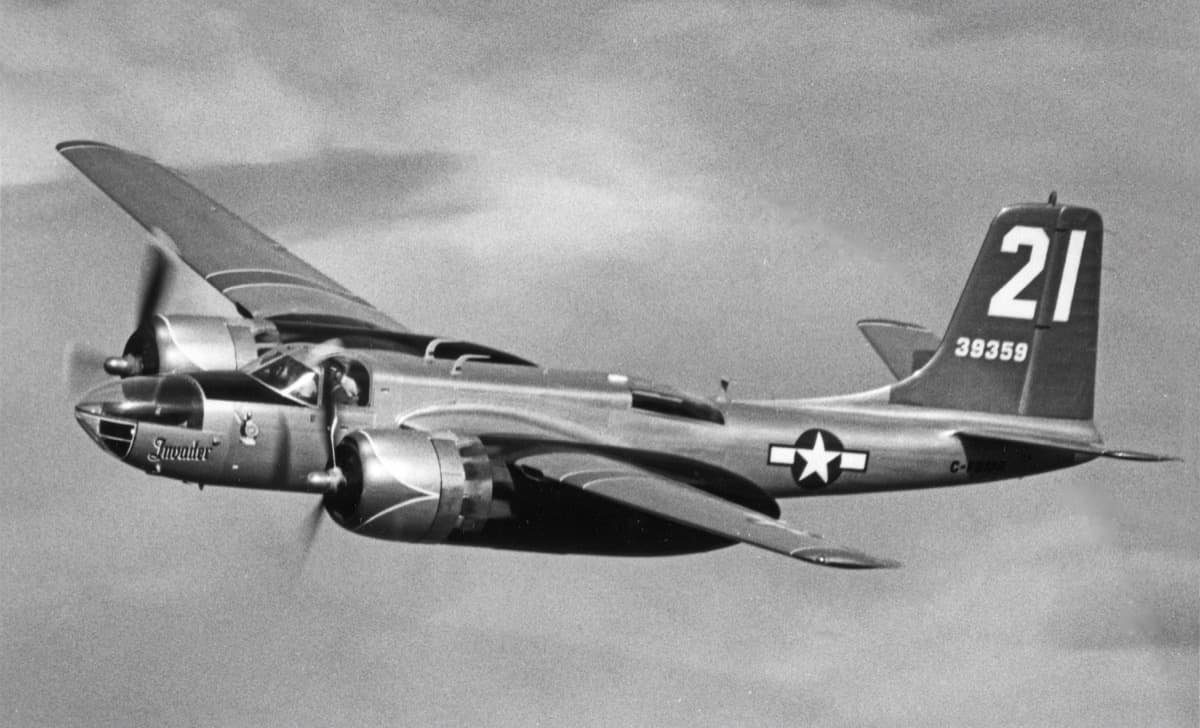
Several warbird owners and museums later, 41-39359 became the pride and joy of the Million Air FBO organization in 2025, after several years of sponsoring it under another owner.
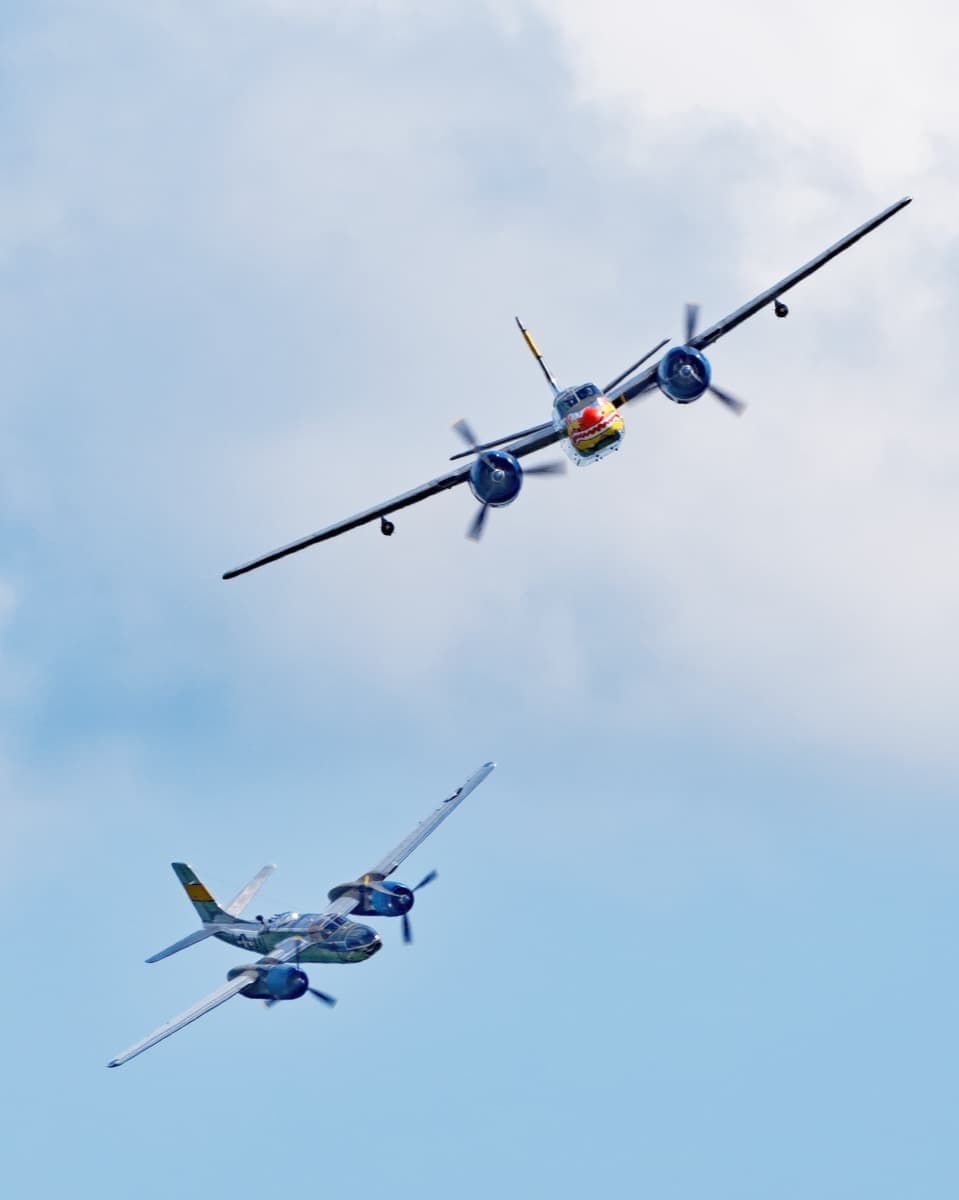
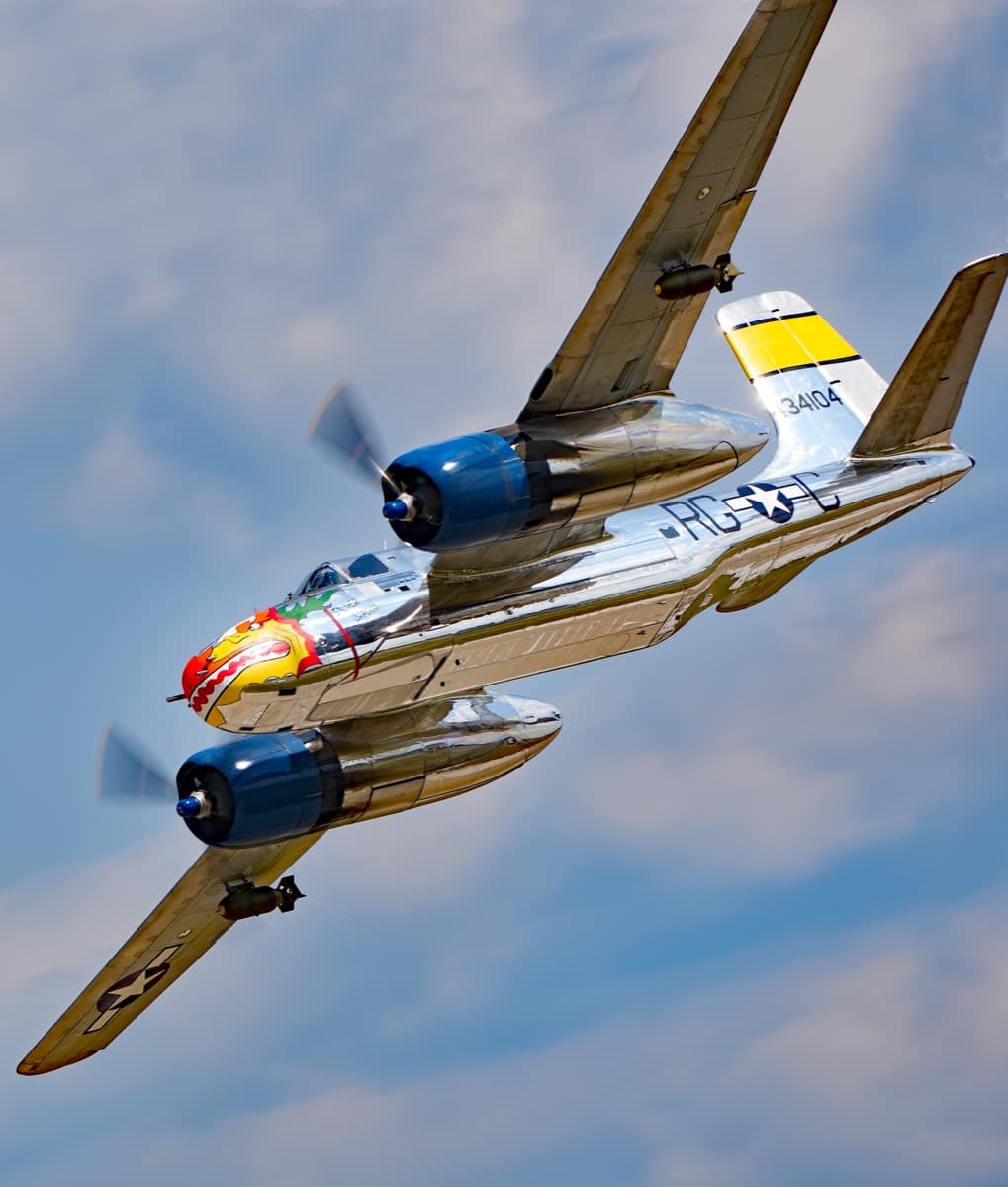
In an only-at-Oshkosh moment, Million Airess joined A-26s Hell’s Belle and Silver Dragon in flight during warbird air shows on at least two days during AirVenture 2026.
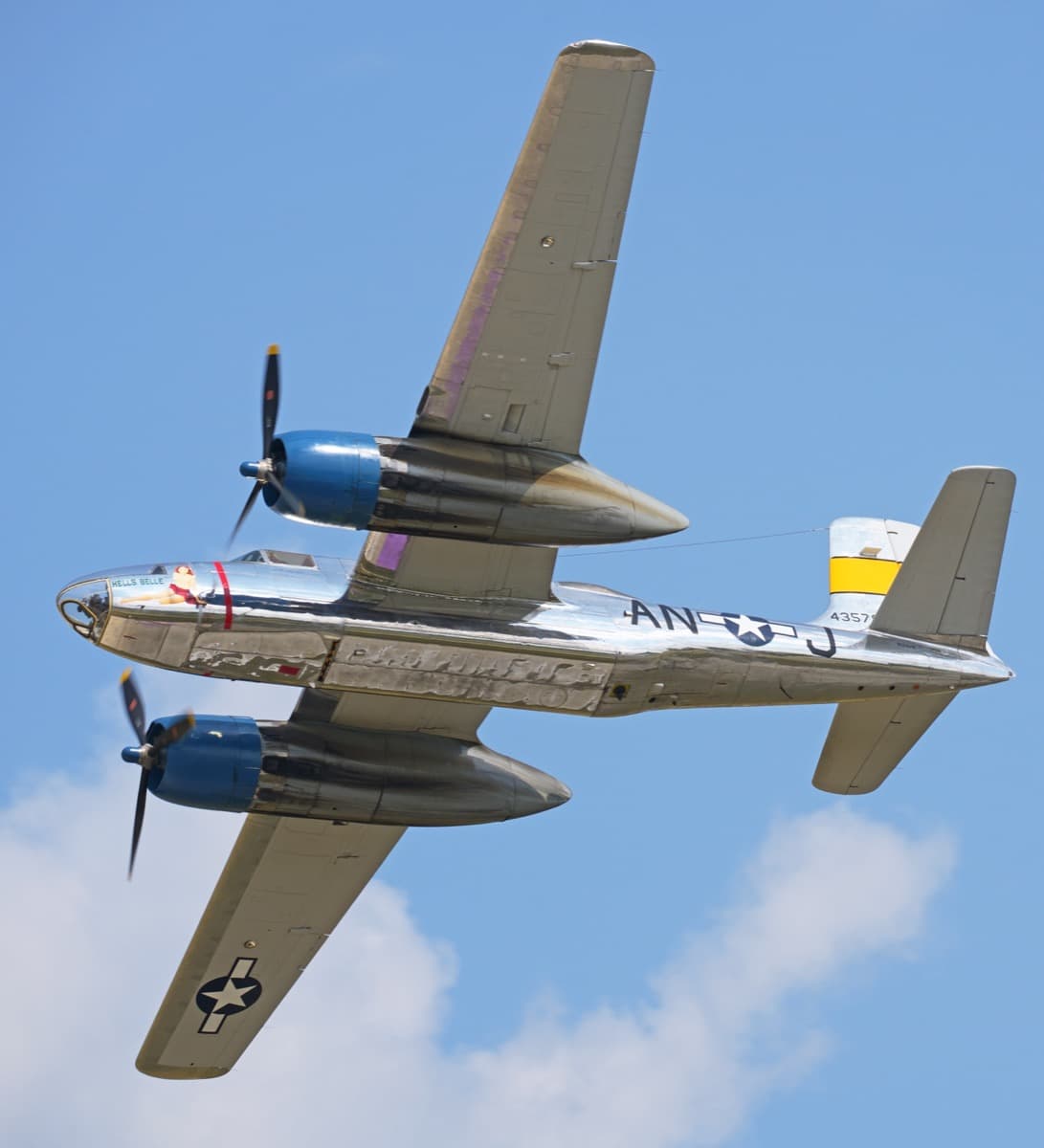
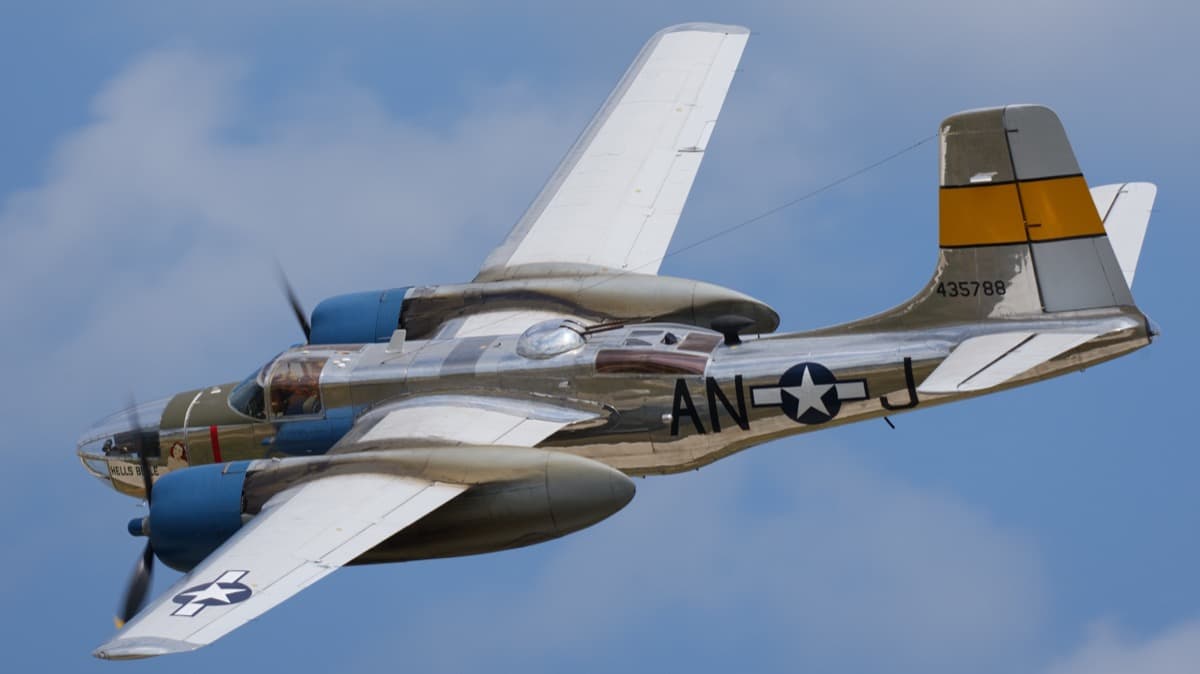
The Douglas A-26 Invader was a product of a design team led by Ed Heinemann. The prototype first flew in July of 1942. A pair of Pratt and Whitney R-2800 engines turn Hamilton Standard three-blade propellers to give the A-26 a top speed well over 350 miles per hour — some sources say the military-equipped A-26C topped out at 373 mph. Cruise speed is listed as ranging from 266 to 284 mph for military A-26s, depending on the source. Such high numbers made surplus A-26s attractive as business aircraft and even air racers.
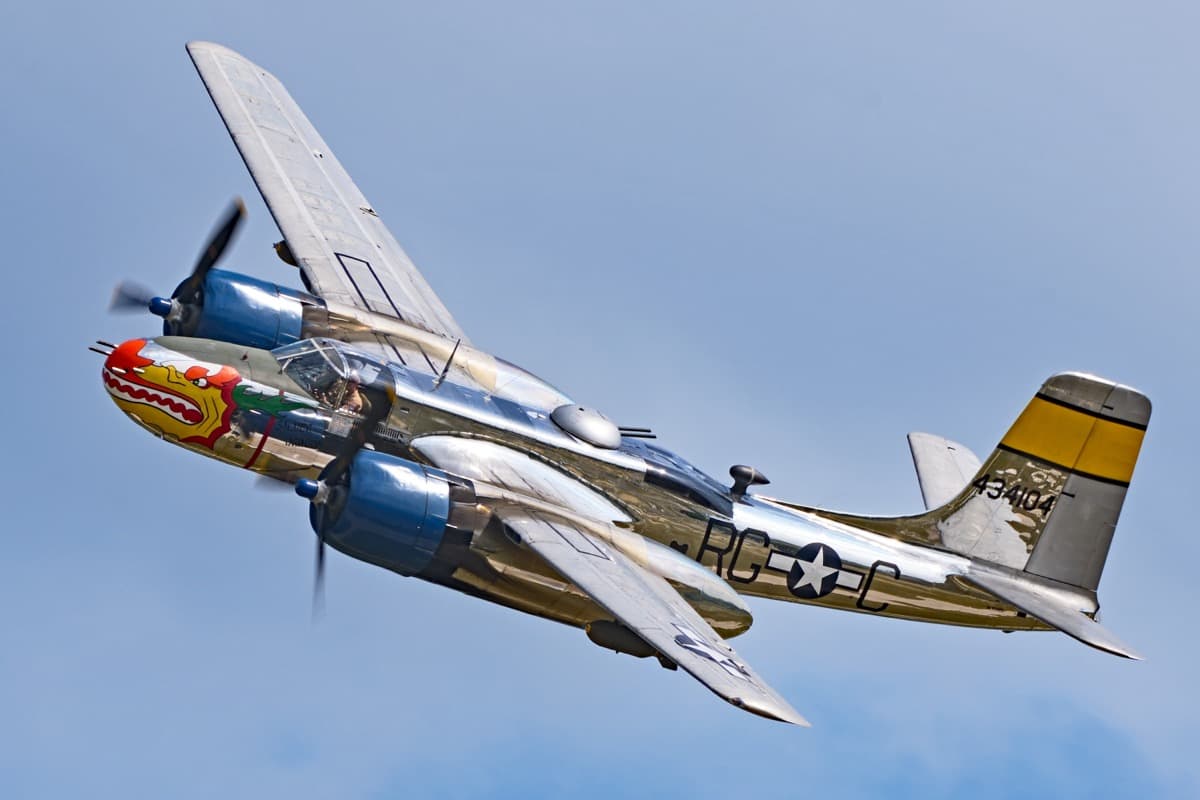
The A-26 was part of a nomenclature switch by the Air Force that still confuses people today. During World War II, a different bomber, the Martin B-26 Marauder, served as a capable medium bomber. After the war, with all Martin B-26s retired, the Air Force changed the nomenclature of the A-26 Invader to be the B-26. At the time of Korea and Vietnam, the Douglas Invader was called the B-26. Then, to further complicate matters, the last Invaders in Air Force service in Southeast Asia were redesignated as A-26 in 1966.
What remains constant is the angular beauty of the Douglas Invader, as depicted in triplicate at AirVenture.

A-26 has always been a favor of mine